Nitrobenzene → p-Fluoronitrobenzene
Reaction equation

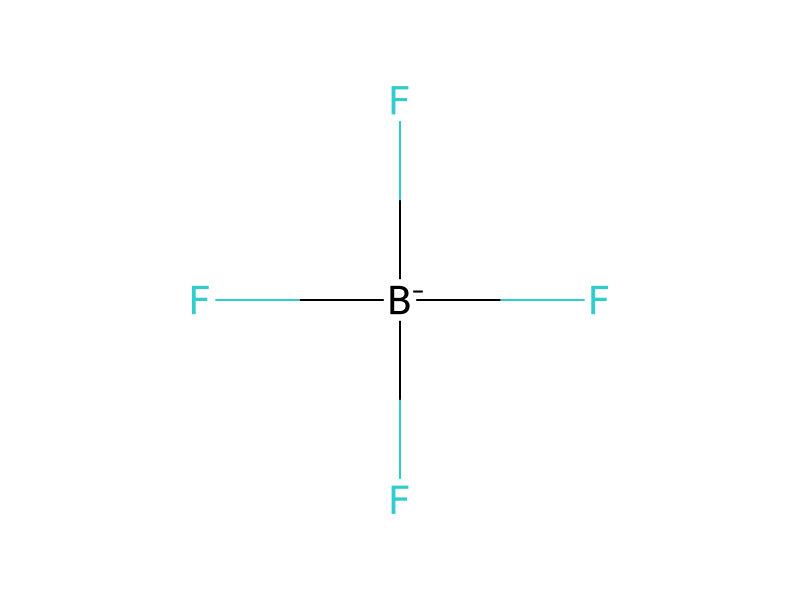
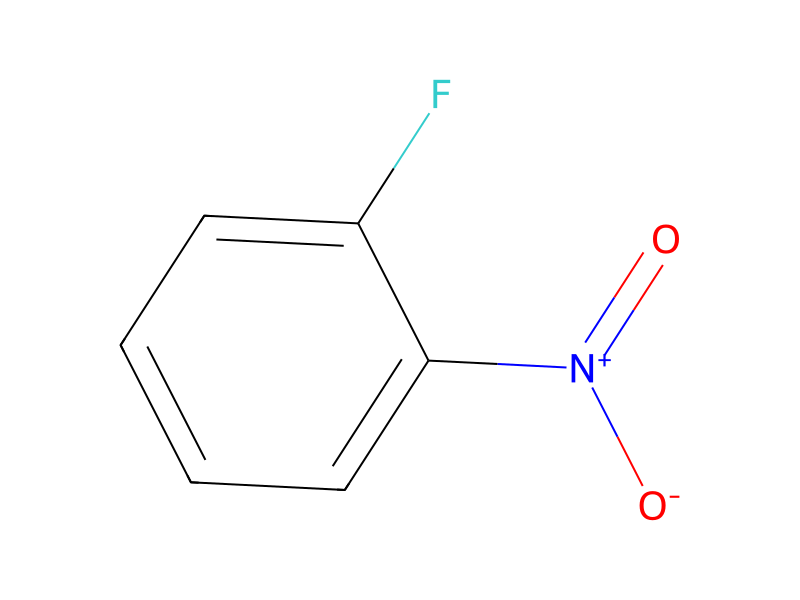
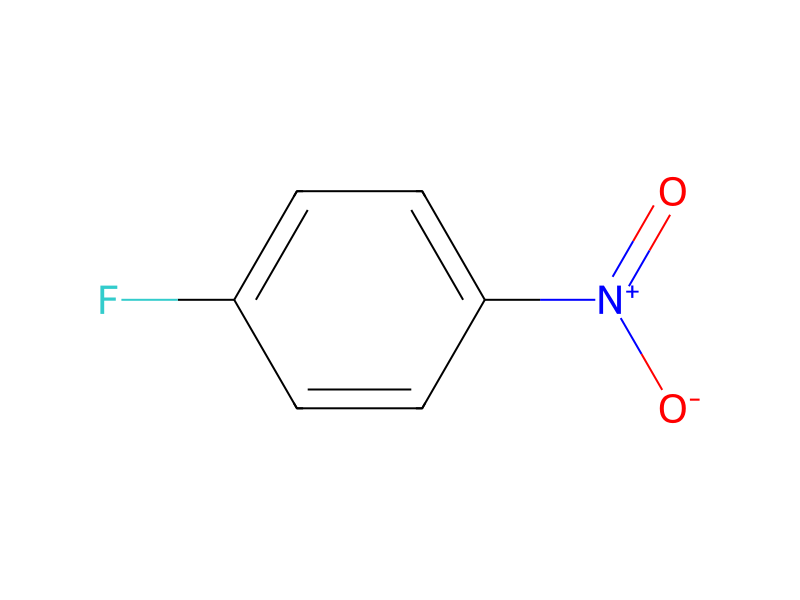
F[B-](F)(F)F.[N+:6]([C:9]1[CH:14]=[CH:13][CH:12]=[CH:11][CH:10]=1)([O-:8])=[O:7].[F:15]C1C=C([N+]([O-])=O)C=CC=1.FC1C=CC=CC=1[N+]([O-])=O>ClC1C=CC=CC=1.C1C=CC=CC=1>[F:15][C:12]1[CH:13]=[CH:14][C:9]([N+:6]([O-:8])=[O:7])=[CH:10][CH:11]=1Participants
Reactant 4


Product 1
Reagents, catalysts & solvents 2


Conditions
- Temperature
- 90 °C
Procedure
A homogeneous reaction mixture was obtained in this experiment, whereas in the aforementioned fluorinations of benzene and chlorobenzene, the reaction mixtures contained suspended [(ClCN)3F]+BF4−. In order to drive the fluorination of nitrobenzene to completion, the reaction mixture was heated at 90° C. for 2 hours before it was tested with KI solution and gave a negative result. G.C. analysis revealed the presence of only 3-fluoronitrobenzene and 2-fluoronitrobenzene with no marked change in ratio (about 2:1 ratio). Despite the presence of the 2-fluoro derivative, no evidence were obtained for the presence of 4-fluoronitrobenzene. The absence of 4-fluoronitrobenzene may have resulted from loss of this isomer during the reaction or subsequent handling operations via nucleophilic displacement of the highly mobile fluorine. In this connection, the reaction vessel became etched during the reaction.
Workup
- customgave a negative result
Sources & evidence
- ORD record
- ord-147f01bd25ce47d0ae74ce3fb1ff166b
- Source dataset
- uspto-grants-2003_10
- Patent number
- US06635760B2
Reaction notes
Loading…