Cinnamoylbenzene → 2-(3-oxo-1,3-diphenylpropyl)cyclohexanone
Reaction equation

[CH:1](=[CH:8][C:9]([C:11]1[CH:16]=[CH:15][CH:14]=[CH:13][CH:12]=1)=[O:10])[C:2]1[CH:7]=[CH:6][CH:5]=[CH:4][CH:3]=1.[C:17]1(=[O:23])[CH2:22][CH2:21][CH2:20][CH2:19][CH2:18]1.[OH-].[Na+]>C(O)C>[C:2]1([CH:1]([CH:18]2[CH2:19][CH2:20][CH2:21][CH2:22][C:17]2=[O:23])[CH2:8][C:9](=[O:10])[C:11]2[CH:16]=[CH:15][CH:14]=[CH:13][CH:12]=2)[CH:7]=[CH:6][CH:5]=[CH:4][CH:3]=1Participants
5
Reactant 3
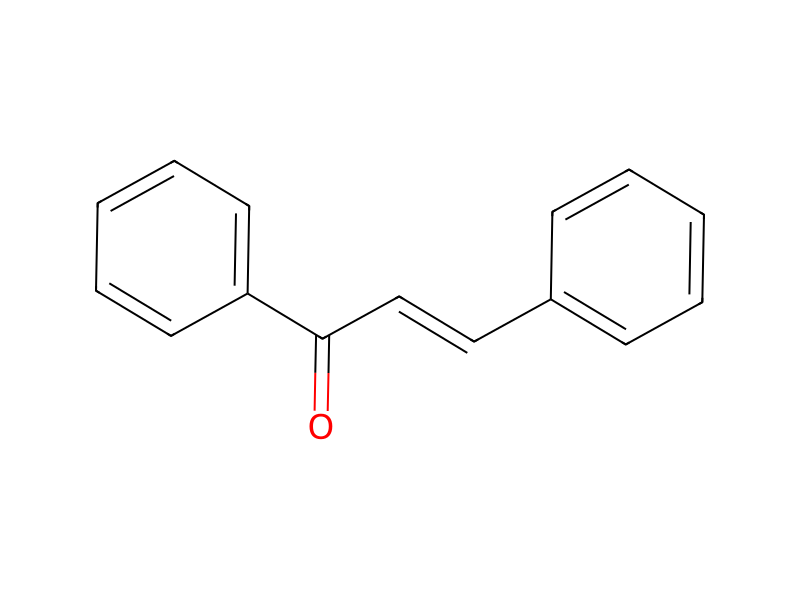


Product 1

Reagents, catalysts & solvents 1

Procedure
Ten parts of benzalacetophenone and 5 parts of cyclohexanone was dissolved in 200 mL of ethyl alcohol and a solution of 5 parts of sodium hydroxide in 100 ml of ethanol was added to the reaction mixture. After 30 minutes the solution became cloudy and white solid was appeared. The reaction mixture was stirred for 10 hours at room temperature and solid was filtered, washed with water and then with 100 ml of ethyl alcohol. The white solid was dried under reduced pressure,with a yield of 12 parts. The reaction proceeded as follows:
Workup
- filtrationsolid was filtered
- washwashed with water
- dry with materialThe white solid was dried under reduced pressure,with a yield of 12 parts
Sources & evidence
- ORD record
- ord-872992daec6c4da09d88e3046d8c3c3d
- Source dataset
- uspto-grants-2002_10
- Patent number
- US06461876B1
Reaction notes
Loading…