Water → 1-(7-Amino-2,3-dihydro-1,4-benzodioxin-6-yl)-2-chloroethan-1-one
Reaction equation

B(Cl)(Cl)Cl.[O:5]1[C:10]2[CH:11]=[CH:12][C:13]([NH2:15])=[CH:14][C:9]=2[O:8][CH2:7][CH2:6]1.[Cl:16][CH2:17][C:18]#N.[Cl-].[Al+3].[Cl-].[Cl-].[OH2:24]>C(Cl)Cl>[NH2:15][C:13]1[C:12]([C:18](=[O:24])[CH2:17][Cl:16])=[CH:11][C:10]2[O:5][CH2:6][CH2:7][O:8][C:9]=2[CH:14]=1Participants

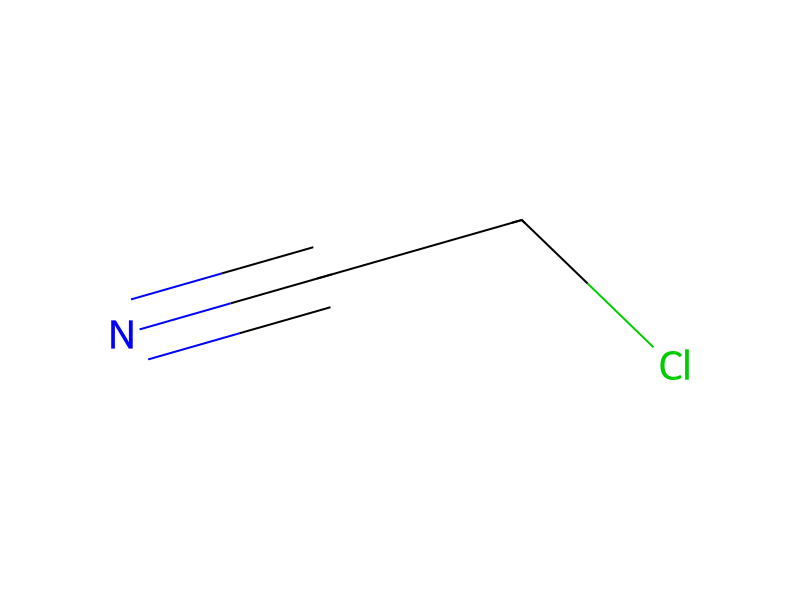





Conditions
- Temperature
- -20 °C
Procedure
A 4-necked 12-L round-bottom flask is equipped with a mechanical stirrer and water-cooled condenser. Under nitrogen, the flask is charged with 1 M boron trichloride in methylene chloride (4 L, 4.00 mol). The solution is cooled to −20° C., then 1,4-benzodioxane-6-amine (500 g, 3.31 mol) available from the Aldrich Chemical Company, Inc., 1001 West Saint Paul Avenue, Milwaukee, Wis. 53233, is added as a solution in methylene chloride (250 mL) over 30 min. The temperature increases to 10° C. during the addition and is subsequently recooled back to −10° C. Chloroacetonitrile (250 mL, 3.95 mol) is added over 5 min, followed by addition of aluminum chloride (485 g, 3.64 mol). The resulting dark mixture is heated at reflux for 24 h. The reaction mixture is cooled to ambient temperature and transferred to two 20-L separatory funnels, each containing 10 L of water. After being stirred for 2.5 h, the organic layer is separated and the aqueous layer is extracted with methylene chloride (4×4 L). The combined organic layers are washed with brine (4 L), dried over anhydrous sodium sulfate and concentrated in vacuc. The resultant thick brown slurry is successively treated with 600 mL of methylene chloride and 2 L of hexane. The mixture is stirred at 0° C. for 30 min. The precipitate is collected by filtration on a Buchner funnel, washed with hexane (1 L) and dried in vacuo. at 30° C. yielding 1-(7-amino-2,3-dihydro-benzo[1,4]dioxin-6-yl)-2-chloro-ethanone as a yellow powder. Reverse HPLC (Spherisorb ODS-25 micron, 1:1 MeCN—H2O) indicated a purity of 91%. Recrystallization from CH2Cl2 provides an analytical sample as a yellow crystalline solid: mp 130° C. (dec.). 1H NMR (CDCl3, 200 MHz) d 4.24 (m, 2H), 4.32 (m, 2H), 4.59 (s, 2H), 6.21 (s, 1H), 6.23 (br. s, 2H), 7.29 (s, 1H). Elemental analysis: Calculated for C10H10CINO3: C 52.76, H 4.43, N 6.15. Found: C 52.62, H 4.42, N 6.12.
Workup
- customA 4-necked 12-L round-bottom flask is equipped with a mechanical stirrer
- temperatureThe temperature increases to 10° C. during the addition
- customis subsequently recooled back to −10° C
- temperatureThe resulting dark mixture is heated
- temperatureat reflux for 24 h
- temperatureThe reaction mixture is cooled to ambient temperature
- customthe organic layer is separated
- extractionthe aqueous layer is extracted with methylene chloride (4×4 L)
- washThe combined organic layers are washed with brine (4 L)
- dry with materialdried over anhydrous sodium sulfate
- concentrationconcentrated in vacuc
- additionThe resultant thick brown slurry is successively treated with 600 mL of methylene chloride and 2 L of hexane
- stirringThe mixture is stirred at 0° C. for 30 min
- filtrationThe precipitate is collected by filtration on a Buchner funnel
- washwashed with hexane (1 L)
- customdried in vacuo
Sources & evidence
- ORD record
- ord-046ebfca5e0d429b951804fb7346f0b3
- Source dataset
- uspto-grants-2002_10
- Patent number
- US06462196B1
Reaction notes
Loading…