3,3-Dimethylbutanal → Neotame
Reaction equation

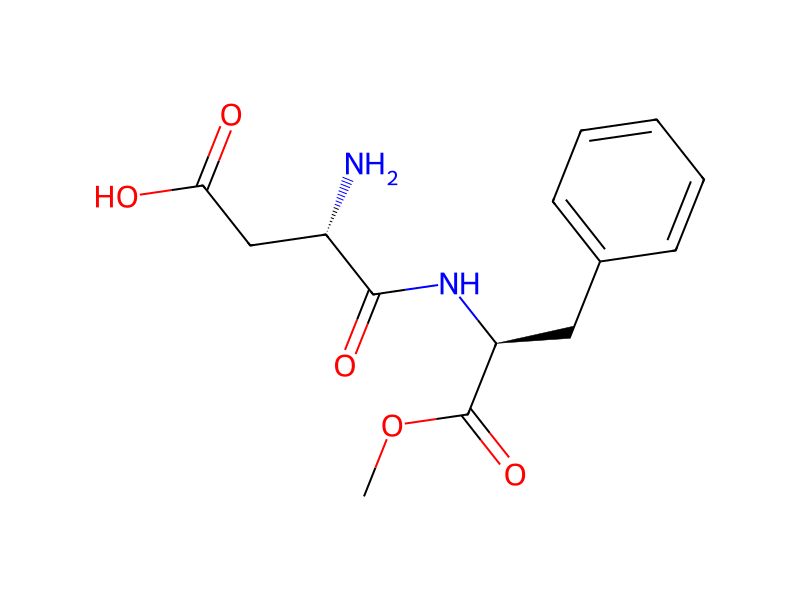
[CH3:1][O:2][C:3]([C@@H:5]([NH:13][C:14]([C@@H:16]([NH2:21])[CH2:17][C:18]([OH:20])=[O:19])=[O:15])[CH2:6][C:7]1[CH:8]=[CH:9][CH:10]=[CH:11][CH:12]=1)=[O:4].[CH3:22][C:23]([CH3:28])([CH3:27])[CH2:24][CH:25]=O.[H][H]>>[CH3:22][C:23]([CH2:24][CH2:25][NH:21][C@H:16]([C:14]([NH:13][C@H:5]([C:3]([O:2][CH3:1])=[O:4])[CH2:6][C:7]1[CH:12]=[CH:11][CH:10]=[CH:9][CH:8]=1)=[O:15])[CH2:17][C:18]([OH:20])=[O:19])([CH3:28])[CH3:27]Participants
4



Procedure
U.S. Pat. No. 5,728,862 describes a method comprising treating a solution of aspartame and 3,3-dimethylbutyraldehyde, in an organic solvent with hydrogen in the presence of a catalyst as a reducing agent. After removal of the catalyst, water was added to form an aqueous/organic solvent solution containing about 17% to about 30% of the organic solvent, by weight, from which the neotame was obtained by precipitation and filtration.
Workup
- customAfter removal of the catalyst, water
- additionwas added
- customto form an aqueous/organic solvent solution
Sources & evidence
- ORD record
- ord-943b229e42c04e61a106a0b8918d0fcd
- Source dataset
- uspto-grants-2002_10
- Patent number
- US06465677B1
Reaction notes
Loading…