
基本信息
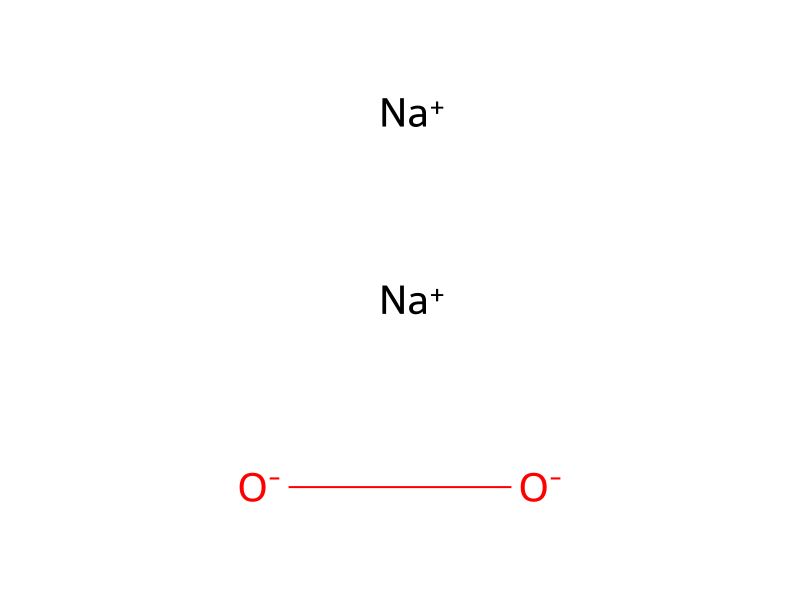
- 标准SMILES
[Na+].[Na+].[O-][O-]- InChIKey
PFUVRDFDKPNGAV-UHFFFAOYSA-N- 分子式
- Na2O2
- 平均分子量
- 77.978 g/mol
- 单同位素质量
- 77.9693678
概述
Sodium peroxide appears as a yellow-white to yellow granular solid. Mixtures with combustible material are readily ignited by friction, heat, or contact with moisture. May vigorously decompose under prolonged exposure to heat, causing the rupture of the containers.
名称与标识
- 首选名称
- Sodium peroxide
- IUPAC
- disodium;peroxide
- 中文名
- 过氧化钠
- 英文名
- Sodium peroxide
- 分子式
- Na2O2
- 分子量
- 77.98
名称与别名
SODIUM PEROXIDE1313-60-6Disodium peroxideSolozoneNatriumsuperoxidSodium dioxideDisodium dioxideNatrium peroxydatumSodium oxide, per-Flocool 180Sodium oxide (Na2O2)Sodium peroxide (Na2(O2))
展开更多名称
過氧化鈉超氧化钠二氧化钠过氧化钠双氧化钠过氧化碱GYHN过氧化曹达三氧化二钠过氧化钠粒状的OxolinGYHNflocoolNa2-(O2)solozone[qr]Oxygen powderPeroxydisodium
3GSN3JCJ5KDTXSID0061660RefChem:6245DTXCID3034038215-209-4disodium;peroxideMFCD00003497UNII-3GSN3JCJ5K
数据库标识
- CAS
1313-60-6- PubChem CID
- 14803
- DTXSID
DTXSID0061660- EC Number
- 215-209-4
- Nikkaji
- J209.344H
性质
结构计算性质
- 极性表面积
- 46.1 Ų
- 氢键供体
- 0
- 氢键受体
- 2
- 可旋转键
- 0
- 重原子
- 4
- 形式电荷
- 0
- 复杂度
- 4
实验与物化性质
Chemical Classes
Metals -> Peroxides, Metal
Reactive agents - 1st degree
Density
2.805 @ 20 °C
2.8 g/cm³
2.805 @25 °C
Color/Form
Yellowish-white, granular powder
WHITE POWDER TURNING YELLOW ON EXPOSURE TO ATMOSPHERE
Yellowish-white powder turns yellow when heated
Pale yellow solid
Solubility
SOLUBLE IN ACID; INSOLUBLE IN ALKALI
Freely sol in water, forming sodium hydroxide and hydrogen peroxide, the latter quickly decomp into oxygen and water
Solubility in water: reaction
Boiling Point657 °C, decomp
Decomposition460 °C
Melting Point
460 °C, decomp
675 °C
Physical Description
Sodium peroxide appears as a yellow-white to yellow granular solid. Mixtures with combustible material are readily ignited by friction, heat, or contact with moisture. May vigorously decompose under prolonged exposure to heat, causing the rupture of the containers.
White to pale-yellow granules; [CHEMINFO MSDS]
YELLOW-TO-WHITE POWDER.
Stability/Shelf LifeABSORBS WATER & CARBON DIOXIDE FROM AIR.
Other Experimental Properties
Reacts with water
Active oxygen content approx 20% by weight; evolves heat when dissolved in cold water
Strong oxidizing agent
With dilute acids hydrogen peroxide is formed which remains stable
For more Other Experimental Properties (Complete) data for SODIUM PEROXIDE (7 total), please visit the HSDB record page.
物理化学性质
- 熔点
- 460 °C · 460 °C (dec.)(lit.)
- 沸点
- 657 °C · 657°C
- 堆积密度
- 1138 kg/m3 · 1138kg/m3
- 密度
- 2.8 · 2.8
- 蒸气压
- 0.001 Pa · 0.001Pa at 20℃
- 闪点
- 657 °C · 657°C
- 储存条件
- 15 °C · Store at +15°C to +25°C.
- 溶解度
- Soluble in acid. Insoluble in alkali.
- 形态
- beads (small)
- 颜色
- Yellow
- 比重
- 2.805 · 2.805
- 气味 (Odor)
- Odorless
- PH值
- 12.8 · 12.8 (100g/l, H2O, 20℃)
- 酸碱指示剂变色ph值范围
- 12.8 · 12.8
- 水溶解性
- 2 · Soluble in water, forming NaOH and H{2}O{2}. Soluble in acid. Insoluble in alkali.
- 比热容
- 1.14 J/ · Cp(crystal): 1.14 J/(g·K), at 25℃
- 敏感性
- Air Sensitive & Hygroscopic
- Merck
- 14 · 14,8655
- 介电常数
- 2.7 · 2.7(Ambient)
- 稳定性
- Reacts violently with water. Contact with combustible materials may cause fire or explosion. Incompatible with strong oxidizing agents, alcohols, organic materials, acids, powdered metals. Absorbs carbon dioxide from the air.
- InChI
- 1S/2Na.O2/c;;1-2/q2*+1;-2
- InChIKey
- PFUVRDFDKPNGAV-UHFFFAOYSA-N
- SMILES
- [Na+].[Na+].[O-][O-]
- CAS 数据库
- 1313 · 1313-60-6(CAS DataBase Reference)
- EPA化学物质信息
- Sodium peroxide (1313-60-6)
化学性质
黄白色粉末。 溶于稀酸,不溶于碱。
安全与法规
GHS分类
GHS Classification
Danger
H271: May cause fire or explosion; strong Oxidizer [Danger Oxidizing liquids; Oxidizing solids]
P210, P220, P260, P264, P280, P283, P301+P330+P331, P302+P361+P354, P304+P340, P305+P354+P338, P306+P360, P316, P321, P363, P370+P378, P371+P380+P375, P405, P420, and P501 (click each P-code to see the statement)
Danger
H271 (100%): May cause fire or explosion; strong Oxidizer [Danger Oxidizing liquids; Oxidizing solids]
P210, P220, P260, P264, P264+P265, P280, P283, P301+P330+P331, P302+P361+P354, P304+P340, P305+P354+P338, P306+P360, P316, P317, P321, P363, P370+P378, P371+P380+P375, P405, P420, and P501 (click each P-code to see the statement)
危害信息
Regulatory Information
Chemical: Sodium peroxide (Na2(O2))
Status: Active Update: 30-03-2018 https://echa.europa.eu/registration-dossier/-/registered-dossier/23936
Sodium peroxide: HSNO Approval: HSR001355 Approved with controls
The New Jersey Worker and Community Right to Know Act requires public and private employers to provide information about hazardous substances at their workplaces. (N.J.S.A. 34:5A-1 et. seq.)
Other Safety InformationIMAP assessments - Sodium peroxide (Na2(O2)): Environment tier I assessment
DOT LabelOxidizer
Fire Hazards
Excerpt from ERG Guide 144 [Oxidizers (Water-Reactive)]:
· May ignite combustibles (wood, paper, oil, clothing, etc.).
Not combustible but enhances combustion of other substances. Risk of fire and explosion on contact with combustible substances.
Fire Potential
MIXTURES OF SODIUM PEROXIDE & COMBUSTIBLE, ORGANIC OR READILY OXIDIZABLE SUBSTANCES...IGNITE EASILY BY FRICTION OR ON CONTACT WITH A SMALL AMT OF WATER.
A mixture of sodium peroxide and aluminum powder reacts with incandescence. ... When the mixture is exposed to moist air, spontaneous ignition occurs.
When the mixture /of sodium peroxide and magnesium powder/ is exposed to moist air, spontaneous combustion occurs.
Sodium peroxide oxidizes antimony, arsenic, copper, potassium, tin, and zinc to incandescence.
Sodium peroxide...is spontaneously flammable with aniline, benzene, organic matter such as paper and wood, and diethyl ether. Mixtures with charcoal, glycerine, certain oils, and phosphorus burn... When a mixture of sodium peroxide and calcium carbide (powdered) is exposed to damp air, spontaneous combustion occurs. ... Sodium peroxide will ignite...organic cmpd, eg, hexamethylenetetramine when the mixture is moistened.
A mixture of sodium peroxide, silver chloride, and charcoal ignites spontaneously.
Health Hazards
Excerpt from ERG Guide 144 [Oxidizers (Water-Reactive)]:
· TOXIC; inhalation or contact with vapor, substance, or decomposition products may cause severe injury or death.
Hazards Summary
Hazardous decomposition products include oxygen (increased fire hazard) and toxic oxides of sodium; Corrosive to skin, eyes, and upper respiratory tract; [CHEMINFO MSDS] Corrosive; Inhalation of high concentration can cause chemical pneumonitis; [MSDSonline]
DOT ID and Guide1504 144
Reactive GroupBases, Strong
EC ClassificationSymbol: O, C; R: 8-35; S: (1/2)-8-27-39-45
UN ClassificationUN Hazard Class: 5.1; UN Pack Group: I
Reactivity AlertsExplosive
安全与防护
Fire Fighting
Excerpt from ERG Guide 144 [Oxidizers (Water-Reactive)]:
NO water. Use dry powder. In case of fire: keep drums, etc., cool by spraying with water. NO direct contact with water.
First Aid Measures
Fresh air, rest. Half-upright position. Artificial respiration may be needed. Refer for medical attention.
First rinse with plenty of water for at least 15 minutes, then remove contaminated clothes and rinse again. Refer for medical attention .
First rinse with plenty of water for several minutes (remove contact lenses if easily possible), then refer for medical attention.
Rinse mouth. Do NOT induce vomiting. Refer for medical attention .
Accidental Release Measures
· CALL 911. Then call emergency response telephone number on shipping paper. If shipping paper not available or no answer, refer to appropriate telephone number listed on the inside back cover.
· ELIMINATE all ignition sources (no smoking, flares, sparks or flames) from immediate area.
First Aid
Excerpt from ERG Guide 144 [Oxidizers (Water-Reactive)]:
General First Aid:
Safe StorageStore in an area without drain or sewer access. Separated from combustible substances, reducing agents, acids and powdered metals. Dry.
Exposure Control and Personal Protection· Wear positive pressure self-contained breathing apparatus (SCBA).
Fire Fighting Procedures
If material on fire or involved in fire: use dry chemical, graphite, or dry earth. Use water only if flooding quantities are available. Apply water from as far a distance as possible.
Evacuation: If fire becomes uncontrollable - consider evacuation of one-half (1/2) mile radius.
In case of fire, water should be applied by the sprinkler system or by hose from a safe distance, preferably with a fog nozzle. Foam may be necessary instead if the peroxide is diluted in a low density flammable solvent. Portable extinguishers should not be used except for very small fires. Peroxides threatened by fire should be wetted from a safe distance for cooling. /Peroxides, Organic and Inorganic/
Storage Conditions
KEEP TIGHTLY CLOSED & PROTECTED FROM CONTACT WITH ORGANIC OR OXIDIZABLE SUBSTANCES.
...SHOULD...BE STORED IN FIRE-RESISTING BUILDINGS, & SEPARATED FROM FLAMMABLE MATERIALS.
PROTECT AGAINST PHYSICAL DAMAGE & MOISTURE. SEPARATE FROM COMBUSTIBLE, ORGANIC OR OTHER READILY OXIDIZABLE MATERIALS. DO NOT STORE IN AREAS SUBJECT TO MOISTURE. IMMEDIATELY REMOVE & DISPOSE OF ANY SPILLED PEROXIDE.
Cleanup MethodsDilute and drain into the sewer with abundant water. /Hydrogen peroxide/
Nonfire Spill ResponseExcerpt from ERG Guide 144 [Oxidizers (Water-Reactive)]:
Disposal Methods
SRP: At the time of review, criteria for land treatment or burial (sanitary landfill) disposal practices are subject to significant revision. Prior to implementing land disposal of waste residue (including waste sludge), consult with environmental regulatory agencies for guidance on acceptable disposal practices.
Spillage Disposal
Personal protection: complete protective clothing including self-contained breathing apparatus. Do NOT absorb in saw-dust or other combustible absorbents. Do NOT let this chemical enter the environment. Sweep spilled substance into covered containers. Then store and dispose of according to local regulations.
毒理信息
Adverse EffectsDermatotoxin - Skin burns.
Exposure RoutesThe substance can be absorbed into the body by inhalation and by ingestion.
Signs and Symptoms
Burning sensation. Cough. Laboured breathing. Shortness of breath. Sore throat.
Redness. Serious skin burns. Pain.
Redness. Pain. Blurred vision. Severe deep burns.
Sore throat. Abdominal pain. Nausea. Shock or collapse. Burning sensation.
ICSC Environmental DataThe substance is harmful to aquatic organisms.
Human Toxicity Excerpts
...MAY CAUSE CHEMICAL BURNS OF SKIN & MUCOUS MEMBRANES, ALTHOUGH BURNS CAUSED BY HYDROGEN PEROXIDE ARE LESS SERIOUS THAN THOSE CAUSED BY SODIUM PEROXIDE.
NO PRIMARY SYSTEMIC EFFECTS WHEN INGESTED BECAUSE IT IS DECOMPOSED IN /SRP: GI TRACT/ BEFORE ABSORPTION. DECOMPOSITION MAY RELEASE LARGE VOL OF OXYGEN... LARGE DOSES PRESUMABLY PRODUCE GASTRITIS & ESOPHAGITIS.
IRRITANT AND CORROSIVE
Acute exposures to sodium peroxide via inhalation may cause respiratory irritation and difficulty in breathing.
For more Human Toxicity Excerpts (Complete) data for SODIUM PEROXIDE (6 total), please visit the HSDB record page.
Non-Human Toxicity Excerpts
/AN AEROSOL/...OF NA2O2 WITH SOME NAO.../WAS USED/ TO REPRESENT PRODUCT OF AN ACCIDENTAL SODIUM METAL FIRE IN A NUCLEAR REACTOR. JUVENILE & ADULT RATS EXPOSED...2 HR TO VARIOUS DILUTIONS OF AEROSOL.../SHOWED NECROSIS OF LARYNX SURFACE/. FINAL PARTICLE SIZE...2.5 UM OR LESS...PREDOMINATELY SODIUM CARBONATE WITH SOME NAOH.
DUE TO INDUSTRIAL DEVELOPMENT OF SODIUM COOLED BREEDER REACTORS, THE CONSEQUENCES OF SODIUM PEROXIDE AEROSOLS ON LETTUCE & TOMATOES WERE STUDIED. NECROSIS WAS REPORTED WHEN DEPOSITS IN SODIUM EQUIV WERE APPROX 300 MG/CU M. LEAVES WERE DESTROYED IF NECROSIS WAS EXTENSIVE.
Populations at Special RiskIndividuals with eye, skin, and chronic respiratory diseases /may be/ at an increased risk. /Hydrogen peroxide/
Probable Routes of Human ExposureIT MAY...BE ENCOUNTERED IN THE AEROSOL FROM SODIUM FIRES.
Antidote and Emergency Treatment
Basic treatment: Establish a patent airway. Suction if necessary. Watch for signs of respiratory insufficiency and assist ventilations if necessary. Administer oxygen by nonrebreather mask at 10 to 15 L/min. Monitor for pulmonary edema and treat if necessary ... . Monitor for shock and treat if necessary ... . For eye contamination, flush eyes immediately with water. Irrigate each eye continuously with normal saline during transport ... . Do not use emetics. For ingestion, rinse mouth and administer 5 ml/kg up to 200 ml of water for dilution if the patient can swallow, has a strong gag reflex, and does not drool ... . Do not attempt to neutralize because of exothermic reaction. Cover skin burns with dry, sterile dressings after decontamination ... . /Oxidizers/
Advanced treatment: Consider orotracheal or nasotracheal intubation for airway control in the patient who is unconscious, has severe pulmonary edema, or is in, respiratory arrest. Early intubation, at the first sign of upper airway obstruction, may be necessary. Positive pressure ventilation techniques with a bag valve mask device may be beneficial. Monitor cardiac rhythm and treat arrhythmias as necessary ... . Start an IV with D5W /SRP: "To keep open", minimal flow rate/. Use lactated Ringer's if signs of hypovolemia are present. Watch for signs of fluid overload. Consider drug therapy for pulmonary edema ... . For hypotension with signs of hypovolemia, administer fluid cautiously. Watch for signs of fluid overload ... . Use proparacaine hydrochloride to assist eye irrigation ... . /Oxidizers/
Peroxides should be washed promptly from the skin to prevent irritation. In the case of eye contact, the eyes should be flushed immediately with large amounts of water, and medical attention should be obtained. ... Medical attention should also be obtained in case of accidental ingestion. ... /Peroxides, Organic and Inorganic/
安全数据
- F
- 3-9-23
- wgk
- 1
- tsca
- TSCA listed
- RTECS号
- WD3450000
- 包装类别
- I
- 危险等级
- 5.1
- 存储类别
- 5.1A - Strongly oxidizing hazardous materials
- 安全说明
- 8-27-39-45
- 海关编码
- 2815 30 00
- 危险品标志
- O,C
- 危险性类别
- Ox. Sol. 1Skin Corr. 1A
- 危险类别码
- 8-35
- 毒害物质数据
- 1313-60-6(Hazardous Substances Data)
- 危险品运输编号
- UN 1504
毒性防护
毒性对皮肤和黏膜有强侵蚀性,溅入眼睛中会引起视力下降,甚至失明。如不慎溅人眼睛,应立刻用水冲洗15 min,然后送人医院治疗。如果溅到皮肤上,也应迅速用大量水冲洗,并用硼酸水中和。工作人员操作时应穿戴劳保防护用具。
包装储运
爆炸物危险特性遇水产生氧气及大量热量, 量大可爆炸
可燃性危险特性遇水分解苛性钠与氧气; 遇有机物、还原剂、硫、磷等易燃物可燃; 燃烧产生有毒氧化钠烟雾
储运特性库房干燥; 轻装轻卸; 与有机物、还原剂、硫磷易燃物分开存放
灭火剂干砂、干土、干石粉
化学与工业
用途与制造
Uses
Used as a chemical intermediate, catalyst, oxidizing agent, antiseptic, and bleaching agent for textiles, paper, and other products; Also used in oxygen-supply systems, water purification, ore processing, and chemical analysis; [HSDB]
Pulp and Paper Processing [Category: Industry]
For Sodium Peroxide (USEPA/OPP PC Code: 063606) there are 0 labels match. /SRP: Not registered for current use in the U.S./
Bleaching animal and vegetable fibers, feathers, bones, ivory, wood, wax, sponges, coral; rendering air charged with carbon dioxide respirable as in torpedo boats, submarines, diving bells, etc; purifying air in sick rooms; dyeing and printing textiles; chemical analysis; general oxidizing agent.
CATALYST IN POLYMERIZATION OF STYRENE TO POLYSTYRENE
CHEM INT FOR OTHER INORG PEROXY CMPD & IN ORGANIC SYNTHESIS; OXIDIZING AGENT IN CHEMICAL ANALYSIS; BLEACHING AGENT FOR TEXTILES & PAPER; COMPONENT OF OXYGEN-SUPPLY SYSTEMS; AGENT FOR REMOVING PARAFFINS BLOCKING OIL WELLS
U.S. Exports
(1972) 5.99X10+7 GRAMS
(1975) 7.48X10+7 GRAMS
Methods of Manufacturing
Reaction of sodium metal with oxygen (free of carbon dioxide and water vapor)
Prepared by heating sodium metal to 300 °C in aluminum vessels with a current of air from which carbon dioxide has been removed. Prepn of the octahydrate: Penneman, Inorg Syn 3, 1 (1950).
Formulations/PreparationsThe product of commerce contains 90-95% sodium peroxide.
General Manufacturing Information
Sodium peroxide (Na2(O2)): ACTIVE
Discussion on the use of hydrogen peroxide and sodium peroxide in the bleaching of tripe.
应用领域
用途可用作制造过氧化氢、金属过氧化物、过硼酸盐的原料,也可作为强氧化剂、漂白剂、消毒剂和防腐剂
用途用作普通分析试剂及氧化剂
用途主要用途是作生氧剂,广泛用于煤矿、化工、潜水、救护、高山测绘、高空飞行等需要供氧的场合,以及闭密系统内空气再生药剂的成分。
用途广泛用作强氧化剂、漂白剂、去臭剂、消毒剂和防腐剂。化学工业中用于制备其他过氧化物等。
用途其水溶液可脱色漂白,氧化剂,防腐剂,杀菌剂,除臭剂,微量分析。 化学工业中作为制造过氧化氢、金属过氧化物、过硼酸盐的原料,也可用作强氧化剂、漂白剂、消毒剂和防腐剂。
制备方法
生产方法金属钠氧化法将熔融金属钠预热至180℃以上,向氧化炉中喷人压力为39.2~44.1 Pa的高速压缩空气流,在300~350℃使钠氧化燃烧,生成的过氧化钠经自由沉降逐渐冷却至100℃以下,得到过氧化钠成品。其4Na+O2→2Na2O2Na2O+O2→2Na2O2
生产方法超氧化钠原粉与氧化钙按比例(93.5:6.5)经粉碎混合后,再经过压板、粉碎、过筛,得到一定大小和强度的颗粒。
上下游产品信息
上游原料
试剂价格
- 10020218 · 500G
- 过氧化钠sodium peroxide;disodium peroxide;disodium dioxide — 931元
- L13306 · 250g
- 过氧化钠, 95%Sodium peroxide, 95% — 3741元
相关反应
19 条






关联笔记
加载中…