化工社化工社化学信息打印报告 · 仅供科研参考
正丁基锂
丁基锂 · 正丁基 · 正丁基锂 · 正定基锂 · 正丁基鋰 · N-丁基锂 · 丁[基]鋰 · 丁基锂溶液
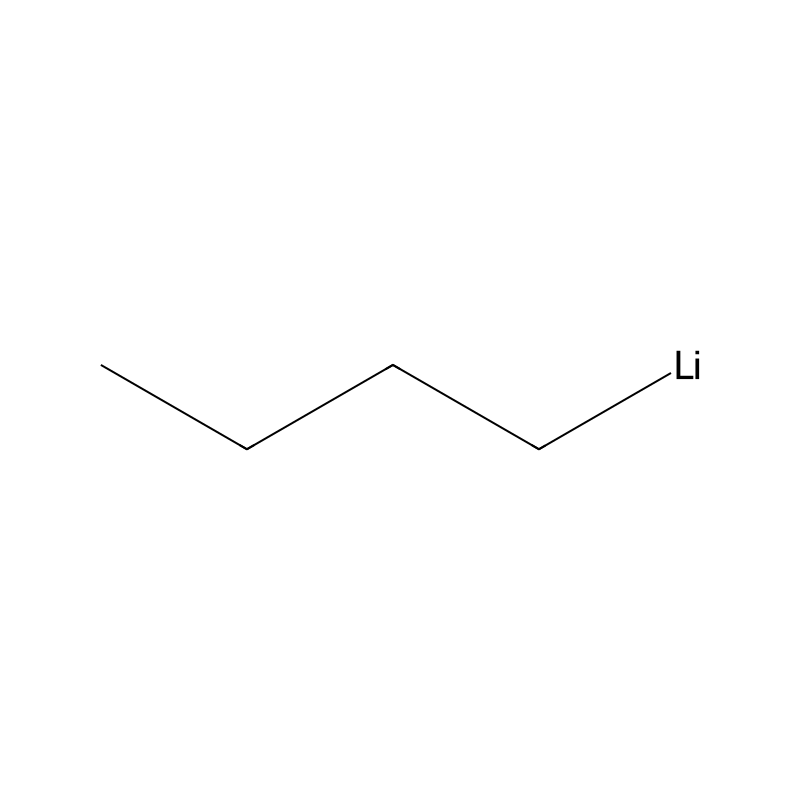
标识与物理属性
| CAS No. | 109-72-8 |
|---|---|
| 分子式 | C4H9Li |
| 平均分子量 | 64.1 g/mol |
| 单同位素质量 | 64.08642872 g/mol |
| SMILES | [Li]CCCC |
| InChIKey | MZRVEZGGRBJDDB-UHFFFAOYSA-N |
| PubChem CID | 53627823 |
| 中文名 | 正丁基锂 |
化学与物理性质
| 极性表面积 | 0 |
|---|---|
| 氢键供体 | 0 |
| 氢键受体 | 0 |
| 可旋转键 | 1 |
| 重原子 | 5 |
| 形式电荷 | 0 |
| 复杂度 | 4 |
| 密度 | 0.765 @25 °C0.68 g/mL at 20 °C |
| 熔点 | -76 °C-95 °C |
| Physical Description | Wet SolidLiquidAvailable in solution of C5 to C7 hydrocarbons[Hawley] In cyclohexane solution: Water-white to pale yellow liquid with a petroleum-like odor[CAMEO] In n-hexane solution: Yellow liquid[MSDSonline] |
| 沸点 | 80 °C |
| 蒸气压 | 163 hPa ( 20 °C) |
| 闪点 | 10 °F |
| 储存条件 | 2-8°C |
| 溶解性 | Miscible with diethyl ether and cyclohexane.vigorous reaction |
| 形态 | liquid |
| 比重 | 0.695 |
| 颜色 | yellow |
| 气味 | Odor of the solvent |
| 爆炸极限 | 1.2-7.8% (v/v) |
| 敏感性 | Air & Moisture Sensitive |
| 水解敏感性 | 8: reacts rapidly with moisture, water, protic solvents |
| BRN | 1209227 |
| InChI | 1S/C4H9.Li/c1-3-4-2/h1,3-4H2,2H3 |
| InChIKey | MZRVEZGGRBJDDB-UHFFFAOYSA-N |
| SMILES | [Li]CCCC |
| LogP(油水分配系数) | 1.25-2.31 |
| CAS 数据库 | 109-72-8(CAS DataBase Reference) |
| NIST化学物质信息 | Butyl lithium(109-72-8) |
| EPA化学物质信息 | Lithium, butyl- (109-72-8) |
化学性质
正丁基锂,化学式 C4H9Li。分子量64.06。无色液体。也有呈粉状者。在空气中易自燃。沸点80-90℃(0.013Pa),比重0.765(25℃)。遇水分解。溶于戊烷、己烷、苯等多数有机溶剂。在乙醚溶液中呈 五聚体,发生缓慢反应,生成乙氧基锂、丁烷和乙烯。约在100℃时缓慢分解,150 ℃时迅速分解,主要产物为丁烯、丁烷和 氢化锂。由金属锂与溴代丁烷或氯代丁烷在己烷或乙醚中经低温反应制得。为重要的有机合成试剂,亦用作异戊二烯、丁二 烯、苯乙烯等的聚合催化剂和火箭燃料组分等。
安全与法规
| GHS 分类 | This chemical does not meet GHS hazard criteria for 16.1% (55 of 341) of reports.DangerH250 (83.9%): Catches fire spontaneously if exposed to air [Danger Pyrophoric liquids]H260 (83%): In contact with water releases flammable gases which may ignite spontaneously [Danger Substances and mixtures which in contact with water, emit flammable gases]H302 (10.6%): Harmful if swallowed [Warning Acute toxicity, oral]H314 (83.9%): Causes severe skin burns and eye damage [Danger Skin corrosion/irritation]H317 (10.6%): May cause an allergic skin reaction [Warning Sensitization, Skin]H318 (70.4%): Causes serious eye damage [Danger Serious eye damage/eye irritation]P210, P222, P223, P231, P231+P232, P233, P260, P261, P264, P264+P265, P270, P272, P280, P301+P317, P301+P330+P331, P302+P335+P334, P302+P352, P302+P361+P354, P304+P340, P305+P354+P338, P316, P317, P321, P330, P333+P317, P362+P364, P363, P370+P378, P402+P404, P405, and P501 (click each P-code to see the statement)Aggregated GHS information provided per 341 reports by companies from 14 notifications to the ECHA C&L Inventory. Each notification may be associated with multiple companies.Reported as not meeting GHS hazard criteria per 55 of 341 reports by companies.There are 13 notifications provided by 286 of 341 reports by companies with hazard statement code(s).Information may vary between notifications depending on impurities, additives, and other factors. The percentage value in parenthesis indicates the notified classification ratio from companies that provide hazard codes. Only hazard codes with percentage values above 10% are shown. For more detailed information, please visit ECHA C&L website. |
|---|---|
| 法规信息 | Chemical: Lithium, butyl-Lithium, butyl- is listed on the EPA's Chemical Data Reporting (CDR) system. Manufacturers and importers of Lithium, butyl- are required to report information about their production and use of this chemical to the EPA under the Toxic Substances Control Act (TSCA). (40 eCFR Part 711)Status: Active Update: 07-04-2023 https://echa.europa.eu/registration-dossier/-/registered-dossier/14573Lithium, butyl-, 15% in hexane: HSNO Approval: HSR001268 Approved with controlsThe New Jersey Worker and Community Right to Know Act requires public and private employers to provide information about hazardous substances at their workplaces. (N.J.S.A. 34:5A-1 et. seq.) |
| 其他安全信息 | IMAP assessments - Lithium, butyl-: Environment tier I assessmentIMAP assessments - Lithium, butyl-: Human health tier I assessment |
| 危害概述 | An irritantSolid and solution highly flammableIgnites in moist air[Hawley] May cause burnsMay ignite upon exposure to airReacts with water evolving heat and flammable gases[CAMEO] PyrophoricGives off flammable gas in contact with waterCorrosive to skin and eyes[eChemPortal: ERMA] Liberates extremely flammable gases on contact with waterA corrosive substance that can cause injury to the skin, eyes, and respiratory tractInhalation may cause chemical pneumonitis[MSDSonline] See Lithium. |
| Hazard Classes and Categories | Pyr. Liq. 1 (83.9%)Water-react. 1 (83%)Acute Tox. 4 (10.6%)Skin Corr. 1 (83.9%)Skin Sens. 1 (10.6%)Eye Dam. 1 (70.4%)Flammable liquids - Category 2Pyrophoric liquids - Category 1Substances and mixtures which, in contact with water, emit flamm - Category 1Reproductive toxicity - Category 1ASkin corrosion/irritation - Category 1Serious eye damage/eye irritation - Category 1Reproductive toxicity - Category 1A, Additional category: Effects on or via lactationSpecific target organ toxicity - Single exposure - Category 1 (nervous system, respiratory organs), Category 3 (narcotic effects)Specific target organ toxicity - Repeated exposure - Category 1 (nervous system, respiratory organs)Flammable agents - 4th degree, Reactive agents - 2nd degree |
| CSL Reaction Information | CSL00127Perfluorethyllithium + Phosphorus Trichloride,Phosphorus + N-BUTYLLITHIUM + CHLOROPENTAFLUOROETHANEAvoid temperatures below -90 CSubstitutionSeveral times in our laboratory, we have experienced a violent decomposition of the ethereal C2F5Cl/n-BuLi solution after the addition of just a few drops of (R)nPCl3=n. In each of these cases, the metal-halogen exchange temperature was maintained below -90 C. We believe that this problem is due to a buildup of starting reagents at low temperatures.C&EN |
| Protective Action Criteria (PAC) | 0.18 [mg/m3]4.5 [mg/m3]27 [mg/m3] |
| 不良影响 | Neurotoxin - Other CNS neurotoxinNephrotoxin - The chemical is potentially toxic to the kidneys in the occupational setting.Dermatotoxin - Skin burns.Toxic Pneumonitis - Inflammation of the lungs induced by inhalation of metal fumes or toxic gases and vapors. |
| F | 3-10 |
| 水危害等级(WGK) | 3 |
| TSCA 清单状态 | TSCA listed |
| 毒性 | There is little toxicity data available for the butyllithiumsfor data on ether and hydrocarbon solvents, see the appropriate LCSSs. |
| 包装类别 | I |
| 危险类别 | 4.3Aquatic Chronic 2Asp. Tox. 1Eye Dam. 1Flam. Liq. 2Pyr. Liq. 1Skin Corr. 1BSTOT SE 3Water-react 1 |
| 储存类别 | 4.2 - Pyrophoric and self-heating hazardous materials |
| 安全说明(S) | 6-9-16-26-36/37/39-45-61-62-6A-46-43B-43-60-33-29-5 |
| 海关编码 | 29319090 |
| 自燃温度 | 240°C |
| 危险品标志 | F,C,N |
| 危险类别码(R) | 14/15-17-34-48/20-51/53-62-65-67-63-35-11-15-50/53-66 |
| 运输编号(UN) | UN 3399 4.3/PG 1 |
类别
遇水自燃物质
爆炸物危险特性
与苯乙烯聚合可能爆炸
可燃性危险特性
浓度大于20%者在空气中自燃; 与水, 二氧化碳接触自燃; 遇热, 明火易燃
储运特性
库房通风低温干燥; 防水, 防二氧化碳
用途与应用
用途
正丁基锂溶液主要用于医药中间体,有机反应催化剂中阴离子聚合引发剂,同时还应用于农药、合成橡胶、香精合成、液晶材料等行业和领域。丁基锂在有机合成上用途非常广泛,增长碳链,是一种比较基础的实验室用产品。 1、金属化反应:R-H + n-Butyl-Li → R-Li + Butane,生成的物质烷基锂可与多种物质发生反应。 2、直接进行金属化反应:连接取代基的芳香化合物与正丁基锂反应,金属锂可连接到该芳香族化合物中。 3、亲核加成和取代反应 4、卤素-金属置换
制备与合成方法
生产方法
在氮气下,使纯乙醚与剪碎的锂丝冷至-10℃,开动搅拌,滴加溴丁烷的乙醚溶液。滴加完毕,缓缓温热到0-10℃,反应1-2h,过滤即得正丁基锂乙醚溶液(商品),产率80%-90%。