2,2',3,3',6-戊氯联苯
2,2',3,3',6-Pentachlorobiphenyl
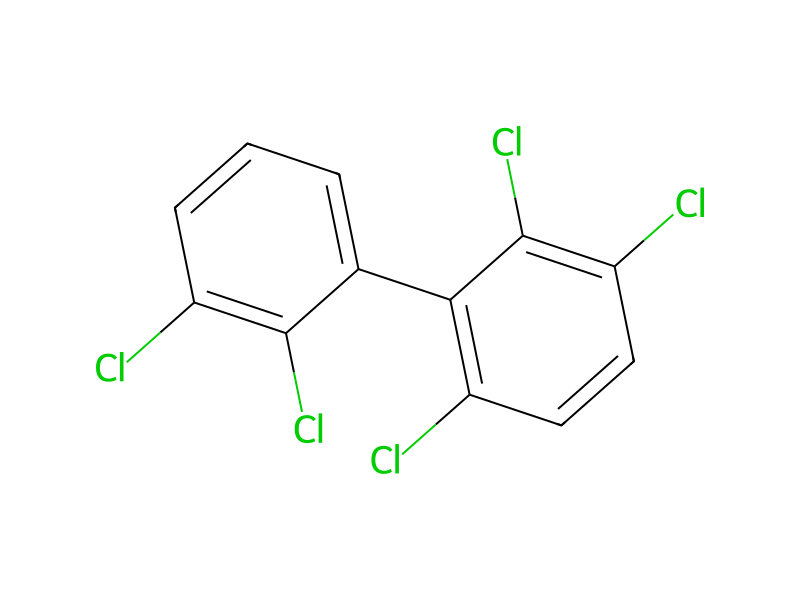
基本信息
- CAS
52663-60-2- 标准SMILES
Clc1cccc(-c2c(Cl)ccc(Cl)c2Cl)c1Cl- InChIKey
QVWUJLANSDKRAH-UHFFFAOYSA-N- 分子式
- C12H5Cl5
- 平均分子量
- 326.4 g/mol
- 单同位素质量
- 323.883389
概述
2,2',3,3',6-Pentachlorobiphenyl is one of 209 polychlorinated biphenyls (PCBs). PCBs are a group of synthetic organic compounds with 1-10 chlorine atoms attached to biphenyl. They were manufactured as commercial mixtures but banned in the 1970's because they were found to bioaccumulate and cause harmful health effects. However, PCBs do not break down readily and are still found in the environment. (L4)
名称与标识
- 首选名称
- 2,2',3,3',6-Pentachlorobiphenyl
- IUPAC
- 1,2,4-trichloro-3-(2,3-dichlorophenyl)benzene
- 中文名
- 2,2',3,3',6-戊氯联苯
- 英文名
- 2,2',3,3',6-Pentachlorobiphenyl
- 分子式
- C12H5Cl5
- 分子量
- 326.43
名称与别名
2,2',3,3',6-PENTACHLOROBIPHENYL52663-60-2PCB 842,2',3,3',6-Pentachloro-1,1'-biphenyl1,2,4-trichloro-3-(2,3-dichlorophenyl)benzeneVIF9S75RZVDTXSID0073536RefChem:53428DTXCID4041234690-209-91,1'-Biphenyl, 2,2',3,3',6-pentachloro-UNII-VIF9S75RZV
展开更多名称
2,2',3,3',6-五氯联苯2,2',3,3',6-戊氯联苯环己烷中2,2`,3,3`,6-五氯联苯PCB NO. 84,10NG/UL 标准品2,2',3,3',6-五氯联苯 35 UG/ML 异辛烷溶液PCB NO 84PCB No. 84 in Cyclohexane
Pcb No. 84SCHEMBL4447012SCHEMBL306219412,2',3,3',6-Pentachloro-1,1'-biphenyl #Q27291845
数据库标识
- CAS
52663-60-2- PubChem CID
- 40468
- DTXSID
DTXSID0073536- UNII
性质
结构计算性质
- XLogP
- 6
- 极性表面积
- 0 Ų
- 氢键供体
- 0
- 氢键受体
- 0
- 可旋转键
- 1
- 重原子
- 17
- 形式电荷
- 0
- 复杂度
- 259
实验与物化性质
LogP6.04
Collision Cross Section158.5 Ų [M]+ [CCS Type: TIMS, Method: calibration with PAHs]
物理化学性质
- 熔点
- 95.86 °C · 95.86°C (estimate)
- 沸点
- 412.3 °C · 412.3°C (rough estimate)
- 密度
- 1.522 · 1.5220 (rough estimate)
- 折射率
- 1.62 · 1.6200 (rough estimate)
- 水溶解性
- 47.02 ug/L · 47.02ug/L(20 ºC)
- Henry's Law Constant
- 5.7 · 5.7×10-2 mol/(m3Pa) at 25℃, Murphy et al. (1987)
- EPA化学物质信息
- 2 · 2,2',3,3',6-Pentachlorobiphenyl (52663-60-2)
安全与法规
安全信息仅供参考,不能替代供应商安全技术说明书(SDS)、适用法规与专业评估。
GHS分类
GHS Classification
This chemical does not meet GHS hazard criteria for 100% (3 of 3) of all reports.
Not Classified
Aggregated GHS information provided per 3 reports by companies from 1 notifications to the ECHA C&L Inventory.
危害信息
Hazard Classes and CategoriesNot Classified
安全与防护
Minimum Risk LevelIntermediate Oral: 0.03 ug/kg/day (L134)
毒理信息
Treatment
There are no specific treatments for PCB poisoning, since it is not usually recognized until after substantial chronic exposure. Only preventing further exposure and treating the observed symptoms can be done. Acute inhalation can be treated by administering oxygen. (L4)
Health Effects
The most common health effects of PCBs are skin conditions such as chloracne and rashes. Chronic PCB exposure has also been shown to cause liver, stomach and kidney, damage, jaundice, edema, anemia, changes in the immune system, behavioral alterations, and impaired reproduction. (L4)
Exposure RoutesOral (L4) ; inhalation (L4) ; dermal (L4)
Toxicity Summary
The mechanism of action varies with the specific PCB. Dioxin-like PCBs bind to the aryl hydrocarbon receptor, which disrupts cell function by altering the transcription of genes, mainly be inducing the expression of hepatic Phase I and Phase II enzymes, especially of the cytochrome P450 family. Most of the toxic effects of PCBs are believed to be results of Ah receptor binding. Other PBCs are believed to interfere with calcium channels and/or change brain dopamine levels. PCBs can also cause endocrine disurption by altering the production of thyroid hormones and binding to estrogen receptors, which can stimulate the growth of certain cancer cells and produce other estrogenic effects, such as reproductive dysfunction. They will bioaccumulate by binding to receptor proteins such as uteroglobin. (A3, A4, A30, A66)
化学与工业
药理信息
Metabolism/Metabolites
PCBs are absorbed via inhalation, oral, and dermal routes of exposure. They are trasported in the blood, often bound to albumin. Due to their lipophilic nature they tend to accumulate in lipid-rich tissues, such as the liver, adipose, and skin. Metabolism of PCBs is very slow and varies based on the degree and position of chlorination. PCBs are metabolized by the microsomal monooxygenase system catalyzed by cytochrome P-450 enzymes to polar metabolites that can undergo conjugation with glutathione and glucuronic acid. The major metabolites are hydroxylated products which are excreted in the bile and faeces. The slow metabolism of PCBs means they tend to accumulate in body tissues. (L4, T6)
用途与制造
Uses
PCBs were used as coolants and lubricants in transformers, capacitors, and other electrical devices (such as fluorescent lights and refridgerators) produced before 1977. PCBs may contaminate the air and water near hazardous waste sites. In addition, PCBs bioaccumulate in the environment and may be found in fish, meat, and dairy products. (L4)
相关反应
0 条
当前筛选下没有反应记录。
化合物笔记
加载中…