

基本信息
- 标准SMILES
[I-].[K+]- InChIKey
NLKNQRATVPKPDG-UHFFFAOYSA-M- 分子式
- IK
- 平均分子量
- 166.0028 g/mol
- 单同位素质量
- 165.86817968
概述
Potassium iodide is an odorless white solid. Sinks and mixes with water. (USCG, 1999)
名称与标识
- 首选名称
- Potassium Iodide
- IUPAC
- potassium iodide
- 中文名
- 碘化钾
- 英文名
- Potassium iodide
- 分子式
- KI
- 分子量
- 166
名称与别名
potassium iodide7681-11-0Thyro-BlockPimaKali iodideThyroshieldKnollideIosatKisolPotassium iodide (KI)Potassium monoiodideKalii iodidum
展开更多名称
碘化钾碘化钾作用碘化钾厂家无水碘化钾食用碘化钾超干碘化钾高纯碘化钾色谱碘化钾色谱碘化钾食品级碘化钾KIIODIDE5470/11/1IODINE SOLUTIONLUGOLPotassium iodide solutionIODUMThyrojod
Asmofug EPotassium diiodideDipotassium diiodideKaliumiodidThyrosafeJoptonePotideIodure de potassium
数据库标识
- CAS
7681-11-0- PubChem CID
- 4875
- DTXSID
DTXSID7034836- ChEMBL
CHEMBL1141- ChEBI
CHEBI:8346- UNII
- 1C4QK22F9J
- EC Number
- 231-659-4
- Nikkaji
- J43.931B
性质
结构计算性质
- 极性表面积
- 0 Ų
- 氢键供体
- 0
- 氢键受体
- 1
- 可旋转键
- 0
- 重原子
- 2
- 形式电荷
- 0
- 复杂度
- 2
实验与物化性质
Chemical ClassesOther Classes -> Halogens, Inorganic Compounds
Polymers
Plastics -> N.a.
Plastics -> Other stabilisers
CosmeticsAntimicrobial
pHAqueous solution in neutral or usually alkaline, pH 7-9
SpringerMaterials Propertiespseudobinary system
Pesticides
Fungicides
Active substance -> EU Pesticides database: Not approved
TasteSTRONG BITTER SALINE
Food AdditivesNUTRIENT SUPPLEMENT, TRACER -> FDA Substance added to food
Density
3.13 at 59 °F (USCG, 1999) - Denser than water; will sink
3.12 g/cu cm
3.13 @25 °C
Color/Form
Colorless or white, cubical crystals, white granules, or powder
HEXAHEDRAL CRYSTALS, EITHER TRANSPARENT OR SOMEWHAT OPAQUE
Solubility
Slightly soluble in ethanol
148 g/100 g water at 25 °C
127.5 g sol in 100 cc water at 0 °C; 1.88 g sol in 100 cc alcohol at 25 °C; 1.31 g sol in 100 cc acetone at 25 °C; sol in ether, ammonia
1 gram dissolves in 0.7 mL water, 0.5 mL boiling water; 51 mL absolute ethanol; 22 mL alcohol; 8 mL methanol; 75 mL acetone; 2 mL glycerol; about 2.5 mL glycol
Human Drugs
FDA approved drugs -> Active ingredient
FDA approved drugs -> Active ingredient
Antifungal medicines
物理化学性质
- 熔点
- 681 °C · 681 °C (lit.)
- 沸点
- 184 °C · 184 °C(lit.)
- 堆积密度
- 1500 kg/m3 · 1500kg/m3
- 密度
- 1.7 g/cm3 · 1.7 g/cm3
- 蒸气密度
- 9 · 9 (vs air)
- 蒸气压
- 0.31 mm · 0.31 mm Hg ( 25 °C)
- 折射率
- 1.677 · 1.677
- 闪点
- 1330 °C · 1330°C
- 储存条件
- 2 · 2-8°C
- 溶解度
- 2 O: · H2O: 1 M at 20 °C, clear, colorless
- 形态
- particles (round)
- 酸度系数(pKa)
- 0.06 · 0.06[at 20 ℃]
- 比重
- 3.13 · 3.13
- 颜色
- Yellow
- Flame Color
- Violet or light purple
- 气味 (Odor)
- odorless
- PH值
- 6 · 6.0-9.0 (25℃, 1M in H2O)
- 生物来源
- rabbit
- 水溶解性
- 1.43 kg/L · 1.43 kg/L
- 热导率
- 2.887 W/ · 2.887 W/(m·K)
- 比热容
- 0.32 J/ · Cp(crystal): 0.32 J/(g·K), at 25℃
- 敏感性
- Hygroscopic
- Merck
- 14 · 14,7643
- 介电常数
- 5.12 · 5.1200000000000001
- BCS Class
- 1 · 1
- 稳定性
- Stable. Protect from light and moisture. Incompatible with strong reducing agents, strong acids, steel, aluminium, alkali metals, brass, magnesium, zinc, cadmium, copper, tin, nickel and their alloys.
- 化妆品成分功效
- ANTIMICROBIAL
- InChI
- 1S/HI.K/h1H;/q;+1/p-1
- InChIKey
- NLKNQRATVPKPDG-UHFFFAOYSA-M
- SMILES
- [K+].[I-]
- LogP
- -0.958 at · -0.958 at 25℃
- CAS 数据库
- 7681 · 7681-11-0(CAS DataBase Reference)
- NIST化学物质信息
- Potassium iodide(7681-11-0)
- EPA化学物质信息
- Potassium iodide (7681-11-0)
- Absorption
- 273 nm · cut-off at 273nm in H2O at 1M
化学性质
碘化钾俗称灰碘。化学式 KI。分子量166.00。无色或白色立方晶体。味咸而苦。湿空气中稍有潮解,露于空气中易被氧化,析出碘而逐渐泛黄,光和湿气能加速其分解。比重3.13。熔点 681℃。沸点1,330℃。易溶于水,溶于乙醇、甲醇、丙酮、甘油和液氨,微溶于乙醚。其水溶液呈中性或微碱性,水溶液能使碘溶解,生成三碘离子(I3-)。其水溶液亦易氧化变黄,酸性时更容易,加碱则可阻止。由氢碘酸与碳酸氢钾作用而得。用作分析试剂和制碘化物、染料的原料,也用作照相感光乳化剂、食品添加剂等。医学上用来防治甲状腺肿 (大脖子病),也用于甲状腺机能亢进的手术前准备,此外尚可用作祛痰、利尿药等。
安全与法规
GHS分类
GHS Classification
This chemical does not meet GHS hazard criteria for 13% (94 of 721) of reports.
Danger
H302 (16.2%): Harmful if swallowed [Warning Acute toxicity, oral]
P233, P260, P261, P264, P264+P265, P270, P271, P272, P273, P280, P284, P301+P317, P302+P352, P304+P340, P305+P351+P338, P319, P321, P330, P332+P317, P333+P317, P337+P317, P342+P316, P362+P364, P391, P403, and P501 (click each P-code to see the statement)
Aggregated GHS information provided per 721 reports by companies from 53 notifications to the ECHA C&L Inventory. Each notification may be associated with multiple companies.
Danger
危害信息
Regulatory Information
Chemical: Potassium iodide (KI)
Commission Regulation (EU) No 188/2011
Potassium iodide (KI) is listed on the EPA's Chemical Data Reporting (CDR) system. Manufacturers and importers of Potassium iodide (KI) are required to report information about their production and use of this chemical to the EPA under the Toxic Substances Control Act (TSCA). (40 eCFR Part 711)
05/751/EC, Reg. (EU) No 116/2014
Status: Active Update: 20-02-2023 https://echa.europa.eu/registration-dossier/-/registered-dossier/13207
Potassium iodide: Does not have an individual approval but may be used under an appropriate group standard
Other Safety InformationIMAP assessments - Potassium iodide (KI): Environment tier I assessment
Health HazardsMay irritate eyes or open cuts. (USCG, 1999)
Hazards Summary
A skin and eye irritant; [CAMEO] Emergency treatment: Iodides; After ingestion, hypersensitivity reactions, e.g., angioedema and urticaria, may occur; Chronic ingestion may cause various skin diseases, goiter, hypothyroidism, and congenital thyroid effects; [HSDB] May cause sensitization by skin contact; [Quick CPC] See Iodine for the TLV of Iodides.
FDA Requirements
The Approved Drug Products with Therapeutic Equivalence Evaluations List identifies currently marketed over-the-counter drug products, incl potassium iodide, approved on the basis of safety and effectiveness by FDA under sections 505 of the Federal Food, Drug, and Cosmetic Act.
Potassium iodide is a food additive permitted for direct addition to food for human consumption, as long as 1) the quantity of the substance added to food does not exceed the amount reasonably required to accomplish its intended physical, nutritive, or other technical effect in food, and 2) any substance intended for use in or on food is of appropriate food grade and is prepared and handled as a food ingredient.
Substance added directly to human food affirmed as generally recognized as safe (GRAS).
Potassium iodide used as a nutrient and/or dietary supplement in animal drugs, feeds, and related products is generally recognized as safe when used in table salt as a source of dietary iodine in accordance with good manufacturing or feeding practice.
For more FDA Requirements (Complete) data for POTASSIUM IODIDE (6 total), please visit the HSDB record page.
Reactive GroupSalts, Basic
Special ReportsFDA, Center for Drug Evaluation and Research; Guidance Document: Potassium Iodide as a Thyroid Blocking Agent in Radiation Emergencies; December 2001. Available at http://www.fda.gov/cder/guidance/4825fnl.htm as of March 12, 2006
FIFRA Requirements
Residues of the following chemical substances are exempted from the requirement of a tolerance when used in accordance with good manufacturing practice as ingredients in an antimicrobial pesticide formulation, provided that the substance is applied on a semi-permanent or permanent food-contact surface (other than being applied on food packaging) with adequate draining before contact with food. (a) The following chemical substances when used as ingredients in an antimicrobial pesticide formulation may be applied to: Food-contact surfaces in public eating places, dairy-processing equipment, and food-processing equipment and utensils. Potassium iodide is included on this list. Limit: When ready for use, the total end-use concentration of all iodide-producing chemicals in the solution is not to exceed 25 ppm of titratable iodine.
Residues of the following chemical substances are exempted from the requirement of a tolerance when used in accordance with good manufacturing practice as ingredients in an antimicrobial pesticide formulation, provided that the substance is applied on a semi-permanent or permanent food-contact surface (other than being applied on food packaging) with adequate draining before contact with food. ... (b) The following chemical substances when used as ingredients in an antimicrobial pesticide formulation may be applied to: Dairy processing equipment, and food-processing equipment and utensils. Potassium iodide is included on this list. Limit: When ready for use, the total end-use concentration of all iodide-producing chemicals in the solution is not to exceed 25 ppm of titratable iodine.
Residues of the following chemical substances are exempted from the requirement of a tolerance when used in accordance with good manufacturing practice as ingredients in an antimicrobial pesticide formulation, provided that the substance is applied on a semi-permanent or permanent food-contact surface (other than being applied on food packaging) with adequate draining before contact with food. ... (c) The following chemical substances when used as ingredients in an antimicrobial pesticide formulation may be applied to: Food-processing equipment and utensils. Potassium iodide is included on this list. Limit: When ready for use, the total end-use concentration of all iodide-producing chemicals in the solution is not to exceed 25 ppm of titratable iodine.
As the federal pesticide law FIFRA directs, EPA is conducting a comprehensive review of older pesticides to consider their health and environmental effects and make decisions about their future use. Under this pesticide reregistration program, EPA examines health and safety data for pesticide active ingredients initially registered before November 1, 1984, and determines whether they are eligible for reregistration. In addition, all pesticides must meet the new safety standard of the Food Quality Protection Act of 1996. Pesticides for which EPA had not issued Registration Standards prior to the effective date of FIFRA '88 were divided into three lists based upon their potential for human exposure and other factors, with List B containing pesticides of greater concern and List D pesticides of less concern. Potassium Iodide is found on List C. Case No: 3080; Pesticide type: fungicide, herbicide, antimicrobial; Case Status: OPP is reviewing data from the pesticide's producers regarding its human health and/or environmental effects, or OPP is determining the pesticide's eligibility for reregistration and developing the RED document.; Active ingredient (AI): potassium iodide; AI Status: The producers of the pesticide have made commitments to conduct the studies and pay the fees required for reregistration, and are meeting those commitments in a timely manner.
Reactivity ProfilePotassium iodide is a weak reducing agent, and may react with strong or weak oxidizing agents.
Air and Water ReactionsWater soluble.
Hazard Classes and Categories
Acute Tox. 4 (16.2%)
Serious eye damage/eye irritation - Category 2B
Serious eye damage/eye irritation - Category 2B
State Drinking Water Guidelines(ME) MAINE 340 ug/L /Iodide ion/
安全与防护
First AidFlush all affected areas with water. (USCG, 1999)
Storage ConditionsStore below 40 °C (104 °F), preferably between 15 and 30 °C (59 and 86 °F), unless otherwise specified by manufacturer. Store in a tight container.
Disposal Methods
SRP: The most favorable course of action is to use an alternative chemical product with less inherent propensity for occupational exposure or environmental contamination. Recycle any unused portion of the material for its approved use or return it to the manufacturer or supplier. Ultimate disposal of the chemical must consider: the material's impact on air quality; potential migration in soil or water; effects on animal, aquatic, and plant life; and conformance with environmental and public health regulations.
Allowable Tolerances
Residues of the following chemical substances are exempted from the requirement of a tolerance when used in accordance with good manufacturing practice as ingredients in an antimicrobial pesticide formulation, provided that the substance is applied on a semi-permanent or permanent food-contact surface (other than being applied on food packaging) with adequate draining before contact with food. (a) The following chemical substances when used as ingredients in an antimicrobial pesticide formulation may be applied to: Food-contact surfaces in public eating places, dairy-processing equipment, and food-processing equipment and utensils. Potassium iodide is included on this list. Limit: When ready for use, the total end-use concentration of all iodide-producing chemicals in the solution is not to exceed 25 ppm of titratable iodine.
Residues of the following chemical substances are exempted from the requirement of a tolerance when used in accordance with good manufacturing practice as ingredients in an antimicrobial pesticide formulation, provided that the substance is applied on a semi-permanent or permanent food-contact surface (other than being applied on food packaging) with adequate draining before contact with food. ... (b) The following chemical substances when used as ingredients in an antimicrobial pesticide formulation may be applied to: Dairy processing equipment, and food-processing equipment and utensils. Potassium iodide is included on this list. Limit: When ready for use, the total end-use concentration of all iodide-producing chemicals in the solution is not to exceed 25 ppm of titratable iodine.
Residues of the following chemical substances are exempted from the requirement of a tolerance when used in accordance with good manufacturing practice as ingredients in an antimicrobial pesticide formulation, provided that the substance is applied on a semi-permanent or permanent food-contact surface (other than being applied on food packaging) with adequate draining before contact with food. ... (c) The following chemical substances when used as ingredients in an antimicrobial pesticide formulation may be applied to: Food-processing equipment and utensils. Potassium iodide is included on this list. Limit: When ready for use, the total end-use concentration of all iodide-producing chemicals in the solution is not to exceed 25 ppm of titratable iodine.
Threshold Limit Values (TLV)0.01 [ppm], inhalable fraction and vapor (iodides)
Protective Action Criteria (PAC)
9.4 [mg/m3]
100 [mg/m3]
620 [mg/m3]
Personal Protective Equipment (PPE)Goggles or face shield. (USCG, 1999)
毒理信息
Interactions
Potassium iodide increased the toxic effect in selenium poisoning.
Concurrent use of captopril, enalapril, or lisinopril with potassium iodide may result in hyperkalemia; serum potassium concentrations should be monitored , however usual doses of potassium iodide used for radiation protection (i.e. up to 130 mg) contain negligible amounts of potassium and should not constitute a problem with ACE inhibitors.
Adverse Effects
Skin Sensitizer - An agent that can induce an allergic reaction in the skin.
Adverse effects are unlikely when KI is used at low doses and for a short time (less than two weeks). The most common side effects are on the digestive system, predominantly gastrointestinal intolerance and its bitter (metallic) taste; thus, the recommendation is to take it with juice or milk to protect against gastrointestinal irritation. However, significant side effects may occur when high doses are administered, especially for treating infectious skin disorders.
Milk ConcentrationsPotassium iodide is distributed into /human/ breast milk ...
Toxicity Summary
If iodide-induced hypothyroidism is detected, these changes are reversible by discontinuing the administration of KI. A study of 7 patients with iodide-induced hypothyroidism showed serum T4, T3, and TSH concentrations returned to normal within one month of iodide withdrawal.
Human Toxicity Excerpts
/SIGNS AND SYMPTOMS/ Iodism (chronic iodine poisoning) may follow prolonged use; symptoms include metallic taste, sore mouth, swollen eyelids sneezing, skin eruptions, nausea, vomiting, epigastric pain, and diarrhea. ... angioedema, laryngeal edema, and cutaneous hemorrhages may occur.
/SIGNS AND SYMPTOMS/ ... Serum-sickness type of hypersensitivity, such as fever, arthralgia, lymph node enlargement, and eosinophilia, may appear. Thromobotic thrombocytopenic purpura and fatal periarteritis nodosa attributed to hypersensitivity to iodide ... described. /Iodide preparations/
/SIGNS AND SYMPTOMS/ In a small proportion of individuals given large doses of iodide for long periods ... thyroid gland shows hyperplasia & is depleted of stores of iodine. Thyroid hormone corrects hypothyroidism and causes goiter to subside ... /Iodide preparation/
/SIGNS AND SYMPTOMS/ Hypersensitivity reactions to iodides may occur and may be manifested by angioedema, cutaneous and mucosal hemorrhage, and signs and symptoms resembling serum sickness, such as fever, arthralgia, lymph node enlargement, and eosinophilia. Urticaria, thrombotic thrombocytopenic purpura, and fatal periarteritis have also been attributed to iodide hypersensitivity. Hypocomplementemic vasculitis in some patients with chronic urticaria or systemic lupus erythematosus has been associated with iodide sensitivity, and some clinicians caution that potassium iodide may precipitate severe systemic illness in such patients. Jodbasedow or iodine-induced thyrotoxicosis may occur with low doses of iodides (i.e., less than 25 mg of iodine daily); this effect is uncommon in the US but more frequent in areas with endemic iodine deficiency.
For more Human Toxicity Excerpts (Complete) data for POTASSIUM IODIDE (6 total), please visit the HSDB record page.
Non-Human Toxicity Excerpts
/LABORATORY ANIMALS: Acute Exposure/ Testing of potassium iodide on rabbit eyes by injection of 3% solution into cornea has caused only slight reaction, graded 17 on a scale of 0-100. /KI solution/
/LABORATORY ANIMALS: Developmental or Reproductive Toxicity/ In female minks fed a basal diet supplemented with either 0, 10, 100, or 1000 ppm KI, gestational periods were shorter than controls. Only 2.1 kits/female mated were whelped by mink fed 100 ppm KI and none of females that received 1000 ppm KI whelped.
/GENOTOXICITY/ Oral administration of KI to pregnant rats produced significant chromosomal aberrations in embryonic liver cells, especially during days 7-14 of pregnancy.
Environmental Water Concentrations
While data specific to potassium iodide were not located(SRC, 2006), the literature suggests that some pharmaceutically active compounds originating from human and veterinary therapy are not eliminated completely in municipal sewage treatment plants and are therefore discharged into receiving waters(1). Wastewater treatment processes often were not designed to remove them from the effluent(2). Selected organic waste compounds may be degrading to new and more persistent compounds that may be released instead of or in addition to the parent compound(2). Studies have indicated that several polar pharmaceutically active compounds can leach through subsoils into aquifers(1).
Antidote and Emergency Treatment
Basic treatment: Establish a patent airway. Suction if necessary. Watch for signs of respiratory insufficiency and assist ventilations if needed. Administer oxygen by nonrebreather mask at 10 to 15 L/min. Monitor for pulmonary edema and treat if necessary ... . Monitor for shock and treat if necessary ... . Anticipate seizures and treat if necessary ... . For eye contamination, flush eyes immediately with water. Irrigate each eye continuously with normal saline during transport ... . Do not use emetics. For ingestion, rinse mouth and administer 5 ml/kg up to 200 ml of water for dilution if the patient can swallow, has a strong gag reflex, and does not drool ... . Cover skin burns with dry sterile dressings after decontamination ... . /Poison A and B/
Advanced treatment: Consider orotracheal or nasotracheal intubation for airway control in the patient who is unconscious, has severe pulmonary edema, or is in respiratory arrest. Positive pressure ventilation techniques with a bag valve mask device may be beneficial. Monitor cardiac rhythm and treat arrhythmias as necessary ... . Start an IV with D5W /SRP: "To keep open", minimal flow rate/. Use lactated Ringer's if signs of hypovolemia are present. Watch for signs of fluid overload. Consider drug therapy for pulmonary edema ... . For hypotension with signs of hypovolemia, administer fluid cautiously. Watch for signs of fluid overload ... . Treat seizures with diazepam (Valium) ... . Use proparacaine hydrochloride to assist eye irrigation ... . /Poison A and B/
Non-Human Toxicity ValuesLD50 Rats iv 285 mg/kg (approx.)
法规信息
FDA Requirements
The Approved Drug Products with Therapeutic Equivalence Evaluations List identifies currently marketed over-the-counter drug products, incl potassium iodide, approved on the basis of safety and effectiveness by FDA under sections 505 of the Federal Food, Drug, and Cosmetic Act.
Potassium iodide is a food additive permitted for direct addition to food for human consumption, as long as 1) the quantity of the substance added to food does not exceed the amount reasonably required to accomplish its intended physical, nutritive, or other technical effect in food, and 2) any substance intended for use in or on food is of appropriate food grade and is prepared and handled as a food ingredient.
Substance added directly to human food affirmed as generally recognized as safe (GRAS).
Potassium iodide used as a nutrient and/or dietary supplement in animal drugs, feeds, and related products is generally recognized as safe when used in table salt as a source of dietary iodine in accordance with good manufacturing or feeding practice.
For more FDA Requirements (Complete) data for POTASSIUM IODIDE (6 total), please visit the HSDB record page.
FIFRA Requirements
Residues of the following chemical substances are exempted from the requirement of a tolerance when used in accordance with good manufacturing practice as ingredients in an antimicrobial pesticide formulation, provided that the substance is applied on a semi-permanent or permanent food-contact surface (other than being applied on food packaging) with adequate draining before contact with food. (a) The following chemical substances when used as ingredients in an antimicrobial pesticide formulation may be applied to: Food-contact surfaces in public eating places, dairy-processing equipment, and food-processing equipment and utensils. Potassium iodide is included on this list. Limit: When ready for use, the total end-use concentration of all iodide-producing chemicals in the solution is not to exceed 25 ppm of titratable iodine.
Residues of the following chemical substances are exempted from the requirement of a tolerance when used in accordance with good manufacturing practice as ingredients in an antimicrobial pesticide formulation, provided that the substance is applied on a semi-permanent or permanent food-contact surface (other than being applied on food packaging) with adequate draining before contact with food. ... (b) The following chemical substances when used as ingredients in an antimicrobial pesticide formulation may be applied to: Dairy processing equipment, and food-processing equipment and utensils. Potassium iodide is included on this list. Limit: When ready for use, the total end-use concentration of all iodide-producing chemicals in the solution is not to exceed 25 ppm of titratable iodine.
Residues of the following chemical substances are exempted from the requirement of a tolerance when used in accordance with good manufacturing practice as ingredients in an antimicrobial pesticide formulation, provided that the substance is applied on a semi-permanent or permanent food-contact surface (other than being applied on food packaging) with adequate draining before contact with food. ... (c) The following chemical substances when used as ingredients in an antimicrobial pesticide formulation may be applied to: Food-processing equipment and utensils. Potassium iodide is included on this list. Limit: When ready for use, the total end-use concentration of all iodide-producing chemicals in the solution is not to exceed 25 ppm of titratable iodine.
As the federal pesticide law FIFRA directs, EPA is conducting a comprehensive review of older pesticides to consider their health and environmental effects and make decisions about their future use. Under this pesticide reregistration program, EPA examines health and safety data for pesticide active ingredients initially registered before November 1, 1984, and determines whether they are eligible for reregistration. In addition, all pesticides must meet the new safety standard of the Food Quality Protection Act of 1996. Pesticides for which EPA had not issued Registration Standards prior to the effective date of FIFRA '88 were divided into three lists based upon their potential for human exposure and other factors, with List B containing pesticides of greater concern and List D pesticides of less concern. Potassium Iodide is found on List C. Case No: 3080; Pesticide type: fungicide, herbicide, antimicrobial; Case Status: OPP is reviewing data from the pesticide's producers regarding its human health and/or environmental effects, or OPP is determining the pesticide's eligibility for reregistration and developing the RED document.; Active ingredient (AI): potassium iodide; AI Status: The producers of the pesticide have made commitments to conduct the studies and pay the fees required for reregistration, and are meeting those commitments in a timely manner.
State Drinking Water Guidelines(ME) MAINE 340 ug/L /Iodide ion/
安全数据
- F
- 10
- wgk
- 1
- tsca
- TSCA listed
- 毒性
- Approx LD i.v. in rats: 285 mg/kg (Hildebrandt)
- RTECS号
- TT2975000
- 存储类别
- 6.1D - Non-combustible acute toxic Cat.3toxic hazardous materials or hazardous materials causing chronic effects
- 安全说明
- 22-36/38
- 海关编码
- 28276000
- 危险品标志
- Xn
- 危险性类别
- STOT RE 1 Oral
- 危险类别码
- 26
- 毒害物质数据
- 7681-11-0(Hazardous Substances Data)
化学与工业
药理信息
ATC Code
S - Sensory organs
R - Respiratory system
V - Various
QV - Various
QR - Respiratory system
QS - Sensory organs
Pharmacodynamics
It works in the thyroid gland. By inhibiting thyroid hormone synthesis and release, thyroid gland vascularity is reduced, thyroid gland tissue becomes firmer, thyroid cell size is reduced, follicular colloid reaccumulates, and bound iodine levels increase. As a protectant following radiation exposure, KI blocks the uptake of radioactive iodine isotopes by the thyroid gland thereby minimizing the risk of radiation-induced thyroid neoplasms.
Mechanism of Action
In hyperthyroid patients, potassium iodide produces rapid remission of symptoms by inhibiting the release of thyroid hormone into the circulation. The effects of potassium iodide on the thyroid gland include reduction of vascularity, a firming of the glandular tissue, shrinkage of the size of individual cells, reaccumulation of colloid in the follicles, and increases in bound iodine. These actions may facilitate thyroidectomy when the medication is given prior to surgery.
When administered prior to and following administration of radioactive isotopes and in radiation emergencies involving the release of radioactive iodine, potassium iodide protects the thyroid gland by blocking the thyroidal uptake of radioactive isotopes of iodine.
The mechanism of action of potassium iodide's antifungal activity against Sporothix schenckii has not been determined. Potassium iodide does not appear to increase monocyte or neutrophil killing of S. schenckii in in vitro studies. However, exposure of the yeast form of S. schenckii to various concentrations of iodine (iodine and potassium iodide solution) has resulted in rapid cell destruction.
Potassium iodide is thought to act as an expectorant by increasing respiratory tract secretions and thereby decreasing the viscosity of mucous ...
When potassium iodide is administered simultaneously with radiation exposure, the protectant effect is approximately 97%. Potassium iodide given 12 and 24 hours before exposure yields a 90% and 70% protectant effect, respectively. However, potassium iodide administered 1 and 3 hours after exposure results in an 85% and 50% protectant effect, respectively. Potassium iodide administered more than 6 hours after exposure is thought to have a negligible protectant effect.
Absorption, Distribution and Excretion
Although eliminated chiefly by the kidneys, it can also be found in saliva, tears, sweat, & milk. ... Some of retained iodine is stored in the thyroid & incorporated into thyroxine.
The iodide ion is excreted in part by bronchi.
Potassium iodide is distributed into /human/ breast milk ...
用途与制造
Uses
Used as a medication (for thyroid disorders and as an expectorant and antifungal agent); an iodine supplement in salt, water, and animal feeds; a deodorant for manure; and a chemical for photographic emulsions; [HSDB] Used in holography; [www.ci.tucson.az.us/arthazards/medium.html]
Photographic Processing [Category: Other]
For Potassium Iodide (USEPA/OPP Pesticide Code: 075701) ACTIVE products with label matches. /SRP: Registered for use in the U.S. but approved pesticide uses may change periodically and so federal, state and local authorities must be consulted for currently approved uses./
Manufacture of photographic emulsions; in animal and poultry feeds to the extent of 10-30 parts per million; in table salt as a source of iodine and in some drinking water; also in analytical chemistry.
Photography (precipitating silver); spectroscopy; infrared transmission; scintillation.
In treatment of hyperthyroidism /Lugol's solution/
Impurities
Impurities: sulfates and heavy metals
Typically less than 1 ppm H2O-OH in 99.9995% purity, ultradry grades
U.S. Exports
(1977) No Data
(1979) No Data
(1987) No Data
U.S. Imports
(1977) 3.18X10+7 G
(1979) 3.15X10+7 G
(1985) 3.03x10+7 g
U.S. Production
2023: 1,000,000 - <2,500,000 lb
(1977) 7.15X10+8 G
(1979) 8.42X10+8 G
(1985) 7.08x10+8 g
(1994) 10 thousand-500 thousand pounds
(1998) 10 thousand-500 thousand pounds
Consumer UsesHeat stabilizer
Industry UsesHeat transferring agent
Methods of Manufacturing
Prepd from HI and KHCO3. Purification by melting in dry hydrogen ... Continuous electrolytic process for large scale industrial prepn: Morylott, Elkins, US Patent 29899450 (1961 to Dow).
A hot aqueous solution of potassium hydroxide is treated with iodine ... to form mixture of KI & potassium iodate. Solution is concentrated by heating ... then an excess of powdered charcoal is added ... Mixture is evaporated to dryness, then ignited. Charcoal ... reduces iodate to iodide and all of the iodine is thus obtained as potassium iodide.
...Prepared by first forming ferrosoferric iodide through reaction between iron wire and iodine in presence of water. A solution of pure potassium carbonate ... added until solution is faintly alkaline, boiled for few moments, and filtered; filtrate is concentrated and set aside to crystallize. KI ... is crystallized from an alkaline solution...
... Most USA production involves absorption of iodine in KOH. Approximately 80 wt % of the potassium iodate ... crystallizes from the reaction mixture and is separated for sale. Of the remainder, 90 wt % is removed by evaporation, fusion, and heating to about 600 °C. The iodate is a poison /and/ ... must be completely removed frequently by a final reduction with carbon. After re-solution in water, further purification is carried out before recrystallization. Iron, barium, carbonate, and hydrogen sulfide are used to effect precipitation of sulfates and heavy metals.
Made by (1) Reaction of HI & KCl, followed by distillation of HCl, (2) Reaction of iodine with KOH or K2CO3 in solution, (3) Reaction of ferrous/ferric iodide with K2CO3, and (4) Evaporation of natural brines
Formulations/Preparations
Oral: Solution: 249 mg (of iodide) per 5 mL Pima Syrup, (Fleming), 1 g/mL SSKI, (Upsher-Smith) Tablets: 65 mg Thyro-Safe (scored), (Recip US); 130 mg Iosat, (Anbec). Thyro-Block (scored), (MedPointe).
Available in 99.9995% purity, ultradry grades; 45% solution
Household ProductsInformation on 29 consumer products that contain Potassium iodide in the following categories is provided:
Use Classification
Cosmetics -> Antimicrobial
Plastics -> Other stabilisers
Plastics -> Polymer Type -> N.a.
General Manufacturing Information
Plastics Material and Resin Manufacturing
Potassium iodide (KI): ACTIVE
Potassium Iodide of commerce contains about 99.5% KI.
Incompatibilities: Alkaloidal salts, chlorate hydrate, tartaric and other acids, calomel, potassium chlorate, metallic salts.
VET: Potassium iodide contains 76.45% iodine & 23.55% potassium. ...iodized salt usually contains about 0.007% iodine or about 0.01% potassium iodide. Adequate use of such salt in feed rations assures adequate iodine intake for normal nutritional needs but not necessarily for therapy.
应用领域
用途用作分析试剂、色层分析及点滴分析,也用于照相用感光乳化剂的配制、制药工业、肥皂、石版印刷、有机合成、医药、食品添加剂等。
用途碘化钾是允许使用的食品碘强化剂,我国规定可用于婴幼儿食品,使用量为0.3-0.6mg/kg。也可用于食盐,使用量为30-70mL/kg。碘作为甲状腺素的组成部分,参与畜禽所有物质的代谢和维持体内热平衡是畜禽生长、繁殖的泌乳必不可少的激素,能提高畜禽的生长性能,促进机体健康。若畜禽机体缺碘,会导致新陈代谢紊乱、机体发生障碍、甲状腺肿大,影响神经功能和皮毛色质及饲料的消化吸收,最终导致生长发育缓慢。
用途碘化钾是制造碘化物和染料的原料。用作照相感光乳化剂。在医药上用作祛痰剂、利尿剂、甲状腺肿防治剂和甲状腺机能亢进手术前用药物,也用于制造具有止痛活血作用的风湿止痛膏。是碘及某些难溶金属碘化物的助溶剂。用作家畜饲料添加剂。
用途在食品工业用作营养增补剂(碘质强化剂)。
制备方法
生产方法甲酸还原法参见碘化钾,所不同的是,要加入除砷剂和除重金属剂进行溶液净化。铁屑还原法将理论量的100%~103%苛性钾加入盛有蒸馏水的反应器中,在搅拌下分次加人定量碘,于80~90℃保温搅拌反应约1h,反应液为棕色,Ph值为6~7时,出现碘酸钾结晶。将反应液降温至30℃以下,加人铁屑使碘酸钾还原成碘化钾。开始反应剧烈,待反应缓和后,加热煮沸,继续搅拌反应1~2h,然后用10%苛性钾溶液调节Ph值为8,加入除砷剂和除重金属剂进行溶液净化,静置,过滤,除去砷和重金属等杂质,将滤液蒸发浓缩析出结晶,再经冷却结晶,离心分离,干燥,制得食用碘化钾成品,其3I2+6KOH→5KI+K1O3+3H2OKIO3+3Fe+3H2O→KI+3Fe(OH)2
生产方法甲酸还原法将工业级碘片加入带搅拌的反应器,加入水,在搅拌下缓慢加入相对密度1.3左右的氢氧化钾溶液使其反应完全。反应溶液呈紫褐色,Ph值为5~6时,容器中出现部分碘酸钾结晶。在溶液中缓慢地加人甲酸,还原碘酸钾。经甲酸还原后的溶液再加入苛性钾,调节Ph值9~10。通入蒸汽,保温1~2 h。静置、过滤除去不溶物,得到清亮滤液,经蒸发浓缩至大部分结晶析出,再经冷却结晶、离心分离,将结晶在110℃干燥,制得碘化钾成品。其6KOH+3I2→5KI+KIO3+3H2OK103+3HCOOH→KI+3H2O+3CO2↑
生产方法由碘与氢氧化钾作用成碘酸钾后,用甲酸或木炭还原而得。
生产方法目前国内大多采用甲酸还原法生产碘化钾。即以碘与氢氧化钾作用生成碘化钾和碘酸钾,再用甲酸或木炭还原碘酸钾而得。但此法中有碘酸盐生成,产品不宜作为食品添加剂。食品级碘化钾可采用铁屑法生产。铁屑法即以碘和铁屑为原料。将一份铁屑置于反应器中,加入7份(质量)的水,在65~cT(温度过高碘容易升华)分批加入3.3份的碘。加入碘片后溶液呈深红棕色,待溶液呈淡绿色后方可加入第二批碘片。然后滤去铁屑,得到碘化亚铁溶液,将此溶液加入10:3(质量)的碳酸钾水溶液,生成碳酸铁沉淀和碘化钾溶液。静置溶液,待澄清后析出上层清液,加热浓缩至相对密度1.75~1.81后再过滤;滤液继续蒸发至相对密度1.93~1.98时,趁热过滤。冷却至60~70℃静置结晶,分离后在70~90℃下干燥得无水碘化钾产品。Fe+I2→FeI2Fe I2+K2CO3—2KI+FeCO3↓
上下游产品信息
上游原料
下游产品
试剂价格
- A12704 · 1000g
- 碘化钾Potassium iodide — 3007元
- 087627 · 100g
- 碘化钾, 99.99% (metals basis)Potassium iodide, 99.99% (metals basis), Thermo Scientific Chemicals — 3697元
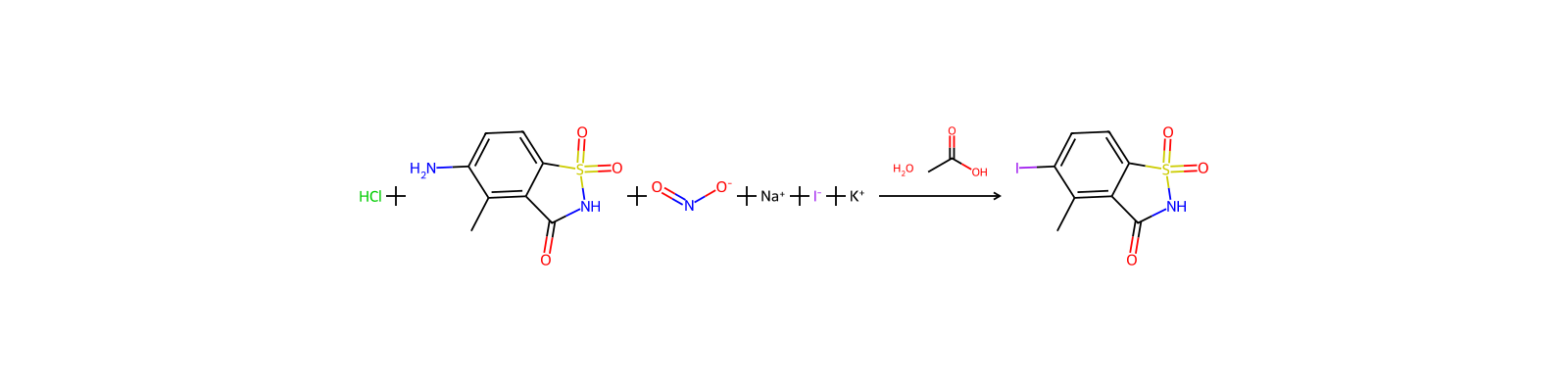
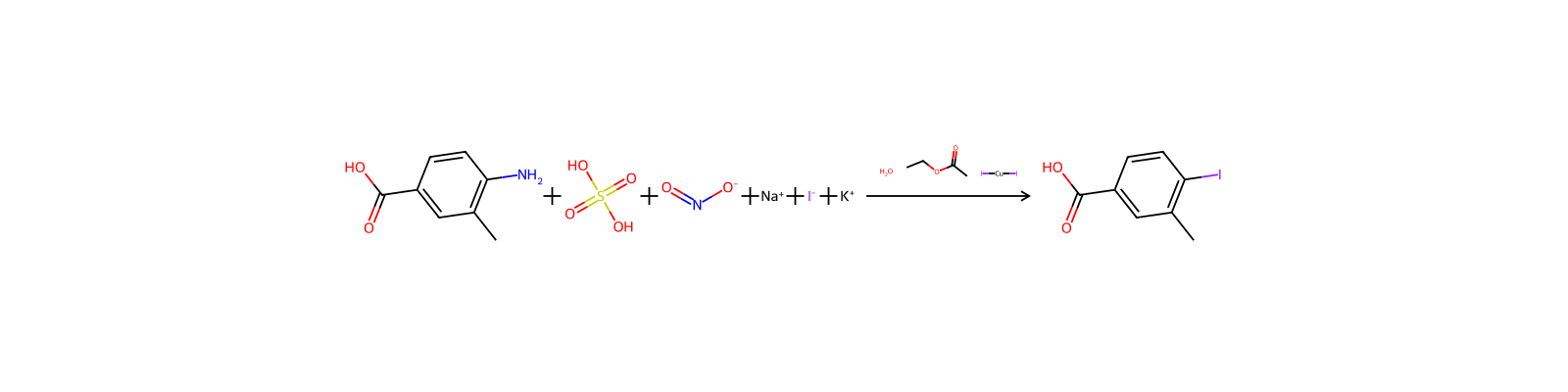
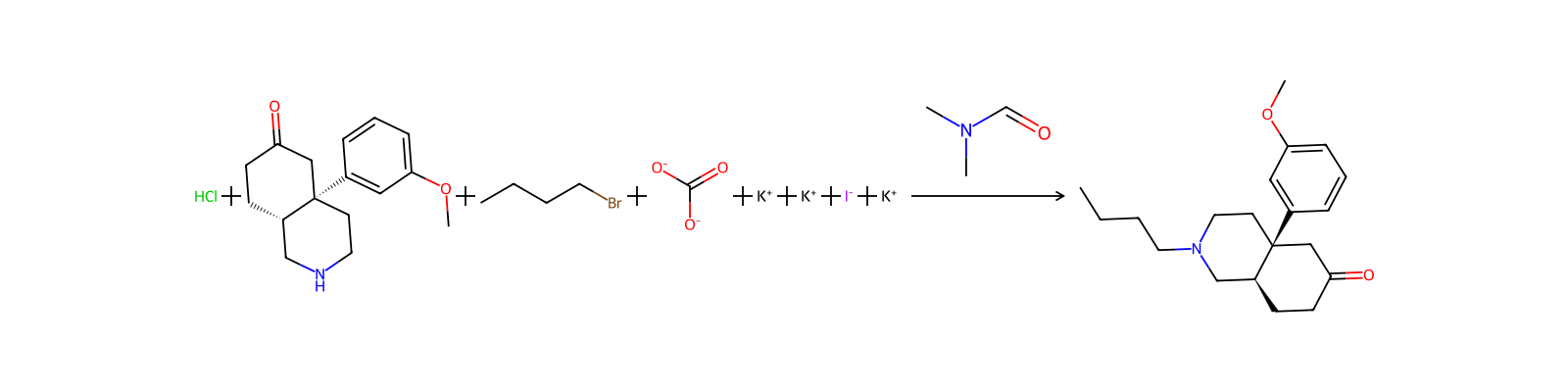
相关反应
6,731 条




关联笔记
加载中…