
基本信息
- 标准SMILES
Nc1ccccc1Cl- InChIKey
AKCRQHGQIJBRMN-UHFFFAOYSA-N- 分子式
- C6H6ClN
- 平均分子量
- 127.57 g/mol
- 单同位素质量
- 127.01887687
概述
O-chloroaniline is a clear amber liquid with an amine odor. Occurs in both alpha and beta forms. (NTP, 1992)
名称与标识
- 首选名称
- 2-Chloroaniline
- IUPAC
- 2-chloroaniline
- 中文名
- 邻氯苯胺
- 英文名
- 2-Chloroaniline
- 分子式
- C6H6ClN
- 分子量
- 127.57
名称与别名
2-CHLOROANILINE95-51-2o-Chloroaniline1-Amino-2-chlorobenzene2-ChlorophenylamineBenzenamine, 2-chloro-Fast Yellow GC Baseo-AminochlorobenzeneAniline, o-chloro-o-Chloroaminobenzeneo-ChloranilineDTXSID2021810
展开更多名称
邻氯苯胺邻氨基氯苯2-氯苯胺曲唑酮杂质232氯苯胺/GC邻氯苯胺(冷库)2-氯苯胺 溶液乙腈中2-氯苯胺2-氯苯胺 危险品邻氯苯胺 LLBAOCA2-CHLOROANALINE2-Chloranilin2-Chloroanlineo-chloro-anilin
2-Amino-1-chlorobenzeneG14I494T2FNSC-6183DTXCID001810RefChem:86446202-426-42-ChlorobenzenamineNSC 6183
数据库标识
- CAS
95-51-2- PubChem CID
- 7240
- DTXSID
DTXSID2021810- ChEMBL
CHEMBL389885- UNII
- G14I494T2F
- EC Number
- 202-426-4
- Nikkaji
- J2.759.603G、J3.952G
性质
结构计算性质
- XLogP
- 1.9
- 极性表面积
- 26 Ų
- 氢键供体
- 1
- 氢键受体
- 1
- 可旋转键
- 0
- 重原子
- 8
- 形式电荷
- 0
- 复杂度
- 74.9
实验与物化性质
Chemical Classes
Nitrogen Compounds -> Amines, Aromatic
Textile
SpringerMaterials Properties15N nuclear magnetic resonance spectrum
LogP
log Kow = 1.90
1.92
1.74
Odor
Characteristic sweet odor
Amine odor
Density
1.213 at 68 °F (NTP, 1992) - Denser than water; will sink
1.2114 at 22 °C/4 °C
1.213 g/cm³
Relative density of the vapour/air-mixture at 20 °C (air = 1): 1.00
Viscosity2.9157 cP at 20 °C
Color/Form
Amber liquid
Water-white to tan liquid
Colorless liquid
Solubility
less than 1 mg/mL at 68 °F (NTP, 1992)
Soluble in acid and in most organic solvents.
Miscible in alcohol and ether
Soluble in alcohol, ether, benzene, and acetone.
In water, 8165 mg/L at 25 °C
Solubility in water, g/100ml at 20 °C: 0.5
Flash Point
208 °F (NTP, 1992)
103 °C
103 °C (closed cup)
108 °C
Boiling Point
406 to 410 °F at 760 mmHg (NTP, 1992)
208.8 °C
209 °C
DecompositionWhen heated to decomposition, it emits toxic fumes of /hydrogen chloride and nitrogen oxides/.
Melting Point
28.5 °F (NTP, 1992)
-14 °C
-2 °C
物理化学性质
- 熔点
- 0 · 0-3 °C
- 沸点
- 208 · 208-210 °C(lit.)
- 密度
- 1.213 g/mL · 1.213 g/mL at 25 °C(lit.)
- 蒸气密度
- 4.41 · 4.41 (vs air)
- 蒸气压
- 0.5 hPa · 0.5 hPa (20 °C)
- 折射率
- 20 · n20/D 1.589
- 闪点
- 98 °C · 98 °C
- 储存条件
- 30 °C · Store below +30°C.
- 溶解度
- 5.13 g/L · water: soluble5.13g/L at 20°C
- 形态
- Liquid
- 酸度系数(pKa)
- 2.65 · 2.65(at 25℃)
- 颜色
- Clear pale yellow to brown
- 气味 (Odor)
- Characteristic odour
- 爆炸极限值(explosive limit)
- 2.4 · 2.4-14.2%(V)
- 水溶解性
- 5.13 g/L · 5.13 g/L (20 ºC)
- 热导率
- 0.148 W/ · 0.148 W/(m·K) at 25 ℃
- Merck
- 14 · 14,2118
- BRN
- 606077 · 606077
- Henry's Law Constant
- 1.9 · 1.9×100 mol/(m3Pa) at 25℃, Brockbank (2013)
- 介电常数
- 13.4 · 13.4
- InChI
- 1S/C6H6ClN/c7-5-3-1-2-4-6(5)8/h1-4H,8H2
- InChIKey
- AKCRQHGQIJBRMN-UHFFFAOYSA-N
- SMILES
- Nc1ccccc1Cl
- LogP
- 1.72 at · 1.72 at 20℃ and pH6-8
- CAS 数据库
- 95 · 95-51-2(CAS DataBase Reference)
- NIST化学物质信息
- o-Chloroaniline(95-51-2)
- EPA化学物质信息
- o-Chloroaniline (95-51-2)
化学性质
琥珀色液体,有氨臭。暴露在空气中颜色变黑。 几乎不溶于水,溶于酸和大多数常用有机溶剂。
安全与法规
GHS分类
GHS Classification
Danger
H301+H311+H331 (78.9%): Toxic if swallowed, in contact with skin or if inhaled [Danger Acute toxicity, oral; acute toxicity, dermal; acute toxicity, inhalation]
P203, P260, P261, P262, P264, P264+P265, P270, P271, P273, P280, P301+P316, P302+P352, P304+P340, P305+P351+P338, P316, P318, P319, P321, P330, P337+P317, P361+P364, P391, P403+P233, P405, and P501 (click each P-code to see the statement)
Aggregated GHS information provided per 204 reports by companies from 20 notifications to the ECHA C&L Inventory. Each notification may be associated with multiple companies.
Danger
H302: Harmful if swallowed [Warning Acute toxicity, oral]
危害信息
Regulatory Information
Chemical: Benzenamine, 2-chloro-
Benzenamine, 2-chloro- is listed on the EPA's Chemical Data Reporting (CDR) system. Manufacturers and importers of Benzenamine, 2-chloro- are required to report information about their production and use of this chemical to the EPA under the Toxic Substances Control Act (TSCA). (40 eCFR Part 711)
Status: Active Update: 15-04-2021 https://echa.europa.eu/registration-dossier/-/registered-dossier/13785
2-Chloroaniline: Does not have an individual approval but may be used under an appropriate group standard
Other Safety InformationIMAP assessments - 2-Chloroaniline and its hydrochloride: Human health tier II assessment
DOT LabelPoison
Fire Hazards
This chemical is combustible. (NTP, 1992)
Combustible. Gives off irritating or toxic fumes (or gases) in a fire.
Health Hazards
SYMPTOMS: Symptoms of exposure to this compound may include headache, nausea, vomiting, jaundice, convulsions, severe kidney damage, liver damage, methemoglobin formation and in sufficient concentrations, cyanosis; skin and eye irritation; and dermatitis. Onset may be delayed 2-4 hours or longer.
Hazards Summary
o-Chloroaniline is listed in a table Examples of Industrial Chemicals for Which Methemoglobin Formation is the Principal Cause of Toxicity; [ACGIH] In the United Kingdom between 1961 and 1980, chloroaniline, p-toluidine, nitrobenzene, and nitrochlorobenzene were the most common industrial causes of methemoglobinemia. Dermal exposure was a more frequent route of toxicity than inhalation with these compounds. (Ellenhorn, M.J. and D.G. Barceloux. Medical Toxicology - Diagnosis and Treatment of Human Poisoning. New York, NY: Elsevier Science Publishing Co., Inc. 1988.) An eye irritant; Can induce methemoglobinemia; [ICSC] Negative results for skin sensitizer from guinea pig testing; [Reference #2]
Reactive GroupAryl Halides
EC ClassificationSymbol: T, N; R: 23/24/25-33-50/53; S: (1/2)-28-36/37-45-60-61; Note: C
UN ClassificationUN Hazard Class: 6.1; UN Pack Group: II
TSCA Requirements
Pursuant to section 8(d) of TSCA, EPA promulgated a model Health and Safety Data Reporting Rule. The section 8(d) model rule requires manufacturers, importers, and processors of listed chemical substances and mixtures to submit to EPA copies and lists of unpublished health and safety studies. Benzenamine, 2-chloro- is included on this list.
Reactivity ProfileO-CHLOROANILINE is incompatible with acids, acid chlorides, acid anhydrides, chloroformates and strong oxidizing agents. (NTP, 1992)
Atmospheric Standards
This action promulgates standards of performance for equipment leaks of Volatile Organic Compounds (VOC) in the Synthetic Organic Chemical Manufacturing Industry (SOCMI). The intended effect of these standards is to require all newly constructed, modified, and reconstructed SOCMI process units to use the best demonstrated system of continuous emission reduction for equipment leaks of VOC, considering costs, non air quality health and environmental impact and energy requirements. o-chloroaniline is produced, as an intermediate or a final product, by process units covered under this subpart.
安全与防护
Fire Fighting
Fires involving this material can be controlled with a dry chemical, carbon dioxide or Halon extinguisher. (NTP, 1992)
Use powder. Use foam. Use carbon dioxide.
First Aid Measures
Fresh air, rest. Artificial respiration may be needed. Refer for medical attention.
Remove contaminated clothes. Rinse and then wash skin with water and soap. Refer for medical attention .
First rinse with plenty of water for several minutes (remove contact lenses if easily possible), then refer for medical attention.
Rinse mouth. Give one or two glasses of water to drink. Refer for medical attention .
First Aid
EYES: First check the victim for contact lenses and remove if present. Flush victim's eyes with water or normal saline solution for 20 to 30 minutes while simultaneously calling a hospital or poison control center. Do not put any ointments, oils, or medication in the victim's eyes without specific instructions from a physician. IMMEDIATELY transport the victim after flushing eyes to a hospital even if no symptoms (such as redness or irritation) develop.
Safe StorageSeparated from food and feedstuffs. Keep in the dark. Well closed.
Exposure Control and Personal ProtectionBiological Exposure Indices (BEI) [ACGIH] - Methemoglobin in blood = 1.5% of hemoglobin during or end of shift
Fire Fighting ProceduresWater, dry chemical, foam or carbon dioxide /4-chloroaniline/
Nonfire Spill Response
SMALL SPILLS AND LEAKAGE: If you spill this chemical, FIRST REMOVE ALL SOURCES OF IGNITION. Then, use absorbent paper to pick up all liquid spill material. Your contaminated clothing and absorbent paper should be sealed in a vapor-tight plastic bag for eventual disposal. Solvent wash all contaminated surfaces with 60-70% ethanol followed by washing with a soap and water solution. Do not reenter the contaminated area until the Safety Officer (or other responsible person) has verified that the area has been properly cleaned.
Disposal Methods
SRP: The most favorable course of action is to use an alternative chemical product with less inherent propensity for occupational exposure or environmental contamination. Recycle any unused portion of the material for its approved use or return it to the manufacturer or supplier. Ultimate disposal of the chemical must consider: the material's impact on air quality; potential migration in soil or water; effects on animal, aquatic, and plant life; and conformance with environmental and public health regulations.
Spillage Disposal
Personal protection: chemical protection suit including self-contained breathing apparatus. Do NOT let this chemical enter the environment. Collect leaking and spilled liquid in sealable containers as far as possible. Absorb remaining liquid in sand or inert absorbent. Then store and dispose of according to local regulations.
Preventive Measures
Immediately wash contaminated areas of body with concentrated soap solution. Remove contaminated clothing, dry, then wash with concentrated soap solution or dispose as waste. Contaminated shoes may be disposed in an incinerator.
Contaminated protective clothing should be segregated in such a manner so that there is no direct personal contact by personnel who handle, dispose, or clean the clothing. Quality assurance to ascertain the completeness of the cleaning procedures should be implemented before the decontaminated protective clothing is returned for reuse by the workers. Contaminated clothing should not be taken home at end of shift, but should remain at employee's place of work for cleaning.
SRP: The scientific literature for the use of contact lenses in industry is conflicting. The benefit or detrimental effects of wearing contact lenses depend not only upon the substance, but also on factors including the form of the substance, characteristics and duration of the exposure, the uses of other eye protection equipment, and the hygiene of the lenses. However, there may be individual substances whose irritating or corrosive properties are such that the wearing of contact lenses would be harmful to the eye. In those specific cases, contact lenses should not be worn. In any event, the usual eye protection equipment should be worn even when contact lenses are in place.
Isolation and EvacuationExcerpt from ERG Guide 152 [Substances - Toxic (Combustible)]:
Eye PreventionWear safety goggles or face shield.
毒理信息
Ecotoxicity Values
EC50 Daphnia magna (Daphnids; ability to swim) 4.2 mg/L/24 hr /Conditions of bioassay not specified in source examined/
EC50 Daphnia magna (Daphnids; ability to swim) 1.8 mg/L/48 hr /Conditions of bioassay not specified in source examined/
LC50 Tubifex (Worm) 130-220 mg/L/48 hr
LC50 Oryzia latipes (Medaka) 6.4 mg/L/48 hr /Conditions of bioassay not specified in source examined/
For more Ecotoxicity Values (Complete) data for 2-CHLOROANILINE (9 total), please visit the HSDB record page.
Environmental Fate
TERRESTRIAL FATE: Based on a classification scheme(1), an estimated Koc value of 260(SRC), determined from a log Kow of 1.90(2) and a regression-derived equation(3), indicates that 2-chloroaniline is expected to have moderate mobility in soil(SRC). However, aromatic amines are expected to bind strongly to humus or organic matter in soils due to the high reactivity of the aromatic amino group(4,5), suggesting that mobility may be much lower in some soils(SRC). The pKa of 2-chloroaniline is 2.66(6), indicating that this compound will primarily exist in its nonionic form in the environment. Volatilization of 2-chloroaniline from moist soil surfaces is expected to be an important fate process(SRC) given an estimated Henry's Law constant of 5.4X10⁻⁶ atm-cu m/mole(SRC), derived from its vapor pressure, 0.20 mm Hg(7), and water solubility, 8.2X10+3 mg/L(8). However, adsorption to soil is expected to attenuate volatilization(SRC). 2-Chloroaniline is not expected to volatilize from dry soil surfaces(SRC) based upon a vapor pressure of 0.20 mm Hg(7). Biodegradation screening tests suggest that 2-chloroaniline is slightly to non-biodegradable(9,10). 100% loss of UV absorbance by microbial degradation in a mineral salts solution, with a soil inoculum, required an excess of 64 days(11). When 2-chloroaniline (3-ppm) was incubated in Guelph loam with water added to 60% water-holding capacity, levels declined rapidly for 2 weeks after which time the rate of loss decreased(12). The percent of 2-chloroaniline remaining in soil after 2 and 8 weeks were 40 and 20%, respectively(12). Experiments using 2-chloroaniline show that it undergoes photolysis in aqueous solution when irradiated by light with wavelengths above 290 nm (13,14); 2-chloroaniline may also be susceptible to direct photolysis by sunlight in soil surfaces(SRC).
AQUATIC FATE: Based on a classification scheme(1), an estimated Koc value of 260(SRC), determined from a log Kow of 1.90(2) and a regression-derived equation(3), indicates that 2-chloroaniline is expected to adsorb to suspended solids and sediment(SRC). Volatilization from water surfaces is expected(3) based upon an estimated Henry's Law constant of 5.4X10⁻⁶ atm-cu m/mole(SRC), derived from its vapor pressure, 0.20 mm Hg(4), and water solubility, 8.2X10+3 mg/L(5). Using this Henry's Law constant and an estimation method(3), volatilization half-lives for a model river and model lake are 7.8 days and 60 days, respectively(SRC). However, aromatic amines are expected to bind strongly to humus or organic matter in soils due to the high reactivity of the aromatic group(6,7), and volatilization from water surfaces is expected to be attenuated by adsorption to suspended solids and sediment in the water column(SRC). The pKa of 2-chloroaniline is 2.66(8), indicating that this compound will primarily exist in its nonionic form in the environment. According to a classification scheme(9), an estimated BCF of 5.8(SRC), from an estimated log Kow(2) and a regression-derived equation(10), suggests the potential for bioconcentration in aquatic organisms is low(SRC). Biodegradation screening tests suggest that 2-chloroaniline is generally resistant to biodegradation or biodegrades slowly(11,12). 2-Chloroaniline (2 mg/L) was found to be not readily biodegradable with a 10% BOD observed after 5 days in a mixed inoculum of river water collected from the Songhua River in China(13). Irradiation of an aqueous solution of 2-chloroaniline in a quartz tube with a fluorochemical lamp (wavelengths above 300 nm) resulted in a photodegradation half-life of 11.5 hours(14). When aqueous solutions of 2.5X10⁻³ mol/L 2-chloroaniline in a photochemical reactor were irradiated by a mercury lamp (wavelengths 254, 297, and 365 nm), the concentration of 2-chloroaniline decreased exponentially with time, and the rate of disappearance approximated a first-order process with a rate constant of 0.107/hour(15).
ATMOSPHERIC FATE: According to a model of gas/particle partitioning of semivolatile organic compounds in the atmosphere(1), 2-chloroaniline, which has a vapor pressure of 0.20 mm Hg at 25 °C(2), is expected to exist solely as a vapor in the ambient atmosphere. Vapor-phase 2-chloroaniline is degraded in the atmosphere by reaction with photochemically-produced hydroxyl radicals(SRC); the half-life for this reaction in air is estimated to be 12 hours(SRC), calculated from its rate constant of 3.1X10⁻¹¹ cu cm/molecule-sec at 25 °C(SRC) that was derived using a structure estimation method(3). 2-Chloroaniline absorbs ultraviolet light above 290 nm(4). Experiments using 2-chloroaniline show that it undergoes photolysis in aqueous solution when irradiated by light with wavelengths above 290 nm (5,6); 2-chloroaniline may also be susceptible to direct photolysis by sunlight in air(SRC).
Food Survey Values2-Chloroaniline has been qualitatively identified as a volatile flavor component of Idaho Russet baked potatoes(1).
Adverse EffectsMethemoglobinemia - The presence of increased methemoglobin in the blood; the compound is classified as primary toxic effect.
Exposure RoutesThe substance can be absorbed into the body by inhalation, through the skin and by ingestion.
Ecotoxicity Excerpts
/AQUATIC SPECIES/ 21 day Daphnia reproduction tests were conducted in line with the provisional procedure proposed by the Federal Environmental Agency (Umweltbundesamt, FRG), as of Jan 1, 1984. Groups of 20, 24-hr old Daphnia magna Straus were exposed to 0.001 to 3.16 mg/L 2-chloroaniline in semi-static test vessels. Parent animals in the test and control vessels had to be pipetted 3 times/wk in freshly prepared test and control media at the corresponding concentration level. The no observed effect concentration (NOEC) was determined from the parameters of mortality of the parent animals, reproduction rate and appearance of the first offspring during the test period. In preliminary acute Daphnia tests, the 24-hr EC50 was 6.0 mg/L for 2-chloroaniline, the EC0 was 1.4 mg/L. The nominal 21-day no observed effect concentration was 0.032 mg/L.
/AQUATIC SPECIES/ Twenty-nine day old fathead minnows were exposed to an 80 mg/L concentration of 2-chloroaniline. Test conditions were as follows: Exposure temperature: 24.9 °C; pH: 7.60. Average concentration/chamber of 2-chloroaniline ranged from 2.00-25.9 mg/L. Affected fathead minnows lost schooling behavior and swam near the tank surface. They were hyperactive and overreactive to external stimuli, were darkly colored, and hemorrhagic. Equilibrium loss was not observed prior to death.
Signs and Symptoms
Blue lips, fingernails and skin. Dizziness. Headache. Shortness of breath. Nausea. Vomiting. Convulsions. Weakness. Confusion. Unconsciousness.
MAY BE ABSORBED! Further see Inhalation.
Redness. Pain.
Abdominal pain. Further see Inhalation.
Ongoing Test Status
The following link will take the user to the National Toxicology Program (NTP) Test Agent Search Results page, which tabulates all of the "Standard Toxicology & Carcinogenesis Studies", "Developmental Studies", and "Genetic Toxicity Studies" performed with this chemical. Clicking on the "Testing Status" link will take the user to the status (i.e., in review, in progress, in preparation, on test, completed, etc.) and results of all the studies that the NTP has done on this chemical. [http://ntp-apps.niehs.nih.gov/ntp_tox/index.cfm?fuseaction=ntpsearch.searchresults&searchterm=95-51-2]
Effluent Concentrations
2-Chloroaniline was detected at an average concentration of 42.58 ug/L and a 76.5% frequency of detection in sewage treatment effluents in England and Wales collected in 1995(1). In a comprehensive survey of wastewater from 4,000 industrial and publicly owned treatment works sponsored by the Effluent Guidelines Division of the US EPA, 2-chloroaniline was identified in discharges of the following industrial categories (positive occurrences, median concentration in ppb): pharmaceuticals (4; 588.1) and organic chemicals (3; 57.1)(2). The highest effluent concentration was 2564.1 ppb in the pharmaceutical industry(2). Wastewater discharges from the commercial manufacture of 4,4'-methylenebis(2-chloroaniline) can contain 2-chloroaniline(3). 2-Chloroaniline was qualitatively detected in effluent discharges from chemical production facilities along the Upper Catawba River in North Carolina in 1973 and 1974(4). Sludge from the Muskegon County, Michigan wastewater treatment system was found to contain 48.3 mg/kg 2-chloroaniline(5).
ICSC Environmental DataThe substance is toxic to aquatic organisms.
Medical SurveillanceConsider the points of attack (blood, heart, lung and liver) in preplacement and periodic physical examinations. /4-Nitroaniline/
Soil Adsorption/Mobility
The Koc of 2-chloroaniline is estimated as 260(SRC), using a log Kow of 1.9(1) and a regression-derived equation(2). According to a classification scheme(3), this estimated Koc value suggests that 2-chloroaniline is expected to have moderate mobility in soil. However, aromatic amines are expected to bind strongly to humus or organic matter in soils due to the high reactivity of the aromatic amino group(4,5), suggesting that mobility may be much lower in some soils(SRC).
法规信息
TSCA Requirements
Pursuant to section 8(d) of TSCA, EPA promulgated a model Health and Safety Data Reporting Rule. The section 8(d) model rule requires manufacturers, importers, and processors of listed chemical substances and mixtures to submit to EPA copies and lists of unpublished health and safety studies. Benzenamine, 2-chloro- is included on this list.
Atmospheric Standards
This action promulgates standards of performance for equipment leaks of Volatile Organic Compounds (VOC) in the Synthetic Organic Chemical Manufacturing Industry (SOCMI). The intended effect of these standards is to require all newly constructed, modified, and reconstructed SOCMI process units to use the best demonstrated system of continuous emission reduction for equipment leaks of VOC, considering costs, non air quality health and environmental impact and energy requirements. o-chloroaniline is produced, as an intermediate or a final product, by process units covered under this subpart.
安全数据
- F
- 8-10-23
- wgk
- 2
- tsca
- TSCA listed
- RTECS号
- BX0525000
- 包装类别
- II
- 危险等级
- 6.1
- 存储类别
- 6.1A - Combustible acute toxic Cat. 1 and 2very toxic hazardous materials
- 安全说明
- 28-36/37-45-60-61-28A-16
- 海关编码
- 29214210
- 自燃温度
- >500 °C
- 危险品标志
- T,N,F
- 危险性类别
- Acute Tox. 3 DermalAcute Tox. 3 InhalationAcute Tox. 3 OralAquatic Acute 1Aquatic Chronic 1Eye Irrit. 2Muta. 2STOT RE 2
- 危险类别码
- 23/24/25-33-50/53-39/23/24/25-11-52/53
- 毒害物质数据
- 95-51-2(Hazardous Substances Data)
- 危险品运输编号
- UN 2019 6.1/PG 2
毒性防护
急性毒性口服- 小鼠 LD50: 256 毫克/ 公斤
包装储运
可燃性危险特性明火可燃; 高热放出有毒氯化物及氮氧化物气体
储运特性库房通风低温干燥; 与氧化剂、酸类、食品添加剂分开存放
灭火剂雾状水、泡沫、二氧化碳、干粉
化学与工业
药理信息
Metabolism/Metabolites
o-Chloroaniline in rabbits is metabolized to 2-amino-3-chlorophenol and 4-amino-3-chlorophenol. In soya beans it yields o-chloroaniline-n-glucoside. /from table/
Bacillus firmus was isolated and transformed 2-chloroaniline almost quantitatively into 4-chloroacetanilide with smaller amount of 4-chloropropionanilide according to co-metabolic reaction.
The primary metabolite of either 2-chloroaniline or 4-chloroaniline by a faecalis in a liquid culture was 4-chloropyrocatechin, further metabolized to 5-chloro-2-hydroxymuconic acid semialdehyde, which was in turn metabolized with the NAD+ cosubstrate to 2-chloro-4-oxalocrotonic acid.
Studies in rats and rabbits have shown that like other aromatic amines, the compound is oxidized in microsomes of liver, kidney, and lung by cytochrome P450 oxidases to its hydroxylated derivatives, which undergo N-acetylation and/or conjugation with glucuronic and sulfuric acids, with subsequent excretion in the urine and/or dissociation into reactive metabolites in the bladder of some species such as the dog and the human.
For more Metabolism/Metabolites (Complete) data for 2-CHLOROANILINE (7 total), please visit the HSDB record page.
Absorption, Distribution and Excretion
The compound is absorbed through the intact skin. o-Chloroaniline is absorbed by oral, inhalation, or dermal exposure.
... Male Fischer 344 rats (4/group) were administered [14C]-2-chloroaniline or [14C]-4-chloroaniline (0.5 or 1.0 mmol/kg; approximately 50 uCi/rat) ip. Urine, feces, blood and tissues were collected at 3 and 24 hr. Both 2- and 4-chloroaniline-derived radioactivity were primarily renally excreted with <1% excretion in the feces by 24 hr post-treatment. Both chloroanilines accumulated mainly in liver (percentage of administered dose/total tissue), but kidney generally had similar or higher equivalent concentrations (umol/g tissue) compared to liver. Subcellular distribution revealed that for both chloroanilines, the cytosolic fraction generally had the highest level of radioactivity independent of time or dose. Covalent binding was detected in both liver and kidney, with the highest concentration (pmol/mg protein) of binding observed in the hepatic microsomal fraction regardless of compound, dose or time studied. In general, 2-chloroaniline derived radioactivity was excreted faster, reached peak tissue concentrations earlier, disappeared from tissues faster and had less covalent binding in target tissue at 24 hr than 4-chloroaniline-derived radioactivity.
用途与制造
Uses
Used as an intermediate for dyes, pesticides, and rubber chemicals; [HSDB]
... Intermediate for rubber chemicals, pigments, pesticides and dyes.
Dye intermediate, standards for colorimetric apparatus, manufacture of petroleum solvents and fungicides.
U.S. Production2020: 41,888 lb
Industry UsesIntermediate
Methods of ManufacturingProduction is by low-pressure hydrogenation of 2-chloronitrobenzene with noble metal and/or noble metal sulfide catalysts at temperatures of about 50-100 °C in inert organic solvents.
Formulations/Preparations
GRADES:Technical
Liquid, technical grades
General Manufacturing Information
Synthetic Rubber Manufacturing
Benzenamine, 2-chloro-: ACTIVE
应用领域
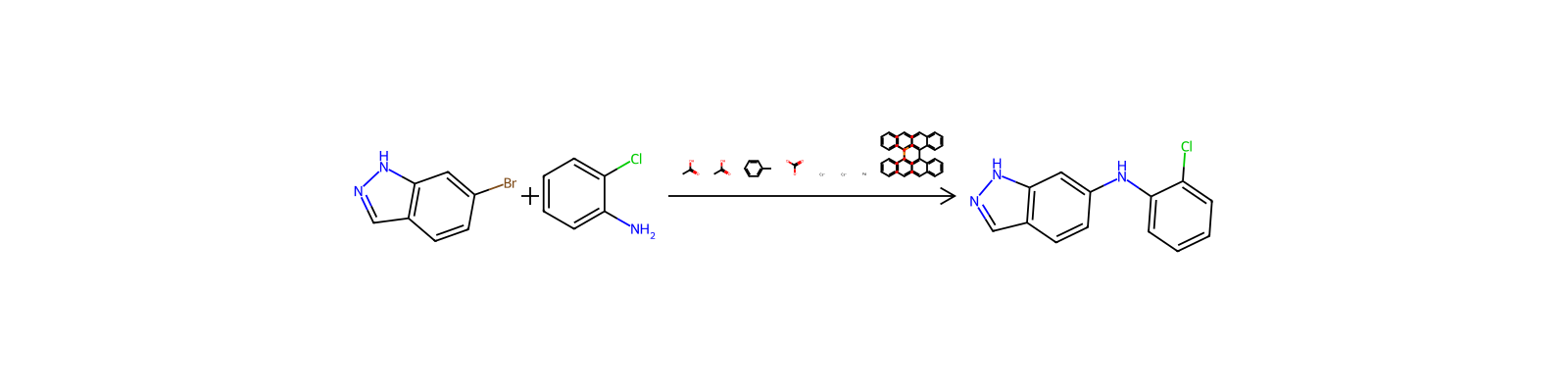
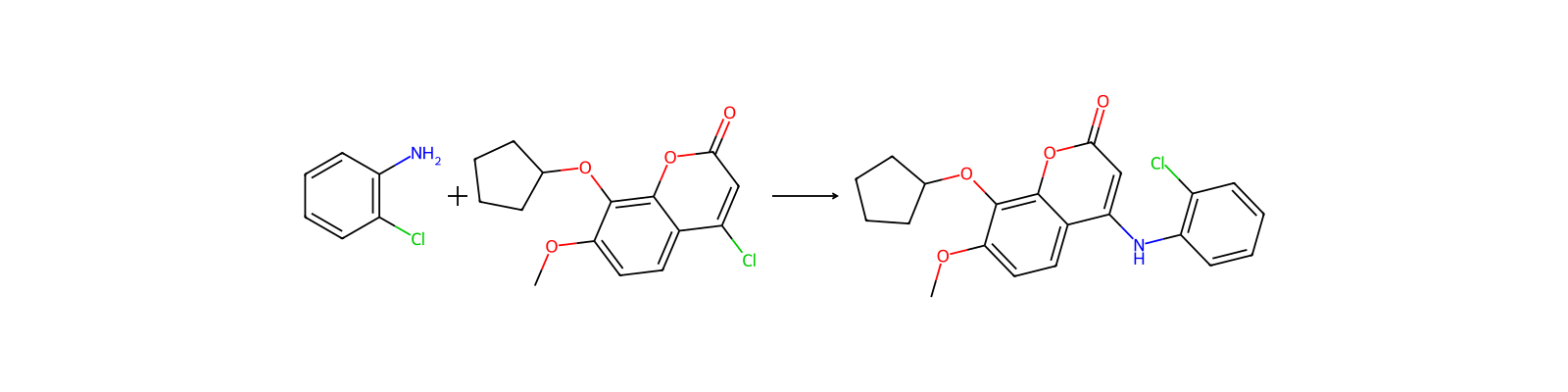
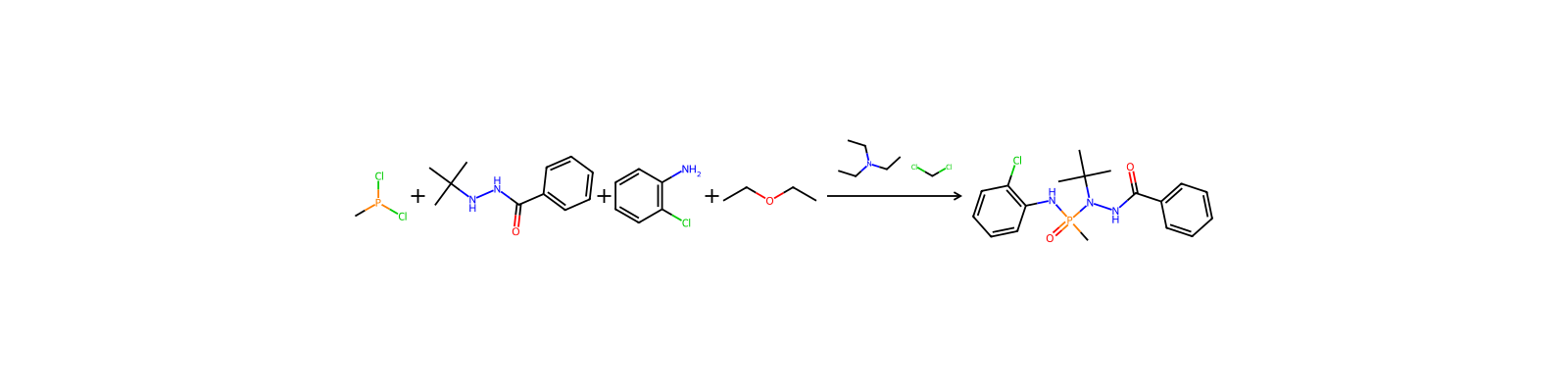
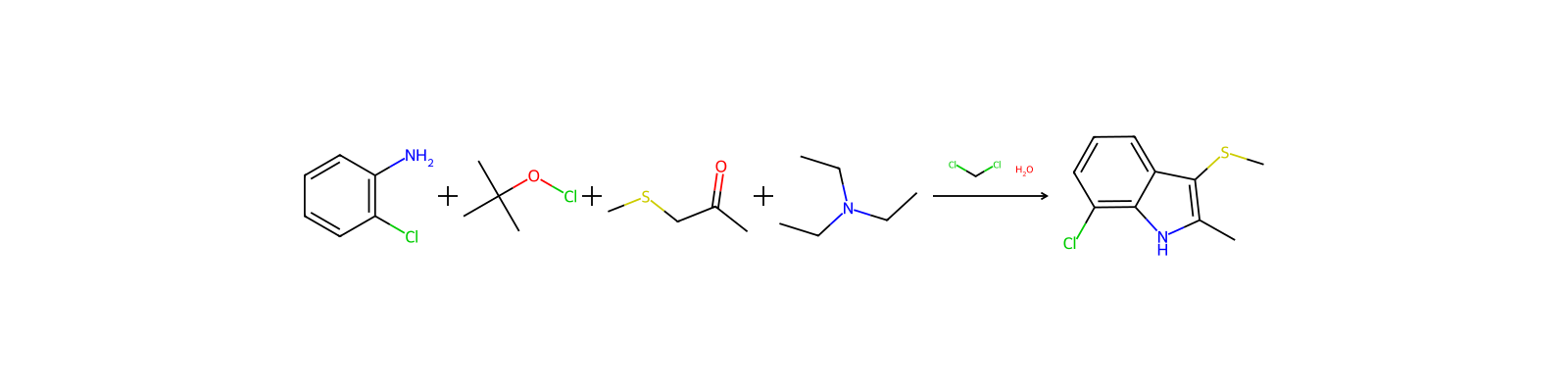
应用邻氯苯胺具有较好的化学稳定性和生物活性,在药物和农药分子的结构修饰和合成中得到广泛应用。在药物合成中,邻氯苯胺可以用作药物分子的中间体,通过改变它的结构和性质来改善药物的药效和药代动力学特性。在农药生产中,邻氯苯胺也被广泛应用于杀虫剂和除草剂等农药的合成。
用途邻氯苯胺是除草剂绿磺隆的原料,也是重要的染料中间体,在染料工业中,用于冰染染料色基。还用于农药、医药、合成树脂,有机合成等领域。
用途该品为冰染染料色基,亦可作为偶氮染料的重氮组分,用于生产酸性黑、酸性蓝及有机色淀水固黄R、永固红FR、汉沙黄HR等。并可用于制取医药、农药、聚氨酯树脂的交联剂甲基双氯苯胺。
制备方法
生产方法由邻硝基氯苯还原而得:在盐酸介质中用铁粉还原,回流6-8h,经水蒸汽蒸馏、减压蒸馏得成品。也可以在甲酸存在下进行铁粉还原:在10m3的铸铁还原釜中加入2m3沸水,然后加入邻硝基氯苯100kg、甲酸15kg、铁粉1.5t,进行还原反应。在17-20h内分次加入4t邻硝基氯苯。其间,在还原反应进行到一刻钟时,加入1t邻硝基氯苯,同时加入铁粉1.5t和甲酸15kg。如果反应缓慢,可再加入铁粉1t。反应完成后,静置,分离出胺层,再静置,使铁沉淀,铁渣用水蒸汽蒸馏出胺。将粗品减压蒸馏,得邻氯苯胺3160kg,收率95%。原料消耗定额:邻硝基氯苯1300kg/t、铁粉(90%)1450kg/t、盐酸(37%) 380kg/t。
生产方法其制备方法是用邻氯硝基苯与铁屑、稀盐酸和水回流6~8h,蒸馏得粗品,再蒸馏得成品。或者用催化加氢的方法,也就是以邻氯硝基苯为原料,在催化剂存在下加氢而制得成品。
上下游产品信息
上游原料
下游产品
试剂价格
- C0111 · 25ML
- 2-氯苯胺2-Chloroaniline — 80元
- C0111 · 100ML
- 邻氯苯胺2-Chloroaniline — 120元
供应商50 家
国药集团化学试剂有限公司86-21-63210123 · [email protected]
梯希爱(上海)化成工业发展有限公司021-67121386 · [email protected]
衢州润东化工有限公司0570-8789886 18892685668 · [email protected]
上海阿拉丁生化科技股份有限公司400-6206333 13167063860 · [email protected]
温州共赢化学有限公司+86-0086-577-64498589 +86-15355981851 · [email protected]
爱斯特(成都)生物制药股份有限公司+86-28-85122536 85324413 · [email protected]
科瑞迪化学400-821-5857 021-64326257 · [email protected]
Syntechem Co.,Ltd[email protected]
上海迈瑞尔生化科技有限公司4006356688 18621169109 · [email protected]
阿法埃莎(中国)化学有限公司400-6106006 · [email protected]
安耐吉化学&3A(安徽泽升科技股份有限公司)400-0056266 · [email protected]
石家庄斯迪亚诺精细化工有限公司0311-89250318 13582355795 · [email protected]
上海瀚鸿科技股份有限公司021-54306202 13764082696 · [email protected]
上海柯维化学技术有限公司021-64609169 18901607656 · [email protected]
上海景颜化工科技有限公司13817811078 · [email protected]
嘉兴市艾森化工有限公司0573-85285100 18627885956 · [email protected]
山东西亚化学有限公司13355009207 13355009207 · [email protected]
玛雅试剂+86 (573) 82222445 (0)18006601000 452520369 · [email protected]
四川库利南科技有限公司400-1166-196 18981987031 · [email protected]
天津希恩思生化科技有限公司400 638 7771 · [email protected]
斯百全化学(上海)有限公司021-021-021-67601398-809-809-809 15221380277 · [email protected]
艾科试剂4008-755-333 18080918076 · [email protected]
上海思域化工科技有限公司86-21-34053660 · [email protected]
赛默飞世尔科技(中国)有限公司800-810-5118 · [email protected]
北京伊诺凯科技有限公司400-810-7969 010-59572699 · [email protected]
TCI AMERICA800-4238616 · [email protected]
TOKYO CHEMICAL INDUSTRY CO., LTD.03-36680489 · [email protected]
TCI Europe320-37350700 · [email protected]
深圳康特腾科技有限公司86-0755-86635001 · [email protected]
越林试剂021-62960152 · [email protected]
苏州安尼康药物研发有限公司0512-69369885 · [email protected]
上海倍卓生物科技有限公司021-61119791,13386096464 · [email protected]
湖北鑫源顺医药化工有限公司13971561712, 13995564702, 027-50664929 · [email protected]
上海将来实业股份有限公司021-61552785 · [email protected]
安徽科迪达化工有限公司0554-2106669 · [email protected]
HBCChem, Inc.+1-510-219-6317 · [email protected]
日照力德士化工有限公司010-51268198 · [email protected]
美岚实业(上海)有限公司021-58958189 · [email protected]
上海石洋化工有限公司021-56795766 · [email protected]
上海爱蝶实业有限公司021-58957966 18930537195 · [email protected]
成都零六生物科技有限公司400-1166-196 13458535857 · [email protected]
广拓化学(上海)有限公司021-60899189-8001 18918189673 · [email protected]
上海御略医药科技有限公司021-60345187 13671753212 · [email protected]
上海麦克林生化科技股份有限公司15221275939 15221275939 · [email protected]
杭州杰恒化工有限公司0571-87396432 · [email protected]
上海嵩爰化工科技有限公司010-1234567 18521000990 · [email protected]
上海有朋化工有限公司021-69005955 13701776567 · [email protected]
江苏艾康生物医药研发有限公司025-66028182 17714375163 · [email protected]
上海凯赛化工有限公司021-33516722 13701817765 · [email protected]
上海彤源化工有限公司021-021-69182866 13701855675 · [email protected]
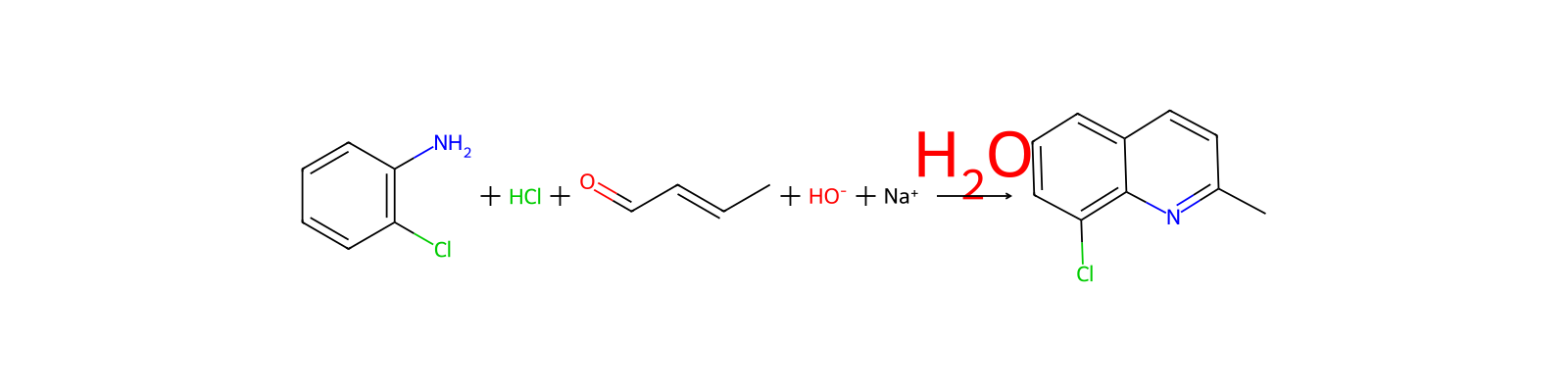
相关反应
460 条



关联笔记
加载中…