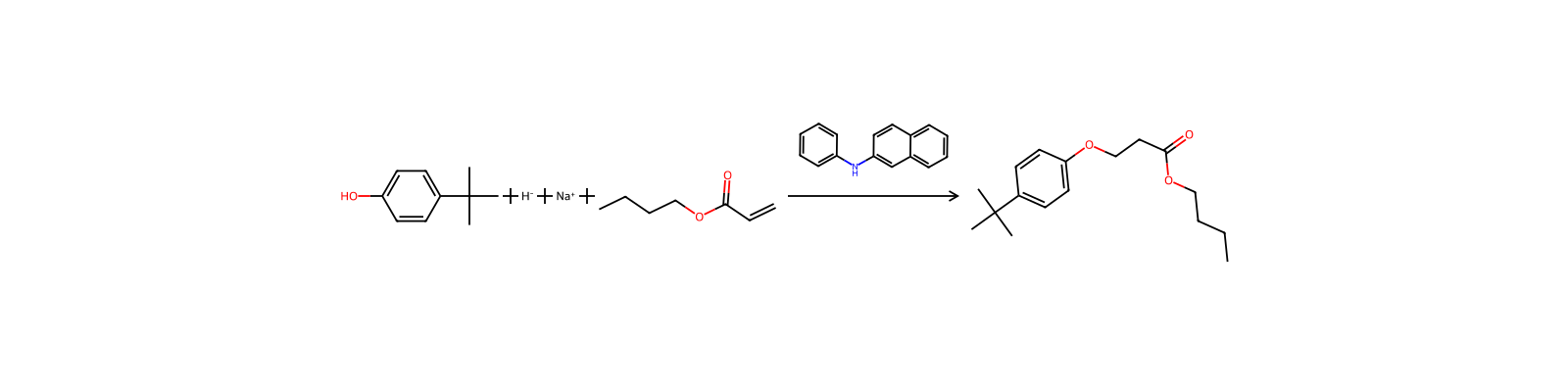
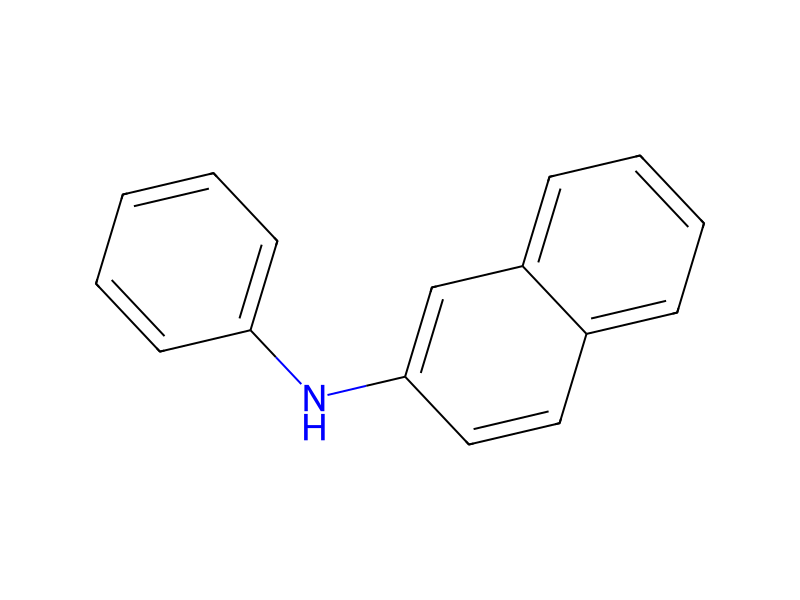
基本信息
- 标准SMILES
c1ccc(Nc2ccc3ccccc3c2)cc1- InChIKey
KEQFTVQCIQJIQW-UHFFFAOYSA-N- 分子式
- C16H13N
- 平均分子量
- 219.28 g/mol
- 单同位素质量
- 219.10479942
名称与标识
- 首选名称
- N-phenyl-2-naphthylamine
- IUPAC
- N-phenylnaphthalen-2-amine
- 中文名
- N-苯基-2-萘胺
- 英文名
- N-(2-Naphthyl)aniline
- 分子式
- C16H13N
- 分子量
- 219.28
名称与别名
N-Phenyl-2-naphthylamine135-88-6N-Phenylnaphthalen-2-amineN-(2-Naphthyl)anilineAgeRite PowderNeozoneAceto PBNAntioxidant 1162-Anilinonaphthalene2-NaphthylphenylamineStabilizator ARAnilinonaphthalene
展开更多名称
尼奥宗D防老剂丁防老剂D防老剂 D苯基乙萘胺苯基Β-萘胺防老剂"D"尼奥棕"D"防老剂丁(D)N-苯基乙萘胺Nonox DN-Phenyl-2-naphthalenamineN-PHENYL-BETA-NAPHTHYLAMINEN-Phenyl-Beta-Naphtylamineak1nonoxd
Neozone DPBNAAntioxidant PBN2-Phenylaminonaphthalene2-Naphthalenamine, N-phenyl-Neosone DVulkanox PBNNeozon D
数据库标识
- CAS
135-88-6- PubChem CID
- 8679
- DTXSID
DTXSID4021131- ChEMBL
CHEMBL1543632- ChEBI
CHEBI:34877- UNII
- 456KT854AJ
- EC Number
- 205-223-9
- Nikkaji
- J3.627G
性质
结构计算性质
- XLogP
- 5.1
- 极性表面积
- 12 Ų
- 氢键供体
- 1
- 氢键受体
- 1
- 可旋转键
- 2
- 重原子
- 17
- 形式电荷
- 0
- 复杂度
- 232
实验与物化性质
LogP
log Kow = 4.38
4.38
4.38
Density
1.24 (NTP, 1992) - Denser than water; will sink
1.24
1.2 g/cm³
1.24
1.24
Color/Form
NEEDLES FROM METHANOL
WHITE TO YELLOWISH CRYSTALS
GRAY TO TAN FLAKES OR POWDER
White to yellow crystals or gray tan flakes or powder [Note: Commercial product may contain 20-30 ppm of beta naphthylamine].
Solubility
less than 1 mg/mL at 66 °F (NTP, 1992)
SOLUBILITY IN ETHANOL 50 G/L, IN BENZENE 27 G/L, IN ACETONE 640 G/L
INSOL IN WATER; SOL IN ALC, ETHER, ACETIC ACID (BLUISH FLUORESCENCE)
Solubility in water at 25 °C: none
Insoluble
Boiling Point
743 °F at 760 mmHg (NTP, 1992)
395.5 °C
395.5 °C
743 °F
743 °F
DecompositionWHEN HEATED TO DECOMP, IT EMITS TOXIC FUMES OF /NITROGEN OXIDES/.
Melting Point
226 °F (NTP, 1992)
108 °C
108 °C
108 °C
226 °F
226 °F
Vapor Pressure0.00000829 [mmHg]
Physical Description
N-phenyl-2-naphthylamine is a light gray to gray powder. Solutions show blue fluorescence. (NTP, 1992)
White to yellow crystals or gray to tan flakes or powder. [Note: Commercial product may contain 20-30 ppm of Beta-Naphthylamine.]; [NIOSH]
Solid
WHITE-TO-GREY SOLID IN VARIOUS FORMS.
White to yellow crystals or gray to tan flakes or powder.
White to yellow crystals or gray to tan flakes or powder. [Note: Commercial product may contain 20-30 ppm of β-Naphthylamine.]
Kovats Retention Index
2169
2222
Collision Cross Section
151.3 Ų [M+H]+ [CCS Type: DT; Buffer gas: N2; Ionization: ESI+; Dataset: TOXCAST; Source Identifier: DTXSID4021131];149.2 Ų [M]+ [CCS Type: DT; Buffer gas: N2; Ionization: APCI+; Dataset: TOXCAST; Source Identifier: DTXSID4021131];150.0 Ų [M+H]+ [CCS Type: DT; Buffer gas: N2; Ionization: APCI+; Dataset: TOXCAST; Source Identifier: DTXSID4021131]
Other Experimental PropertiesMAY BE OXIDIZED TO 7-PHENYL-7H-DIBENZO[C,G]CARBAZOLE
物理化学性质
- 熔点
- 105 · 105-108 °C (lit.)
- 沸点
- 395 · 395-395.5 °C (lit.)
- 密度
- 1.24 · 1.24
- 蒸气压
- 0.001 Pa · 0.001Pa at 20℃
- 折射率
- 1.702 · 1.7020 (estimate)
- 储存条件
- -20 °C · -20°C
- 溶解度
- Chloroform (Slightly), Methanol (Very Slightly)
- 形态
- Gray to tan flakes or powder
- 酸度系数(pKa)
- 0.78 · 0.78±0.30(Predicted)
- 颜色
- Pale Beige to Pale Gray
- 生物来源
- mouse
- 水溶解性
- 0.1 g/100 · Insoluble. <0.1 g/100 mL at 19 ºC
- 最大波长(λmax)
- 219 nm · 219 nm
- BRN
- 2211188 · 2211188
- 稳定性
- Stable. Incompatible with oxidizing agents.
- InChI
- 1S/C16H13N/c1-2-8-15(9-3-1)17-16-11-10-13-6-4-5-7-14(13)12-16/h1-12,17H
- InChIKey
- KEQFTVQCIQJIQW-UHFFFAOYSA-N
- SMILES
- N(c1ccccc1)c2ccc3ccccc3c2
- LogP
- 3.2 at · 3.2 at 23℃ and pH7.9-8.3
- CAS 数据库
- 135 · 135-88-6(CAS DataBase Reference)
- (IARC)致癌物分类
- 3 · 3 (Vol. 16, Sup 7) 1987
- NIST化学物质信息
- 2 · 2-Naphthyl phenyl amine(135-88-6)
- EPA化学物质信息
- -2 · N-Phenyl-2-naphthylamine (135-88-6)
化学性质
浅灰色粉末,暴露于空气中或日光下逐渐转变为灰红色。 不溶于水,溶于乙醇、四氯化碳、苯、丙酮。
安全与法规
GHS分类
GHS Classification
Warning
H315: Causes skin irritation [Warning Skin corrosion/irritation];H317: May cause an allergic skin reaction [Warning Sensitization, Skin];H319: Causes serious eye irritation [Warning Serious eye damage/eye irritation];H351: Suspected of causing cancer [Warning Carcinogenicity];H411: Toxic to aquatic life with long lasting effects [Hazardous to the aquatic environment, long-term hazard]
P203, P261, P264, P264+P265, P272, P273, P280, P302+P352, P305+P351+P338, P318, P321, P332+P317, P333+P317, P337+P317, P362+P364, P391, P405, and P501 (click each P-code to see the statement)
Warning
危害信息
Regulatory Information
Chemical: 2-Naphthalenamine, N-phenyl-
Status: Active Update: 10-08-2017 https://echa.europa.eu/registration-dossier/-/registered-dossier/18330
N-Phenyl-2-naphthylamine: Does not have an individual approval but may be used under an appropriate group standard
Other Safety InformationIMAP assessments - 2-Naphthalenamine, N-phenyl-: Human health tier II assessment
DOT LabelCorrosive
Fire Hazards
Literature sources indicate that this chemical is combustible. (NTP, 1992)
Combustible. Finely dispersed particles form explosive mixtures in air.
Fire PotentialFIRE HAZARD: MODERATE, WHEN EXPOSED TO HEAT OR FLAME... CAN REACT WITH OXIDIZING MATERIALS.
Health Hazards
Excerpt from NIOSH Pocket Guide for N-Phenyl-beta-naphthylamine:;Exposure Routes: Inhalation, skin absorption, ingestion, skin and/or eye contact;Symptoms: Irritation; leucoplakia; acne, hypersensitivity to sunlight; [potential occupational carcinogen];Target Organs: Eyes, skin, bladder;Cancer Site: Bladder cancer (NIOSH, 2024)
Hazards SummaryAllergic contact dermatitis reported in rubber workers; [Kanerva, p. 1826] Danger of skin sensitization; [MAK]
Reactive GroupAmines, Phosphines, and Pyridines
UN ClassificationUN Hazard Class: 9; UN Pack Group: III
Special Reports
DHHS/NTP; Toxicology & Carcinogenesis Studies of N-Phenyl-2-naphthylamine in F344/N Rats and B6C3F1 Mice (Feed Studies) Technical Report Series No. 333 (1988) NIH Publication No. 88-2589
DISCUSSES CARCINOGENIC RISK OF PBNA TO HUMAN SUBJECTS.[BATTEN PL, HATHWAY DE; BR J CANCER 35 (3): 342-346 (1977)]
Scmidt E et al; Zeitschr Gesamte Hyg 29 (8): 452-6 (1983). Toxicological evaluation of vulcanization vapors with special reference to nitrogen containing aging preventative agents.
Reactivity Profile
N-PHENYL-2-NAPHTHYLAMINE may react with strong oxidizing agents (NTP, 1992). Neutralizes acids in exothermic reactions to form salts plus water. May be incompatible with isocyanates, halogenated organics, peroxides, phenols (acidic), epoxides, anhydrides, and acid halides. Flammable gaseous hydrogen may be generated in combination with strong reducing agents, such as hydrides.
Chemical DangersReacts with oxidants. Decomposes on burning. This produces toxic and corrosive fumes.
安全与防护
Fire Fighting
Fires involving this compound can be controlled using a dry chemical, carbon dioxide or Halon extinguisher. (NTP, 1992)
Use water spray, powder, foam, carbon dioxide.
First Aid Measures
Fresh air, rest. Seek medical attention if you feel unwell.
Remove contaminated clothes. Rinse and then wash skin with water and soap.
First rinse with plenty of water for several minutes (remove contact lenses if easily possible), then refer for medical attention.
Seek medical attention if you feel unwell.
First Aid
EYES: First check the victim for contact lenses and remove if present. Flush victim's eyes with water or normal saline solution for 20 to 30 minutes while simultaneously calling a hospital or poison control center. Do not put any ointments, oils, or medication in the victim's eyes without specific instructions from a physician. IMMEDIATELY transport the victim after flushing eyes to a hospital even if no symptoms (such as redness or irritation) develop.;SKIN: IMMEDIATELY flood affected skin with water while removing and isolating all contaminated clothing. Gently wash all affected skin areas thoroughly with soap and water. If symptoms such as redness or irritation develop, IMMEDIATELY call a physician and be prepared to transport the victim to a hospital for treatment.;INHALATION: IMMEDIATELY leave the contaminated area; take deep breaths of fresh air. If symptoms (such as wheezing, coughing, shortness of breath, or burning in the mouth, throat, or chest) develop, call a physician and be prepared to transport the victim to a hospital. Provide proper respiratory protection to rescuers entering an unknown atmosphere. Whenever possible, Self-Contained Breathing Apparatus (SCBA) should be used; if not available, use a level of protection greater than or equal to that advised under Protective Clothing.;INGESTION: DO NOT INDUCE VOMITING. If the victim is conscious and not convulsing, give 1 or 2 glasses of water to dilute the chemical and IMMEDIATELY call a hospital or poison control center. Be prepared to transport the victim to a hospital if advised by a physician. If the victim is convulsing or unconscious, do not give anything by mouth, ensure that the victim's airway is open and lay the victim on his/her side with the head lower than the body. DO NOT INDUCE VOMITING. IMMEDIATELY transport the victim to a hospital. (NTP, 1992)
(General first aid procedures);Eye: Irrigate immediately - If this chemical contacts the eyes, immediately wash (irrigate) the eyes with large amounts of water, occasionally lifting the lower and upper lids. Get medical attention immediately.;Skin: Soap wash immediately - If this chemical contacts the skin, immediately wash the contaminated skin with soap and water. If this chemical penetrates the clothing, immediately remove the clothing, wash the skin with soap and water, and get medical attention promptly.;Breathing: Respiratory support;Swallow: Medical attention immediately - If this chemical has been swallowed, get medical attention immediately.
Safe StorageSeparated from oxidants. Provision to contain effluent from fire extinguishing. Store in an area without drain or sewer access.
Storage Conditions
...MATERIALS WHICH ARE TOXIC AS STORED OR WHICH...DECOMP INTO TOXIC COMPONENTS DUE TO CONTACT WITH HEAT...SHOULD BE STORED IN COOL, WELL-VENTILATED PLACE, OUT OF DIRECT RAYS OF SUN, AWAY FROM AREAS OF HIGH FIRE HAZARD, &...PERIODICALLY INSPECTED & MONITORED.
Nonfire Spill Response
SMALL SPILLS AND LEAKAGE: If a spill of this chemical occurs, FIRST REMOVE ALL SOURCES OF IGNITION, then you should dampen the solid spill material with acetone and transfer the dampened material to a suitable container. Use absorbent paper dampened with acetone to pick up any remaining material. Seal your contaminated clothing and the absorbent paper in a vapor-tight plastic bag for eventual disposal. Solvent wash all contaminated surfaces with acetone followed by washing with a soap and water solution. Do not reenter the contaminated area until the Safety Officer (or other responsible person) has verified that the area has been properly cleaned.;STORAGE PRECAUTIONS: You should store this material under ambient temperatures and protect it from light. (NTP, 1992)
Disposal Methods
SRP: At the time of review, criteria for land treatment or burial (sanitary landfill) disposal practices are subject to significant revision. Prior to implementing land disposal of waste residue (including waste sludge), consult with environmental regulatory agencies for guidance on acceptable disposal practices.
Spillage Disposal
Personal protection: particulate filter respirator adapted to the airborne concentration of the substance. Do NOT let this chemical enter the environment. Sweep spilled substance into covered containers. If appropriate, moisten first to prevent dusting. Carefully collect remainder. Then store and dispose of according to local regulations. Do NOT wash away into sewer.
Preventive Measures
The worker should immediately wash the skin when it becomes contaminated.
The worker should wash daily at the end of each work shift.
Work clothing that becomes wet or significantly contaminated should be removed and replaced.
Workers whose clothing may have become contaminated should change into uncontaminated clothing before leaving the work premises.
Isolation and Evacuation
Excerpt from ERG Guide 154 [Substances - Toxic and/or Corrosive (Non-Combustible)]:;IMMEDIATE PRECAUTIONARY MEASURE: Isolate spill or leak area in all directions for at least 50 meters (150 feet) for liquids and at least 25 meters (75 feet) for solids.;SPILL: Increase the immediate precautionary measure distance, in the downwind direction, as necessary.;FIRE: If tank, rail tank car or highway tank is involved in a fire, ISOLATE for 800 meters (1/2 mile) in all directions; also, consider initial evacuation for 800 meters (1/2 mile) in all directions. (ERG, 2024)
Eye PreventionWear safety goggles.
Fire PreventionNO open flames. Closed system, dust explosion-proof electrical equipment and lighting. Prevent deposition of dust. Prevent build-up of electrostatic charges (e.g., by grounding).
毒理信息
Cancer Sites[bladder cancer]
Target OrgansEyes, skin, bladder
Environmental Fate
TERRESTRIAL FATE: One screening study observed that N-phenyl-2-naphthylamine is readily biodegradable to beta-naphthylamine at concns <5 ppm(2). Higher concns appear to be toxic to microorganisms(2,SRC). Because N-phenyl-2-naphthylamine absorbs UV light >290 nm(3), photolysis may be important if N-phenyl-2-naphthylamine is spilled on terrestrial surfaces(SRC). By analogy to other aromatic amines(1), when released to soil, N-phenyl-2-naphthylamine may undergo covalent chemical bonding with humic materials which can result in its chemical alteration to a latent form and result in tight adsorption. When covalently bound in this latent form, leaching in soil systems is not expected to occur. This covalent bonding proceeds in two steps: a rapid and reversible bonding followed by a slower and much less reversible reaction(1,SRC). In the absence of covalent bonding, leaching would not be possible based on an estimated Koc of 12,500(4-6).
AQUATIC FATE: Based on analogy to other aromatic amines(1), N-phenyl-2-naphthylamine may undergo covalent bonding with humic materials in the water column and in sediment; therefore, partitioning from the water column to sediment and suspended material may be important. N-Phenyl-2-naphthylamine may be susceptible to photooxidation via hydroxyl and peroxy radicals based on analogy to other aromatic amines(2,SRC). Because N-phenyl-2-naphthylamine abosorbs UV light >290 nm(4), photolysis may be important in near-surface water. A BCF value of 147(3,SRC) suggests that N-phenyl-2-naphthylamine will have low potential to bioconcentrate in aquatic organisms(SRC). Aquatic hydrolysis and volatilization do not appear to be environmentally important removal processes of N-phenyl-2-naphthylamine in water(SRC). It appears that N-phenyl-2-naphthylamine is readily biodegradable to beta-naphthylamine at concns <5 ppm(5).
ATMOSPHERIC FATE: Based on a modified regression-derived equation(1,SRC), the vapor pressure for N-phenyl-2-naphthylamine can be estimated to be 8.3X10⁻⁶ mm Hg at 25 °C(SRC). According to a suggested classification scheme(2), this vapor pressure value suggests that N-phenyl-2-naphthylamine will exist in both the vapor and particulate phases in the ambient atmosphere. Particulate-phase N-phenyl-2-naphthylamine will probably be removed from air via dry deposition. Vapor-phase N- phenyl-2-naphthylamine is degraded rapidly in an average ambient atmosphere by reaction with photochemically produced hydroxyl radicals at an estimated half-life of about 55 minutes(3,SRC).
Adverse EffectsSkin Sensitizer - An agent that can induce an allergic reaction in the skin.;ACGIH Carcinogen - Not Classifiable.
Exposure Routes
The substance can be absorbed into the body by inhalation, by ingestion and through the skin.
inhalation, skin absorption, ingestion, skin and/or eye contact
Signs and Symptoms
Redness.
Redness. Pain.
Irritation; leucoplakia; acne, hypersensitivity to sunlight; [potential occupational carcinogen]
Ongoing Test Status
The following link will take the user to the National Toxicology Program (NTP) Test Agent Search Results page, which tabulates all of the "Standard Toxicology & Carcinogenesis Studies", "Developmental Studies", and "Genetic Toxicity Studies" performed with this chemical. Clicking on the "Testing Status" link will take the user to the status (i.e., in review, in progress, in preparation, on test, completed, etc.) and results of all the studies that the NTP has done on this chemical. [http://ntp-apps.niehs.nih.gov/ntp_tox/index.cfm?fuseaction=ntpsearch.searchresults&searchterm=135-88-6]
ICSC Environmental DataThe substance is toxic to aquatic organisms. Bioaccumulation of this chemical may occur in fish. The substance may cause long-term effects in the aquatic environment.
Soil Adsorption/Mobility
Aromatic amines have been observed to undergo rapid and reversible covalent bonding with humic materials in aqueous solution; the initial bonding reaction is followed by a slower and much less reversible reaction believed to represent the addition of the amine to quinoidal structures followed by oxidation of the product to give an amino-substituted quinone; these processes represent pathways by which aromatic amines may be converted to latent forms in the biosphere(4). In the absence of covalent bonding, one can estimate the adsorption potential based on the Koc value. Based on an experimental log octanol-water partition coefficient of 4.38(2) and a recommended regression-derived equation(1), the Koc value for N-phenyl-2-naphthylamine can be estimated to be 12,500(SRC). According to a suggested classification scheme(3), this Koc value indicates that N-phenyl-2-naphthylamine will be immobile in soil.
Human Toxicity Excerpts
LEUCOPLAKIA, ACNE & HYPERSENSITIVITY TO SUNLIGHT...OBSERVED IN 36 WORKERS EXPOSED FOR PROLONGED PERIODS TO N-PHENYL-2-NAPHTHYLAMINE...
OUT OF 57 CU-SMELTING WORKERS SUFFERING FROM INFLAMMATORY LESIONS OF MUCOUS MEMBRANE & SKIN OF LIPS, 22 HAD INCR SENSITIVITY TO RUBBER AS MAIN CAUSE OF CHEILITIS.
OCCUPATIONAL ALLERGIC DERMATOSIS WAS OBSERVED IN RUBBER WORKERS DUE TO ADDITIVES SUCH AS NEOZON D.
IT HAS BEEN REPORTED THAT COMMERCIAL N-PHENYL-2-NAPHTHYLAMINE IS CONTAMINATED WITH 20-30 MG/KG OF CARCINOGEN 2-NAPHTHYLAMINE...
For more Human Toxicity Excerpts (Complete) data for 2-NAPHTHYLAMINE, N-PHENYL- (6 total), please visit the HSDB record page.
Artificial Pollution SourcesN-Phenyl-2-naphthylamine is used as an antioxidant, lubricant, and inhibitor(1) and, therefore, it may be released to the environment during its production and use(SRC).
Environmental Biodegradation
Using an initial concn of 100 mg/L N-phenyl-2-naphthylamine, 0 %BOD was observed after a 2 week period in a biodegradation screening test using 30 mg/L sludge(1). N-Phenyl-2-naphthylamine, initial concn of 100 ppm, exhibited a 0-29 % Theoretical BOD in a Japanese MITI test after 14 days of incubation at 25 °C(2). N-phenyl-2-naphthylamine was shown to degrade to beta-naphthylamine in a screening study using activated sludge inoculum at 21 °C(3). In this study, 44.2 and 9.3 %CO2 production was observed in 1 day at initial concns of 2 and 5 ppm, respectively(3). At an initial concn of 8 ppm, N-phenyl-2-naphthylamine was observed to be inhibitory to microorganisms under the same test conditions(3). Furthermore, adsorption to solids was found to occur and, hence, reduce biodegradation(3).
法规信息
Regulatory Information
Chemical: 2-Naphthalenamine, N-phenyl-
Status: Active Update: 10-08-2017 https://echa.europa.eu/registration-dossier/-/registered-dossier/18330
N-Phenyl-2-naphthylamine: Does not have an individual approval but may be used under an appropriate group standard
安全数据
- wgk
- 2
- tsca
- TSCA listed
- 毒性
- mouse,LD50,oral,1450mg/kg (1450mg/kg),BEHAVIORAL: SOMNOLENCE (GENERAL DEPRESSED ACTIVITY),Hygiene and Sanitation Vol. 31(1-3), Pg. 183, 1966.
- RTECS号
- QM4550000
- 包装类别
- III
- 危险等级
- 6.1(b)
- 存储类别
- 11 - Combustible Solids
- 安全说明
- 22-24/25-61-36/37-26
- 海关编码
- 29214500
- 危险品标志
- Xn,N
- 危险性类别
- Aquatic Chronic 2Carc. 2Eye Irrit. 2Skin Irrit. 2Skin Sens. 1
- 危险类别码
- 36/38-40-43-51/53-53-51
- 毒害物质数据
- 135-88-6(Hazardous Substances Data)
- 危险品运输编号
- 3077
化学与工业
药理信息
Metabolism/Metabolites
AMT RANGING FROM 0-10 UG 2-NAPHTHYLAMINE WAS DETECTED IN URINE OF DOGS GIVEN SINGLE DOSE OF 5 MG/KG...N-PHENYL-2-NAPHTHYLAMINE...
Hepatic microsomal preparations from rat, hamster, dog, monkey, and humans catalyze PBNA biotransformation in vitro to 6-hydroxy-N-phenyl-2-naphthylamine and 4'-hydroxy-N-phenyl-2-naphthylamine.
A dose dependent relationship between the concn of parent compound and its BNA metabolite in rat urine was observed after oral doses of 50 or 100 mg PBNA/kg/day for 4 days. Some 34 ug BNA was recovered in rat urine after a total PBNA dose of 400 mg.
Experimental evidence from human volunteers ingesting PBNA at a single 10-50 mg dose and from workers inhaling PBNA dust show that BNA is eliminated in the urine as a metabolite of PBNA.
The carcinogenic antioxidants, N-phenyl-1-naphthylamine (P1NA) and phenyl-2-naphthylamine (P2NA) were examined in vitro for biotransformation by rat hepatic microsomes and in freshly isolated hepatocytes. HLPC analysis of hepatocyte incubations revealed that phenols were the major metabolites in both cases. P1NA formed one phenolic metabolite only, while incubation with P2NA yielded two phenols identified as 6-hydroxy-P2NA and 4'-hydroxy-P2NA by chromatography with authentic samples. beta-Naphthylamine, a metabolite indicating dephenylation of P2NA was not detectable. Metabolism studies with microsomes revealed that the phenols were formed by cytochrome p450 dependent monooxygenases. Pretreatment of animals with phenobarbital and 3-methylcholanthrene both incr the rate of microsomal metabolism of P1NA and P2NA, indicating that more than one p450 enzyme mediate the oxygenation reaction. Animal pretreatment with single and repeated doses of P1NA and P2NA did not markedly stimulate metabolism, but induced ethylmorphine demethylation in males and females and benzo(a)pyrene hydroxylation in females.
Absorption, Distribution and Excretion
IN DOGS GIVEN SINGLE ORAL DOSES OF 5 MG/KG...(1,4,5 ,8-(14)C)-N-PHENYL-2-NAPHTHYLAMINE ALONE OR FOLLOWING REPEATED DOSES OF 400 MG/ANIMAL...N-PHENYL-2-NAPHTHYLAMINE ON 5 DAYS A WK FOR 4 WK, MORE THAN 90% OF RADIOACTIVITY...EXCRETED OVER 3 DAYS, MAINLY IN FECES. ONLY 2.8% OF RADIOACTIVITY WAS EXCRETED IN URINE.
NO INCR EXCRETION OF LABELED 2-NAPHTHYLAMINE...OBSERVED FOLLOWING 4 WK PRETREATMENT WITH 400 MG/ANIMAL UNLABELED N-PHENYL-2-NAPHTHYLAMINE...
2-NAPHTHYLAMINE WAS FOUND @ LEVEL OF 3-4 UG IN 24-HR SAMPLES OF URINE FROM 2 VOLUNTEERS WHO INGESTED 50 MG N-PHENYL-2-NAPHTHYLAMINE CONTAINING 0.7 UG 2-NAPHTHYLAMINE & FROM WORKERS (UNSPECIFIED NUMBER) EST TO HAVE INHALED 30 MG N-PHENYL-2-NAPHTHYLAMINE...
IN 4 WORKERS EXPOSED TO N-PHENYL-2-NAPHTHYLAMINE DUSTS (EST INTAKE, 40 MG)... EST TO CONTAIN 32 NG 2-NAPHTHYLAMINE, 3-8 UG 2-NAPHTHYLAMINE...FOUND IN 24-HR URINE SAMPLES...
IN 19 VOLUNTEERS GIVEN 10 MG N-PHENYL-2-NAPHTHYLAMINE CONTAINING 8 NG 2-NAPHTHYLAMINE (0.8 MG/KG), FROM 0.4-3 UG 2-NAPHTHYLAMINE WERE FOUND IN 24-HR URINE SAMPLES FROM 7 SUBJECTS, 6 OF WHICH WERE NON-SMOKERS.
Cellular LocationsMembrane
用途与制造
Uses
No longer used in the United States because of carcinogenic potential; in the past used as a antioxidant for rubber, grease, and oils; also used as a component of rocket fuels and as a stabilizer in dyes and silicone enamels; [ACGIH] Used as an antioxidant in the production of rubber, polymers, greases, oils; as an inhibitor of polymerization; as a stabilizer in silicon enamels; and as a catalyst and chemical intermediate; Also used in rocket fuels, surgical plasters, and tin electroplating baths; [CHEMINFO]
Electroplating [Category: Plate]
RUBBER ANTIOXIDANT; LUBRICANT; INHIBITOR (BUTADIENE)
STABILIZER IN ELECTRICAL-INSULATING SILICONE ENAMELS; HEAT & LIGHT STABILIZER; VULCANIZATION ACCELERATOR; COMPONENT OF ROCKET FUELS; IN SURGICAL PLASTERS; IN TIN-ELECTROPLATING BATHS; CHEM INTERMEDIATE; IN DYES; CATALYST & POLYMERIZATION INHIBITOR
ImpuritiesCommercial product may contain 20-30 ppm beta-naphthylamine
U.S. Exports
(1972) No Data
(1975) No Data
U.S. Imports
(1972) 4.00X10+5 GRAMS
(1975) 7.58X10+7 GRAMS
Imports through the principal U.S. customs districts totaled 18,166 pounds in 1983.
U.S. Production
(1972) 2.05X10+9 GRAMS
(1975) 7.09X10+8 GRAMS
Methods of Manufacturing
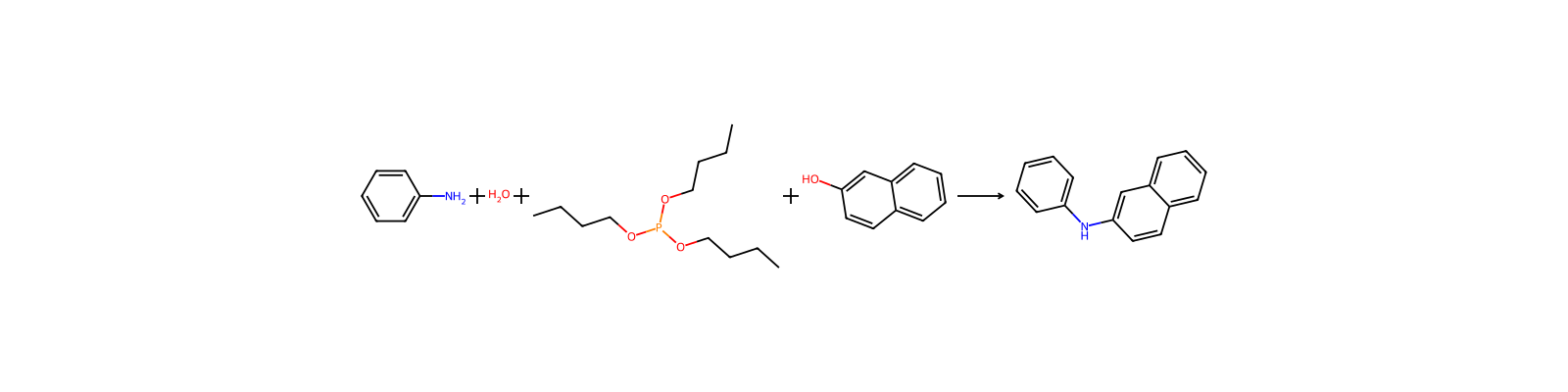
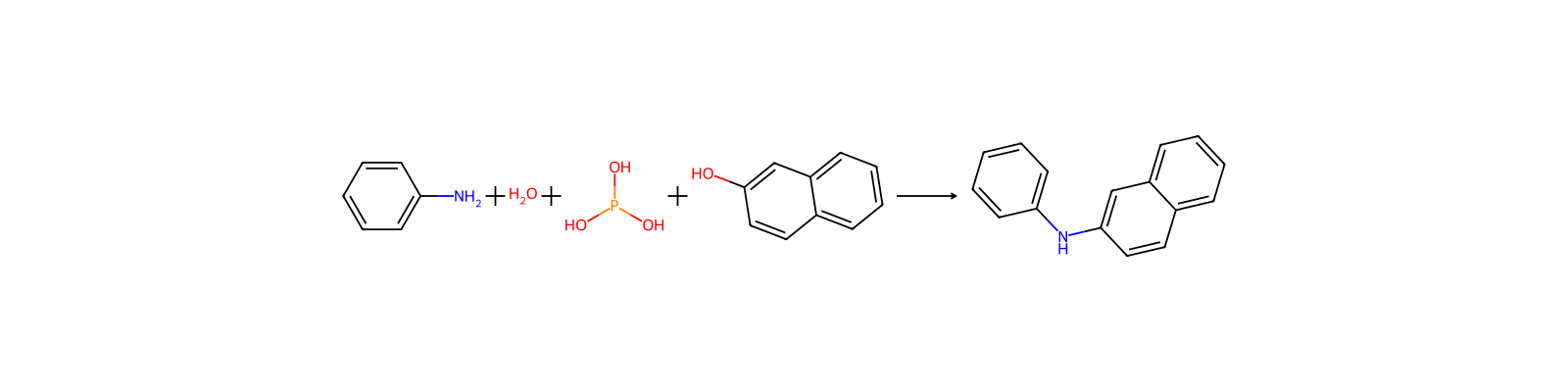
...WAS PREPARED BY GRAEBE IN 1880 BY HEATING 2-NAPHTHOL WITH ANILINE HYDROCHLORIDE (PRAGER ET AL, 1929). METHOD...CURRENTLY...USED IN JAPAN (THE CHEM DAILY CO LTD, 1976) & IN US (KEHE & KOURIS, 1965) IS CONDENSATION OF 2-NAPHTHOL & ANILINE IN PRESENCE OF A CATALYST.
Formulations/Preparations
UNTIL RECENTLY...WAS AVAILABLE IN US AS COMMERCIAL GRADE...PURITY, 97.0% MIN; SET-POINT, 106.0 °C MIN; ASH CONTENT, 0.5% MAX; 2-NAPHTHOL CONTENT, 0.5% MAX.
/IT IS/...AVAILABLE IN US IN VARIETY OF FORMULATIONS, COMPOUNDED WITH OTHER ANTIOXIDANTS, EG, PARA-ISOPROPOXYDIPHENYLAMINE & DIPHENYL-PARA-PHENYLENEDIAMINE...
General Manufacturing Information
2-Naphthalenamine, N-phenyl-: ACTIVE
...DETECTED IN EXTRACTS FROM WIDE VARIETY OF ANIMAL, PLANT & MICROBIAL LIPIDS. IT HAS BEEN SHOWN, HOWEVER, THAT IT WAS CONTAMINANT OF SOLVENTS USED TO EXTRACT THEM, WHICH HAD COME INTO CONTACT WITH RUBBER CONTAINING THE ANTIOXIDANT...
IT IS BELIEVED THAT NO US COMPANIES ARE CURRENTLY PRODUCING THIS COMPD COMMERCIALLY
...IS USED PRIMARILY AS ANTIOXIDANT (GENERALLY @ LEVELS OF 1-2%) IN RUBBER PROCESSING...TO IMPART HEAT, OXIDN & FLEX-CRACKING RESISTANCE IN NATURAL RUBBER, SYNTHETIC RUBBERS & LATEXES...
.../IT/ HAS BEEN USED AS CHEM INTERMEDIATE IN PRODN OF RUBBER ANTIOXIDANT, N-PHENYL-2-NAPHTHYLAMINE-ACETONE CONDENSATE, & IN PRODN OF 7 DYES...OF WHICH...CI ACID BLUE 98.../IS/ OF COMMERCIAL WORLD SIGNIFICANCE...
N-Phenyl-2-naphthylamine, an antioxidant in rubber processing, is gradually being displaced by improved products.
应用领域
用途适用于天然橡胶、合成橡胶和胶乳
用途该品是天然橡胶、二烯类合成橡胶、氯丁橡胶及基胶乳用通用型防老剂。对热、氧、屈挠及一般老化有良好的防护作用,并稍优于防老剂甲。对有害金属有抑制作用,但较防老剂甲弱。若与防老剂4010或4010NA并用,则抗热、氧、屈挠龟裂,以及抗臭氧性均有显著提高。本品对天然胶、丁腈胶、丁苯胶的硫化速度无甚影响,对氯丁胶则稍有迟延作用。本品在干胶中容易分解,亦容易分散于水中。本品在橡胶中的溶解度约1.5%,用量不超过1份不会发生喷霜。该品有污染性,在日光下渐变为灰黑色,故不适用于白色或浅色制品。主要用于制造轮胎、胶管、胶带、胶辊、胶鞋、电线电缆绝缘层等工业制品。防老剂丁还可作各种合成橡胶后处理和贮存时的稳定剂,可用作聚甲醛的抗热防老剂。该品对皮肤有一定的刺激性。
用途检验氯酸盐。有机合成。染料中间体。用作橡胶抗氧剂、润滑剂、聚合抑制剂 。
制备方法
生产方法2-萘酚与苯胺在苯胺盐酸盐的催化下,于250℃进行缩合而得。将2-萘酚与苯加入缩合锅内熔化,投入苯胺盐酸盐进行缩合。反应结束后,用碳酸钠中和。蒸出过量的苯胺,再在真空下脱水干燥,经切片、打粉、包装即得防老剂丁。原料消耗(kg/t)2-萘酚(98.5%) 660苯胺(99.2%) 425
上下游产品信息
上游原料
下游产品
试剂价格
- P0198 · 25G
- N-苯基-2-萘胺N-Phenyl-2-naphthylamine — 140元
- P0198 · 500G
- N-苯基-2-萘胺N-Phenyl-2-naphthylamine — 650元
供应商50 家
国药集团化学试剂有限公司86-21-63210123 · [email protected]
梯希爱(上海)化成工业发展有限公司021-67121386 · [email protected]
江西益众化工有限公司15307925109 15350027073 · [email protected]
阿诺西(上海)生物技术有限公司400-1107768 15058188853 · [email protected]
上海阿拉丁生化科技股份有限公司400-6206333 13167063860 · [email protected]
Shandong chuangyingchemical Co., Ltd.18853181302 · [email protected]
艾吉析科技(上海)有限公司17717235263 · [email protected]
广州纳珑化工有限公司13192879270; 13192879270 · [email protected]
BAYNOE CHEM CO.,LTD+86-21-34783353 +8615000719740 · [email protected]
武汉欣扬瑞和化学科技有限公司13720274133 · [email protected]
杭州奥得科技有限公司0571-88772972-0 15057128248 · [email protected]
杭州品高化工有限公司0571-87658025 · [email protected]
Dayang Chem (Hangzhou) Co.,Ltd.+86-0571-88938639 17705817739 · [email protected]
Syntechem Co.,Ltd[email protected]
上海迈瑞尔生化科技有限公司4006356688 18621169109 · [email protected]
武汉市聚舜化工有限公司027-02783261126 18971318572 · [email protected]
安耐吉化学&3A(安徽泽升科技股份有限公司)400-0056266 · [email protected]
广东云星生物技术有限公司0751-18902340975/189023400307 18902340307 · [email protected]
上海瀚鸿科技股份有限公司021-54306202 13764082696 · [email protected]
南通合润生物科技有限公司18362409333 · [email protected]
上海隆盛化工有限公司58099637 13585536065 · [email protected]
武汉市皇臻生物化工有限公司13795480948 · [email protected]
佛山宝诺生物科技有限公司0757-85921206 18520245316 · [email protected]
上海稳同科技有限公司02151600108 13062666369 · [email protected]
山东西亚化学有限公司13355009207 13355009207 · [email protected]
广东大小化工有限公司1866-171603 18666171603 · [email protected]
玛雅试剂+86 (573) 82222445 (0)18006601000 452520369 · [email protected]
四川库利南科技有限公司400-1166-196 18981987031 · [email protected]
天津希恩思生化科技有限公司400 638 7771 · [email protected]
上海皓鸿生物医药科技有限公司400-8210725 4008210725 · [email protected]
北京伊诺凯科技有限公司15652467323 · [email protected]
艾科试剂4008-755-333 18080918076 · [email protected]
上海思域化工科技有限公司86-21-34053660 · [email protected]
TCI AMERICA800-4238616 · [email protected]
TOKYO CHEMICAL INDUSTRY CO., LTD.03-36680489 · [email protected]
TCI Europe320-37350700 · [email protected]
成都麦卡希化工有限公司028-85632863 18108198598 · [email protected]
北京京土恒盛化工科技有限公司00-13911456598 13911456598 · [email protected]
安徽科迪达化工有限公司0554-2106669 · [email protected]
HBCChem, Inc.+1-510-219-6317 · [email protected]
泰安嘉岳生物化工有限公司15318151873 13561760680 · [email protected]
雷丁试剂0510-85629785 18013409632 · [email protected]
天津普西唐生物医药科技有限公司010-60605840 · [email protected]
上海麦克林生化科技股份有限公司15221275939 15221275939 · [email protected]
杭州杰恒化工有限公司0571-87396432 · [email protected]
康迪斯化工(湖北)有限公司13125172151 · [email protected]
成都润泽本土化工有限公司13096311329 028-88469284 616445927 · [email protected]
池州凯隆进出口贸易有限公司[email protected]
Sigma-Aldrich西格玛奥德里奇(上海)贸易有限公司021-61415566 800-8193336 · [email protected]
天津荣燊化工有限公司18317763565; 18317763565 · [email protected]
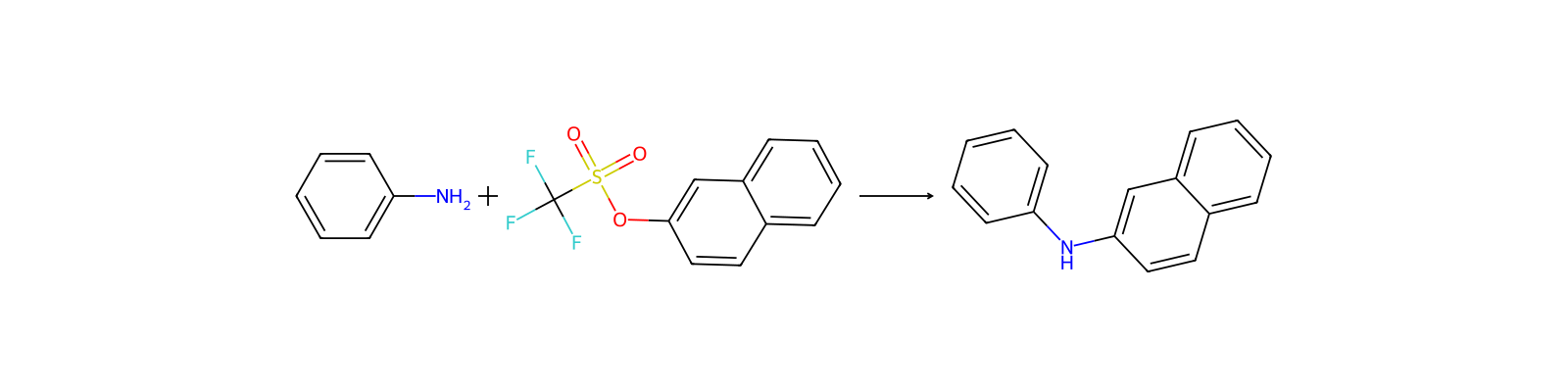
相关反应
27 条
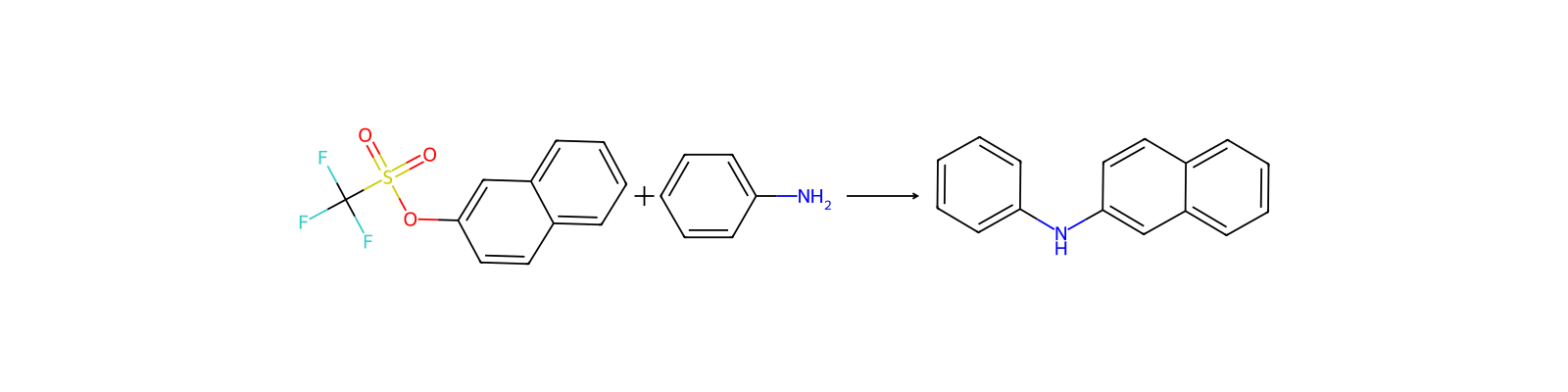
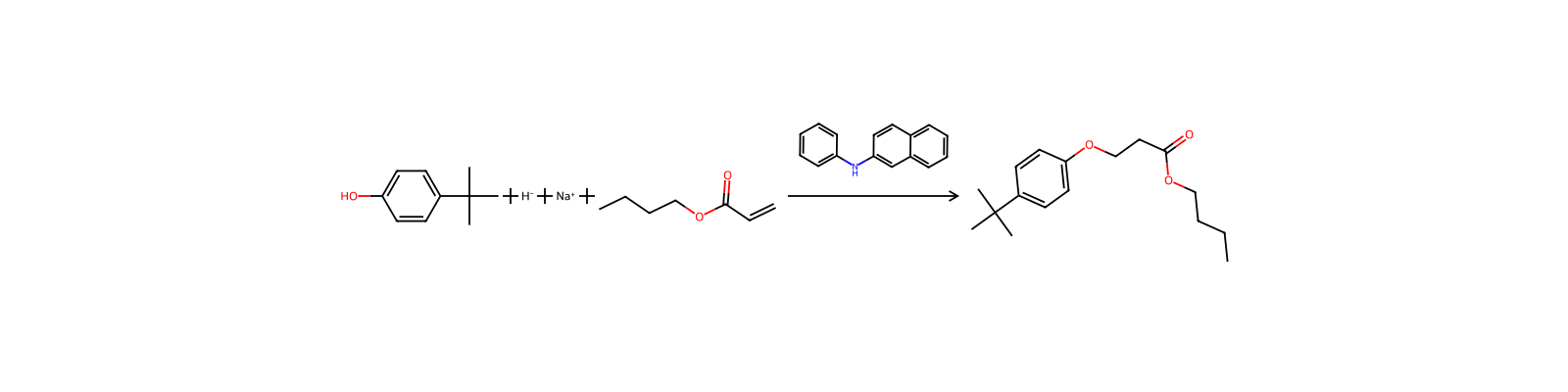
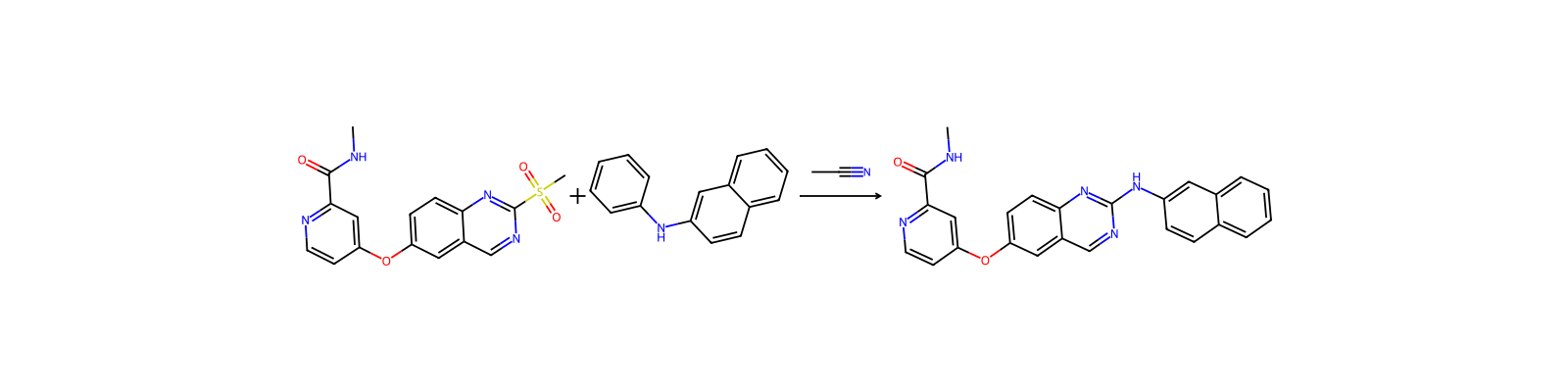
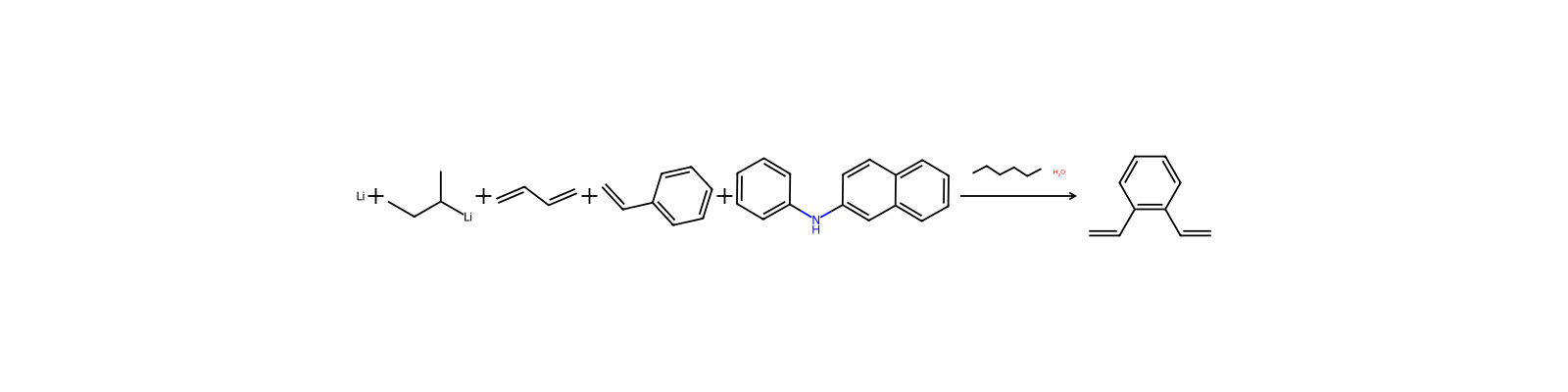
关联笔记
加载中…