醋酸钠 → HCID 86752510,化合物
反应方程式
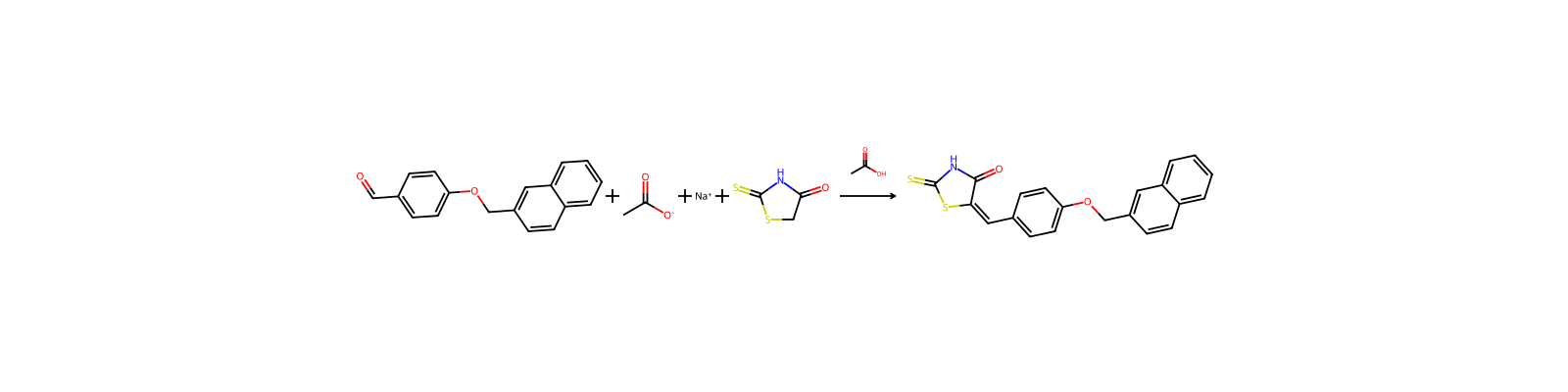
[CH:1]1[C:10]2[C:5](=[CH:6][CH:7]=[CH:8][CH:9]=2)[CH:4]=[CH:3][C:2]=1[CH2:11][O:12][C:13]1[CH:20]=[CH:19][C:16]([CH:17]=O)=[CH:15][CH:14]=1.C([O-])(=O)C.[Na+].[S:26]1[CH2:32][C:30](=[O:31])[NH:29][C:27]1=[S:28]>C(O)(=O)C>[CH:1]1[C:10]2[C:5](=[CH:6][CH:7]=[CH:8][CH:9]=2)[CH:4]=[CH:3][C:2]=1[CH2:11][O:12][C:13]1[CH:20]=[CH:19][C:16]([CH:17]=[C:32]2[S:26][C:27](=[S:28])[NH:29][C:30]2=[O:31])=[CH:15][CH:14]=1参与物
5



实验过程
Under a nitrogen atmosphere in a round bottom flask 4-[(naphth-2-yl)methoxy]benzaldehyde (5.24 g, 20 mmol) was dissolved in 100 ml of acetic acid. To this solution was added sodium acetate (5.74 g, 70 mmol) and rhodanine (2.66 g, 20 mmol). The reaction mixture was raised to the reflux temperature and maintained at this temperature. The progress of the reaction was monitored by thin layer chomratography.