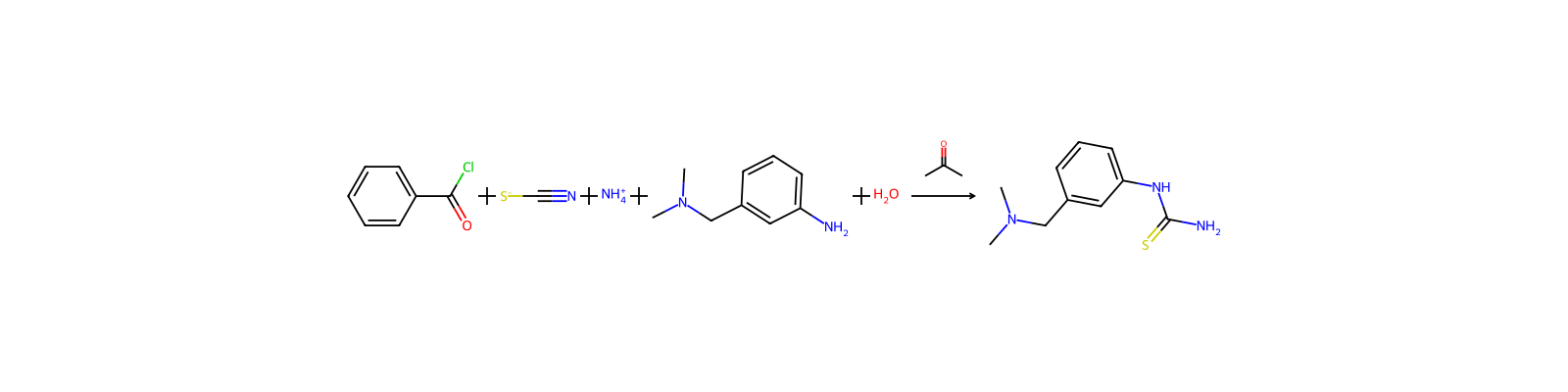
Benzoyl chloride (0.18 ml) was added to a solution of ammonium thiocyanate (0.12 g) in acetone (7 ml) and heated under reflux for 5 min. Subsequently, a solution of the compound (0.21 g) obtained in Example 38 in acetone (6 ml) was added. The reaction mixture was stirred at room temperature for 20 min and then water was added to give a yellow precipitate, which was separated off by filtration. To the recovered product, 10% aqueous sodium hydroxide solution (20 ml) was added and heated under reflux for 5 min. The reaction mixture was made acidic with 35% HCl, then weakly alkaline with 28% aqueous ammonia solution, and concentrated to 20 ml under reduced pressure. The resulting precipitate was filtered off and the filtrate was extracted with chloroform; the organic layer was dried with anhydrous magnesium sulfate and the solvent was concentrated under reduced pressure. The residue was purified by silica gel column chromatography (eluent, chloroform methanol=5:1) to give 0.1 g of the titled compound (yield, 35%).