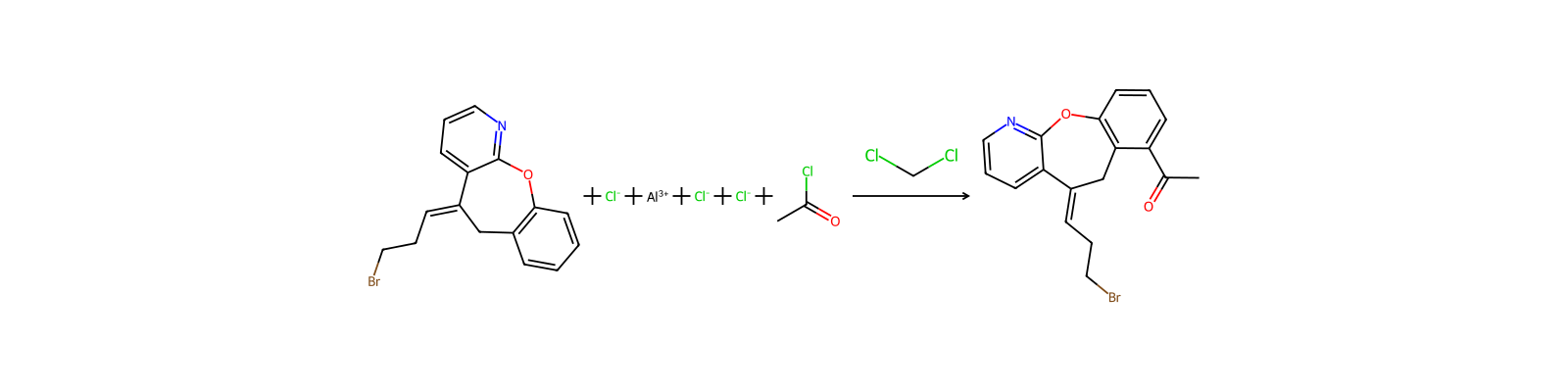
[Br:1][CH2:2][CH2:3][CH:4]=[C:5]1[C:15]2[C:10](=[N:11][CH:12]=[CH:13][CH:14]=2)[O:9][C:8]2[CH:16]=[CH:17][CH:18]=[CH:19][C:7]=2[CH2:6]1.[Cl-].[Al+3].[Cl-].[Cl-].[C:24](Cl)(=[O:26])[CH3:25]>ClCCl>[C:24]([C:19]1[C:7]2[CH2:6][C:5](=[CH:4][CH2:3][CH2:2][Br:1])[C:15]3[C:10]([O:9][C:8]=2[CH:16]=[CH:17][CH:18]=1)=[N:11][CH:12]=[CH:13][CH:14]=3)(=[O:26])[CH3:25]To a solution of example 53, step 1 (7.2 g) in dichloromethane (70 ml) was added aluminum chloride (9.1 g) and acetyl chloride (3.2 ml), and the mixture stirred at 0° C. for 10 minutes. The reaction mixture was poured into ice. The aqueous layer was extracted with ethyl acetate, and the organic layer was washed with saturated aqueous sodium chloride, and dried with magnesium sulfate. The solvent was distilled off under reduced pressure. The Residue was purified by silica gel chromatography, eluting with ethyl acetate-hexane (1:2) to give 7-acetyl-5-(3-bromopropylidene)-5,11-dihydro[1]benzoxepino[2,3-b]pyridine (7.9 g).