反应方程式
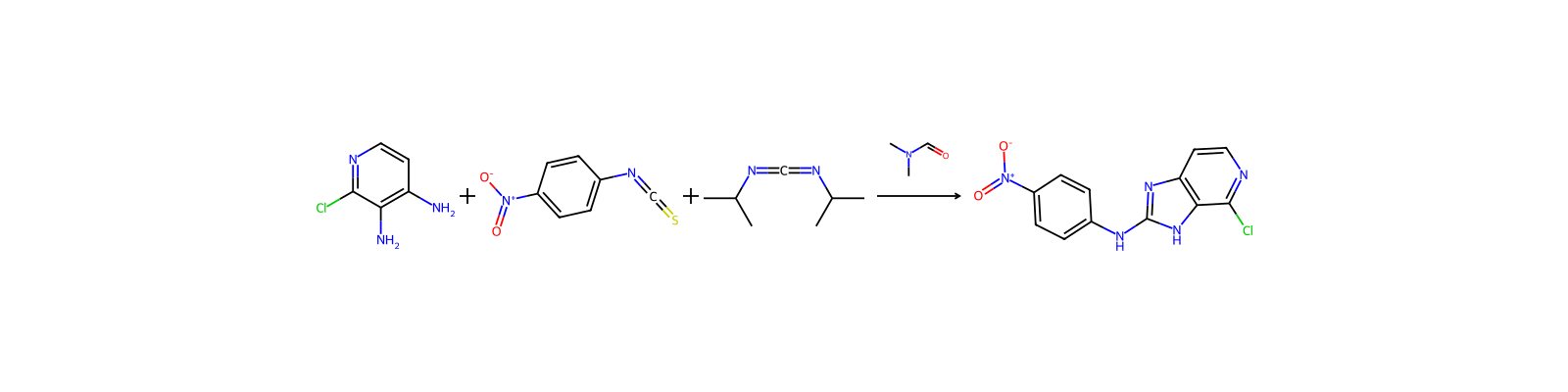
[NH2:1][C:2]1[C:3]([Cl:9])=[N:4][CH:5]=[CH:6][C:7]=1[NH2:8].[N+:10]([C:13]1[CH:18]=[CH:17][C:16]([N:19]=[C:20]=S)=[CH:15][CH:14]=1)([O-:12])=[O:11].CC(N=C=NC(C)C)C>CN(C=O)C>[Cl:9][C:3]1[C:2]2[NH:1][C:20]([NH:19][C:16]3[CH:15]=[CH:14][C:13]([N+:10]([O-:12])=[O:11])=[CH:18][CH:17]=3)=[N:8][C:7]=2[CH:6]=[CH:5][N:4]=1参与物
5


实验过程
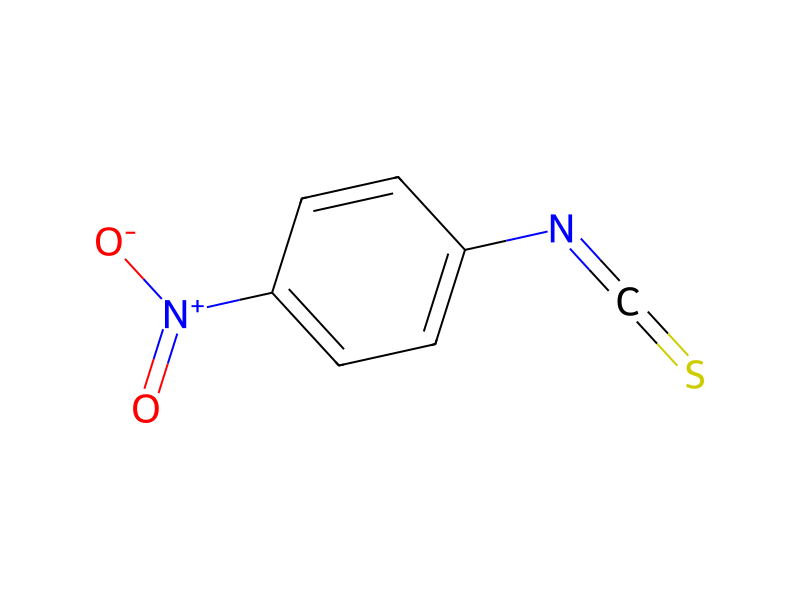
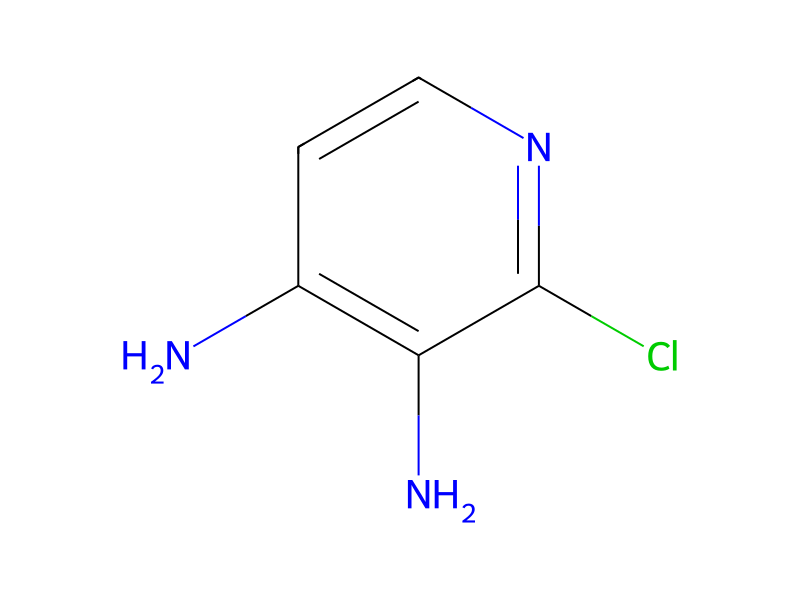
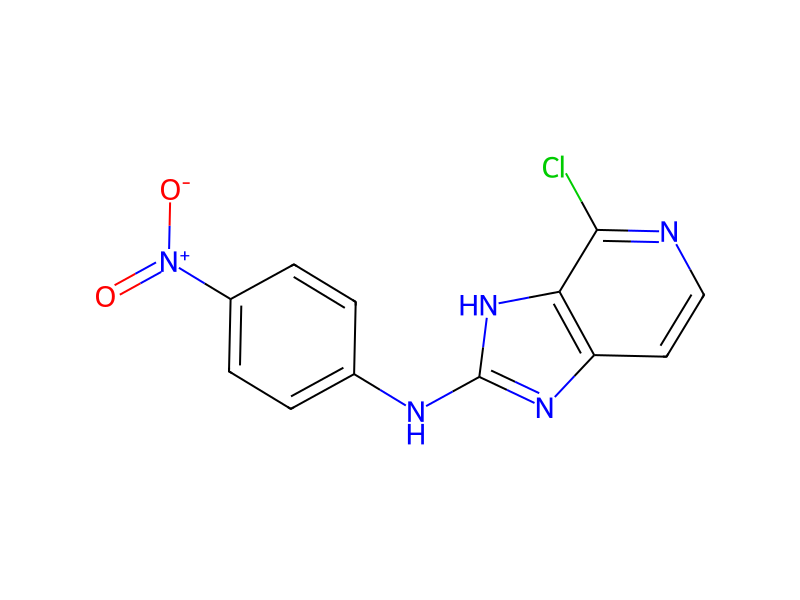
3.1 A solution of 0.72 g of 3,4-diamino-2-chloropyridine, 0.9 g of 4-nitrophenyl isothiocyanate and 0.78 ml of N,N-diisopropylcarbodiimide in 30 ml of DMF is stirred at room temperature for 16 hours, then at 500 for 6 hours. The solvent is separated off, and the residue is crystallised from methanol, giving 1.2 g of 4-chloro-2-(4-nitrophenylamino)-3H-imidazo-[4,5-c]pyridine (“6”).
后处理
- customThe solvent is separated off
- customthe residue is crystallised from methanol
来源与证据
- ORD记录
- ord-5af5aee4d7de41bbb82aa03f3bc06196
- 来源数据集
- uspto-grants-2010_04
- 专利号
- US07696224B2
关联笔记
加载中…