三乙胺 → 8-bromo-[1,2,4]triazolo[4,3-a]quinoxalin-1(2H)-one
HRID 711368
反应方程式
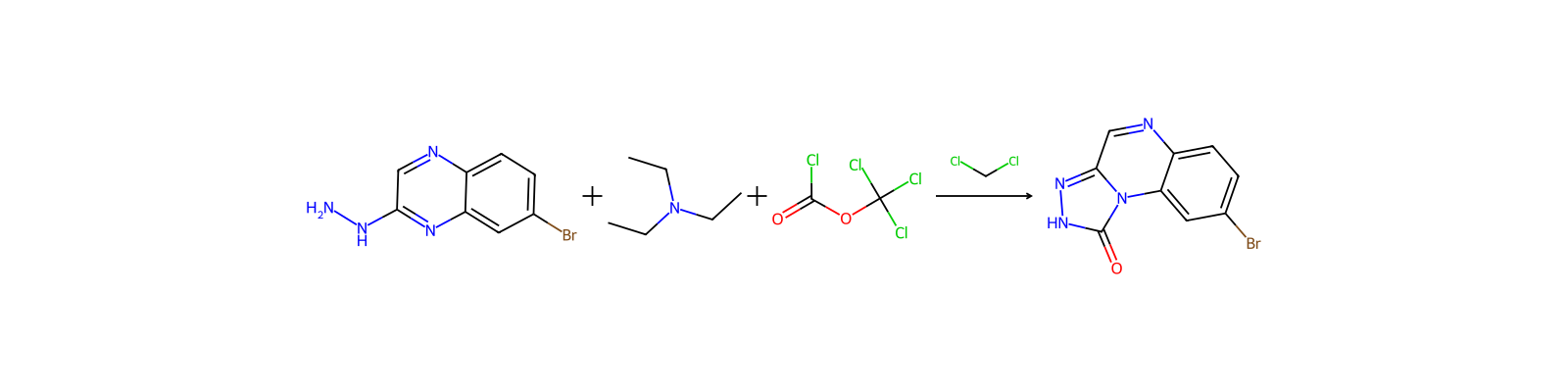
[Br:1][C:2]1[CH:11]=[C:10]2[C:5]([N:6]=[CH:7][C:8]([NH:12][NH2:13])=[N:9]2)=[CH:4][CH:3]=1.C(N(CC)CC)C.[O:21]=[C:22](Cl)OC(Cl)(Cl)Cl>ClCCl>[Br:1][C:2]1[CH:11]=[C:10]2[C:5]([N:6]=[CH:7][C:8]3[N:9]2[C:22](=[O:21])[NH:13][N:12]=3)=[CH:4][CH:3]=1参与物
5




实验过程
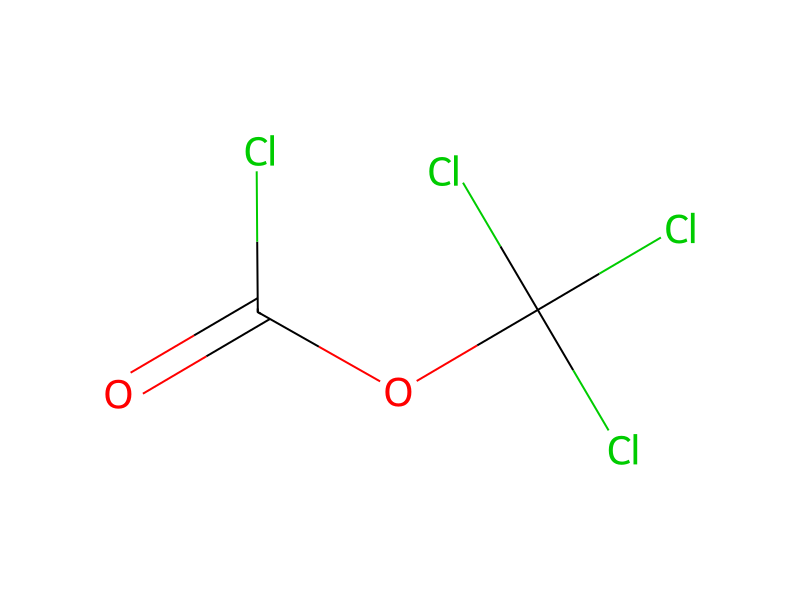
To the solution of 7-bromo-2-hydrazinylquinoxaline (200 mg, 0.83 mmol) in dichloromethane (5 mL) was added triethylamine (0.175 mL, 1.2 mmol), then the solution of diphosgene (0.055 mL, 0.46 mmol) in dichloromethane was added dropwise at 0° C. with stirring under nitrogen atmosphere. After stirring at r.t. for 5 h, the solvent was removed under vacuum, the residue was washed with water, and dried in vacuo to afford the title product 8-bromo-[1,2,4]triazolo[4,3-a]quinoxalin-1(2H)-one as yellow solid in 82% yield (180 mg). m/z 265 (M+H)+.