HomeMCPWorkbenchSkills
HomeWorkbenchNotificationsMe
llms.txt · MCP GuidePrivacy Policy · Terms of Service · Supportv1.8.3
  1. Home
  2. /Compound

Dipotassium Oxalate

HCID 11413
New reaction
Print

Completing data — refresh the page later to see the latest
Basic informationNames & identifiersPropertiesSafety & regulationChemistry & industryRelated reactionsCompound notes
Substructure searchFind similar structures

Basic information

CAS
583-52-8
Standard SMILES
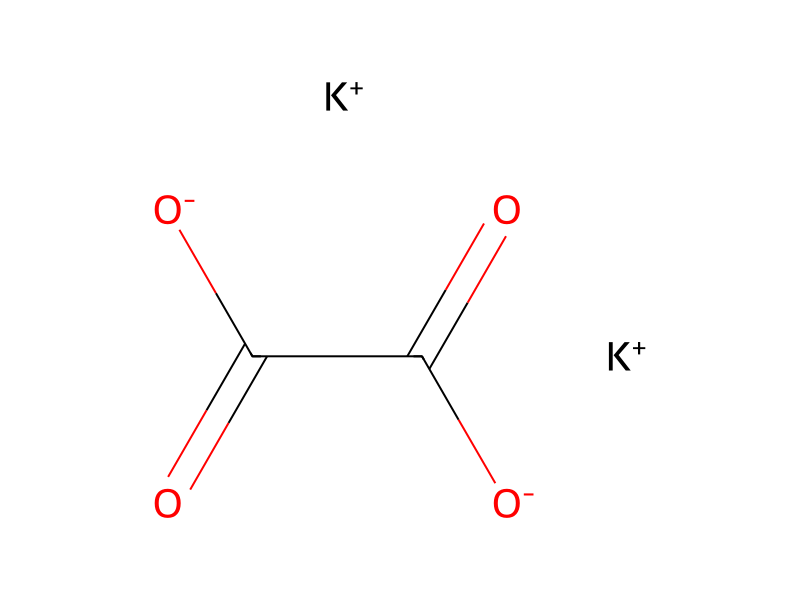
O=C([O-])C(=O)[O-].[K+].[K+]
InChIKey
IRXRGVFLQOSHOH-UHFFFAOYSA-L
Molecular formula
C2K2O4
Average molar mass
166.22 g/mol
Monoisotopic mass
165.90707145

Names & identifiers

Preferred name
Dipotassium Oxalate
IUPAC
dipotassium;oxalate
English name
Potassium oxalate
Molecular formula
C2K2O4
Molecular weight
166.22

Names & synonyms

Potassium oxalateDipotassium oxalate583-52-8Ethanedioic acid, dipotassium saltPotassium neutral oxalateoxalic acid dipotassium saltLC7F2W7I5BEthanedioic acid, potassium salt (1:2)KALI OXALICUMOXALIC ACID, DIPOTASSIUM SALTEthanedioic acid potassium salt (1:2)DTXSID6060393
Show more names
DIPTASSIUMOXALATEipotassium,oxalatedipotassiumethanedioatepotassiumneutraloxalateOxalic acid dipotassiumpotassiumoxalate(k2c2o4)oxalicacid,dipotassiumsaltPotassium Oxalate Anhydrous
RefChem:57878DTXCID7042358209-506-8Potassiumoxalatedipotassium;oxalateMFCD00012464dipotassium,oxalatedi-potassium oxalate

Database identifiers

CAS
583-52-8
PubChem CID
11413
DTXSID
DTXSID6060393
UNII
LC7F2W7I5B
EC Number
209-506-8
Nikkaji
J441C

Properties

Computed structural propertiesFilling in

Topological polar surface area
80.3 Ų
Hydrogen bond donors
0
Hydrogen bond acceptors
4
Rotatable bonds
0
Heavy atoms
8
Formal charge
0
Complexity
60.5

Experimental & physicochemical properties

Chemical ClassesMetals -> Organic Acids, Metal Salts
CosmeticsChelating
Density2.08 @25 °C
Physical DescriptionColorless odorless solid; Efflorescent in warm dry air; [Merck Index] White crystals or chunks; [Integra MSDS]

Physicochemical properties

Density
2.13 · 2.13
solubility
2 O · slightly soluble in H2O
color
white pwd
Odor
odorless
Water Solubility
392 g/L · 392g/L at 20℃
Cosmetics Ingredients Functions
ANTICORROSIVECHELATING
InChI
InChI=1S/C2H2O4.2K/c3-1(4)2(5)6;;/h(H,3,4)(H,5,6);;/q;2*+1/p-2
InChIKey
IRXRGVFLQOSHOH-UHFFFAOYSA-L

Safety & regulation

Safety information is for reference only and does not replace the supplier’s Safety Data Sheet (SDS), applicable regulations, or professional assessment.

GHS classification

GHS Classification · 6 items

Warning

H302+H312 (42%): Harmful if swallowed or in contact with skin [Warning Acute toxicity, oral; acute toxicity, dermal]

P264, P264+P265, P270, P280, P301+P317, P302+P352, P305+P351+P338, P317, P321, P330, P337+P317, P362+P364, and P501 (click each P-code to see the statement)

Aggregated GHS information provided per 300 reports by companies from 5 notifications to the ECHA C&L Inventory. Each notification may be associated with multiple companies.

Warning

H302: Harmful if swallowed [Warning Acute toxicity, oral]

Hazard information

Regulatory Information · 3 items

Chemical: Ethanedioic acid, dipotassium salt

REACH registered substance: Dipotassium oxalate (EC: 209-506-8)

Ethanedioic acid, dipotassium salt: Does not have an individual approval but may be used under an appropriate group standard

Other Safety InformationIMAP assessments - Ethanedioic acid, dipotassium salt: Environment tier I assessment
Hazards Summary · 1 item

Occurs as the monohydrate; Poisonous; [Merck Index] Dust is irritating to eyes, nose, and throat; Inhalation may cause systemic poisoning; Ingestion may cause cardiovascular collapse and delayed neuromuscular symptoms; [CHRIS] Caused arrhythmias and shock in women at lowest lethal dose of 1000 mg/kg; [RTECS] May cause severe irritation or burns to skin; May cause burns or injury to eyes; A nose, throat, and respiratory tract irritant; Heavy inhalation exposure may cause coughing, difficulty breathing, and chest pains; Chronic overexposure may lead to kidney injury; Toxic by ingestion and inhalation; Targets kidneys and nervous system; [Integra MSDS]

Hazard Classes and Categories · 3 items

Chemistry & industry

Pharmacology

FDA Pharmacological Classification · 2 items

KALI OXALICUM

Osmotic Laxative [EPC]; Potassium Compounds [CS]; Potassium Salt [EPC]; Increased Large Intestinal Motility [PE]; Osmotic Activity [MoA]; Inhibition Large Intestine Fluid/Electrolyte Absorption [PE]

MeSH Pharmacological ClassificationMaterials that add an electron to an element or compound, that is, decrease the positiveness of its valence. (From McGraw-Hill Dictionary of Scientific and Technical Terms, 5th ed)

Uses & manufacturing

Uses · 2 items

Used to bleach straw and to prevent in vitro blood coagulation; [Merck Index] Used in photography and to remove textile stains; [Hawley]

Photographic Processing [Category: Other]

Household ProductsInformation on 2 consumer products that contain Dipotassium Oxalate in the following categories is provided:
Use ClassificationCosmetics -> Chelating
General Manufacturing InformationEthanedioic acid, potassium salt (1:2): ACTIVE
Applications · 3 items

UsesPotassium oxalate is a white crystal or powder made by neutralizing oxalic acid with potassium carbonate. It is soluble in water 1:3 but not in alcohol. Potassium oxalate was used as an early developer for gelatin plates but is best known as the developer for platinum prints.

UsesCleaning and bleaching straw, removing stains in photography; in vitro blood anticoagulant; also in analytical chemistry.

Potassium oxalate, K2C204, H20, is odorless, efforescent, water-soluble, colorless crystals that decompose when heated. Sinks in and mixes slowly with water. Used in analytical chemistry and photography, and as a bleach and oxalic acid source.

Related reactions

4 records
New reaction record
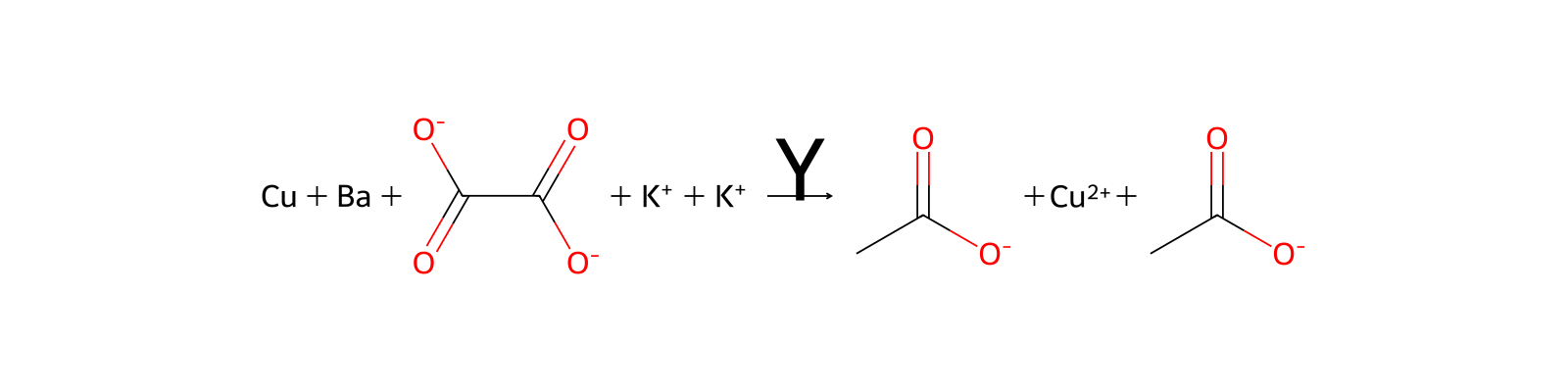
HRID 1180683 reaction equation
HRID 1180683As reactant
HRID 1381849 reaction equation
HRID 1381849As reactant
HRID 1606389 reaction equation
HRID 1606389As reactant
HRID 1650129 reaction equation
HRID 1650129As reactant

Compound notes

On this pageBasic informationNames & identifiersPropertiesSafety & regulationChemistry & industryRelated reactionsCompound notes
SMILES
C([O-])(=O)C([O-])=O.[K+].[K+]
CAS DataBase Reference
583 · 583-52-8(CAS DataBase Reference)
FDA UNII
7 F2W7I5B · LC7F2W7I5B
EPA Substance Registry System
Ethanedioic acid, potassium salt (1:2) (583-52-8)
Symbol(GHS)
7 · GHS07
Signal word
Warning
Hazard statements
312 · H312-H302-H319
Precautionary statements
264 · P264-P270-P301+P312-P330-P501-P280-P302+P352-P312-P322-P363-P501-P264-P280-P305+P351+P338-P337+P313P
TSCA
TSCA listed
REACH Registrations
Active

Acute Tox. 4 (100%)

Acute toxicity - category 4

Acute toxicity (Oral) - Category 4

Safety & protection

Protective Action Criteria (PAC) · 3 items

9.5 [mg/m3]

100 [mg/m3]

630 [mg/m3]

Toxicology

Adverse EffectsDermatotoxin - Skin burns.

Safety data

tsca
TSCA listed
Signal word
Warning
Symbol(GHS)
GHS07
Hazard statements
H312-H302-H319
REACH Registrations
Active
Precautionary statements
P264-P270-P301+P312-P330-P501-P280-P302+P352-P312-P322-P363-P501-P264-P280-P305+P351+P338-P337+P313P
General Description

Preparation methods

PreparationOxalic acid is the main raw material for the preparation of potassium oxalate. It is prepared by reacting potassium carbonate with oxalic acid. The reaction equation is: K₂CO₃ + H₂C₂O₄ = K₂C₂O₄ + CO₂↑ + H₂O.

Upstream & downstream products

Upstream raw materials

Potassium formatePotassium carbonateOxalic acid

Downstream products

POTASSIUM GLYCOLATEBenzenethiol, potassium salt1,4-Phenylenediacetonitrile1,2-Ethenediylbis(oxy) (9CI)