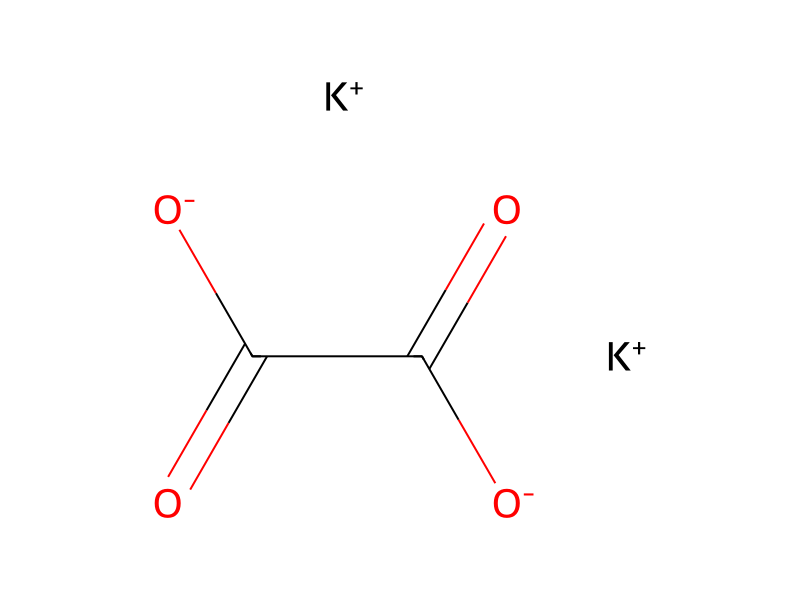
Dipotassium Oxalate → Cupric acetate
Reaction equation

[Cu:1].[Ba].[C:3]([O-])(=O)[C:4]([O-:6])=[O:5].[K+].[K+]>[Y]>[C:4]([O-:6])(=[O:5])[CH3:3].[Cu+2:1].[C:4]([O-:6])(=[O:5])[CH3:3]Participants
5
Reactant 3


Product 1

Reagents, catalysts & solvents 1

Procedure
The copper, barium, and yttrium solutions were mixed and the potassium oxalate solution was added all at once with vigorous stirring. The pH of the solution was 11.3. A brown gelatinous precipitate formed, and it was filtered, washed thoroughly with water, dried at 120° C., and crushed to a fine powder. The elemental analysis shown in the table below suggested YBa2Cu3 (OH)3 (Ox)2O3.H2O.
Workup
- customA brown gelatinous precipitate formed
- filtrationit was filtered
- washwashed thoroughly with water
- customdried at 120° C.
- customcrushed to a fine powder
Sources & evidence
- ORD record
- ord-13de05fb812843b0852718f386a9c921
- Source dataset
- uspto-grants-1989_02
- Patent number
- US04804649
Reaction notes
Loading…