StartseiteMCPSkillsWorkbenchOpenChem
StartseiteWorkbenchBenachrichtigungenMein Bereich
llms.txt · skill.md · MCP-AnleitungDatenschutz · Nutzungsbedingungen · Supportv1.8.5
  1. Startseite
  2. /Verbindung

Pivalaldehyd

Pivalaldehyde

HCID 12417
Neue Reaktion
Drucken
GrundinformationenÜberblickNamen und BezeichnerEigenschaftenSicherheit und RegulatorischesChemie und IndustrieZugehörige ReaktionenNotizen zur Verbindung
TeilstruktursucheÄhnliche Strukturen suchen

Grundinformationen

CAS
630-19-3
Standard-SMILES
CC(C)(C)C=O
InChIKey
FJJYHTVHBVXEEQ-UHFFFAOYSA-N
Summenformel
C5H10O
Durchschnittliche Molmasse
86,13 g/mol
Monoisotopische Masse
86,07316494

Überblick

2,2-dimethylpropanal is a member of the class of propanals that is propanal substituted by two methyl groups at position 2. It is a member of propanals and a 2-methyl-branched fatty aldehyde.

Namen und Bezeichner

Bevorzugter Name
Pivalaldehyde
IUPAC
2,2-dimethylpropanal
Lokaler Name
Pivalaldehyd
Englischer Name
Pivaldehyde
Summenformel
C5H10O
Molmasse
86.13

Namen und Synonyme

Trimethylacetaldehyde630-19-3PIVALALDEHYDEPivaldehyde2,2-DimethylpropanalNeopentanal2,2-DimethylpropionaldehydePivalic aldehydeNEOPENTALDEHYDESSC20260QWalpha,alpha-DimethylpropionaldehydeNSC-22043
Weitere Namen anzeigen
PALtert-Pentanal2,2-dimethyl-propanapropanal,2,2-dimethyl-LRIT1LRRC21
DTXSID2060888CHEBI:141557RefChem:174620DTXCID3043609211-134-6Propanal, 2,2-dimethyl-MFCD00006962tert-Valeraldehyde

Datenbank-Bezeichner

CAS
630-19-3
PubChem CID
12417
DTXSID
DTXSID2060888
ChEBI
CHEBI:141557
UNII
SSC20260QW
EC Number
211-134-6
Nikkaji
J102.084F

Eigenschaften

Berechnete Struktureigenschaften

XLogP
1,1
Polarare Oberfläche (TPSA)
17,1 Ų
H-Brücken-Donoren
0
H-Brücken-Akzeptoren
1
Frei drehbare Bindungen
1
Schwere Atome
6
Formalladung
0
Komplexität
49,4

Experimentelle und physikochemische Eigenschaften

Chemical ClassesOther Classes -> Aldehydes
SpringerMaterials PropertiesSchoenflies notation
Vapor Pressure71.2 [mmHg]
Physical DescriptionColorless liquid; [Merck Index] mp = 6 deg C; [Alfa Aesar MSDS]

Physikochemische Eigenschaften

Schmelzpunkt
6 °C · 6 °C
Siedepunkt
74 · 74–76 °C (165–169 °F; 347–349 K)
Dichte
0.78 · 0.78
Brechungsindex
1.38 · 1.38
Flammpunkt
20 °C · 20 °C
storage temp.
2 · 2-8°C
Löslichkeit
Chloroform, Ethyl Acetate (Slightly), Methanol (Slightly)
Aggregatzustand
clear liquid

Sicherheit und Regulatorisches

Sicherheitsangaben dienen nur zur Orientierung und ersetzen weder das Sicherheitsdatenblatt (SDB) des Lieferanten noch geltende Vorschriften oder eine fachliche Bewertung.

GHS-Klassifizierung

GHS Classification · 4 Einträge

Danger

H225 (100%): Highly Flammable liquid and vapor [Danger Flammable liquids]

P210, P233, P240, P241, P242, P243, P261, P264, P271, P280, P302+P352, P303+P361+P353, P304+P340, P319, P321, P332+P317, P362+P364, P370+P378, P403+P233, P403+P235, P405, and P501 (click each P-code to see the statement)

Aggregated GHS information provided per 66 reports by companies from 10 notifications to the ECHA C&L Inventory. Each notification may be associated with multiple companies.

Gefahrenhinweise

Regulatory InformationREACH registered substance: Pivalaldehyde (EC: 211-134-6)
Hazards SummaryAn irritant; [Alfa Aesar MSDS]
Hazard Classes and CategoriesFlam. Liq. 2 (100%)

Sicherheitsdaten

F
8
wgk
3
tsca
TSCA listed
ridadr
UN 1989 3/PG 2
hs_code
2912190090
risk_code
11-37/38-43
hazard_code
F,Xi,F+
safety_code
16-23-33-24
hazard_class
3
packing_group
III
Speicherklasse
3 - Flammable liquids

Chemie und Industrie

Verwendung und Herstellung

UsesUsed as a reagent in synthetic organic chemistry; [Merck Index]
General Manufacturing InformationPropanal, 2,2-dimethyl-: ACTIVE
Anwendungen · 2 Einträge

BeschreibungTrimethylacetaldehyde (also known as Pivaldehyde) is the trimethyl form of acetaldehyde. It is an aldehyde with a sterically bulky R group, the tertiary-butyl group being attached to the carbonyl, >C=O. It is a useful reagent in organic synthesis, pharmaceuticals, agrochemicals and dyestuff. It is useful in streoselective synthesis application as well as in aldol condensation reactions. As a derivative of acetaldehyde, trimethyl acetaldehyde can be used for the production of acetate. It can also be used as the precursor for manufacturing of pyridine derivatives, pentaerythritol, and crotonaldehyde.

VerwendenCommonly used building block in aldol condensation reactions.
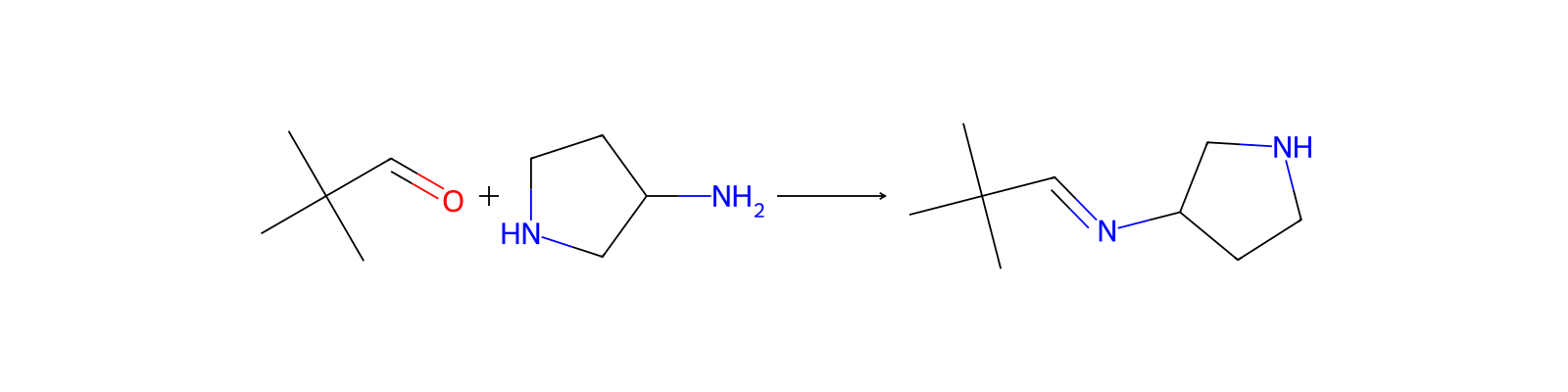
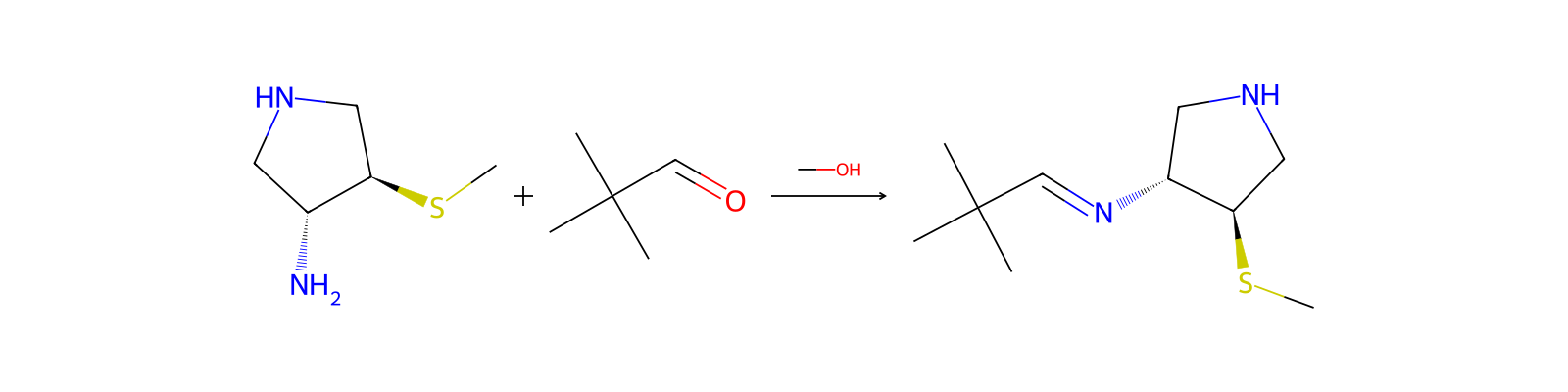
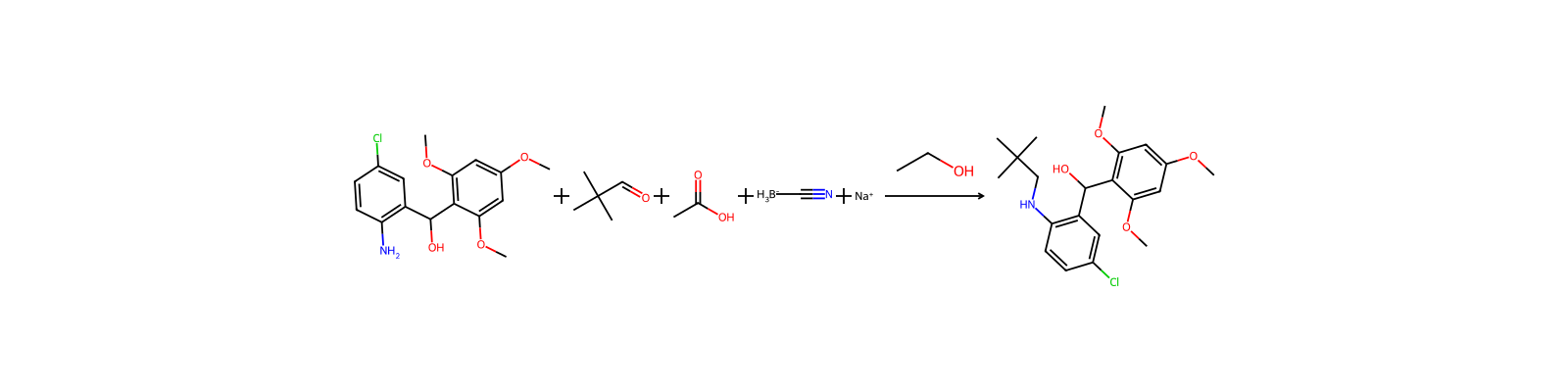
Vor- und nachgelagerte Produkte

Vorgelagerte Rohstoffe

3,3-Dimethyl-2-oxobuttersure2-Hydroxy-2-methylpropionaldehyd

Nachgelagerte Produkte

Clomazone2,2-Dimethylpropan-1,3-diol(S)-2-MethylprolineMethylisocyanacetatN-(Trimethylsilyl)-2,2-dimethylpropane-1-imine

Zugehörige Reaktionen

342
Reaktionsaufzeichnung erstellen
HRID 1311als Edukt
HRID 1312als Edukt
HRID 1314als Edukt
HRID 1316als Edukt
HRID 1317als Edukt
HRID 1791als Edukt
HRID 1802als Produkt
HRID 1809als Edukt
ZurückSeite 1 von 43

Notizen zur Verbindung

Auf dieser SeiteGrundinformationenÜberblickNamen und BezeichnerEigenschaftenSicherheit und RegulatorischesChemie und IndustrieZugehörige ReaktionenNotizen zur Verbindung
Farbe
Colorless to Light yellow
Wichte
0.793 · 0.793
Wasserlöslichkeit
Negligible
BRN
506060 · 506060
Henry's Law Constant
4.1 · 4.1×10-2 mol/(m3Pa) at 25℃, Wang et al. (2017)
Dielectric constant
9.05 · 9.0500000000000007
Stabilität
Air Sensitive, Volatile
InChI
1S/C5H10O/c1-5(2,3)4-6/h4H,1-3H3
InChIKey
FJJYHTVHBVXEEQ-UHFFFAOYSA-N
SMILES
[H]C(=O)C(C)(C)C
CAS Datenbank
630 · 630-19-3(CAS DataBase Reference)
NIST chemische Informationen
2 · Propanal, 2,2-dimethyl-(630-19-3)
EPA chemische Informationen
2 · Propanal, 2,2-dimethyl- (630-19-3)
Hazard Classifications
Eye Irrit. 2Flam. Liq. 2Skin Irrit. 2STOT SE 3
2,2-Dimethylhexan-3-ol
1,9-Bis-Boc-1,5,9-triazanonane
methyl (2S)-2-amino-3,3-dimethylbutanoate
2,2-Dimethyl-3-hexanone
(2S,5S)-(-)-2-tert-Butyl-3-methyl-5-benzyl-4-imidazolidinone
Ethyl-4,4-dimethyl-3-oxovalerat
2-Amino-5-tert-butyl-1,3,4-thiadiazole
2R,5S)-5-benzyl-2-tert-butyl-3-MethyliMidazolidin-4-one