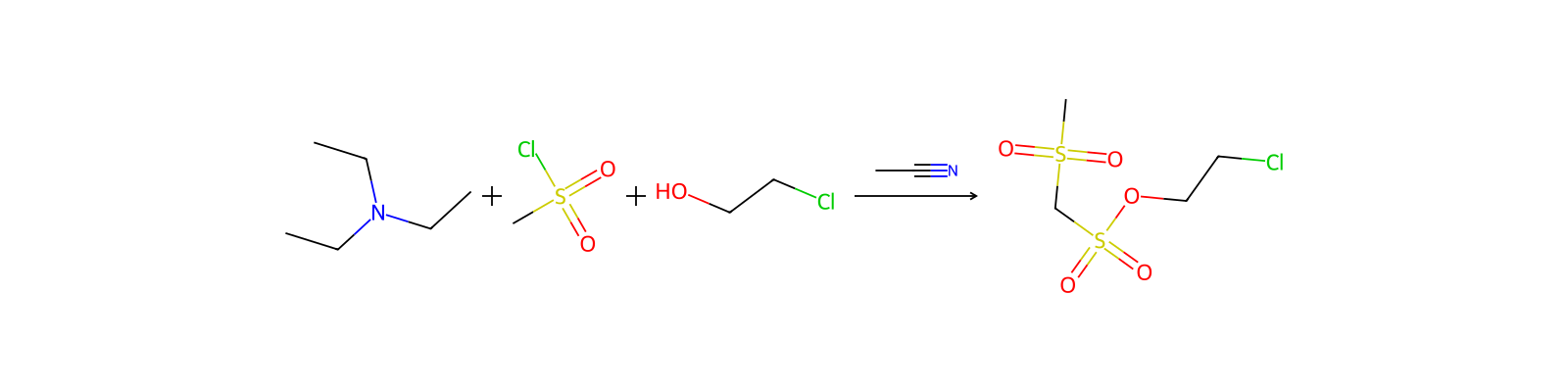
HRID 4725As reactant
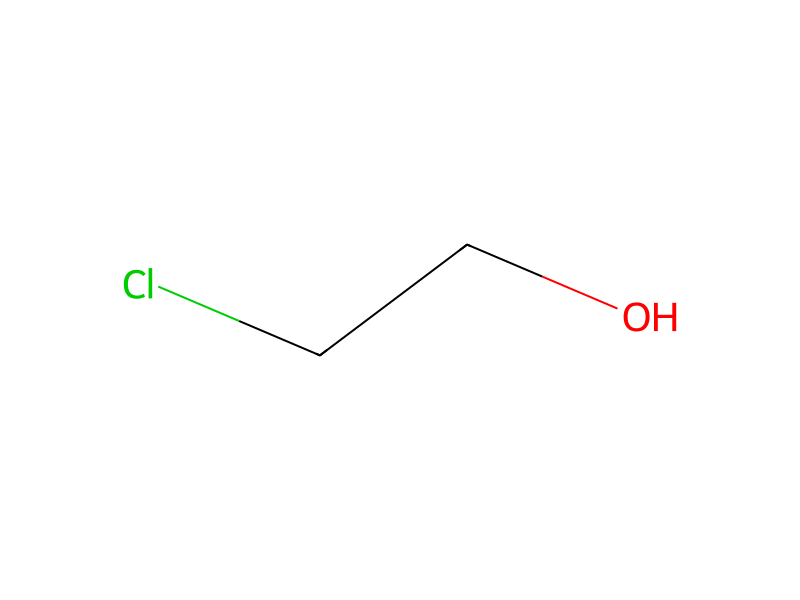
107-07-3OCCClSZIFAVKTNFCBPC-UHFFFAOYSA-NEthylene chlorohydrin is a colorless liquid with an ether-like odor. It is soluble in water and is also a combustible liquid. Its vapors are heavier than air and it is very toxic by inhalation and skin absorption. Prolonged exposure to low concentrations or short term exposure to high concentrations may result in adverse health effects.
107-07-3、59826-67-4DTXSID1021877CHEMBL191244CHEBI:28200Toxic Gases & Vapors -> Other Toxic Gases & Vapors
Flammable agents - 2nd degree
log Kow = -0.06
-0.06
0.03
FAINT ETHEREAL ODOR
SWEET, PLEASANT
Faint ether-like odor.
1.197 (EPA, 1998) - Denser than water; will sink
1.197 @ 20 °C/4 °C
WHEN HEATED WITH WATER TO 100 °C IT DECOMPOSES INTO GLYCOL & ALDEHYDE; WHEN HEATED TO 184 °C, IT DECOMPOSES INTO ETHYLENE CHLORIDE & ACETALDEHYDE; DENSITY OF SATURATED AIR: 1.011 @ 20 °C; 1.022 @ 30.3 °C; PERCENT IN SATURATED AIR: 0.644 @ 20 °C; 1.32 @ 30.3 °C
Relative density (water = 1): 1.2
1.2
1.44 @ 20°C
COLORLESS GLYCERINE-LIKE LIQ
Safety information is for reference only and does not replace the supplier’s Safety Data Sheet (SDS), applicable regulations, or professional assessment.
Danger
H300: Fatal if swallowed [Danger Acute toxicity, oral]
P260, P262, P264, P270, P271, P280, P284, P301+P316, P302+P352, P304+P340, P316, P320, P321, P330, P361+P364, P403+P233, P405, and P501 (click each P-code to see the statement)
This chemical does not meet GHS hazard criteria for 3.7% (11 of 299) of reports.
Danger
H226 (76.6%): Flammable liquid and vapor [Warning Flammable liquids]
Chemical: Ethanol, 2-chloro-
Regulation (EC) No 178/2002 (amended)
Ethylene Chlorohydrin is listed in the dataset of EPA Human Health Benchmarks for Pesticides under the Safe Drinking Water Act (40 eCFR 141)
REACH registered substance: 2-chloroethanol (EC: 203-459-7)
Ethylene chlorohydrin: HSNO Approval: HSR002990 Approved with controls
The New Jersey Worker and Community Right to Know Act requires public and private employers to provide information about hazardous substances at their workplaces. (N.J.S.A. 34:5A-1 et. seq.)
Its decomposition products will react with water or steam to produce toxic and corrosive fumes of phosgene and hydrogen chloride. Vapors are heavier than air and may flash back to a source of ignition. (EPA, 1998)
· HIGHLY FLAMMABLE: Will be easily ignited by heat, sparks or flames.
Flammable. Gives off irritating or toxic fumes (or gases) in a fire. Above 60 °C explosive vapour/air mixtures may be formed.
IN VIVO, IT IS OXIDIZED TO CHLOROACETIC ACID ... .
2-CHLOROETHANOL WAS GIVEN ORALLY TO RATS. LIVER GLUTATHIONE WAS RAPIDLY DEPLETED & S-CARBOXYMETHYLGLUTATHIONE WAS FORMED. TOXICITY OF 2-CHLOROETHANOL IS PROBABLY DUE TO ITS CONVERSION TO CHLOROACETALDEHYDE IN VIVO.
2-chloroethanol was detected in the blood and liver of rats during the first 24 days after oral dosing of CH2ClCH2Cl /ethylene dichloride/ at 750 mg/kg.
Disposition and metabolism of 1-(2-chloroethyl)-3-(2',3',4'-tri-O-acetylribopyranosyl)-1-nitrosourea (RPCNU) were studied in rats after labeling RPCNU with (14)C- in 3 different positions. Within the first min after injection, most of the radioactivity derived from ethyl-(14)C groups was recovered as volatile products. Among these, 2-chlorothanol was identified as a main component.
For more Metabolism/Metabolites (Complete) data for 2-CHLOROETHANOL (6 total), please visit the HSDB record page.
... MAY BE ABSORBED THROUGH THE SKIN.
... MAY BE ABSORBED THROUGH ... GI TRACT, OR BY INHALATION.
The excretion & tissue distribution of (14)C-labeled chloroethanol were studied in rats following single oral admin of 5 & 50 mg/kg. At both dose levels, the radioactivity was rapidly eliminated, mainly in the urine. On the first day 77.2% of the dose was found in the urine, 1.7% in the feces, and 1.0% as CO2 in the expired air. Only 2.8% was excreted by these routes during the following 3 days. The residual radioactivity after 4 days was almost equally distributed. Approx 0.4% of the dose was in the liver and 3% in the whole organism.
Used as a solvent and chemical intermediate; it is formed during the sterilization of supplies with ethylene oxide; [ACGIH] Used as a solvent for cellulose ethers, machine cleaning, and spot removing; [HSDB]

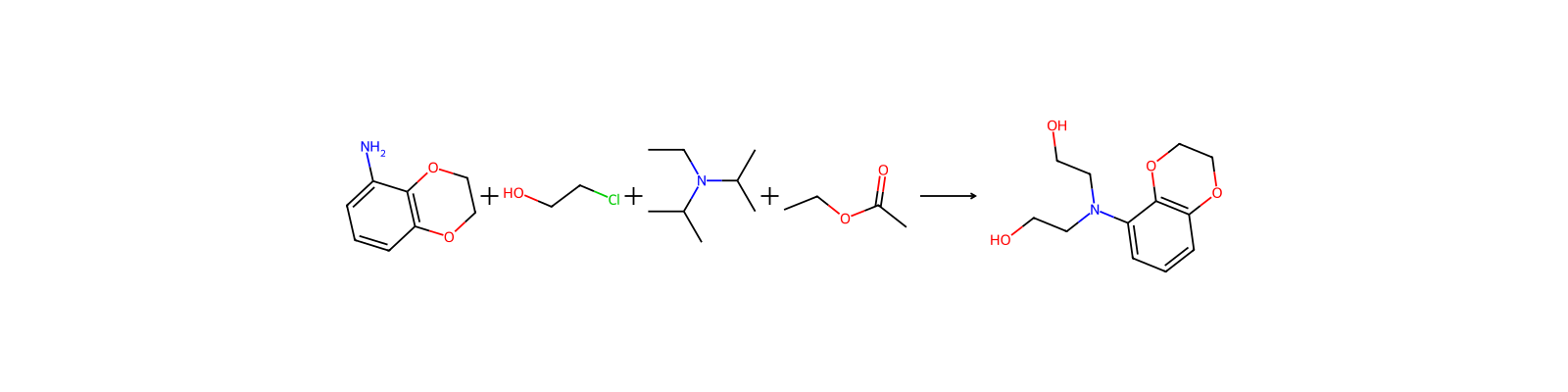




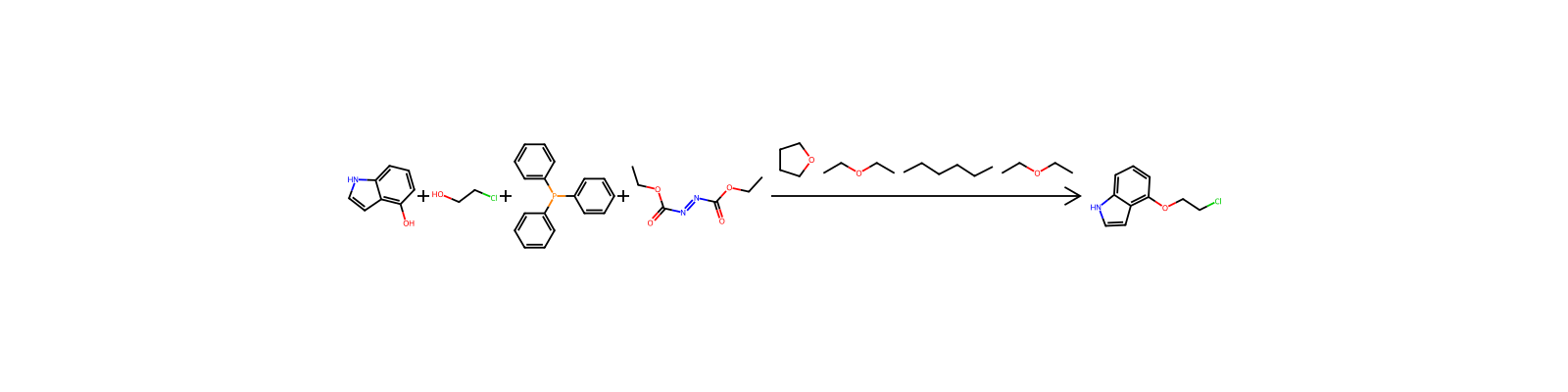
Colorless liquid.
greater than or equal to 100 mg/mL at 66 °F (NTP, 1992)
SOL IN ALL PROPORTIONS IN WATER, ALC, ORG SOLVENTS; SLIGHTLY SOL IN ETHER
SOL IN VARIOUS RESINS
Infinitely soluble in aqueous solution (1X10+6 mg/l @ 25 °C)
Solubility in water: miscible
Miscible
140 °F (EPA, 1998)
40 °C
105 °F (40 °C) (open cup)
60 °C c.c.
140 °F
140 °F
262 °F at 760 mmHg (EPA, 1998)
128-130 °C @ 760 MM HG
128-130 °C
262 °F
128.8 °C @760 [mm Hg]
262 °F
-89.5 °F (EPA, 1998)
-67.5 °C
-67 °C
-90 °F
-67.5 °C
-90 °F
Very toxic; probable oral lethal dose in humans is 50-500 mg/kg or between 1 teaspoon and 1 ounce for a 70 kg (150 lb.) person. Poisoning causes liver and kidney degeneration and irritates mucous membranes; it may be cumulative. Several fatal cases with brain edema and lung edema have been reported from industrial exposure by inhalation and skin contact. It is more toxic by skin contact than orally. (EPA, 1998)
· TOXIC; may be fatal if inhaled, ingested or absorbed through skin.
In acute animal experiments, ethylene chlorohydrin is a potent central nervous system depressant. Autopsy of a worker who died from ethylene chlorohydrin poisoning showed severe damage to the brain, liver, and other organs. [ACGIH] Absorbed through the skin and severely irritating to the eyes and respiratory tract; Causes heart, liver, and kidney damage and respiratory failure; [ICSC] Ethylene chlorohydrin is more toxic to the kidneys than other halogenated hydrocarbons. It readily penetrates through rubber gloves and the skin. [LaDou, p. 417]
1135 131
1135 131
Do not breathe fumes from burning material. Air purifying respirator or self-contained breathing apparatus, coat, pants, gloves, and boots should be worn. No skin surface should be exposed. Bands around legs, arm and waist should be provided.
Use water spray, powder, alcohol-resistant foam, carbon dioxide. In case of fire: keep drums, etc., cool by spraying with water.
Fresh air, rest. Half-upright position. Artificial respiration may be needed. Refer for medical attention.
Remove contaminated clothes. Rinse and then wash skin with water and soap. Refer for medical attention .
First rinse with plenty of water for several minutes (remove contact lenses if easily possible), then refer for medical attention.
Rinse mouth. Induce vomiting (ONLY IN CONSCIOUS PERSONS!). Refer for medical attention .
· CALL 911. Then call emergency response telephone number on shipping paper. If shipping paper not available or no answer, refer to appropriate telephone number listed on the inside back cover.
· ELIMINATE all ignition sources (no smoking, flares, sparks or flames) from immediate area.
Signs and Symptoms of Acute Chloroethanol Exposure: Signs and symptoms of acute exposure to chloroethanol may include weakness, dizziness, confusion, visual disturbances, incoordination, shock, seizures, and coma. Dyspnea (shortness of breath), pulmonary edema, respiratory depression, and respiratory failure may occur. Weak pulse, hypotension (low blood pressure), and cyanosis (blue tint to the skin and mucous membranes) may be observed. Nausea, vomiting, and hematuria (bloody urine) may be seen after exposure. Liver and kidney damage may also occur. Chloroethanol is irritating to the skin and mucous membranes.
General First Aid:
(General first aid procedures)
· Wear positive pressure self-contained breathing apparatus (SCBA).
TIH (Toxic Inhalation Hazard) - Term used to describe gases and volatile liquids that are toxic when inhaled. Some are TIH materials themselves, e.g., chlorine, and some release TIH gases when spilled in water, e.g., chlorosilanes. [ERG 2016].
2.0 [ppm]
1. Remove all ignition sources. 2. Ventilate area of spill or leak. 3. For small quantities, absorb on paper towels. Evaporate in a safe place (such as a fume hood). Allow sufficient time for evaporating vapors to completely clear the hood ductwork. Burn the paper in a suitable location away from combustible materials. Large quantities can be collected and atomized in a suitable combustion chamber equipped with an appropriate effluent gas cleaning device. Ethylene chlorohydrin should not be allowed to enter a confined space, such as a sewer, because of the possibility of an explosion.
SRP: At the time of review, criteria for land treatment or burial (sanitary landfill) disposal practices are subject to significant revision. Prior to implementing land disposal of waste residue (including waste sludge), consult with environmental regulatory agencies for guidance on acceptable disposal practices.
1. By absorbing it in vermiculite, dry sand, earth or a similar material and disposing in a secured sanitary landfill. 2. By atomizing in a suitable combustion chamber equipped with an appropriate effluent gas cleaning device.
Personal protection: complete protective clothing including self-contained breathing apparatus. Collect leaking and spilled liquid in sealable containers as far as possible. Absorb remaining liquid in sand or inert absorbent. Then store and dispose of according to local regulations.
Simultaneous administration of ethyl alcohol increased the LD50 of ethylene chlorohydrin regardless of the route of administration (peroral or percutaneous). Necrotic lesions produced in the liver and kidney by ethylene chlorohydrin were also reduced in number and extent by ethanol. Blood concn of the chlorohydrin were raised by ethanol administration, which suggests that the protective effect is due to competitive inhibition of chlorohydrin metabolism to chloroacetaldehyde.
2-Chloroethanol is thought to interfere with the detoxification mechanisms of the alkaloids. Chickens were administered monocrotaline after separate groups were pretreated with BHA and 2-chloroethanol. There was an apparent deleterious effect of monocrotaline in 2-chloroethanol-pretreated chickens, similar to that in non-pretreated birds, with respect to growth rates, morbility, mortality, and hepatic histopatholoqy. Monocrotaline pyrrole formation was measured in chickens pretread with BHA and 2-chloroethanol by means of the Erlich reagent reaction spectrophotometric assay. There was a significant difference in pyrrole production between the treatment groups. The 2-chloroethanol plus-monocrotaline (40 mg/kg), BHA (500 mg/kg) plus monocrotaline, nonocrotaline, BHA (100 mg/kg) plus monocrotaline (20 mg/kg), and BHA (500 mg/kg) plus 2-chloroethanol and monocrotaline groups had decreasing amounts of pyrrole metabolite formation respectively.
LC50 Pimephales promelas (fathead minnow) 83.7 mg/l/96 hr (95% confidence limit 75.0-93.4 mg/l), flow-through bioassay with measured concentrations, 24.0 °C, dissolved oxygen 7.1 mg/l, hardness 52.3 mg/l calcium carbonate, alkalinity 44.2 mg/l calcium carbonate, and pH 7.22.
TERRESTRIAL FATE: If released on soil 2-chloroethanol would be expected to leach because of its estimated very low adsorptivity to soil. In view of its low estimated Henry's Law constant, 1.04X10⁻⁷ atm-cu m/mole(1), and low estimated adsortivity to soil, 2-chloroethanol would not be expected to volatilize from moist soil. However, it would be expected to volatilize from dry soil and other surfaces because it's vapor pressure is appreciable, 7.18 mm Hg at 25 °C(2). 2-Chloroethanol was readily biodegradable in screening tests and biological treatment simulations tests which suggest that it may biodegrade in soil(SRC).
AQUATIC FATE: If released in water, the fate of 2-chloroethanol is not clear. In view of its low estimated Henry's Law constant, 1.04X10⁻⁷ atm-cu m/mole(1), 2-chloroethanol would not be expected to volatilize from surface waters. It would not be expected to adsorb to sediment, bioconcentrate in fish, photolyze or hydrolyze. However, based on data from screening tests, it may biodegrade(SRC).
ATMOSPHERIC FATE: 2-Chloroethanol reacts with photochemically-produced hydroxyl radicals in the atmosphere and has a rate constant of 1.40X10⁻¹² cu cm/molec-sec(1) for this reaction. Assuming a hydroxyl radical concn of 5X10+5 per cu cm, the half-life of 2-chloroethanol in the atmosphere will be 11.5 days(SRC). 2-Chloroethanol is soluble in water(2) and would be subject to washout by rain.
2-Chloroethanol and 2-chloroethanol fatty acid esters are byproducts of the ethylene oxide fumigation of foods(1). Furthermore, 2-chloroethanol fatty acid esters are hydrolyzed to 2-chloroethanol in model digestive systems(1). The level of 2-chloroethanol found in samples of black walnuts and a variety of spices (item, concn in ppm) was: allspice, 810-880; black pepper, 0.2-45; black walnuts, 1.9-4.8; chili powder, 0.8-45; cocoa, not detected; mint flakes, 0.6; mushrooms, not detected - 0.4; Nacho cheese mix, not detected - 14; nutmeg, 16-37; onion powder, not detected; paprika, not detected - 513; parsley flakes, 0.4; red pepper, 3.6-490; seafood seasoning, 33; taco seasoning, 115-117; vegetable flakes, 0.35-0.6; and white pepper, 0.78(1).
The substance can be absorbed into the body by inhalation, through the skin and by ingestion.
inhalation, skin absorption, ingestion, skin and/or eye contact
Cough. Dizziness. Headache. Nausea. Sore throat. Vomiting.
MAY BE ABSORBED! Further see Inhalation.
Redness. Pain. Severe deep burns.
See Inhalation.
irritation mucous membrane; nausea, vomiting; dizziness, incoordination; numb; visual disturbance; headache; thirst; delirium; low blood pressure; collapse, shock, coma; liver, kidney damage
The following link will take the user to the National Toxicology Program (NTP) Test Agent Search Results page, which tabulates all of the "Standard Toxicology & Carcinogenesis Studies", "Developmental Studies", and "Genetic Toxicity Studies" performed with this chemical. Clicking on the "Testing Status" link will take the user to the status (i.e., in review, in progress, in preparation, on test, completed, etc.) and results of all the studies that the NTP has done on this chemical. [http://ntp-apps.niehs.nih.gov/ntp_tox/index.cfm?fuseaction=ntpsearch.searchresults&searchterm=107-07-3]
The following medical procedures should be made available to each employee who is exposed to ethylene chlorohydrin at potentially hazardous levels: ... A complete history and physical examination. ... Examination of the respiratory system, liver, kidneys, and central nervous system should be stressed. The skin should be examined for evidence of chronic disorders. ... A profile of liver function should be obtained by using a medically acceptable array of biochemical tests. ... Since kidney damage has been observed from exposure, a urinalysis should be obtained to include at a minimum specific gravity, albumin, glucose, and microscopic /examination/ of centrifuged sediment. ... The aforementioned medical examinations should be repeated on a semi-annual basis for the first two years and annually thereafter.
This action promulgates standards of performance for equipment leaks of Volatile Organic Compounds (VOC) in the Synthetic Organic Chemical Manufacturing Industry (SOCMI). The intended effect of these standards is to require all newly constructed, modified, and reconstructed SOCMI process units to use the best demonstrated system of continuous emission reduction for equipment leaks of VOC, considering costs, non air quality health and environmental impact and energy requirements. ETHYLENE CHLOROHYDRIN is produced, as an intermediate or a final product, by process units covered under this subpart.
Releases of CERCLA hazardous substances are subject to the release reporting requirement of CERCLA section 103, codified at 40 CFR part 302, in addition to the requirements of 40 CFR part 355. Chloroethanol is an extremely hazardous substance (EHS) subject to reporting requirements when stored in amounts in excess of its threshold planning quantity (TPQ) of 500 lbs.
No currently registered in the U.S. for use as a pesticide; [HSDB]
Metal Degreasing [Category: Clean]
For 2-Chloroethanol (USEPA/OPP Pesticide Code: 600502) there are 0 labels match. /SRP: Not registered for current use in the U.S., but approved pesticide uses may change periodically and so federal, state and local authorities must be consulted for currently approved uses./
MFR OF INSECTICIDES; TREATING SWEET POTATOES BEFORE PLANTING
Introduction of hydroxyethyl group in organic synth; solvent for cellulose acetate, ethylcellulose; activate sprouting of dormant potatoes; mfg of ethylene oxide and ethylene glycol, insecticides.
(1972) NOT MORE THAN 1.6X10+10 GRAMS
(1975) AT LEAST 2.0X10+10 GRAMS
REACTION OF ETHYLENE OXIDE & AQUEOUS METALLIC CHLORIDES
MADE FROM ETHYLENE BY THE ACTION OF A HYPOCHLORITE.
2-Chloroethanol can be synthesized by reaction of hypochlorous acid with ethylene.
GRADES: ANHYDROUS; 38%.
Grades or Purity: 99+%
Ethanol, 2-chloro-: ACTIVE
For many years 2-chloroethanol was manufactured on a large scale as a precursor to ethylene oxide, but this process has been almost completely displaced by the direct oxidation of ethylene to ethylene oxide.
DescriptionEthylene chlorohydrine is a clear, colourless liquid with mild, ethereal odour. It reacts with alkali metals. Ethylene chlorohydrine has applications as a laboratory reagent and as a pharmaceutical intermediate. Ethylene chlorohydrine is a building block in the production of pharmaceuticals, biocides, and plasticisers, used for manufacture of thiodiglycol, an important solvent for cellulose acetate and ethyl cellulose, textile-printing dyes, extraction of pine lignin, in dewaxing, refining of rosin, and the cleaning of machines. Several dyes are prepared by the alkylation of aniline derivatives with chloroethanol.
UsesEthylene chlorohydrin is used in the manufacture of insecticides, as a solvent for cellu lose esters, in treating sweet potatoes beforeplanting (Merck 1989), and in making ethylene glycol and ethylene oxide. Exposurerisks to this compound may arise when itis formed from ethylene oxide during thesterilization of grain and spices, drugs, andsurgical supplies. The compound was used inthe past in hastening grape vine sprouting.
UsesEthylene chlorohydrin (CH2Cl-CH2-OH; 2-Chloroethanol) is used for its special solvent properties. It is a chemical intermediate in the production of ethylene glycol and, in the past, ethylene oxide. This alcohol is used in the manufacturing of insecticides and as a cleaning agent for machines. Indirect exposure can result from release as a by-product in applications involving ethylene oxide and its accumulation in some foodstuffs as a result of sterilization or packaging.
Uses2-Chloroethanol, is used in the preparation of TTFTT (tetrathiafulvalene-2,3,6,7-tetrathiolate) and important building block in TTF syntheis. In addition, it is used in the synthesis of vinyltriazoles. This is the labeled analog.
General Description2-Chloroethanol is a colorless liquid with an ether-like odor. 2-Chloroethanol is soluble in water and is also a combustible liquid. It reacts with alkali metals.Ethylene chlorohydrine has applications as a laboratory reagent and as a pharmaceutical intermediate. Ethylene chlorohydrine is a building block in the production of pharmaceuticals, biocides, and plasticisers, used for manufacture of thiodiglycol, an important solvent for cellulose acetate and ethyl cellulose, textile-printing dyes, extraction of pine lignin, in dewaxing, refining of rosin, and the cleaning of machines. Several dyes are prepared by the alkylation of aniline derivatives with chloroethanol.
DefinitionChEBI: 2-chloroethanol is a chloroethanol carrying a chloro substituent at position 2. It has a role as a xenobiotic metabolite.