StartseiteMCPSkillsWorkbenchOpenChem
StartseiteWorkbenchBenachrichtigungenMein Bereich
llms.txt · skill.md · MCP-AnleitungDatenschutz · Nutzungsbedingungen · Supportv1.8.5
  1. Startseite
  2. /Verbindung

Kaliumthiocyanat

Potassium thiocyanate

HCID 516872
Neue Reaktion
Drucken
GrundinformationenÜberblickNamen und BezeichnerEigenschaftenSicherheit und RegulatorischesChemie und IndustrieZugehörige ReaktionenNotizen zur Verbindung
TeilstruktursucheÄhnliche Strukturen suchen

Grundinformationen

CAS
333-20-0
Standard-SMILES
N#C[S-].[K+]
InChIKey
ZNNZYHKDIALBAK-UHFFFAOYSA-M
Summenformel
KSCN
Durchschnittliche Molmasse
97,18 g/mol
Monoisotopische Masse
96,93885166

Überblick

Potassium thiocyanate is a potassium salt which is the monopotassium salt of thiocyanic acid. It contains a thiocyanate.

Namen und Bezeichner

Bevorzugter Name
Potassium thiocyanate
IUPAC
potassium thiocyanate
Lokaler Name
Kaliumthiocyanat
Englischer Name
Potassium thiocyanate
Summenformel
CKNS
Molmasse
98.19

Namen und Synonyme

POTASSIUM THIOCYANATE333-20-0Potassium rhodanateRodancaPotassium sulfocyanatePotassium thiocyanideArterocynRhocyaPotassium isothiocyanateAterocynpotassium rhodanideKyonate
Weitere Namen anzeigen
Product Description
Thiocyanic acid, potassium saltKSCNDTXSID7029619TM7213864ADTXCID009619CHEBI:30951RefChem:6160206-370-1

Datenbank-Bezeichner

CAS
333-20-0
PubChem CID
516872
DTXSID
DTXSID7029619
ChEMBL
CHEMBL2106973
ChEBI
CHEBI:30951
UNII
TM7213864A
EC Number
206-370-1
Nikkaji
J3.633A

Eigenschaften

Berechnete Struktureigenschaften

Polarare Oberfläche (TPSA)
24,8 Ų
H-Brücken-Donoren
0
H-Brücken-Akzeptoren
2
Frei drehbare Bindungen
0
Schwere Atome
4
Formalladung
0
Komplexität
34,5

Experimentelle und physikochemische Eigenschaften

Chemical ClassesMetals -> Metals, Inorganic Compounds
CosmeticsStabilizing
Pesticides · 2 Einträge

Fungicides

Active substance -> EU Pesticides database: Not approved

Density · 2 Einträge

1.9 g/cm³

1.89 @25 °C

SolubilitySolubility in water: very good
Decomposition500 °C
Melting Point · 2 Einträge

173 °C

173 °C

Physical Description · 2 Einträge

Colorless deliquescent solid; [Merck Index]

COLOURLESS-TO-WHITE HYGROSCOPIC CRYSTALS.

Physikochemische Eigenschaften

Schmelzpunkt

Sicherheit und Regulatorisches

Sicherheitsangaben dienen nur zur Orientierung und ersetzen weder das Sicherheitsdatenblatt (SDB) des Lieferanten noch geltende Vorschriften oder eine fachliche Bewertung.

GHS-Klassifizierung

GHS Classification · 6 Einträge

Danger

H302+H312+H332 (45.4%): Harmful if swallowed, in contact with skin or if inhaled [Warning Acute toxicity, oral; acute toxicity, dermal; acute toxicity, inhalation]

P261, P264, P264+P265, P270, P271, P273, P280, P301+P317, P302+P352, P304+P340, P305+P351+P338, P305+P354+P338, P317, P321, P330, P337+P317, P362+P364, P391, and P501 (click each P-code to see the statement)

Aggregated GHS information provided per 284 reports by companies from 24 notifications to the ECHA C&L Inventory. Each notification may be associated with multiple companies.

Danger

H302: Harmful if swallowed [Warning Acute toxicity, oral]

Gefahrenhinweise

Regulatory Information · 6 Einträge

Chemical: Thiocyanic acid, potassium salt

Commission Regulation (EU) No 188/2011

Thiocyanic acid, potassium salt (1:1) is listed on the EPA's Chemical Data Reporting (CDR) system. Manufacturers and importers of Thiocyanic acid, potassium salt (1:1) are required to report information about their production and use of this chemical to the EPA under the Toxic Substances Control Act (TSCA). (40 eCFR Part 711)

05/751/EC, Reg. (EU) No 108/2014

REACH registered substance: Potassium thiocyanate (EC: 206-370-1)

Potassium thiocyanate: Does not have an individual approval but may be used under an appropriate group standard

Other Safety InformationIMAP assessments - Thiocyanate salts: Human health tier II assessment
Fire HazardsNot combustible. Gives off irritating or toxic fumes (or gases) in a fire.
Hazards Summary · 1 Eintrag

Toxic effects include skin eruptions, psychosis, and collapse; [Merck Index] May cause CNS effects (excitement and convulsions); Prolonged or repeated exposure may cause thyroid and CNS effects leading to impaired function and hypothyroidism; [ICSC] Human ingestion of 80 mg/kg causes hallucinations, convulsions, and muscle weakness; Human ingestion of 428 mg/kg causes toxic psychosis, hallucinations, and gastritis; [RTECS] Sheep exposed orally during gestation produced goiter in newborn lambs; Effects to female fertility observed in rats at high doses; Another study demonstrated maternal and fetal toxicity with no increase in congenital defects; [REPROTOX] Harmful by ingestion, inhalation, and skin absorption; Targets the CNS, cardiovascular system, and thyroid; [Sigma-Aldrich MSDS] See Sodium thiocyanate.

Chemie und Industrie

Pharmakologische Informationen

MeSH Pharmacological ClassificationChemicals and substances that impart color including soluble dyes and insoluble pigments. They are used in INKS; PAINTS; and as INDICATORS AND REAGENTS.

Verwendung und Herstellung

Uses · 2 Einträge

Used to make mustard oil, for printing and dyeing textiles, in photography (intensifier), and as a therapeutic hypotensive; [Merck Index] Used as a contact fungicide for green house vegetables and ornamentals and green house and open field strawberries; [ExPub: EFSA: DAR - Vol. 1]

Farming (Pesticides) [Category: Industry]

U.S. Production2023: <50,000 lb
Household ProductsInformation on 1 consumer products that contain Potassium Thiocyanate in the following categories is provided:
Use ClassificationCosmetics -> Stabilizing
General Manufacturing InformationThiocyanic acid, potassium salt (1:1): ACTIVE
Anwendungen · 1 Eintrag

VerwendenPotassium Thiocyanate has been used as a catalyst in a one-pot reaction of dialkyl acetylenedicarboxylates with indane-1,3-dione. Potassium Thiocyanate has been used as a selective bacterial inhibitor to create ESS-3 broth to allow co-enrichment of the target pathogens and suppress growth of some non-target pathogens

Darstellung · 1 Eintrag

Potassium thiocyanate may be made by adding caustic potash to a solution of ammonium thiocyanate, followed by evaporation of the solution. NH4SCN + KOH →KSCN + NH4OHAlso, the compound can be prepared by heating potassium cyanide with sulfur:KCN + S →KSCN.

Zugehörige Reaktionen

739
Reaktionsaufzeichnung erstellen
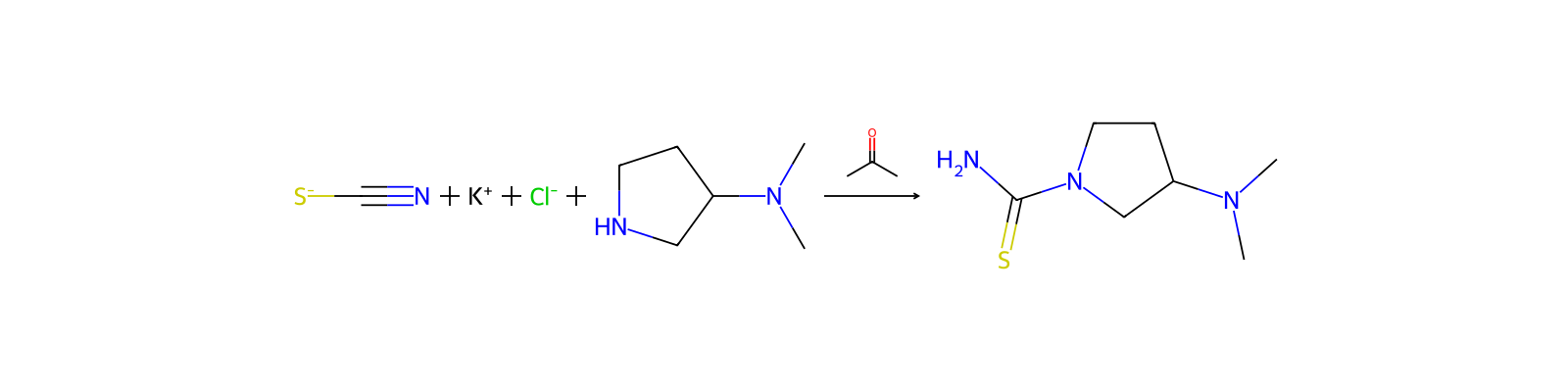
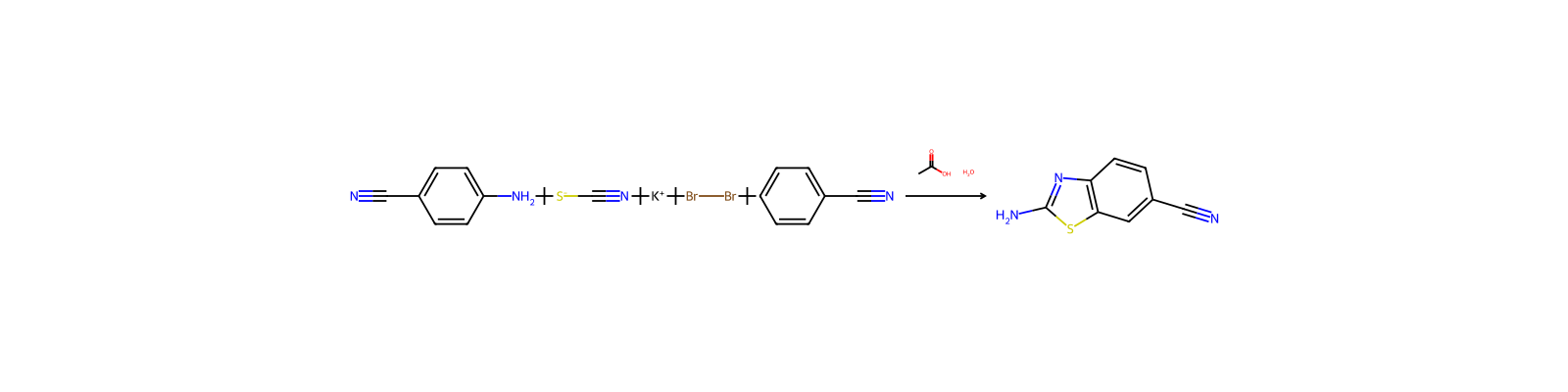
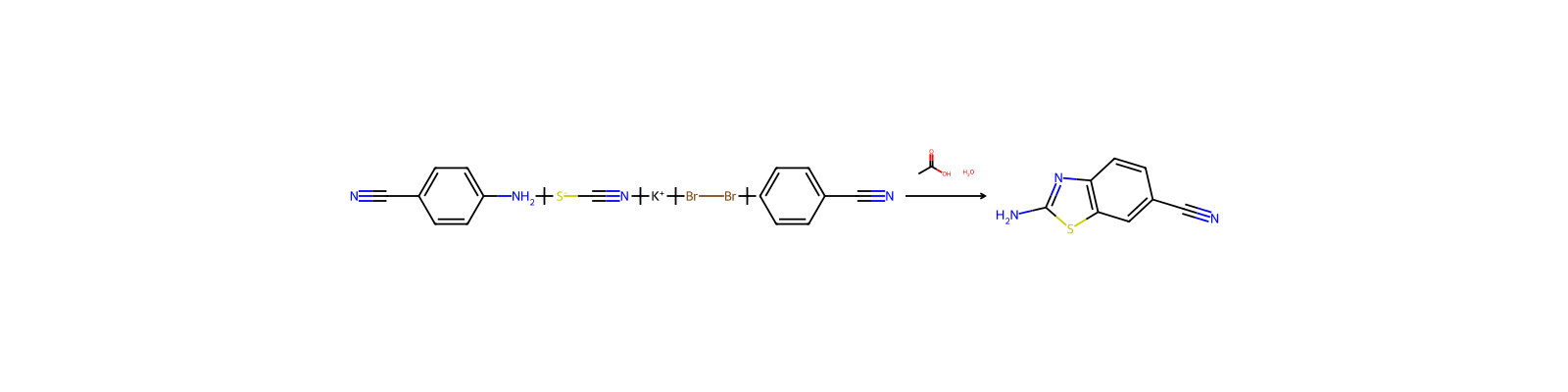
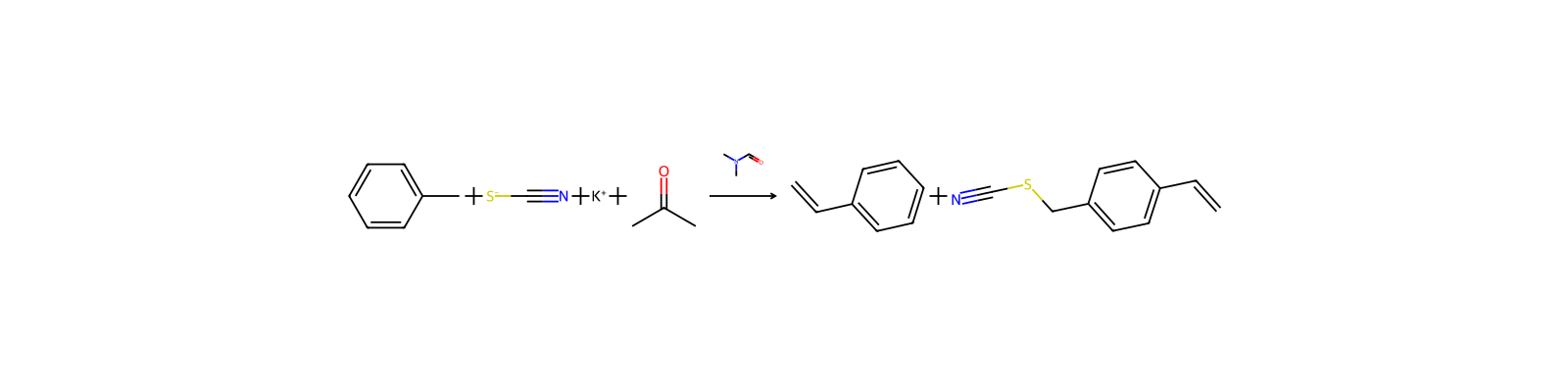
HRID 1934als Edukt
HRID 4349als Edukt
HRID 5227als Edukt
HRID 7818als Edukt
HRID 9100als Edukt
HRID 9102als Edukt
HRID 9125als Edukt
HRID 9127als Edukt
ZurückSeite 1 von 93

Notizen zur Verbindung

Auf dieser SeiteGrundinformationenÜberblickNamen und BezeichnerEigenschaftenSicherheit und RegulatorischesChemie und IndustrieZugehörige ReaktionenNotizen zur Verbindung
173.2 °C · 173.2 °C (343.8 °F; 446.3 K)
Siedepunkt
500 °C · 500 °C (932 °F; 773 K) (decomposes)
Dichte
1.886 g/cm3 · 1.886 g/cm3
Dampfdruck
0.001 hPa · <0.001 hPa (20 °C)
Flammpunkt
Not applicable
storage temp.
5 °C · Store at +5°C to +30°C.
Löslichkeit
2 O: · H2O: 8 M at 20 °C, clear, colorless
Aggregatzustand
crystals
pka
0.85 · 0.85(Temp: 25 °C)
Farbe
Colorless
Wichte
1.886 · 1.886
Geruch (Odor)
Odorless
PH
5.3 · 5.3-8.7 (25℃, 50mg/mL in H2O)
Wasserlöslichkeit
2170 g/L · 2170 g/L (20 ºC)
Spezifische Wärmekapazität
0.91 J/ · Cp(crystal): 0.91 J/(g·K), at 25℃
Merck
14 · 14,7691
BRN
3594799 · 3594799
Stabilität
Stable. Incompatible with nitric acid, strong oxidizing agents, active halogen compounds.
Kosmetik-Inhaltsstoffe Funktionen
LIGHT STABILIZER
InChI
1S/CHNS.K/c2-1-3;/h3H;/q;+1/p-1
InChIKey
ZNNZYHKDIALBAK-UHFFFAOYSA-M
SMILES
[K]SC#N
LogP
0.58 · 0.58
CAS Datenbank
333 · 333-20-0(CAS DataBase Reference)
NIST chemische Informationen
Potassium thiocyanate(333-20-0)
EPA chemische Informationen
Potassium thiocyanate (333-20-0)
Absorption
274 nm · cut-off at 274nm in H2O at 8M
EC ClassificationSymbol: Xn; R: 20/21/22-32-52/53; S: (2)-13-61; Note: A
Chemical DangersDecomposes on heating. This produces very toxic fumes of sulfur compounds, nitrogen oxides and cyanides. Reacts violently with strong oxidants. Contact with water causes a strong cooling effect.
Hazard Classes and Categories · 3 Einträge

Acute Tox. 4 (100%)

Acute toxicity - category 4

Acute toxicity (Oral) - Category 4

Sicherheit und Schutzausrüstung

Fire FightingIn case of fire in the surroundings, use appropriate extinguishing media.
First Aid Measures · 4 Einträge

Fresh air, rest.

Remove contaminated clothes. Rinse skin with plenty of water or shower.

First rinse with plenty of water for several minutes (remove contact lenses if easily possible), then refer for medical attention.

Rinse mouth. Give a slurry of activated charcoal in water to drink. Refer for medical attention .

Safe StorageSeparated from strong oxidants. Dry. Well closed.
Spillage DisposalPersonal protection: particulate filter respirator adapted to the airborne concentration of the substance. Sweep spilled substance into covered containers. If appropriate, moisten first to prevent dusting. Carefully collect remainder.
Eye PreventionWear safety goggles or eye protection in combination with breathing protection.
Inhalation RiskA harmful concentration of airborne particles can be reached quickly when dispersed.
Skin PreventionProtective gloves.
Exposure PreventionPREVENT DISPERSION OF DUST!
Ingestion PreventionDo not eat, drink, or smoke during work.
Inhalation PreventionUse local exhaust or breathing protection.
Effects of Long Term ExposureThe substance may have effects on the thyroid and central nervous system. This may result in impaired functions and hypothyroidism.
Effects of Short Term ExposureThe substance may cause effects on the central nervous system. This may result in excitement and convulsions.

Toxikologische Informationen

Adverse EffectsNeurotoxin - Other CNS neurotoxin
Exposure RoutesThe substance can be absorbed into the body by inhalation and by ingestion.
Signs and Symptoms · 2 Einträge

Cough. Further see Ingestion.

Confusion. Convulsions. Nausea. Vomiting. Weakness.

Sicherheitsdaten

wgk
1
tsca
TSCA listed
hs_code
2930909099
RTECS-Nr.
XL1925000
risk_code
32-52/53-20/21/22
Toxizität
LD50 orally in mice, rats: 594, 854 mg/kg, Andersen, Chen, J. Am. Pharm. Assoc. 29, 152 (1940)
hazard_code
Xn,Xi
hazard_note
Irritant/Hygroscopic
safety_code
13-61-36/37-46
Speicherklasse
13 - Non Combustible Solids
Hazard Classifications
Acute Tox. 4 DermalAcute Tox. 4 InhalationAcute Tox. 4 OralAquatic Chronic 3Eye Dam. 1
synthetische

Vor- und nachgelagerte Produkte

Vorgelagerte Rohstoffe

SchwefelwasserstoffAmmonium hydrogen sulfide4-ChlorbenzaldehydKohlenstoffdioxidAmmoniumthiocyanatKohlendisulfidDesulfurizationAmmoniak, wasserfrei

Nachgelagerte Produkte

nitric acid pickling inhibitor LAN-51-Methyl-1H-imidazole-5-carboxaldehydeINTERFERON ALPHA RECOMBINANT RATEthyl imidazole-4-carboxylateCarbimazolN-(2-thioxo-4-oxothiazolidin)essigsureAntu (ISO)Imidazol-2-thiol4-Phenylimidazol(2,6-Diisopropyl-4-Phenoxy)PhenylthioureaMethylthiocyanatSenfölCeftriaxoninterferon-gamma-1aThiamazolImidazol-4-ylmethanolhydrochlorid4-BromophenylthioureaEthylensulfid

Ergänzende Hinweise

DefinitionChEBI: A potassium salt which is the monopotassium salt of thiocyanic acid.