StartseiteMCPSkillsWorkbenchOpenChem
StartseiteWorkbenchBenachrichtigungenMein Bereich
llms.txt · skill.md · MCP-AnleitungDatenschutz · Nutzungsbedingungen · Supportv1.8.5
  1. Startseite
  2. /Verbindung

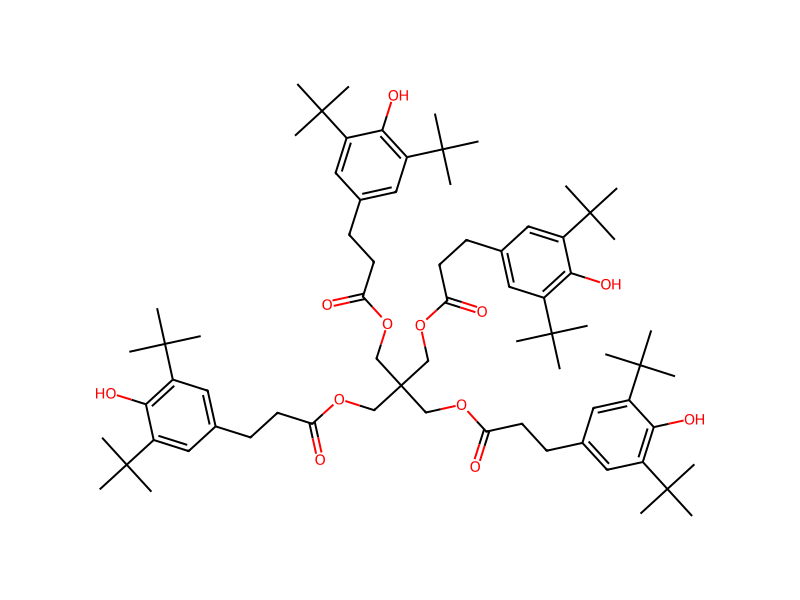
Pentaerythrittetrakis(3-(3,5-di-tert-butyl-4-hydroxyphenyl)propionat)

Antioxidant 1010

HCID 64819
Neue Reaktion
Drucken
GrundinformationenÜberblickNamen und BezeichnerEigenschaftenSicherheit und RegulatorischesChemie und IndustrieZugehörige ReaktionenNotizen zur Verbindung
TeilstruktursucheÄhnliche Strukturen suchen

Grundinformationen

CAS
6683-19-8
Standard-SMILES
CC(C)(C)c1cc(CCC(=O)OCC(COC(=O)CCc2cc(C(C)(C)C)c(O)c(C(C)(C)C)c2)(COC(=O)CCc2cc(C(C)(C)C)c(O)c(C(C)(C)C)c2)COC(=O)CCc2cc(C(C)(C)C)c(O)c(C(C)(C)C)c2)cc(C(C)(C)C)c1O
InChIKey
BGYHLZZASRKEJE-UHFFFAOYSA-N
Summenformel
C73H108O12
Durchschnittliche Molmasse
1.177,6 g/mol
Monoisotopische Masse
1.176,78407888

Überblick

has antioxidant activity

Namen und Bezeichner

Bevorzugter Name
Antioxidant 1010
IUPAC
[3-[3-(3,5-ditert-butyl-4-hydroxyphenyl)propanoyloxy]-2,2-bis[3-(3,5-ditert-butyl-4-hydroxyphenyl)propanoyloxymethyl]propyl] 3-(3,5-ditert-butyl-4-hydroxyphenyl)propanoate
Lokaler Name
Pentaerythrittetrakis(3-(3,5-di-tert-butyl-4-hydroxyphenyl)propionat)
Englischer Name
Antioxidant 1010
Summenformel
C73H108O12
Molmasse
1177.66

Namen und Synonyme

6683-19-8Irganox 1010Antioxidant 1010Pentaerythritol tetrakis(3-(3,5-di-tert-butyl-4-hydroxyphenyl)propionate)Tetraalkofen BPEPhenosane 23Dovernox 10Fenozan 22Fenozan 23Naugard 10Sumilizer BP 101Irganox 1010FF
Weitere Namen anzeigen
PENTAERYTHRITYL TETRA-DI-t-BUTYL HYDROXYHYDROCINNAMATEPentaerythritol TetrakisBHPMao60Antioxidant1010PENTAERYTHRITOL TETRAKIS(3,5-DI-TERT-BUTYL-4-HYDROXYHYDROCINNAMATE)Carbyltetramethylene tetrakis(3,5-di-tert-butyl-4-hydroxyhydrocinnamate)TTHP
Irganox 1040Anox 20AMRalox 630ANOX 20ADK Stab AO 60Irganox 1010FPMARK AO 60DTXSID1027633

Datenbank-Bezeichner

Eigenschaften

Berechnete Struktureigenschaften

XLogP
19,4
Polarare Oberfläche (TPSA)
186 Ų
H-Brücken-Donoren
4
H-Brücken-Akzeptoren
12
Frei drehbare Bindungen
32
Schwere Atome
85
Formalladung
0
Komplexität
1.730

Experimentelle und physikochemische Eigenschaften

Chemical ClassesOther Classes -> Other Organic Compounds
Polymers · 2 Einträge

Plastics -> Polyolefin-I; PUR; Polyolefin-II; PVC (soft); PVC (rigid); PET; PA; PC; (E)PS

Plastics -> Antioxidants

CosmeticsCosmetic ingredients (Pentaerythrityl Tetra-di-t-butyl Hydroxyhydrocinnamate) -> CIR (Cosmetic Ingredient Review)
FragrancesFragrance Ingredient (Benzenepropanoic acid, 3,5-bis(1,1-dimethylethyl)-4-hydroxy-, 2,2-bis[[3-[3,5-bis(1,1-dimethylethyl)-4-hydroxyphenyl]-1-oxopropoxy]methyl]- -1,3-propanediyl ester) -> IFRA transparency List
LogP23
Density1.15 g/cm³
SolubilitySolubility in water: none
Flash Point · 2 Einträge

297 °C o.c.

566.6 °F (open cup)

Animal DrugsPharmaceuticals -> UK Veterinary Medicines Directorate List

Sicherheit und Regulatorisches

Sicherheitsangaben dienen nur zur Orientierung und ersetzen weder das Sicherheitsdatenblatt (SDB) des Lieferanten noch geltende Vorschriften oder eine fachliche Bewertung.

GHS-Klassifizierung

GHS Classification · 6 Einträge

This chemical does not meet GHS hazard criteria for 91.6% (2698 of 2945) of all reports.

Not Classified

Aggregated GHS information provided per 2945 reports by companies from 12 notifications to the ECHA C&L Inventory.

Warning

H302 (100%): Harmful if swallowed [Warning Acute toxicity, oral]

P264, P270, P273, P280, P301+P317, P302+P352, P321, P330, P332+P317, P362+P364, and P501 (click each P-code to see the statement)

Gefahrenhinweise

Regulatory Information · 4 Einträge

Chemical: Benzenepropanoic acid, 3,5-bis(1,1-dimethylethyl)-4-hydroxy-, 2,2-bis[[3-[3,5-bis(1,1-dimethylethyl)-4-hydroxyphenyl]-1-oxopropoxy]methyl]-1,3-propanediyl ester

Benzenepropanoic acid, 3,5-bis(1,1-dimethylethyl)-4-hydroxy-, 1,1'-[2,2-bis[[3-[3,5-bis(1,1-dimethylethyl)-4-hydroxyphenyl]-1-oxopropoxy]methyl]-1,3-propanediyl] ester is listed on the EPA's Chemical Data Reporting (CDR) system. Manufacturers and importers of Benzenepropanoic acid, 3,5-bis(1,1-dimethylethyl)-4-hydroxy-, 1,1'-[2,2-bis[[3-[3,5-bis(1,1-dimethylethyl)-4-hydroxyphenyl]-1-oxopropoxy]methyl]-1,3-propanediyl] ester are required to report information about their production and use of this chemical to the EPA under the Toxic Substances Control Act (TSCA). (40 eCFR Part 711)

REACH registered substance: Pentaerythritol tetrakis(3-(3,5-di-tert-butyl-4-hydroxyphenyl)propionate) (EC: 229-722-6)

Benzenepropanoic acid, 3,5-bis(1,1-dimethylethyl)-4-hydroxy-, 2,2-bis[[3-[3,5-bis(1,1-dimethylethyl)-4-hydroxyphenyl]-1-oxopropoxy]methyl]-1,3-propanediyl ester: Does not have an individual approval but may be used under an appropriate group standard

Other Safety InformationIMAP assessments - Benzenepropanoic acid, 3,5-bis(1,1-dimethylethyl)-4-hydroxy-, 2,2-bis[[3-[3,5-bis(1,1-dimethylethyl)-4-hydroxyphenyl]-1-oxopropoxy]methyl]-1,3-propanediyl ester: Human health tier I assessment

Chemie und Industrie

Verwendung und Herstellung

Uses · 4 Einträge

CIR ingredient: Pentaerythrityl Tetra-di-t-butyl Hydroxyhydrocinnamate

Used in the polymers industry as a stabilizer and antioxidant; [IUCLID] Used as a stabilizer for various polymers, as a radical scavenger in polyolefins, to make construction foam, Raffia film (PP film) and fibers, adhesives and sealants, thermoplastics, plastic and rubber products, wire and cable, wood plastic composites, and textiles-leather-fur; [ExPub: ECHA REACH Registrations] Permitted for use as an inert ingredient in non-food pesticide products; [EPA] Used as an antioxidant; [Addivant MSDS]

Textiles (Fiber & Fabric Manufacturing) [Category: Industry]

Plastics -> Typical concentration range in plastic materials -> 0.002 - 0.5%

U.S. Production2023: 40,000,000 - <55,000,000 lb
Consumer UsesAnti-static agent
Industry UsesOxidizing agent
Household ProductsInformation on 33 consumer products that contain Pentaerythrityl Tetra-Di-T-Butyl Hydroxyhydrocinnamate in the following categories is provided:
Use Classification · 5 Einträge

EPA Safer Chemical Functional Use Classes -> Preservatives and Antioxidants

Safer Chemical Classes -> Green circle - The chemical has been verified to be of low concern

Fragrance Ingredients

Plastics -> Antioxidants

Plastics -> Polymer Type -> Polyolefin-I; PUR; Polyolefin-II; PVC (soft); PVC (rigid); PET; PA; PC; (E)PS

General Manufacturing Information · 2 Einträge

Transportation Equipment Manufacturing

Benzenepropanoic acid, 3,5-bis(1,1-dimethylethyl)-4-hydroxy-, 1,1'-[2,2-bis[[3-[3,5-bis(1,1-dimethylethyl)-4-hydroxyphenyl]-1-oxopropoxy]methyl]-1,3-propanediyl] ester: ACTIVE

Zugehörige Reaktionen

8
Reaktionsaufzeichnung erstellen
HRID 359339als Edukt
HRID 364914als Edukt
HRID 620691als Edukt
HRID 1087284als Edukt
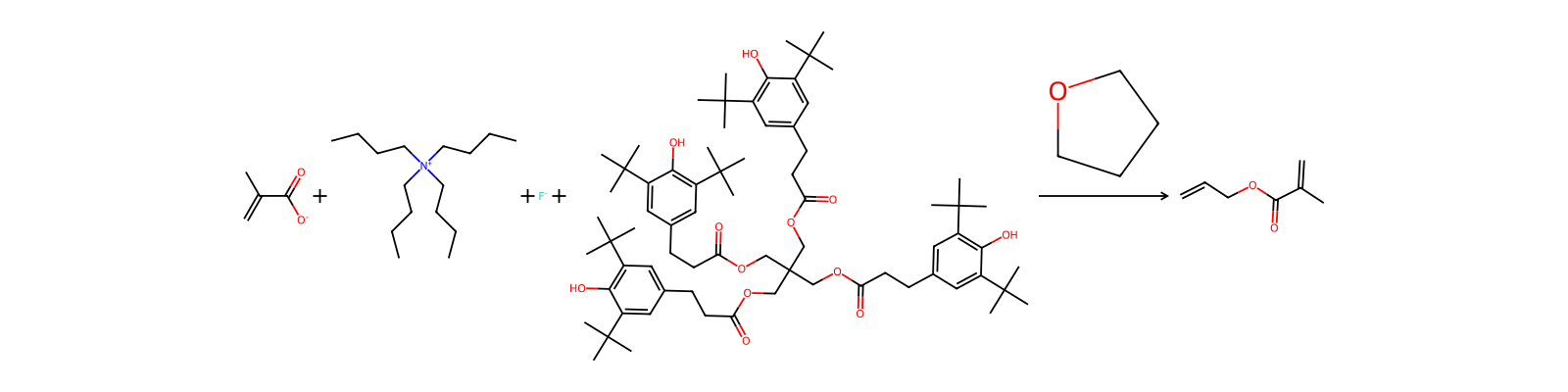
HRID 1759500als Lösungsmittel
HRID 1823641als Katalysator
HRID 2403076als Edukt
HRID 2413671als Edukt

Notizen zur Verbindung

Auf dieser SeiteGrundinformationenÜberblickNamen und BezeichnerEigenschaftenSicherheit und RegulatorischesChemie und IndustrieZugehörige ReaktionenNotizen zur Verbindung
CAS
6683-19-8
PubChem CID
64819
DTXSID
DTXSID1027633
ChEMBL
CHEMBL3187856
UNII
255PIF62MS
EC Number
229-722-6、687-966-2
Nikkaji
J46.615H
Endocrine DisruptorsPotential endocrine disrupting compound
Melting Point · 2 Einträge

110-125 °C

230-257 °F

Vapor Density1.15

Physikochemische Eigenschaften

Schmelzpunkt
115 · 115-118 °C (dec.)(lit.)
Siedepunkt
779.1 °C · 779.1°C (rough estimate)
Dichte
0.9594 · 0.9594 (rough estimate)
Brechungsindex
1.639 · 1.6390 (estimate)
storage temp.
2 · 2-8°C
Löslichkeit
Chloroform (Slightly), Ethyl Acetate (Slightly)
pka
11.71 · 11.71±0.40(Predicted)
Aggregatzustand
Solid
Farbe
White to Off-White
Kosmetik-Inhaltsstoffe Funktionen
ANTIOXIDANT
InChIKey
BGYHLZZASRKEJE-UHFFFAOYSA-N
LogP
18.832 · 18.832 (est)
CAS Datenbank
6683 · 6683-19-8(CAS DataBase Reference)
EPA chemische Informationen
3 · Pentaerithritol tetrakis[3,5-di-tert-butyl-4-hydroxyhydrocinnamate] (6683-19-8)
Fire HazardsCombustible. Finely dispersed particles form explosive mixtures in air.
Hazards Summary · 1 Eintrag

May cause mechanical eye and respiratory tract irritation; [ICSC] Not a skin or eye irritant in rabbits; Not a skin sensitizer in guinea pigs; No adverse effects to fertility, reproduction, or development observed in 2-generation oral study of rats (doses up to 10,000ppm in feed); No teratogenic effects observed in mice (doses up to 1,000 mg/kg/day); [IUCLID] May cause mechanical irritation; [Addivant MSDS]

EPA Safer ChemicalChemical: Pentaerythritol, tetrakis(3,5-di-tert-butyl-4-hydroxyhydrocinnamate)
Chemical DangersReacts with strong oxidants, strong acids and strong bases.
Physical DangersDust explosion possible if in powder or granular form, mixed with air.
Hazard Classes and Categories · 2 Einträge

Not Classified

Acute Tox. 4 (100%)

Sicherheit und Schutzausrüstung

Fire FightingUse water spray, foam, powder, carbon dioxide.
First Aid Measures · 4 Einträge

Fresh air, rest.

Rinse and then wash skin with water and soap.

Rinse with plenty of water (remove contact lenses if easily possible).

Rinse mouth.

Safe StorageSeparated from strong oxidants, strong bases and strong acids.
Spillage DisposalRemove all ignition sources. Personal protection: particulate filter respirator adapted to the airborne concentration of the substance. Sweep spilled substance into covered containers. If appropriate, moisten first to prevent dusting.
Eye PreventionWear safety spectacles.
Fire PreventionNO open flames. Prevent deposition of dust. Closed system, dust explosion-proof electrical equipment and lighting.
Inhalation RiskA nuisance-causing concentration of airborne particles can be reached quickly when dispersed.
Ingestion PreventionDo not eat, drink, or smoke during work.
Inhalation PreventionAvoid inhalation of dust.
Threshold Limit Values (TLV)2 mg/m³ [2002]
Effects of Short Term ExposureMay cause mechanical irritation to the eyes and respiratory tract.

Toxikologische Informationen

Toxicity SummarySafe in the present practices of use and concentration. Ingredient, concentration, and use information are available in documents discoverable at https://cir-reports.cir-safety.org
Signs and Symptoms · 2 Einträge

Cough.

Redness.

Toxicity DataLC50 (rat) > 1,950 mg/m3/4hr

Sicherheitsdaten

wgk
-
tsca
TSCA listed
hs_code
2918290000
RTECS-Nr.
DA8340900
Toxizität
LD50 unreported in mammal (species unspecified): 10gm/kg
safety_code
22-24/25
Speicherklasse
11 - Combustible Solids
Anwendungen · 1 Eintrag

VerwendenPentaerythritol Tetrakis(3-(3,5-di-tert-butyl-4-hydroxyphenyl)propionate) is an antioxidant used in food packaging to prevent the spoilage and increase the shelf life of food products. It can be found mainly in food packages made of LDPE, HDPE, PP, PVC and PET.

Vor- und nachgelagerte Produkte

Vorgelagerte Rohstoffe

Kalium-tert-butanolatEthanolPhenolNatriummethanolatDOYLE DIRHODIUM CATALYST-RH2(4S-MEOX)4PentaerythritolMethanolMethylpropionat2,6-Di-tert-butylphenolMethylacrylat3-(3,5-Di-tert-butyl-4-hydroxyphenyl)propionsure

Nachgelagerte Produkte

Complex antioxidant