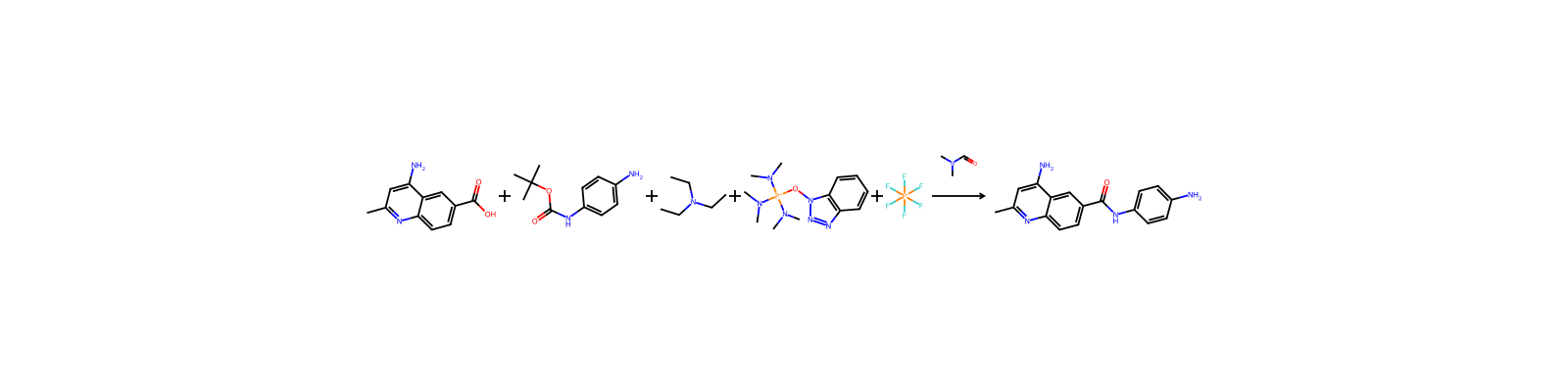
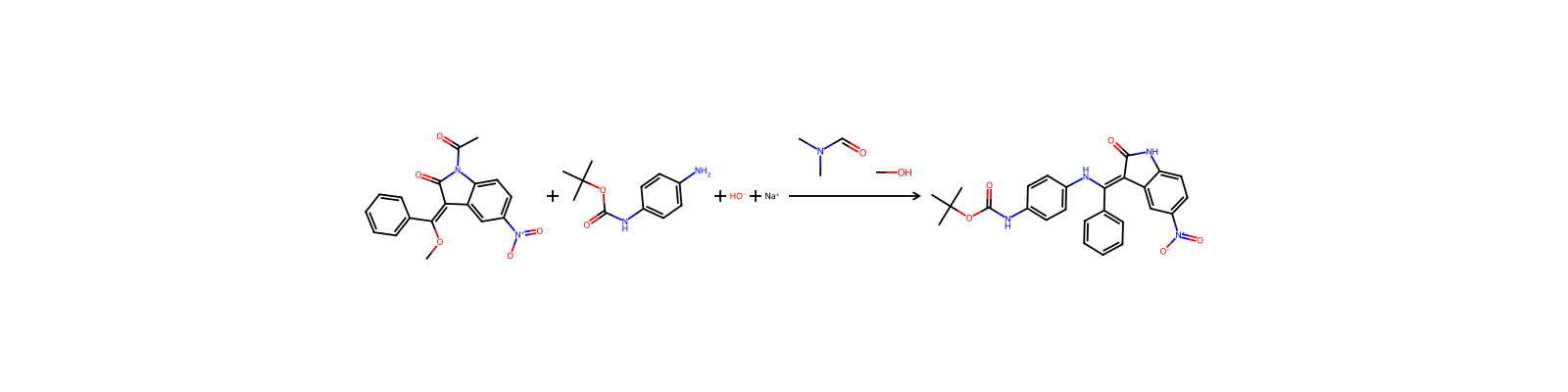
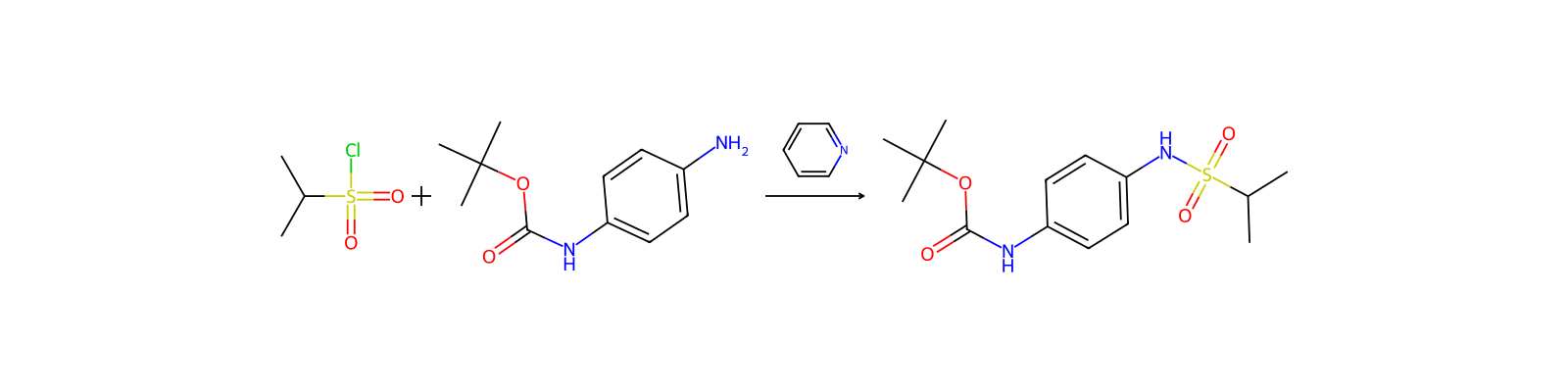
HRID 18537als Edukt
tert-Butyl (4-aminophenyl)carbamate

71026-66-9CC(C)(C)OC(=O)Nc1ccc(N)cc1WIVYTYZCVWHWSH-UHFFFAOYSA-N71026-66-9DTXSID90991332Sicherheitsangaben dienen nur zur Orientierung und ersetzen weder das Sicherheitsdatenblatt (SDB) des Lieferanten noch geltende Vorschriften oder eine fachliche Bewertung.
Warning
H302 (83.3%): Harmful if swallowed [Warning Acute toxicity, oral]
P261, P264, P264+P265, P270, P271, P272, P280, P301+P317, P302+P352, P304+P340, P305+P351+P338, P317, P319, P321, P330, P332+P317, P333+P317, P337+P317, P362+P364, P403+P233, P405, and P501 (click each P-code to see the statement)
Aggregated GHS information provided per 6 reports by companies from 3 notifications to the ECHA C&L Inventory. Each notification may be associated with multiple companies.
VerwendenN-Boc-p-phenylenediamine can be used as:A reactant to prepare perylene monoimide-based dyes for dye-sensitized solar cell applications.A starting material to synthesize covalent organic frameworks, which are used as proton exchange membranes for hydrogen fuel cell applications.A reactant in the synthesis of bestatin derived hydroxamic acids as potent pan-HDAC inhibitors.