HomeMCPWorkbenchSkills
HomeWorkbenchNotificationsMe
llms.txt · MCP GuidePrivacy Policy · Terms of Service · Supportv1.8.3
  1. Home
  2. /Compound

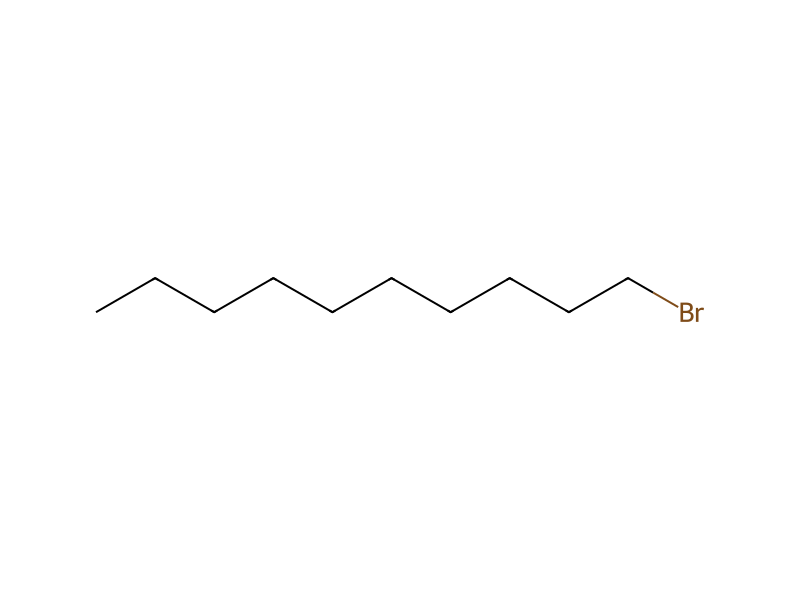
1-Bromodecane

HCID 8173
New reaction
Print
Basic informationNames & identifiersPropertiesSafety & regulationChemistry & industryRelated reactionsCompound notes
Substructure searchFind similar structures

Basic information

CAS
112-29-8
Standard SMILES
CCCCCCCCCCBr
InChIKey
MYMSJFSOOQERIO-UHFFFAOYSA-N
Molecular formula
C10H21Br
Average molar mass
221.18 g/mol
Monoisotopic mass
220.08266

Names & identifiers

Preferred name
1-Bromodecane
IUPAC
1-bromodecane
English name
1-Bromodecane
Molecular formula
C10H21Br
Molecular weight
221.18

Names & synonyms

1-BROMODECANEDecyl bromide112-29-8n-Decyl bromideDecane, 1-bromo-1-Decyl bromideDTXSID9051581Y2JDF9ZCB6NSC-8780DTXCID3030133RefChem:75157203-955-3
Show more names
1-BromdecanBROMO DECANEI–Bromodecane1-bromo-decan1-DecylbromidBroMine decane10-Bromodecane
DecylbromideDecane, bromo-bromodecanedecylmonobromide1-bromo-decane1-bromo-n-decaneMFCD000002211-Bromodecane Solution in Methanol, 1000ug/mL

Database identifiers

CAS
112-29-8
PubChem CID
8173
DTXSID
DTXSID9051581
ChEMBL
CHEMBL3559832
UNII
Y2JDF9ZCB6
EC Number
203-955-3
Nikkaji
J5.209D

Properties

Computed structural properties

XLogP
6
Topological polar surface area
0 Ų
Hydrogen bond donors
0
Hydrogen bond acceptors
0
Rotatable bonds
8
Heavy atoms
11
Formal charge
0
Complexity
61.9

Experimental & physicochemical properties

Chemical ClassesOther Classes -> Halogenated Aliphatics, Saturated
SpringerMaterials PropertiesBoiling point
LogP6.0
Density1.0702 @ 20°C
Boiling Point240.6 °C @760 [mm Hg]
Melting Point-29.2 °C
Vapor Pressure0.04 [mmHg]
Physical Description · 2 items

Liquid

Clear, light yellow liquid; [Aldrich MSDS]

Physicochemical properties

Melting point
-30 °C · -30 °C
Boiling point
139 °C/30 · 139 °C/30 mmHg

Safety & regulation

Safety information is for reference only and does not replace the supplier’s Safety Data Sheet (SDS), applicable regulations, or professional assessment.

GHS classification

GHS Classification · 4 items

Warning

H315 (15.1%): Causes skin irritation [Warning Skin corrosion/irritation]

P264, P264+P265, P273, P280, P302+P352, P305+P351+P338, P321, P332+P317, P337+P317, P362+P364, P391, and P501 (click each P-code to see the statement)

Aggregated GHS information provided per 53 reports by companies from 10 notifications to the ECHA C&L Inventory. Each notification may be associated with multiple companies.

Hazard information

Regulatory Information · 4 items

Chemical: Decane, 1-bromo-

Decane, 1-bromo- is listed on the EPA's Chemical Data Reporting (CDR) system. Manufacturers and importers of Decane, 1-bromo- are required to report information about their production and use of this chemical to the EPA under the Toxic Substances Control Act (TSCA). (40 eCFR Part 711)

REACH registered substance: 1-bromodecane (EC: 203-955-3)

Decane, 1-bromo-: Does not have an individual approval but may be used under an appropriate group standard

Hazards SummaryMay cause irritation; [Aldrich MSDS] See 1-Bromopropane and 2-Bromopentane.
Hazard Classes and CategoriesSkin Irrit. 2 (15.1%)

Safety & protection

Protective Action Criteria (PAC) · 3 items

13 [mg/m3]

150 [mg/m3]

880 [mg/m3]

Toxicology

Chemistry & industry

Uses & manufacturing

U.S. Production2022: 70,547 lb
Industry UsesIntermediate
General Manufacturing Information · 2 items

Miscellaneous Manufacturing

Decane, 1-bromo-: ACTIVE

Applications · 3 items

Uses1-Bromodecane is used to produce decanal. It is also used in organic synthesis.

Uses1-Bromodecane was used in the synthesis of ferrocene containing hexacatenar metallomesogen.

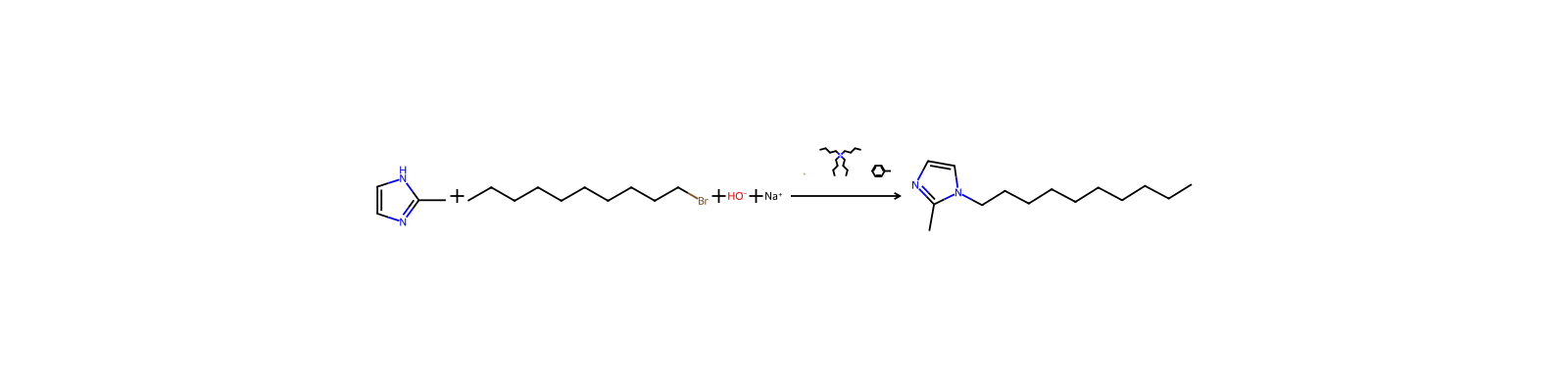
General Description1-Bromodecane participates in alkylation of pentaerythritol and introduces two lipophilic groups in pentaerythritol. It reacts with 1,2-dimethylimidazole to yield 1-decyl-2,3-dimethylimidazolium bromide.

Upstream & downstream products

Upstream raw materials

4-Decene, 1-bromo-, (4Z)-Acetic acid, 2,2,2-trifluoro-, decyl esterDecyl methane sulfate2,3,4,6-Tetra-O-acetyl-alpha-D-glucopyranosyl bromideβ-D-Glucose pentaacetatedecyl formateN-DECYL ACETATE

Related reactions

214 records
New reaction record
HRID 1417 reaction equation
HRID 1417As reactant
HRID 2583 reaction equation
HRID 2583As reactant
HRID 44138 reaction equation
HRID 44138As reactant
HRID 53467 reaction equation
HRID 53467As reactant
HRID 53468 reaction equation
HRID 53468As reactant
HRID 55269 reaction equation
HRID 55269As reactant
HRID 65068 reaction equation
HRID 65068As reactant
HRID 93590 reaction equation
HRID 93590As reactant
PreviousPage 1 of 27

Compound notes

On this pageBasic informationNames & identifiersPropertiesSafety & regulationChemistry & industryRelated reactionsCompound notes
Density
1.07 · 1.07
refractive index
1.46 · 1.46
Flash point
94 °C · 94 °C
storage temp.
30 °C · Store below +30°C.
solubility
Chloroform, Ethyl Acetate (Slightly)
form
clear liquid
color
Colorless to Almost colorless
Water Solubility
SLIGHTLY SOLUBLE
BRN
1735227 · 1735227
Henry's Law Constant
1.7 · 1.7×10-4 mol/(m3Pa) at 25℃, Ebert et al. (2023)
Dielectric constant
4.4 · 4.4(24℃)
Stability
Stable. Combustible. Incompatible with strong oxidizing agents, strong bases.
InChI
1S/C10H21Br/c1-2-3-4-5-6-7-8-9-10-11/h2-10H2,1H3
InChIKey
MYMSJFSOOQERIO-UHFFFAOYSA-N
SMILES
CCCCCCCCCCBr
CAS DataBase Reference
112 · 112-29-8(CAS DataBase Reference)
FDA UNII
2 JDF9ZCB6 · Y2JDF9ZCB6
NIST Chemistry Reference
1 · Decane, 1-bromo-(112-29-8)
EPA Substance Registry System
1 · Decane, 1-bromo- (112-29-8)
UNSPSC Code
12352101 · 12352101
NACRES
22 · NA.22
Symbol(GHS)
7 · GHS07
Signal word
Warning
Hazard statements
315 · H315-H319
Precautionary statements
264 · P264-P280-P302+P352-P305+P351+P338-P332+P313-P337+P313
PPE
Eyeshields, Gloves, multi-purpose combination respirator cartridge (US)
Risk Statements
36 · 36/37/38
Safety Statements
23 · 23-24/25
RIDADR
2810 · 2810
WGK Germany
3 · 3
RTECS
6850000 · HD6850000
F
8 · 8
TSCA
TSCA listed
HazardClass
6.1 · 6.1
HS Code
29033036 · 29033036
Storage Class
10 · 10 - Combustible liquids
Hazard Classifications
2 Skin · Eye Irrit. 2Skin Irrit. 2
Toxicity
50 orally · LD50 orally in Rabbit: > 2000 mg/kg
REACH Registrations
Active
Limited Quantities
5 L · 5.0 L (1.3 gallons) (liquid) or 5.0 kg (11 lbs) (solid)
Excepted Quantities
Max Inner Pack (30g or 30ml) and Max Outer Pack (1Kg or 1L)
Adverse Effects
Neurotoxin - Acute solvent syndrome
Toxicity DataLC50 (mouse) = 4,200 mg/m3/2hr

Safety data

F
8
PPE
Eyeshields, Gloves, multi-purpose combination respirator cartridge (US)
wgk
3
tsca
TSCA listed
rtecs
HD6850000
ridadr
2810
hs_code
29033036
Toxicity
LD50 orally in Rabbit: > 2000 mg/kg
risk_code
36/37/38
Signal word
Warning
Symbol(GHS)
GHS07
safety_code
23-24/25
hazard_class
6.1
Storage Class
10 - Combustible liquids
Hazard statements
H315-H319
Limited Quantities
5.0 L (1.3 gallons) (liquid) or 5.0 kg (11 lbs) (solid)
Excepted Quantities
Max Inner Pack (30g or 30ml) and Max Outer Pack (1Kg or 1L)
REACH Registrations
Active
Hazard Classifications
Eye Irrit. 2Skin Irrit. 2
Precautionary statements
P264-P280-P302+P352-P305+P351+P338-P332+P313-P337+P313
10-Bromo-1-decene
Triphenylphosphine dibromide
Carbon tetrabromide
Decane

Downstream products

Sodium decane-1-sulfonate4-n-DecyloxybenzaldehydeTetrakis(decyl)ammonium bromide3',4'-(Didecyloxy)benzaldehydeDecoquinatetrans-2-Tridecen-1-ol2-Propenoic acid, 3-[4-(decyloxy)phenyl]-