Reaction equation

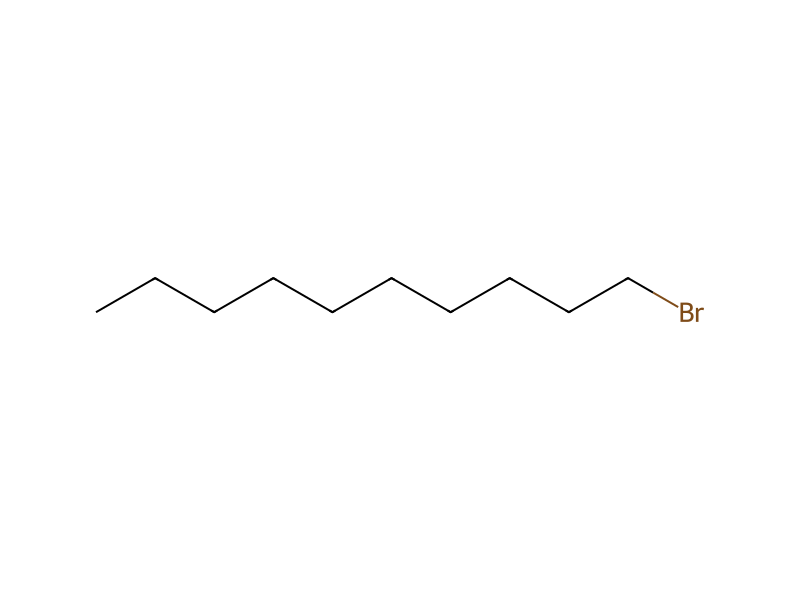
[OH:1][C:2]1[CH:7]=[CH:6][C:5]([C:8]2[CH:13]=[CH:12][C:11]([C:14]([OH:16])=[O:15])=[CH:10][CH:9]=2)=[CH:4][CH:3]=1.[CH2:17](Br)[CH2:18][CH2:19][CH2:20][CH2:21][CH2:22][CH2:23][CH2:24][CH2:25][CH3:26].[OH-].[K+].[I-].[Na+].Cl>O.C(O)C>[CH2:17]([O:1][C:2]1[CH:3]=[CH:4][C:5]([C:8]2[CH:13]=[CH:12][C:11]([C:14]([OH:16])=[O:15])=[CH:10][CH:9]=2)=[CH:6][CH:7]=1)[CH2:18][CH2:19][CH2:20][CH2:21][CH2:22][CH2:23][CH2:24][CH2:25][CH3:26]Participants
Reactant 5




Product 1

Reagents, catalysts & solvents 2


Conditions
- Temperature
- 100 °C
Procedure
A mixture of 21.4 g (0.1 mol) of 4'-hydroxybiphenyl-4-carboxylic acid, 33.15 g (0.15 mol) of n-decyl bromide, 13.20 g (0.2 mol) of 85% potassium hydroxide, 1.05 g (7 mmol) of sodium iodide, 500 ml of ethanol and 100 ml of distilled water was heated under reflux at 100° C. for 12 hours. After 40 ml of 25% potassium hydroxide was added, the mixture was further heated under reflux for 2 hours. After allowing the reaction system to cool up to room temperature, the reaction mixture in cold water was acidified with 36% hydrochloric acid. The deposited product was separated by filtration and dissolved in acetone with heating, followed by filtration. The resulting filtrate was concentrated to obtain 1.97 g (6 mmol) of 4'-decyloxybiphenyl-4-carboxylic acid.
Workup
- temperaturewas heated
- temperaturethe mixture was further heated
- temperatureunder reflux for 2 hours
- temperatureto cool up to room temperature
- customThe deposited product was separated by filtration
- dissolutiondissolved in acetone
- temperaturewith heating
- filtrationfollowed by filtration
- concentrationThe resulting filtrate was concentrated
Sources & evidence
- ORD record
- ord-0396fca3395e4ebeb8f2c15f2dea83c8
- Source dataset
- uspto-grants-1998_03
- Patent number
- US05725798
Linked notes
Loading…