StartseiteMCPSkillsWorkbenchOpenChem
StartseiteWorkbenchBenachrichtigungenMein Bereich
llms.txt · skill.md · MCP-AnleitungDatenschutz · Nutzungsbedingungen · Supportv1.8.5
  1. Startseite
  2. /Verbindung

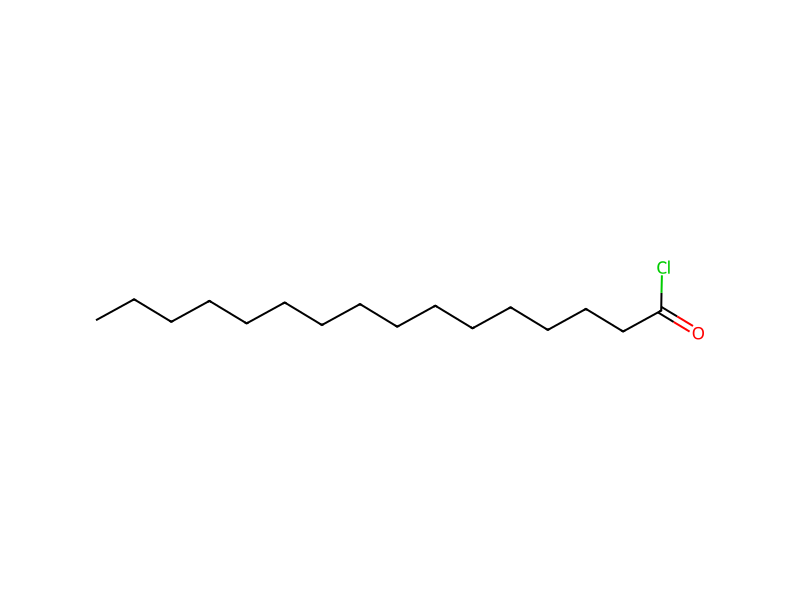
Palmitoyl chloride

HCID 8206
Neue Reaktion
Drucken
GrundinformationenÜberblickNamen und BezeichnerEigenschaftenSicherheit und RegulatorischesChemie und IndustrieZugehörige ReaktionenNotizen zur Verbindung
TeilstruktursucheÄhnliche Strukturen suchen

Grundinformationen

CAS
112-67-4
Standard-SMILES
CCCCCCCCCCCCCCCC(=O)Cl
InChIKey
ARBOVOVUTSQWSS-UHFFFAOYSA-N
Summenformel
C16H31ClO
Durchschnittliche Molmasse
274,9 g/mol
Monoisotopische Masse
274,2063433

Überblick

Hexadecanoyl chloride appears as a clear colorless to light yellow liquid with a pungent odor. Freezing point 11-12 °C. Irritates skin, eyes, and mucous membranes. May be toxic by ingestion, inhalation and skin absorption.

Namen und Bezeichner

Bevorzugter Name
Palmitoyl chloride
IUPAC
hexadecanoyl chloride
Englischer Name
Palmitoyl chloride
Summenformel
C16H31ClO
Molmasse
274.87

Namen und Synonyme

Palmitoyl chlorideHEXADECANOYL CHLORIDE112-67-4Palmitic acid chlorideHexadecanoic acid, chloride7642R2JOSBNSC-9854DTXSID4051582RefChem:169735DTXCID8030134203-996-7Palmityl chloride
Weitere Namen anzeigen
mitoyLPalmitoylchloridCETYLOYL CHLORIDEPalmitoyl choridePALNITOYL CHLORIDEPalmitoylChloride>
Palmitic chlorideC16H31ClOHexadecanoyl-chloride-n-hexadecanoyl chloride1-hexadecanoyl chlorideMFCD00000742Hexadecanoyl chloride Palmitoyl chloridePalm acetyl chlorine(14 acetyl chlorine)

Datenbank-Bezeichner

CAS
112-67-4
PubChem CID
8206
DTXSID
DTXSID4051582
UNII
7642R2JOSB
EC Number
203-996-7
Nikkaji
J110.173K

Eigenschaften

Berechnete Struktureigenschaften

XLogP
7,3
Polarare Oberfläche (TPSA)
17,1 Ų
H-Brücken-Donoren
0
H-Brücken-Akzeptoren
1
Frei drehbare Bindungen
14
Schwere Atome
18
Formalladung
0
Komplexität
180

Experimentelle und physikochemische Eigenschaften

Chemical ClassesToxic Gases & Vapors -> Other Toxic Gases & Vapors
SpringerMaterials PropertiesOptical coefficient
Color/FormCOLORLESS LIQUID
SolubilityVERY SOL IN ETHER
Boiling Point · 2 Einträge

199 °C @ 20 MM HG

BOILING POINT: 194.5 °C AT 17 MM HG

Melting Point11-12 °C
Refractive IndexINDEX OF REFRACTION: 1.4514 @ 20 °C/D
Physical Description · 2 Einträge

Hexadecanoyl chloride appears as a clear colorless to light yellow liquid with a pungent odor. Freezing point 11-12 °C. Irritates skin, eyes, and mucous membranes. May be toxic by ingestion, inhalation and skin absorption.

Clear colorless to light yellow liquid; mp = 11-12 deg C; [CAMEO] Clear colorless liquid; mp = 11-13 deg C; [MSDSonline]

Sicherheit und Regulatorisches

Sicherheitsangaben dienen nur zur Orientierung und ersetzen weder das Sicherheitsdatenblatt (SDB) des Lieferanten noch geltende Vorschriften oder eine fachliche Bewertung.

GHS-Klassifizierung

GHS Classification · 5 Einträge

This chemical does not meet GHS hazard criteria for 0.5% (1 of 201) of reports.

Danger

H290 (21.4%): May be corrosive to metals [Warning Corrosive to Metals]

P234, P260, P261, P264, P272, P280, P301+P330+P331, P302+P352, P302+P361+P354, P304+P340, P305+P354+P338, P316, P317, P321, P332+P317, P333+P317, P362+P364, P363, P390, P405, P406, and P501 (click each P-code to see the statement)

Aggregated GHS information provided per 201 reports by companies from 17 notifications to the ECHA C&L Inventory. Each notification may be associated with multiple companies.

Gefahrenhinweise

Regulatory Information · 3 Einträge

Chemical: Hexadecanoyl chloride

REACH registered substance: Palmitoyl chloride (EC: 203-996-7)

Palmitoyl chloride: Does not have an individual approval but may be used under an appropriate group standard

Other Safety InformationIMAP assessments - Hexadecanoyl chloride: Human health tier I assessment
DOT LabelCorrosive
Fire HazardsExcerpt from ERG Guide 154 [Substances - Toxic and/or Corrosive (Non-Combustible)]:
Health HazardsExcerpt from ERG Guide 154 [Substances - Toxic and/or Corrosive (Non-Combustible)]:
Hazards Summary · 1 Eintrag

Slowly decomposed by water forming hydrochloric and palmitic acids; A skin, eye, and mucous membrane irritant; [CAMEO] Corrosive to skin and eyes; [eChemPortal: ERMA] Reacts violently with water; A corrosive substance that can cause injury to the skin, eyes, and respiratory tract; A lachrymator; Inhalation may cause chemical pneumonitis; [MSDSonline]

Chemie und Industrie

Verwendung und Herstellung

General Manufacturing InformationHexadecanoyl chloride: ACTIVE

Anwendungen

VerwendenPalmitoyl Chloride was used as a polymeric carriers for plasmid DNA (pDNA) delivery to 293T cells.

Vor- und nachgelagerte Produkte

Vorgelagerte Rohstoffe

Palmitinsure

Nachgelagerte Produkte

Chloramphenicolpalmitat6-O-PalmitoylascorbinsureHexadecan-1-ol2-HydroxyethylpalmitatN,N'-Ethan-1,2-diylbishexadecan-1-amidGlycidyl Palmitate3-Butenoic acid, 4-hydroxy-, gamma-lactone4-HexadecylanilinePropylpalmitatCholest-5-en-3-β-ylpalmitatOctylpalmitatTricosansureEstra-1,3,5(10)-trien-3,17β-diol-17-palmitat

Zugehörige Reaktionen

250
Reaktionsaufzeichnung erstellen
HRID 4492als Edukt
HRID 5127als Edukt
HRID 6095als Edukt
HRID 19748als Edukt
HRID 32377als Edukt
HRID 34304als Edukt
HRID 90193als Edukt
HRID 92745als Edukt
ZurückSeite 1 von 32

Notizen zur Verbindung

Auf dieser SeiteGrundinformationenÜberblickNamen und BezeichnerEigenschaftenSicherheit und RegulatorischesChemie und IndustrieZugehörige ReaktionenNotizen zur Verbindung
Other Experimental Properties
DECOMPOSES IN WATER, ALCOHOL

Physikochemische Eigenschaften

Schmelzpunkt
10 °C · 10 °C
Siedepunkt
200 °C/15 · 200 °C/15 mmHg
Dichte
0.91 · 0.91
Brechungsindex
1.45 · 1.45
Flammpunkt
166 °C · 166 °C
storage temp.
30 °C · Store below +30°C.
Löslichkeit
Chloroform (Sparingly), Ethyl Acetate (Slightly)
Aggregatzustand
clear liquid
Farbe
Colorless to Light orange to Yellow
Wichte
0.905 · 0.905
Wasserlöslichkeit
Decomposition
BRN
972409 · 972409
Stabilität
Moisture Sensitive
InChI
1S/C16H31ClO/c1-2-3-4-5-6-7-8-9-10-11-12-13-14-15-16(17)18/h2-15H2,1H3
InChIKey
ARBOVOVUTSQWSS-UHFFFAOYSA-N
SMILES
CCCCCCCCCCCCCCCC(Cl)=O
CAS Datenbank
112 · 112-67-4(CAS DataBase Reference)
NIST chemische Informationen
Palmitoyl chloride(112-67-4)
EPA chemische Informationen
Hexadecanoyl chloride (112-67-4)
Reactive GroupAcyl Halides, Sulfonyl Halides, and Chloroformates
Reactivity Profile · 1 Eintrag

HEXADECANOYL CHLORIDE is incompatible with bases (including amines), with strong oxidizing agents, and with alcohols. May react vigorously or explosively if mixed with diisopropyl ether or other ethers in the presence of trace amounts of metal salts [J. Haz. Mat., 1981, 4, 291].

Air and Water ReactionsDecomposes rather slowly in water to form hydrochloric acid and palmitic acid, a fatty acid that is not soluble in water.
Hazard Classes and CategoriesMet. Corr. 1 (21.4%)

Sicherheit und Schutzausrüstung

Fire FightingExcerpt from ERG Guide 154 [Substances - Toxic and/or Corrosive (Non-Combustible)]:
First AidExcerpt from ERG Guide 154 [Substances - Toxic and/or Corrosive (Non-Combustible)]:
Nonfire Spill ResponseExcerpt from ERG Guide 154 [Substances - Toxic and/or Corrosive (Non-Combustible)]:
Isolation and EvacuationExcerpt from ERG Guide 154 [Substances - Toxic and/or Corrosive (Non-Combustible)]:
Personal Protective Equipment (PPE)Excerpt from ERG Guide 154 [Substances - Toxic and/or Corrosive (Non-Combustible)]:

Toxikologische Informationen

Adverse EffectsDermatotoxin - Skin burns.

Sicherheitsdaten

F
9-21
wgk
1
tsca
TSCA listed
ridadr
UN 3265 8/PG 2
hs_code
2915900090
risk_code
14-34-29
Toxizität
LD50 orally in Rabbit: > 2000 mg/kg
hazard_code
C
safety_code
26-36/37/39-43-45-8
hazard_class
8
packing_group
II
Speicherklasse
8A - Combustible corrosive hazardous materials
Giftige Stoffe Daten
112-67-4(Hazardous Substances Data)
Hazard Classifications
Skin Corr. 1B