StartseiteMCPSkillsWorkbenchOpenChem
StartseiteWorkbenchBenachrichtigungenMein Bereich
llms.txt · skill.md · MCP-AnleitungDatenschutz · Nutzungsbedingungen · Supportv1.8.5
  1. Startseite
  2. /Verbindung

Zinnmonoxid

TIN OXIDE (SnO)

HCID 88989
Neue Reaktion
Drucken
GrundinformationenÜberblickNamen und BezeichnerEigenschaftenSicherheit und RegulatorischesChemie und IndustrieZugehörige ReaktionenNotizen zur Verbindung
TeilstruktursucheÄhnliche Strukturen suchen

Grundinformationen

CAS
21651-19-4
Standard-SMILES
[O]=[Sn]
InChIKey
QHGNHLZPVBIIPX-UHFFFAOYSA-N
Summenformel
OSn
Durchschnittliche Molmasse
134,71 g/mol
Monoisotopische Masse
135,897117

Überblick

Tin(ii) oxide appears as brownish-black powder or black to blue-black crystalline solid. Mp: 1080 °C (decomposes); density: 6.45 g cm-3. Insoluble in water.

Namen und Bezeichner

Bevorzugter Name
TIN OXIDE (SnO)
IUPAC
oxotin
Lokaler Name
Zinnmonoxid
Englischer Name
Tin(II) oxide
Summenformel
OSn
Molmasse
134.71

Namen und Synonyme

Tin(II) oxide21651-19-4Tin monoxideTin oxide (SnO)Tin oxide (Sn2O2)stannanoneTin (II) OxideTIN PROTOXIDETIN(2+) OXIDERefChem:1100132244-499-5oxotin
Weitere Namen anzeigen
SnOSTANNOUS OXIDESKILOxtaintin(ii)TIN OXIDETin(Ⅱ)oxidTIB KAT 188Tin(Ⅱ)oxideZinnmonoxid
(oxo)stannaneT 1186; Tego RL; Tin dioxide; Tin dioxide (SnO2); Tin(IV) oxideMFCD00011243Tin Oxide NanowiresSTANNOUS MONOXIDESCHEMBL180008Tin(II) oxide, >=95%SCHEMBL41985469

Datenbank-Bezeichner

CAS
21651-19-4
PubChem CID
88989
EC Number
244-499-5
Nikkaji
J44.252F、J751.730K

Eigenschaften

Berechnete Struktureigenschaften

Polarare Oberfläche (TPSA)
17,1 Ų
H-Brücken-Donoren
0
H-Brücken-Akzeptoren
1
Frei drehbare Bindungen
0
Schwere Atome
2
Formalladung
0
Komplexität
2

Experimentelle und physikochemische Eigenschaften

Chemical ClassesMetals -> Metals, Inorganic Compounds
Density · 5 Einträge

6.3 (NIOSH, 2024) - Denser than water; will sink

6.45 g/cm³

6.3

6.95 @25 °C

6.3

Solubility · 3 Einträge

Insoluble (NIOSH, 2024)

Solubility in water: none

Insoluble

Boiling Point · 3 Einträge

Decomposes (NIOSH, 2024)

decomposes

Decomposes

Melting Point · 4 Einträge

1976 °F @ 600 mmHg. (Decomposes) (NIOSH, 2024)

1976 °F@600 mmHg (decomposes)

1630 °C

(600 mmHg): 1976 °F (Decomposes)

Vapor Pressure · 3 Einträge

0 mmHg (approx) (NIOSH, 2024)

0 mmHg

0 mmHg (approx)

Physical Description · 6 Einträge

Tin(ii) oxide appears as brownish-black powder or black to blue-black crystalline solid. Mp: 1080 °C (decomposes); density: 6.45 g cm-3. Insoluble in water.

Sicherheit und Regulatorisches

Sicherheitsangaben dienen nur zur Orientierung und ersetzen weder das Sicherheitsdatenblatt (SDB) des Lieferanten noch geltende Vorschriften oder eine fachliche Bewertung.

GHS-Klassifizierung

GHS Classification · 6 Einträge

This chemical does not meet GHS hazard criteria for 64.7% (130 of 201) of all reports.

Danger

H302 (35.3%): Harmful if swallowed [Warning Acute toxicity, oral]

P260, P261, P264, P264+P265, P270, P272, P280, P301+P317, P302+P352, P305+P351+P338, P319, P321, P330, P333+P317, P337+P317, P362+P364, and P501 (click each P-code to see the statement)

Aggregated GHS information provided per 201 reports by companies from 10 notifications to the ECHA C&L Inventory. Each notification may be associated with multiple companies.

Danger

Gefahrenhinweise

Regulatory Information · 4 Einträge

Chemical: Tin oxide (SnO)

Tin oxide (SnO) is listed on the EPA's Chemical Data Reporting (CDR) system. Manufacturers and importers of Tin oxide (SnO) are required to report information about their production and use of this chemical to the EPA under the Toxic Substances Control Act (TSCA). (40 eCFR Part 711)

REACH registered substance: Tin monoxide (EC: 244-499-5)

Tin (II) oxide: Does not have an individual approval but may be used under an appropriate group standard

Other Safety InformationEvaluation - Chemicals that are unlikely to require further regulation to manage risks to environment
Fire HazardsNot combustible.
Health HazardsExcerpt from NIOSH Pocket Guide for Tin(II) oxide (as Sn):
Hazards Summary · 1 Eintrag

May cause mechanical respiratory tract irritation; Stannosis is a benign pneumoconiosis caused by inhalation of tin dust or fume. [ICSC] Slowly oxidized by air forming tin(IV) oxide; [CAMEO] May cause irritation; Harmful by ingestion; [Alfa Aesar MSDS] See Tin and inorganic compounds. See Tin(IV) oxide.

Chemie und Industrie

Pharmakologische Informationen

Metabolism/Metabolites · 1 Eintrag

Though tin metal is very poorly absorbed, tin compounds may be absorbed via oral, inhalation, or dermal routes, with organotin compounds being much more readily absorbed than inorganic tin compounds. Tin may enter the bloodstream and bind to hemoglobin, where it is distributed and accumulates mainly in the kidney, liver, lung, and bone. Tin and its metabolites are excreted mainly in the urine and feces. (L308)

Verwendung und Herstellung

Uses · 4 Einträge

Tin oxides are used in solders, protective coatings, and alloys; [ACGIH] Used as a reducing agent and to make stannous salts; [Merck Index] Used to make gold-tin and copper-tin ruby glass; [INCHEM CICADS]

Abrasive Blasting [Category: Clean]

Glassblowing [Category: Hobbies]

Tin(II) oxide is used as a precursor in manufacturing of other, typically divalent, tin compounds or salts, and as a reducing agent and in the creation of ruby glass. (L321)

U.S. Production2023: <75,000 lb
Consumer UsesNot Known or Reasonably Ascertainable
Industry UsesPigment
General Manufacturing Information · 2 Einträge

Synthetic Dye and Pigment Manufacturing

Tin oxide (SnO): ACTIVE

Anwendungen

VerwendenTin(II) oxide is used as reducing agent, soft abrasive, and in preparation of stannous salts. It is used in the manufacture of copper ruby glass, and for illumination with UV light.
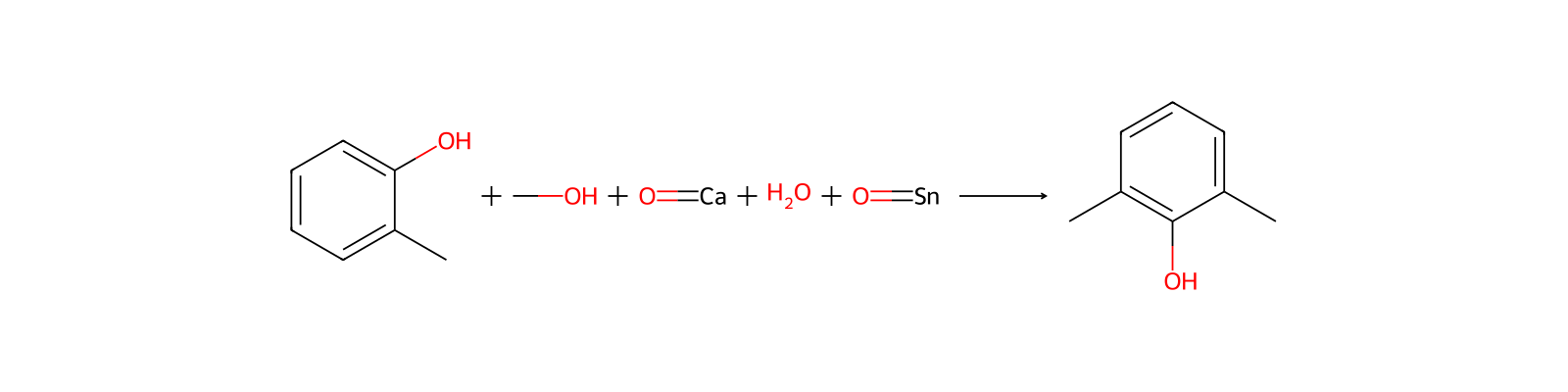
Vor- und nachgelagerte Produkte

Zugehörige Reaktionen

19
Reaktionsaufzeichnung erstellen
HRID 140467als Edukt
HRID 175288als Edukt
HRID 194048als Edukt
HRID 319559als Edukt
HRID 954815als Edukt
HRID 1089384als Edukt
HRID 1145731als Edukt
HRID 1628358als Edukt
ZurückSeite 1 von 3

Notizen zur Verbindung

Auf dieser SeiteGrundinformationenÜberblickNamen und BezeichnerEigenschaftenSicherheit und RegulatorischesChemie und IndustrieZugehörige ReaktionenNotizen zur Verbindung

Dry Powder

Brownish-black solid; [Merck Index] Bluish-black odorless powder; [Alfa Aesar MSDS]

BLUE-TO-BLACK CRYSTALLINE POWDER.

Brownish-black powder or black to blue-black crystalline solid.

Brownish-black powder.

Physikochemische Eigenschaften

Schmelzpunkt
1080 °C · 1080 °C
Dichte
6 · 6,95 g/cm3
storage temp.
Store at RT.
Löslichkeit
2 O, · insoluble in H2O, ethanol; soluble in acid solutions
Aggregatzustand
powder
Farbe
Blue-black
Wichte
6.95 · 6.95
Wasserlöslichkeit
Insoluble in water, and alcohol.
Spezifische Wärmekapazität
0.33 J/ · Cp(crystal): 0.33 J/(g·K); Cp(gas): 0.23 J/(g·K), at 25℃
Merck
14 · 14,8787
Stabilität
Stable. Incompatible with strong acids, strong bases.
InChI
1S/O.Sn
InChIKey
QHGNHLZPVBIIPX-UHFFFAOYSA-N
SMILES
O=[SnH2]
CAS Datenbank
21651 · 21651-19-4(CAS DataBase Reference)
EPA chemische Informationen
Stannous oxide (21651-19-4)
Reactive GroupReducing Agents, Strong
Reactivity ProfileTIN(II) OXIDE is a reducing agent. Unstable in air due to slow oxidation to tin(IV) oxide. At 300 °C this oxidation proceeds incandescently. Incompatible with strong oxidizing agents. Reacts with acids and with strong bases.
Air and Water ReactionsNo rapid reaction with air. No rapid reaction with water.
Hazard Classes and Categories · 2 Einträge

Acute Tox. 4 (35.3%)

Specific target organ toxicity - Repeated exposure - Category 1 (lung)

Hazardous Reactivities and IncompatibilitiesNone reported

Sicherheit und Schutzausrüstung

Fire FightingIn case of fire in the surroundings, use appropriate extinguishing media.
First Aid Measures · 4 Einträge

Fresh air, rest.

Rinse skin with plenty of water or shower.

First rinse with plenty of water for several minutes (remove contact lenses if easily possible), then refer for medical attention.

Rinse mouth.

First Aid · 2 Einträge

Excerpt from NIOSH Pocket Guide for Tin(II) oxide (as Sn):

(General first aid procedures)

Exposure Control and Personal Protection · 1 Eintrag

TIH (Toxic Inhalation Hazard) - Term used to describe gases and volatile liquids that are toxic when inhaled. Some are TIH materials themselves, e.g., chlorine, and some release TIH gases when spilled in water, e.g., chlorosilanes. [ERG 2016].

Spillage Disposal · 1 Eintrag

Personal protection: particulate filter respirator adapted to the airborne concentration of the substance. If appropriate, moisten first to prevent dusting. Sweep spilled substance into covered containers. Carefully collect remainder. Then store and dispose of according to local regulations.

Eye PreventionWear safety goggles or eye protection in combination with breathing protection if powder.
Inhalation RiskA harmful concentration of airborne particles can be reached quickly when dispersed, especially if powdered.
Skin PreventionProtective gloves.
Exposure PreventionPREVENT DISPERSION OF DUST!
Ingestion PreventionDo not eat, drink, or smoke during work.
Inhalation PreventionUse local exhaust or breathing protection.
Respirator RecommendationsImportant additional information about respirator selection

Toxikologische Informationen

Treatment · 1 Eintrag

EYES: irrigate opened eyes for several minutes under running water. INGESTION: do not induce vomiting. Rinse mouth with water (never give anything by mouth to an unconscious person). Seek immediate medical advice. SKIN: should be treated immediately by rinsing the affected parts in cold running water for at least 15 minutes, followed by thorough washing with soap and water. If necessary, the person should shower and change contaminated clothing and shoes, and then must seek medical attention. INHALATION: supply fresh air. If required provide artificial respiration.

Target Organsrespiratory system
Health EffectsIngestion of large amounts of inorganic tin compounds can cause stomachache, anemia, and liver and kidney problems. (L307, L308)
Exposure Routes · 2 Einträge

inhalation, skin and/or eye contact

Oral (L308) ; inhalation (L308) ; dermal (L308)

Toxicity SummaryInorganic and organic tin compounds are weak inhibitors of alcohol dehydrogenase. (A183)
Signs and Symptoms · 3 Einträge

Cough.

Stannosis (benign pneumoconiosis): dyspnea (breathing difficulty), decreased pulmonary function

Inorganic or organic tin compounds placed on the skin or in the eyes can produce skin and eye irritation. (L308)

ICSC Environmental DataBioaccumulation of this chemical may occur in crustacea and fish.
Carcinogen ClassificationNo indication of carcinogenicity to humans (not listed by IARC).

Sicherheitsdaten

OEB
B
OEL
TWA: 2 mg/m3
wgk
3
tsca
TSCA listed
hs_code
28259085
RTECS-Nr.
XQ3700000
safety_code
24/25
Speicherklasse
6.1C - Combustible acute toxic Cat.3toxic compounds or compounds which causing chronic effects
Hazard Classifications
Acute Tox. 4 OralEye Irrit. 2Skin Sens. 1STOT RE 1

Vorgelagerte Rohstoffe

Zinn

Nachgelagerte Produkte

Bis(2-ethylhexyl) phthalate