
Grundinformationen
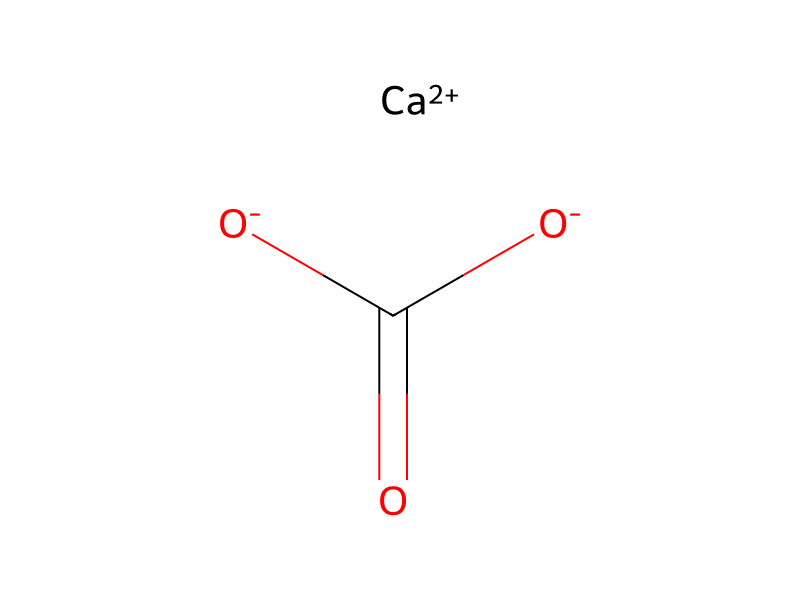
- Standard-SMILES
O=C([O-])[O-].[Ca+2]- InChIKey
VTYYLEPIZMXCLO-UHFFFAOYSA-L- Summenformel
- CaCO3
- Durchschnittliche Molmasse
- 100,09 g/mol
- Monoisotopische Masse
- 99,94733484
Überblick
Calcium carbonate appears as white, odorless powder or colorless crystals. Practically insoluble in water. Occurs extensive in rocks world-wide. Ground calcium carbonate (CAS: 1317-65-3) results directly from the mining of limestone. The extraction process keeps the carbonate very close to its original state of purity and delivers a finely ground product either in dry or slurry form. Precipitated calcium carbonate (CAS: 471-34-1) is produced industrially by the decomposition of limestone to calcium oxide followed by subsequent recarbonization or as a by-product of the Solvay process (which is used to make sodium carbonate). Precipitated calcium carbonate is purer than ground calcium carbonate and has different (and tailorable) handling properties.
Namen und Bezeichner
- Bevorzugter Name
- Calcium Carbonate
- IUPAC
- calcium carbonate
- Lokaler Name
- Kalkstein
- Englischer Name
- CALCIUM CARBONATE
- Summenformel
- CCaO3
- Molmasse
- 100.09
Namen und Synonyme
CALCIUM CARBONATE471-34-1AeromattCalcium carbonate (1:1)Carbonic acid calcium salt (1:1)Calofort UAlbaglosAragoniteCalcicollCalseedsCaltrateCalwhite
Weitere Namen anzeigen
CALCITECHALKMicromarblePARIS WHITEGROUND LIMESTONEPRECIPITATED CHALKWHITINGAgstoneKALKSPAR
ChemcarbDuramiteHydrocarbKotamiteMicrocarbMicromyaNeoanticidAkadama
Datenbank-Bezeichner
- CAS
1317-65-3、13397-26-7、13701-58-1、471-34-1、72608-12-9- PubChem CID
- 10112
- DTXSID
DTXSID3036238- ChEMBL
CHEMBL1200539- ChEBI
CHEBI:3311- UNII
- H0G9379FGK
- EC Number
- 207-439-9、615-782-4
- Nikkaji
- J404I
Eigenschaften
Berechnete Struktureigenschaften
- Polarare Oberfläche (TPSA)
- 63,2 Ų
- H-Brücken-Donoren
- 0
- H-Brücken-Akzeptoren
- 3
- Frei drehbare Bindungen
- 0
- Schwere Atome
- 5
- Formalladung
- 0
- Komplexität
- 18,8
Experimentelle und physikochemische Eigenschaften
Chemical ClassesMineral Dusts -> Other Mineral Dusts
Polymers
Plastics -> Pigments agents
Plastics -> Polyolefin-I; PUR; Polyolefin-II; PVC (soft); ABS; PVC (rigid); PET; PMMA; PA; PC; (E)PS
Cosmetics
Cosmetic ingredients (Calcium Carbonate) -> CIR (Cosmetic Ingredient Review)
Buffering; Opacifying; Oral care; Viscosity controlling; Absorbent; Cosmetic colorant; Bulking; Abrasive
pHpH = 8 to 9
Pesticides
Agrochemicals -> Pesticide active substances
Active substance -> EU Pesticides database: Not approved
Agrochemicals -> Pesticide active substances
Active substance -> EU Pesticides database: Approved
OdorOdorless
Taste
Chalky taste
Tasteless
Food Additives
Foods, Drugs -> FDA Regulatory Status of Color Additives
Use unspecified -> FDA Substance added to food
ANTICAKING AGENT OR FREE-FLOW AGENT, COLOR OR COLORING ADJUNCT, DRYING AGENT, FORMULATION AID, HUMECTANT, LEAVENING AGENT, LUBRICANT OR RELEASE AGENT, MASTICATORY SUBSTANCE, NUTRIENT SUPPLEMENT, PH CONTROL AGENT, PROCESSING AID -> FDA Substance added to food
Density
2.7 to 2.95 (NIOSH, 2024)
Bulk density: 40-100 lb/cubic ft; screen analysis: usually 200 to 325 mesh
2.8 g/cm³
2.7-2.95
2.93 @25 °C
2.7-2.95
Color/FormWhite hexagonal crystals or powder (Calcite); white orthrombic crystals or powder (Argonite); colorless hexagonal crystals (vaterite)
Solubility
0.001 % (NIOSH, 2024)
Practically insoluble in water and in alcohol. Dissolves with effervescence in diluted acetic acid, in diluted hydrochloric acid and in diluted nitric acid, and the resulting solutions, after boiling, give positive tests for calcium.
Solubility Product constant: 3.36X10⁻⁹ at 25 °C
ALKALI HYDROXIDE REDUCES ITS SOLUBILITY
INSOL IN ALCOHOL
SOLUBILITY IN H2O INCR BY AMMONIUM SALT & BY CO2
CorrosivityNon-corrosive
Physikochemische Eigenschaften
- Schmelzpunkt
- 825 °C · 825 °C
- Siedepunkt
- 2850 °C · 2850 °C
- Dichte
- 2.93 g/mL · 2.93 g/mL at 25 °C(lit.)
- Löslichkeit
- 5 M · 5 M HCl: 0.1 M at 20 °C, clear, colorless
- Aggregatzustand
- random crystals
- Farbe
- Gray
- Spezifische Wärmekapazität
- 0.82 J/ · Cp(crystal): 0.82 J/(g·K), at 25℃
- InChI
- 1S/CH2O3.Ca/c2-1(3)4;/h(H2,2,3,4);/q;+2/p-2
- InChIKey
- VTYYLEPIZMXCLO-UHFFFAOYSA-L
- SMILES
- [Ca+2].[O-]C(=O)[O-]
- CAS Datenbank
- 1317 · 1317-65-3(CAS DataBase Reference)
- EPA chemische Informationen
- Limestone (1317-65-3)
Sicherheit und Regulatorisches
GHS-Klassifizierung
GHS Classification
Not Classified
Aggregated GHS information provided per 3535 reports by companies from 27 notifications to the ECHA C&L Inventory.
This chemical does not meet GHS hazard criteria for 100% (12 of 12) of all reports.
Not Classified
Aggregated GHS information provided per 12 reports by companies from 1 notifications to the ECHA C&L Inventory.
Gefahrenhinweise
Regulatory Information
Chemical: Carbonic acid, calcium salt (1:1)
Regulation (EC) No 1107/2009 (amended)
Carbonic acid calcium salt (1:1) is listed on the EPA's Chemical Data Reporting (CDR) system. Manufacturers and importers of Carbonic acid calcium salt (1:1) are required to report information about their production and use of this chemical to the EPA under the Toxic Substances Control Act (TSCA). (40 eCFR Part 711)
2002/2076
2008/127, Reg. (EU) 2017/195, Reg. (EU) 2020/1160, Reg. (EU) 2021/1448, Reg. (EU) 2021/745, Reg. (EU) No 369/2012, Reg. (EU) No 540/2011
Status: Active Update: 28-04-2023 https://echa.europa.eu/registration-dossier/-/registered-dossier/16050
Other Safety InformationIMAP assessments - Carbonic acid, calcium salt (1:1): Human health tier I assessment
Fire HazardsNot combustible.
Fire PotentialNot combustible.
Health HazardsExcerpt from NIOSH Pocket Guide for Calcium carbonate:
Hazards Summary
No adverse effects associated with exposure to calcium carbonate have been identified. [Harber, p. 354] Important natural forms are calcite and aragonite, which may be contaminated with magnesium, iron, chromium, manganese, sulfur, zinc, lead, and sometimes crystalline silica. Chemically produced calcium carbonate is 98-99% pure. [CHEMINFO]
FDA Requirements
Certification of this color additive when used as a color additive in drugs is not necessary for the protection of the public health, and therefore batches thereof are exempt from the certification pursuant to section 721(c) of the act.
An ingredient whose use in food or food packaging is subject to a prior sanction or approval within the meaning of section 201(s)(4) of the Act is exempt from classification as a food additive. ... Substances classified as stabilizers, when migrating from food-packaging material shall include: ... calcium carbonate.
Substance added directly to human food affirmed as generally recognized as safe (GRAS).
Drug products containing certain active ingredients offered over-the-counter (OTC) for certain uses. A number of active ingredients have been present in OTC drug products for various uses, as described below. However, based on evidence currently available, there are inadequate data to establish general recognition of the safety and effectiveness of these ingredients for the specified uses: calcium carbonate is included in antidiarrheal drug products.
For more FDA Requirements (Complete) data for CALCIUM CARBONATE (8 total), please visit the HSDB record page.
Reactive GroupCarbonate Salts
Special Reports
Optimal Calcium Uptake. Current Bibliographies in Medicine 94-4. Public Services Division/National Library of Medicine. 775 citations from January, 1990-April, 1994.[Available from, as of April 4, 2003: http://www.nlm.nih.gov/pubs/cbm/calcium.html]
EPA Safer ChemicalChemical: Calcium carbonate
FIFRA Requirements
Residues of calcium carbonate are exempted from the requirement of a tolerance when used in accordance with good agricultural practice as inert (or occasionally active) ingredients in pesticide formulations applied to growing crops or to raw agricultural commodities after harvest. Use: solid diluent, carrier.
Residues of calcium carbonate are exempted from the requirement of a tolerance when used in accordance with good agricultural practice as inert (or occasionally active) ingredients in pesticide formulations applied to animals. Use: solid diluent, carrier.
OSHA Standards
Permissible Exposure Limit: Table Z-1 8-Hr Time Weighted Avg: 15 mg/cu m, total dust. /Calcium carbonate, RN 1317-65-3/
Permissible Exposure Limit: Table Z-1 8-Hr Time Weighted Avg: 5 mg/cu m, respirable fraction. /Calcium carbonate, RN 1317-65-3/
Sicherheit und Schutzausrüstung
Fire FightingIn case of fire in the surroundings, use appropriate extinguishing media.
First Aid Measures
Fresh air.
Rinse skin with plenty of water or shower.
Rinse with plenty of water (remove contact lenses if easily possible).
Rinse mouth.
First Aid
Excerpt from NIOSH Pocket Guide for Calcium carbonate:
(General first aid procedures)
Safe StorageSeparated from acids, aluminium, ammonium salts, fluorine and magnesium.
Fire Fighting ProceduresIn case of fire in the surroundings, use appropriate extinguishing media.
Storage ConditionsSeparated from acids, aluminium and ammonium salts.
Cleanup MethodsPersonal protection: particulate filter respirator adapted to the airborne concentration of the substance. Sweep spilled substance into covered containers.
Disposal Methods
SRP: The most favorable course of action is to use an alternative chemical product with less inherent propensity for occupational exposure or environmental contamination. Recycle any unused portion of the material for its approved use or return it to the manufacturer or supplier. Ultimate disposal of the chemical must consider: the material's impact on air quality; potential migration in soil or water; effects on animal, aquatic, and plant life; and conformance with environmental and public health regulations.
Spillage DisposalPersonal protection: particulate filter respirator adapted to the airborne concentration of the substance. Sweep spilled substance into covered containers.
Preventive Measures
SRP: The scientific literature for the use of contact lenses by industrial workers is inconsistent. The benefits or detrimental effects of wearing contact lenses depend not only upon the substance, but also on factors including the form of the substance, characteristics and duration of the exposure, the uses of other eye protection equipment, and the hygiene of the lenses. However, there may be individual substances whose irritating or corrosive properties are such that the wearing of contact lenses would be harmful to the eye. In those specific cases, contact lenses should not be worn. In any event, the usual eye protection equipment should be worn even when contact lenses are in place.
Do not eat, drink, or smoke during work.
Eye PreventionWear safety goggles.
Inhalation RiskA nuisance-causing concentration of airborne particles can be reached quickly when dispersed, especially if powdered.
Toxikologische Informationen
TreatmentCadmium poisoning is treated by removal from exposure and supportive care. If ingested, induced vomiting or gastric lavage may be performed. (L139)
Interactions
... A mixture of 2 parts magnesium oxide and 1 part calcium carbonate produces relatively normal stool for many patients.
Milk-alkali syndrome may occur after prolonged admin of calcium carbonate with concomitant use of sodium bicarbonate and/or homogenized milk containing Vit D.
Certain anions in antacids (carbonate and hydroxide) ... are thought to form insoluble complexes when combined with iron. A study evaluating the effect of antacids and iron absorption used patients with mild iron deficiency and found that when Mylanta II (5 mL) was given with 10 mg of iron, the increase in plasma iron seen two hours after the dose was not significantly different from the iron level seen two hours after a control dose. ... calcium carbonate 500 mg also decreased the two-hour plasma levels, with serum iron levels attaining only one-third of the control dose.
Concurrent use of excessive amounts of /alcohol, caffeine (usually more than 8 cups of coffee a day), or tobacco/ has been reported to decrease calcium absorption.
For more Interactions (Complete) data for CALCIUM CARBONATE (45 total), please visit the HSDB record page.
Target OrgansEyes, skin, respiratory system
Ecotoxicity ValuesLC50; Species: Gambusia affinis (Western mosquitofish); Conditions: static; Concentration: >56,000 mg/L for 24-96 hr
Adverse Effects
Due to the short-term, periodic nature of calcium carbonate/antacid use and the small dose of calcium carbonate used for supplementation, most adverse effects are minor. However, an overdose can occur if large doses are taken for an extended time or abused. The patient can experience moderate to severe side effects of an overdose. These include:
Exposure Routes
inhalation, skin and/or eye contact
Oral (L6) ; inhalation (L6) ; dermal (L6)
Toxicity Summary
The CIR Expert Panel concluded that the following 6 carbonate salts are safe in the present practices of use and concentration, as described in this safety assessment, when formulated to be non-irritating...Calcium Carbonate...
Safe for use in cosmetics, with qualifications
The FDA recognizes calcium carbonate as a generally safe drug and food additive. A maximum dose of 8 to 10 g per day of calcium carbonate can be administered for short-term use. However, long-term use of over 2 grams can lead to adverse effects such as hypercalcemia, renal calculi, hypophosphatemia, and nephrotoxicity, especially in individuals with chronic kidney disease. Fetotoxicity has also been observed in pregnant women taking over 1500 mg/kg of body weight per day of calcium carbonate.
Cadmium initially binds to metallothionein and is transported to the kidney. Toxic effects are observed once the concentration of cadmium exceeds that of available metallothionein, and it has also been shown that the cadmium-metallothionein complex may be damaging. Accumulation of cadmium in the kidney results in increased excretion of vital low and high weight molecular proteins. Cadmium is a high affinity zinc analog and can interfere in its biological processes. It also binds to and activates the estrogen receptor, likely stimulating the growth of certain types of cancer cells and causing other estrogenic effects, such as reproductive dysfunction. Cadmium causes cell apoptosis by activating mitogen-activated protein kinases. (L8, A18, A19, A28)
Ecotoxicity Excerpts
/AQUATIC SPECIES/ This study was undertaken to determine whether calcium could render any protection against copper (Cu) toxicity in Nile tilapia with emphasis on histopathological and histochemical analysis. The copper LC50 values for 24, 48, 72, and 96 hr to tilapia in the laboratory were 210.27, 213.34, 193.30, and 185. 75 mg/L, respectively. Prior to Cu exposure, fish were exposed to 0 (G1 and G3) and 30 mg/L calcium carbonate (G2 and G4) for 4 days. After that, fish were exposed to 46 mg/L copper, which corresponds to 25% of the 96 hr LC50 (G3 and G4) for 96 hr and 7 days. In the gills of the copper treatment group, primary filament cell hyperplasia, epithelial lifting, or edema, secondary lamellar fusion, and aneurysm were observed. Swollen hepatocytes showing vacuoles and congestion in sinusoids were observed. Necrosis was observed in some areas. In the kidney, glomerulus's atrophy, tubular swelling, and also necrosis were seen. Fish that were pre-exposed to calcium showed slight alteration when compared to copper alone-treatment groups. Histochemical staining for calcium and copper by alizarin red S and rhodanine staining, respectively, indicated no accumulation of calcium and copper in kidney, liver, gills, and muscle. In conclusion, calcium appears to be beneficial in reducing the effects of heavy metal contaminations in aquatic organisms.
/AQUATIC SPECIES/ To determine the effects of water hardness on the toxicities of cobalt (Co) and nickel (Ni) to a freshwater fish, Capoeta fusca. Toxicity was investigated by static bioassay. Fish were exposed to cobalt (as CoCl2) and nickel (as NiCl2) for 96 hr in waters with two levels of hardness ("hard" and "very hard", nominally 130 mg/L and 350 mg/L as CaCO3, respectively). Water hardness had a significant effect on the acute toxicity of both elements. The 96 hr LC50 values for Co were 91.7 mg/L and 204.8 mg/L in hard and very hard waters, respectively, and for Ni the 96 hr LC50 values were 78.0 mg/L and 127.2 mg/L, respectively. The fish were more sensitive to Co and Ni toxicity in hard water than in very hard water; very hard water protects C. fusca against the toxicity of Co and Ni.
/AQUATIC SPECIES/ The potential modifying effects of certain water quality parameters (e.g., hardness, alkalinity, pH) on the acute toxicity of boron were tested using a freshwater cladoceran, Ceriodaphnia dubia. By comparison, boron acute toxicity was less affected by water quality characteristics than some metals (e.g., copper and silver). Increases in alkalinity over the range tested did not alter toxicity. Increases in water hardness appeared to have an effect with very hard waters (>500 mg/L as CaCO3)...
/AQUATIC SPECIES/ In this study, the toxicity of mercuric chloride (HgCl2), an important pollutant threatening water resources for many years, and the effects of water temperature and hardness on the toxicity in cultured rainbow trout Oncorhynchus mykiss (4.79 +/- 0.16 g; 7.38 +/- 0.24 cm; mean +/- SD) were investigated at different temperatures (12 and 17 °C) and hardness concentrations (35, 70 and 120 mg/ L as calcium carbonate, CaCO3). For this purpose, the acute toxicity tests were performed by 96-hr static tests in different water temperatures and water hardness concentrations. For acute toxicity tests, solutions ranging from 0.4 to 1.2 mg/L were used at 12 °C and solutions ranging from 0.4 to 1.0 mg/L at 17 °C. The LC50 values of HgCl2 that killed 50% of rainbow trout within 96 hr in the hardness concentrations of 35, 70 and 120 mg/L CaCO3 were calculated using probit analysis, and were found to be 0.725, 0.788, 0.855 mg/L at 12 °C and 0.670, 0.741, 0.787 mg/L at 17 °C, respectively. Consequently, the toxicity of HgCl2 on rainbow trout decreased when the temperature decreased from 17 to 12 °C. Toxicity increased when the hardness decreased from 120 to 35 mg/L CaCO3. In contrast to temperature, water hardness presents a negative effect on the toxicity of HgCl2.
For more Ecotoxicity Excerpts (Complete) data for CALCIUM CARBONATE (9 total), please visit the HSDB record page.
Signs and Symptoms
Cough.
Redness.
irritation eyes, skin, respiratory system; cough
Acute inhalation of cadmium fumes results in metal fume fever, which is characterized by chills, fever, headache, weakness, dryness of the nose and throat, chest pain, and coughing. Ingestion of cadmium causes vomiting and diarrhea. (L6)
ICSC Environmental DataEnvironmental effects from the substance have not been investigated adequately.
Natural Pollution Sources
EGG SHELLS ARE 94% CALCIUM CARBONATE. LIMESTONE...IS NATURAL SOURCE OF TECHNICAL OR AGRICULTURAL GRADES.
Calcium carbonate ... occurs naturally as the principal constituent of limestone, marble and chalk
Calcium carbonate /is present in/ ... oyster shells and dolomite
Exists in nature as minerals aragonite, calcite and vaterite. Two crystal forms are of commercial importance: aragonite, orthorhombic...calcite hexagonal-rhombohedral...
The solubility of calcium carbonate in water containing carbon dioxide causes the formation of caves with stalactites and stalagmites and is responsible for hardness in water
Human Toxicity Excerpts
/HUMAN EXPOSURE STUDIES/ Thirty-two healthy volunteers were exposed to 0 (control), 500, 1000, and 5000 ug/cu m calcium carbonate dust for 3 hours and nasal saccharin transport time (STT), rhinomanometry, and visual analog scales (VAS) on nasal discomfort were obtained. A dose dependent decrease of STT (P = 0.02) and nasal patency (P = 0.04), and increased sensation of nasal obstruction (P = 0.002) and dryness (P = 0.03) was observed. The results indicate that acute exposure to low-toxicity particulate matter in concentrations frequently encountered in western agglomeration areas may affect nasal functions and cause nasal symptoms.
/SIGNS AND SYMPTOMS/ Admin of calcium carbonate promotes positive phosphate balance; plasma phosphate concn may or may not be incr, but hyperphosphatemia is usual finding in patients with milk-alkali syndrome.
/SIGNS AND SYMPTOMS/ ... Enough is absorbed to cause systemic and renal effects ... a slight-to-moderate metabolic alkalosis occurs during treatment with CaCO3, but it is slow to develop.
/SIGNS AND SYMPTOMS/ When phosphate intake is low /during chronic calcium carbonate admin/, hypophosphatemia may occur. Hypercalciuria and alkaluria predispose to nephrolithiasis.
For more Human Toxicity Excerpts (Complete) data for CALCIUM CARBONATE (27 total), please visit the HSDB record page.
Regulatorische Informationen
FDA Requirements
Certification of this color additive when used as a color additive in drugs is not necessary for the protection of the public health, and therefore batches thereof are exempt from the certification pursuant to section 721(c) of the act.
An ingredient whose use in food or food packaging is subject to a prior sanction or approval within the meaning of section 201(s)(4) of the Act is exempt from classification as a food additive. ... Substances classified as stabilizers, when migrating from food-packaging material shall include: ... calcium carbonate.
Substance added directly to human food affirmed as generally recognized as safe (GRAS).
Drug products containing certain active ingredients offered over-the-counter (OTC) for certain uses. A number of active ingredients have been present in OTC drug products for various uses, as described below. However, based on evidence currently available, there are inadequate data to establish general recognition of the safety and effectiveness of these ingredients for the specified uses: calcium carbonate is included in antidiarrheal drug products.
For more FDA Requirements (Complete) data for CALCIUM CARBONATE (8 total), please visit the HSDB record page.
FIFRA Requirements
Residues of calcium carbonate are exempted from the requirement of a tolerance when used in accordance with good agricultural practice as inert (or occasionally active) ingredients in pesticide formulations applied to growing crops or to raw agricultural commodities after harvest. Use: solid diluent, carrier.
Residues of calcium carbonate are exempted from the requirement of a tolerance when used in accordance with good agricultural practice as inert (or occasionally active) ingredients in pesticide formulations applied to animals. Use: solid diluent, carrier.
Sicherheitsdaten
- OEB
- B
- OEL
- TWA: 10 mg/m3 (total)
- wgk
- -
- tsca
- TSCA listed
- RTECS-Nr.
- FF9335000
- risk_code
- 37/38-41
- hazard_code
- Xi
- safety_code
- 26-36/37/39
- Speicherklasse
- 13 - Non Combustible Solids
Chemie und Industrie
Pharmakologische Informationen
ATC Code
A - Alimentary tract and metabolism
A - Alimentary tract and metabolism
QA - Alimentary tract and metabolism
QA - Alimentary tract and metabolism
Bionecessity
Infants: 201 mg/day /for/ 0 to 6 mo /and/ 270 mg/day /for/ 7 to 12 mo. Children: 500 mg/day /for/ 1 to 3 yr and 800 mg/day /for/ 4 to 8 yr. Adults: 1,300 mg/day /for/ 9 to 18 yr, 1000 mg/day /for/ 19 to 50 yr /and/ 1200 mg/day /for above/ 51 yr. /During/ pregnancy /and/ lactation: 1300 mg/day /for/ 14 to 18 yr /and/ 1000 mg/day /for/ 19 to 50 yr. /Adequate Intakes (AIs) of calcium/
Requirements for all vitamins and most minerals are increased during breast-feeding. /Calcium supplements/
Anthropogenic CO2 is reducing the pH and altering the carbonate chemistry of seawater, with repercussions for marine organisms and ecosystems. Current research suggests that calcification will decrease in many species, but compelling evidence of impaired functional performance of calcium carbonate structures is sparse, particularly in key species. Here we demonstrate that ocean acidification markedly degrades the mechanical integrity of larval shells in the mussel Mytilus californianus, a critical community member on rocky shores throughout the northeastern Pacific. Larvae cultured in seawater containing CO2 concentrations expected by the year 2100 (540 or 970 ppm) precipitated weaker, thinner and smaller shells than individuals raised under present-day seawater conditions (380 ppm), and also exhibited lower tissue mass. Under a scenario where mussel larvae exposed to different CO2 levels develop at similar rates, these trends suggest a suite of potential consequences, including an exacerbated vulnerability of new settlers to crushing and drilling attacks by predators; poorer larval condition, causing increased energetic stress during metamorphosis; and greater risks from desiccation at low tide due to shifts in shell area to body mass ratios. Under an alternative scenario where responses derive exclusively from slowed development, with impacted individuals reaching identical milestones in shell strength and size by settlement, a lengthened larval phase could increase exposure to high planktonic mortality rates. In either case, because early life stages operate as population bottlenecks, driving general patterns of distribution and abundance, the ecological success of this vital species may be tied to how ocean acidification proceeds in coming decades.
Ocean acidification is a pervasive stressor that could affect many marine organisms and cause profound ecological shifts. A variety of biological responses to ocean acidification have been measured across a range of taxa, but this information exists as case studies and has not been synthesized into meaningful comparisons amongst response variables and functional groups. /The authors/ used meta-analytic techniques to explore the biological responses to ocean acidification, and found negative effects on survival, calcification, growth and reproduction. However, there was significant variation in the sensitivity of marine organisms. Calcifying organisms generally exhibited larger negative responses than non-calcifying organisms across numerous response variables, with the exception of crustaceans, which calcify but were not negatively affected. Calcification responses varied significantly amongst organisms using different mineral forms of calcium carbonate. Organisms using one of the more soluble forms of calcium carbonate (high-magnesium calcite) can be more resilient to ocean acidification than less soluble forms (calcite and aragonite). Additionally, there was variation in the sensitivities of different developmental stages, but this variation was dependent on the taxonomic group. /These/ analyses suggest that the biological effects of ocean acidification are generally large and negative, but the variation in sensitivity amongst organisms has important implications for ecosystem responses.
For more Bionecessity (Complete) data for CALCIUM CARBONATE (8 total), please visit the HSDB record page.
Protein BindingCalcium acts as a co-factor to numerous enzymes.
Pharmacodynamics
Gastric-peptic disease occurs as a result of an imbalance between protective factors, such as mucus, bicarbonate, and prostaglandin secretion, and aggressive factors, such as hydrochloric acid, pepsin, and <i>Helicobacter pylori</i> (<i>H. pylori</i>). Antacids work by restoring acid-base balance, attenuating the pepsin activity and increasing bicarbonate and prostaglandin secretion. The acid-neutralizing capacity of calcium carbonate is 58 mEq/15 ml. When used as a nutritional supplement, calcium carbonate acts by directly increasing calcium stores within the body.
Mechanism of Action
Calcium carbonate is a basic inorganic salt that acts by neutralizing hydrochloric acid in gastric secretions. It also inhibits the action of pepsin by increasing the pH and via adsorption. Cytoprotective effects may occur through increases in bicarbonate ion (HCO<sub>3</sub><sup>-</sup>) and prostaglandins. Neutralization of hydrochloric acid results in the formation of calcium chloride, carbon dioxide and water. Approximately 90% of calcium chloride is converted to insoluble calcium salts (e.g. calcium carbonate and calcium phosphate).
Metabolism/Metabolites
None.
After ingestion /of CaCO3 tablets/, it is converted to sol calcium salts in stomach, and calcium is thereby made available for absorption.
Cadmium is absorbed from oral, inhalation, and dermal routes. Cadmium initially binds to metallothionein and albumin and is transported mainly to the kidney and liver. Toxic effects are observed once the concentration of cadmium exceeds that of available metallothionein, and it has also been shown that the cadmium-metallothionein complex may be damaging. Cadmium is not known to undergo any direct metabolic conversion and is excreted unchanged, mainly in the urine. (L6)
FDA Pharmacological Classification
ANTACID TABLETS
Cations, Divalent [CS]; Calcium [CS]; Phosphate Chelating Activity [MoA]; Phosphate Binder [EPC]; Blood Coagulation Factor [EPC]; Increased Coagulation Factor Activity [PE]
CALCIUM ANTACID
Cations, Divalent [CS]; Calcium [CS]; Increased Coagulation Factor Activity [PE]; Blood Coagulation Factor [EPC]
CALCIUM CARBONATE
Increased Coagulation Factor Activity [PE]; Blood Coagulation Factor [EPC]; Phosphate Binder [EPC]; Phosphate Chelating Activity [MoA]; Calcium [CS]; Cations, Divalent [CS]
MeSH Pharmacological ClassificationSubstances that counteract or neutralize acidity of the GASTROINTESTINAL TRACT.
Absorption, Distribution and Excretion
Maximal absorption occurs at doses of 500 mg or less taken with food. Oral bioavailability depends on intestinal pH, the presence of food and dosage.
Excreted mainly in the feces. The majority of renally filtered calcium is reabsorbed in the ascending limb of the loop of Henle and the proximal and distal convoluted tubules. Also secreted by sweat glands.
Calcium is rapidly distributed taken up by skeletal tissues following absorption and distribution into extracellular fluids. Bone contains 99% of the body's calcium and the remaining 1% is approximately equally distributed between intracellular and extracellular fluids.
Calcium absorption is best when a person consumes no more than 500 mg at one time. So a person who takes 1,000 mg/day of calcium from supplements, for example, should split the dose rather than take it all at once.
Amount of calcium absorbed from calcium carbonate is usually stated to be 10%, but ... depends upon amount of gastric acid; in 1 study, 0-2% of single 2 g dose was ... absorbed in achlorhydric persons, 9-16% in normal subjects, and 11-37% in patients with peptic ulcer ...
Fraction absorbed seems to be nearly the same when CaCO3 is given chronically in daily doses of 20 g /as when it is given in single 2 g dose/. ... Amount absorbed probably reaches a plateau at a dose of about 20 g.
Verwendung und Herstellung
Uses
CIR ingredient: Calcium Carbonate
Calcium carbonate occurs in nature as limestone, chalk, marble, dolomite, aragonite, calcite and oyster shells. [NIOSH] Natural calcium carbonate can be found in the minerals calcite and aragonite (limestone, chalk, and marble). [Harber, p. 354] Calcium carbonate is used in the manufacture of quicklime, Portland cement, and paints. Pharmaceutical grades are used in cosmetics, foods, and drugs. [ACGIH] Used in paints, rubber, plastics, ceramics, polishes, inks, pharmaceuticals, adhesives, etc. [CHEMINFO] Used for whiting in glassblowing; [www.ci.tucson.az.us/arthazards/medium.html]
Smelting Copper or Lead [Category: Industry]
Glassblowing [Category: Hobbies]
Mesh Heading: Antacids
For calcium carbonate (USEPA/OPP Pesticide Code: 073502) there are 0 labels match. /SRP: Not registered for current use in the U.S., but approved pesticide uses may change periodically and so federal, state and local authorities must be consulted for currently approved uses./
Impurities
Major contaminants: magnesium carbonate and silica
Both natural ground and precipitated calcium carbonate can contain low levels of impurities that are regulated. The impurities depend on the source of material, processing, and the final grade. Impurities are typically trace metals and naturally occurring minerals.
U.S. Exports(1975) 5.6X10+8 grams (Excluding pigment grade)
U.S. Production
2023: 4,000,000,000 - <5,500,000,000 lb
(1972) 2X10+11 GRAMS (PRECIPITATED)
(1975) 4.03X10+11 GRAMS (PRECIPITATED)
Market for fine products (97%, <45 um) is estimated to be 5-9 million tons annually in the U.S.
Production volumes for non-confidential chemicals reported under the Inventory Update Rule.[Table#2464]
For more U.S. Production (Complete) data for CALCIUM CARBONATE (7 total), please visit the HSDB record page.
Consumption Patterns
(Pigment grade) (est.) 17% in paint; 17% in plastics; 17% in carpet backing; 17% in putty; 13% in rubber; 19% in other applications, including precipitated calcium carbonate used principally for coating paper (1969)
Derivative: Construction, 72%; Raw Material, 19%; Filler & Extender, 1%; and others, 8% (1982)
The use of calcium carbonate in paint, paper, and plastics make up the principal part of the market.
Consumer UsesFixing agent (mordant)
Industry UsesAbrasives
Methods of Manufacturing
Reaction of calcium chloride and sodium carbonate or ammonium carbonate
The production of natural ground calcium carbonate starts with the quarrying of a deposit of chalk, limestone, or marble. The best deposits for most industrial applications are those having a high (>90% CaCO3) purity and high brightness. ... The ore is taken to a primary crusher for size reduction and then into the processing plant. The plant process is dependent on the grade of material being made. ... Coarse products that do not require high purity, 90-98% CaCO3, go to secondary crushing. This may be a cone- or jaw-type crusher that produces material minus 4 cm. Final grinding for products down to approximately 5 um median particle size can be done in a roller mill or ball mill. Products finer than 10 um often involve additional processing, usually in a dry ball mill circuit with air classification.
For those grades /of calcium carbonate/ requiring high purity or finer material the process is different. Ideally, the secondary crushing step should reduce the ore to the point where mineral impurities are liberated, typically <100 um, without producing an excess of fines. The material may then be beneficiated through a mineral flotation process in which impurities are floated out. The flotation process produces a higher brightness material that is typically >98% calcium carbonate. ... The flotation product is further ground in a ball mill to produce a product in the 2-50 um particle range. Products having a median particle size less than 2 mm are usually wet ground in media or sand mills, the final product being a slurry that can be shipped after stabilizers and biocides are added, or dried for powdered products.
Precipitated calcium carbonate can be produced by several methods but only the carbonation process is commercially used in the United States. Limestone is calcined in a kiln to obtain carbon dioxide and quicklime. The quicklime is mixed with water to produce a milk-of-lime. Dry hydrated lime can also be used as a feedstock. Carbon dioxide gas is bubbled through the milk-of-lime in a reactor known as a carbonator. Gassing continues until the calcium hydroxide has been converted to the carbonate. The end point can be monitored chemically or by pH measurements. Reaction conditions determine the type of crystal, the size of particles, and the size distribution produced. ... Following carbonation, the product can be further purified by screening. This screening, also used to control the maximum size of the product, is followed by dewatering (qv). Rotary vacuum filters, pressure filters, or centrifuges are used in the mechanical removal of water. Final drying is accomplished as with natural calcium carbonate in either a rotary, spray, or flash dryer. Products having mean particle sizes from submicrometers (~0.03 um) to several micrometers are available.
... Methods of manufacture: (1) As a byproduct in the "Lime soda process"; (2) By precipitation of calcium carbonate from calcium hydroxide in the "Carbonation process"; or (3) By precipitation of calcium carbonate from calcium chloride in the "Calcium chloride process".
Formulations/Preparations
Formulations: dispersible, nonwettable.
/Available in/ Filler grades; USP grades; technical grades; high-purity grades; and specialty grades
Found in: Tums, 500 mg; Tums-Extra strength, 750 mg
Both natural ground or precipitated calcium carbonate are available as dry products. Calcium carbonate slurry, primarily used in the paper industry, is typically >70% solids by weight for ground products and 20-50% solids by weight for precipitated. Some grades are surface coated to improve handling and dispersibility in plastics. Agents used for surface treatment used are fatty acids, resins, and wetting agents.
MAALOX QUICK DISSOLVE: 600 mg CaCO3/tablet; CALCIUM RICH ROLAIDS: 80 mg Mg(OH)2 and 412 mg CaCO3/tablet; TUMS EX 750 mg CaCO3 ... /From table/
Household ProductsInformation on 335 consumer products that contain Calcium carbonate in the following categories is provided:
Use Classification
EPA Safer Chemical Functional Use Classes -> Processing Aids and Additives
Safer Chemical Classes -> Green circle - The chemical has been verified to be of low concern
Food additives
Food Additives -> ANTICAKING_AGENT -> JECFA Functional Classes
Food Additives -> ANTICAKING_AGENT -> JECFA Functional Classes
Plastics -> Polymer Type -> Polyolefin-I; PUR; Polyolefin-II; PVC (soft); ABS; PVC (rigid); PET; PMMA; PA; PC; (E)PS
General Manufacturing Information
Plastics Material and Resin Manufacturing
Carbonic acid calcium salt (1:1): ACTIVE
The principal U.S. producers of ground calcium carbonate are Columbia River Carbonates, ECC International, Franklin Limestone Co., Genstar Stone Products, Georgia Marble, J.M. Huber Corp., Calcium Carbonate Division, James River Limestone Co., Inc., OMYA Inc. (Pluess-Staufer), and Pfizer Inc. The principal U.S. producers of precipitated products are Mississippi Lime Co., and Pfizer Inc.
Anwendungen
BeschreibungCalcite is one of the most common minerals on the face of the earth, comprising about 4% by weight of the earth’s crust and is formed in many different geological environments. Calcite can form rocks of considerable mass and constitutes a significant part of all three major rock classification types. It forms oolitic, fossiliferous and massive limestones in sedimentary environments and even serves as the internal cement for many sandstones and shales.Calcite is even a major component in the igneous rock called carbonatite and forms the major portion of many hydrothermal veins. Not necessarily a variety of calcite, cave formations are certainly a unique aspect of calcite’s story.
VerwendenSource of lime; neutralizing agent, filler, and extender in rubber, plastics, paints; opacifying agent in paper; fortification of bread; putty; tooth pow- ders; antacid; whitewash; Portland cement; sulfur dioxide removal from stack gases; metallurgical flux; analytical chemistry; carbon dioxide gener- ation (laboratory).
Darstellung
synthetischeThe calcite present is derived mostly from the remains of organisms such as clams, brachiopods, bryozoa, crinoids and corals. These animals live on the bottom of the sea and when they die their shells accumulate into piles of shelly debris. This debris can then form beds of limestone. Some limestones may have been derived from nonbiogenic calcite formation.
Vor- und nachgelagerte Produkte
Vorgelagerte Rohstoffe
Nachgelagerte Produkte
Anbieter26 Anbieter
国药集团化学试剂有限公司86-21-63210123 · [email protected]
天津市恒兴化学试剂制造有限公司022-26772349 15822233318 · [email protected]
河北枫嘉新材料科技有限公司+86-0311-87836622 +86-18712993135 · [email protected]
武汉易泰科技有限公司上海分公司18930552037 · [email protected]
淄博容纳生物科技有限公司+86-86-13583358881 +8618560316533 · [email protected]
山东洛克化工有限公司17653113209 13065062079 · [email protected]
沈阳依莱普克斯化工有限公司024-31124838 15840046119
Hebei Qige Biological Technology Co. Ltd+86 +8618733132031
PT CHEM GROUP LIMITED+86-85511178; +86-85511178 · [email protected]
成都润泽本土化工有限公司13096311329 028-88469284 616445927 · [email protected]
池州凯隆进出口贸易有限公司[email protected]
山东智尚新材料有限公司+8617653113209 · [email protected]
BOC Sciences[email protected]
杭州洁汉化工有限公司+86-571-86217390; +8618058761490 · [email protected]
河南天孚化工有限公司+86-0371-55170693 +86-19937530512 · [email protected]
厦门盈融达化工有限公司+86-0592-6210733 · [email protected]
SHANDONG ZHI SHANG CHEMICAL CO.LTD0531-68652808 18953170293 · [email protected]
海蔚化学86-21-51086038 · [email protected]
爆牛贸易重庆有限公司+86-023-6139-8061 +86-86-13650506873 · [email protected]
XIAMEN AMITY INDUSTRY AND TRADE CO., LTD.+8618950047208 · [email protected]
SUZHOU SENFEIDA CHEMICAL CO.,LTD+86-0512-83500002 +86-15195660023 · [email protected]
DAYANG CHEM (HANGZHOU) CO.,LTD+86-88938639 +86-17705817739 · [email protected]
上海将牧生物科技有限公司+8615821988213 · [email protected]
天门恒昌化工有限公司027-59322316 15172518801 · [email protected]
Hefei TNJ Chemical Industry Co.,Ltd.+86-0551-65418671 +86-189 4982 3763 · [email protected]
Shaanxi Dideu Medichem Co. Ltd+86-17392712779 · [email protected]
Ergänzende Hinweise
DefinitionAragonite: An anhydrous mineral form of calcium carbonate, CaCO3, which occurs associated with limestone and in some metamorphic rocks. It is also the main ingredient of pearls. It is not as stable as calcite, into which it may change over time. Calcite:A mineral form of calcium carbonate occurring in limestone, chalk, and marble. Charlk: A natural form of calcium carbonate (CaCO3) formed originally by marine organisms. (Blackboard chalk is calcium sulfate, CaSO4.).
Zugehörige Reaktionen
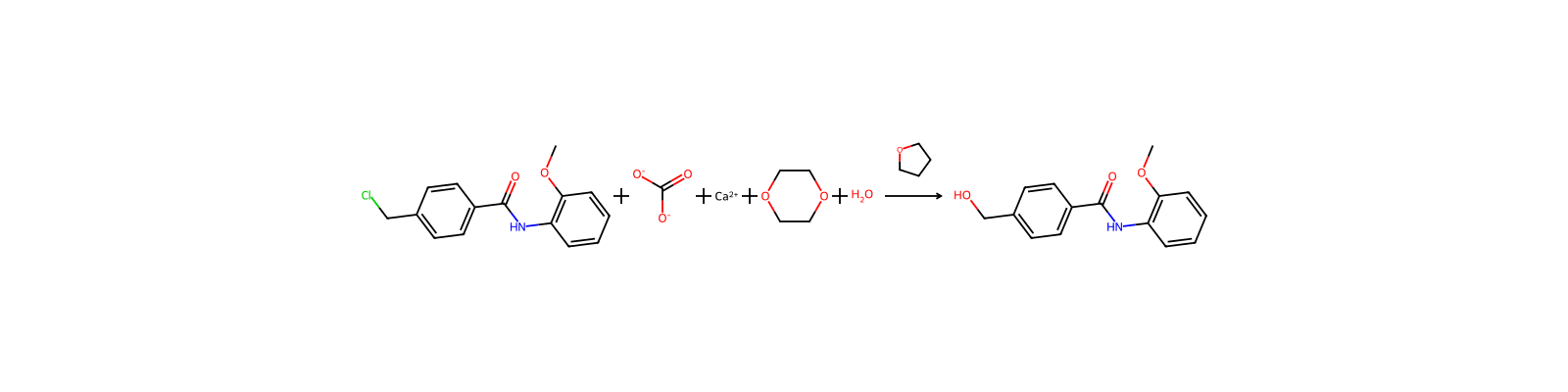
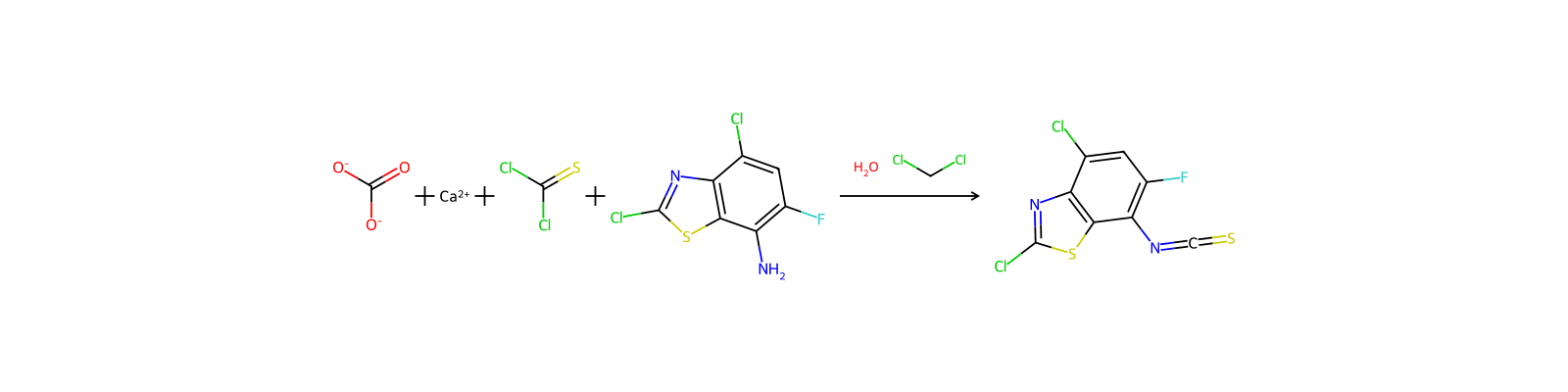
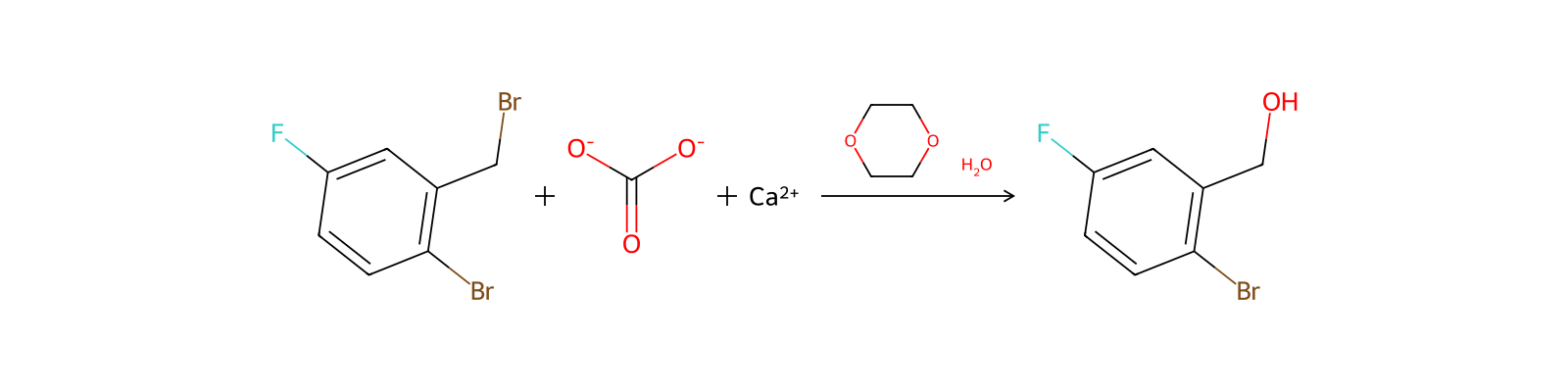
835




Verknüpfte Notizen
Wird geladen…