
Diphenylacetylen
Diphenylacetylene
Daten werden ergänzt – lade die Seite später neu, um den aktuellen Stand zu sehen

Grundinformationen
- CAS
501-65-5- Standard-SMILES
C(#Cc1ccccc1)c1ccccc1- InChIKey
JRXXLCKWQFKACW-UHFFFAOYSA-N- Summenformel
- C14H10
- Durchschnittliche Molmasse
- 178,23 g/mol
- Monoisotopische Masse
- 178,07825032
Überblick
Biphenylacetylene is an arylacetylene that is acetylene in which the hydrogens are replaced by phenyl groups. It has a role as a fluorochrome. It is a member of benzenes and an arylacetylene.
Namen und Bezeichner
- Bevorzugter Name
- Diphenylacetylene
- IUPAC
- 2-phenylethynylbenzene
- Lokaler Name
- Diphenylacetylen
- Englischer Name
- Diphenylacetylene
- Summenformel
- C14H10
- Molmasse
- 178.23
Namen und Synonyme
DIPHENYLACETYLENE501-65-5TolanDiphenylethyneTolane1,2-Diphenylacetylene2-phenylethynylbenzeneBiphenylacetyleneBenzene, 1,1'-(1,2-ethynediyl)bis-1,1'-ethyne-1,2-diyldibenzeneY70JA8HB75CHEBI:51579
Weitere Namen anzeigen
Diphenilethyneethyne,diphenyl-1,2-DIPHENYL ETHYNE
DTXSID4060109NSC-5185RefChem:134661DTXCID3040778207-926-61,2-diphenylethynediphenyl acetyleneEthyne, diphenyl-
Datenbank-Bezeichner
- CAS
501-65-5- PubChem CID
- 10390
- DTXSID
DTXSID4060109- ChEMBL
CHEMBL223309- ChEBI
CHEBI:51579- UNII
- Y70JA8HB75
- EC Number
- 207-926-6
- Nikkaji
- J6.193J
Eigenschaften
Berechnete StruktureigenschaftenWird ergänzt
- XLogP
- 4,8
- Polarare Oberfläche (TPSA)
- 0 Ų
- H-Brücken-Donoren
- 0
- H-Brücken-Akzeptoren
- 0
- Frei drehbare Bindungen
- 2
- Schwere Atome
- 14
- Formalladung
- 0
- Komplexität
- 193
Experimentelle und physikochemische Eigenschaften
Chemical ClassesOther Classes -> Aromatic Hydrocarbons
SpringerMaterials PropertiesSchoenflies notation
LogP4.78
Physical DescriptionSolid; [Merck Index] White crystalline powder; [Acros Organics MSDS]
Physikochemische Eigenschaften
- Schmelzpunkt
- 59 · 59-61 °C (lit.)
- Siedepunkt
- 170 °C/19 · 170 °C/19 mmHg (lit.)
- Dichte
- 0.99 g/mL · 0.99 g/mL at 25 °C (lit.)
- Brechungsindex
- 1.6415 · 1.6415 (estimate)
- Flammpunkt
- 170 °C/19mm · 170°C/19mm
- storage temp.
- 2 · Sealed in dry,2-8°C
- Aggregatzustand
- Crystalline Powder and Chunks
- Farbe
- Light yellow to brownish
- Wichte
- 0.99 · 0.99
- Wasserlöslichkeit
- Miscible with ether and hot alcohol. Immiscible with water.
- Spezifische Wärmekapazität
- 1.27 J/ · Cp(crystal): 1.27 J/(g·K), at 25℃
- Merck
- 14 · 14,9504
- BRN
- 606478 · 606478
- Stabilität
- Stable. Combustible. Incompatible with strong oxidizing agents.
- InChI
- 1S/C14H10/c1-3-7-13(8-4-1)11-12-14-9-5-2-6-10-14/h1-10H
- InChIKey
- JRXXLCKWQFKACW-UHFFFAOYSA-N
- SMILES
- c1ccc(cc1)C#Cc2ccccc2
- CAS Datenbank
- 501 · 501-65-5(CAS DataBase Reference)
- NIST chemische Informationen
- Diphenylethyne(501-65-5)
- EPA chemische Informationen
- 1 · Benzene, 1,1'-(1,2-ethynediyl)bis- (501-65-5)
Sicherheit und Regulatorisches
Sicherheitsangaben dienen nur zur Orientierung und ersetzen weder das Sicherheitsdatenblatt (SDB) des Lieferanten noch geltende Vorschriften oder eine fachliche Bewertung.
GHS-Klassifizierung
GHS Classification
Warning
H315 (100%): Causes skin irritation [Warning Skin corrosion/irritation]
P261, P264, P264+P265, P271, P280, P302+P352, P304+P340, P305+P351+P338, P319, P321, P332+P317, P337+P317, P362+P364, P403+P233, P405, and P501 (click each P-code to see the statement)
The GHS information provided by 1 company from 1 notification to the ECHA C&L Inventory.
Gefahrenhinweise
Regulatory InformationBenzene, 1,1'-(1,2-ethynediyl)bis-: Does not have an individual approval but may be used under an appropriate group standard
Hazards SummaryMay cause irritation; [Acros Organics MSDS] See Phenylacetylene.
Hazard Classes and CategoriesSkin Irrit. 2 (100%)
CSL Reaction Information
CSL00138
NITROBENZENE + DIPHENYLACETYLENE + ALUMINUM CHLORIDE
Aluminum chloride-nitrobenzene mixtures explode with existence of diphenylacetylene
Explosive
M (up to 100g)
Dissolve aluminum chloride in nitrobenzene in the presence of an oxidizable organic component should always be conducted initially on a small scale and with proper shielding in the event of an explosion.
Sicherheitsdaten
- wgk
- 3
- tsca
- TSCA listed
- hs_code
- 29029090
- safety_code
- 24/25-22
- Speicherklasse
- 11 - Combustible Solids
Chemie und Industrie
Verwendung und Herstellung
UsesUsed as a starting material for polymerizations; [REPROTOX]
General Manufacturing InformationBenzene, 1,1'-(1,2-ethynediyl)bis-: ACTIVE
Anwendungen
VerwendenDiphenylacetylene is often used as a building block in organic and organometallic chemistry. It acts as dienophile and under goes Diels-Alder reaction with tetraphenylcyclopentadienone to prepare hexaphenylbenzene. It acts as a precursor in the preparation of 3-alkoxycyclopropene by reacting with benzal chloride in the presence of potassium t-butoxide.
Vor- und nachgelagerte Produkte
Vorgelagerte Rohstoffe
Ergänzende Hinweise
DefinitionChEBI: An arylacetylene that is acetylene in which the hydrogens are replaced by phenyl groups.
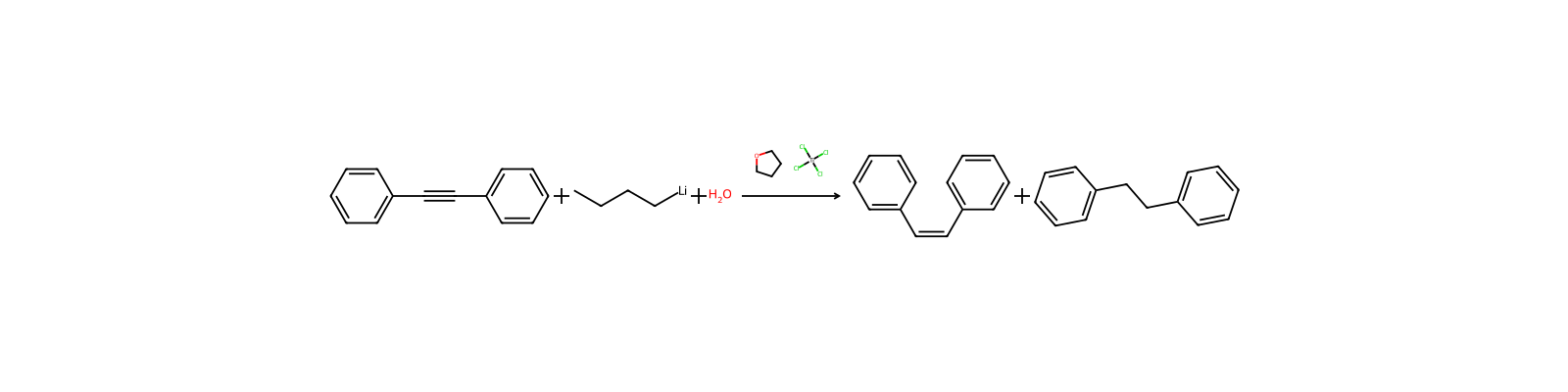
Zugehörige Reaktionen
75



Notizen zur Verbindung
Wird geladen…