
Grundinformationen
- Standard-SMILES
NCCCCN- InChIKey
KIDHWZJUCRJVML-UHFFFAOYSA-N- Summenformel
- C4H12N2
- Durchschnittliche Molmasse
- 88,15 g/mol
- Monoisotopische Masse
- 88,10004838
Überblick
Putrescine is a four-carbon alkane-alpha,-diamine. It is obtained by the breakdown of amino acids and is responsible for the foul odour of putrefying flesh. It has a role as an antioxidant and a fundamental metabolite. It is a conjugate base of a 1,4-butanediammonium.
Namen und Bezeichner
- Bevorzugter Name
- Putrescine
- IUPAC
- butane-1,4-diamine
- Englischer Name
- Tetramethylenediamine
- Summenformel
- C4H12N2
- Molmasse
- 0
Namen und Synonyme
1,4-diaminobutaneputrescine1,4-butanediamine110-60-1butane-1,4-diaminetetramethylenediamineButylenediaminePutrescin1,4-ButylenediamineTetramethyldiamine1,4-TetramethylenediamineNSC-60545
Weitere Namen anzeigen
V10TVZ52E4DTXSID4041107CHEBI:171481,4 Butanediamine1,4 DiaminobutaneRefChem:177345DTXCID2021107203-782-3
Datenbank-Bezeichner
- CAS
110-60-1- PubChem CID
- 1045
- DTXSID
DTXSID4041107- ChEMBL
CHEMBL46257- ChEBI
CHEBI:17148- UNII
- V10TVZ52E4
- EC Number
- 203-782-3
- Nikkaji
- J1.979H
Eigenschaften
Berechnete Struktureigenschaften
- XLogP
- -0,9
- Polarare Oberfläche (TPSA)
- 52 Ų
- H-Brücken-Donoren
- 2
- H-Brücken-Akzeptoren
- 2
- Frei drehbare Bindungen
- 3
- Schwere Atome
- 6
- Formalladung
- 0
- Komplexität
- 17,5
Experimentelle und physikochemische Eigenschaften
Chemical ClassesNitrogen Compounds -> Amines, Aliphatic
DrugsPharmaceuticals -> Listed in ZINC15
SpringerMaterials PropertiesNuclear quadrupole resonance spectroscopy
Pesticides
Attractants
Active substance -> EU Pesticides database: Not approved
LogP
log Kow = -3.42
-0.70
OdorStrong piperidine-like odor
Density0.877 g/cu cm at 25 °C
Color/Form
Colorless oil
Colorless crystals
Leaflets
Solubility
Soluble in water with strongly basic reaction
Very soluble in water
Boiling Point158.5 °C
Decomposition
When heated to decomposition it emits toxic fumes of /nitroxides/.
Hazardous Decomposition Products: Carbon monoxide, Carbon dioxide, Nitrogen oxides, Hydrogen chloride gas. /1,4-Diaminobutane dihydrochloride 97%/
Melting Point
27.5 °C
27.5 °C
Physikochemische Eigenschaften
- Schmelzpunkt
- 27.5 °C · 27.5 °C
- Siedepunkt
- 158.5 °C · 158.5 °C
- Dichte
- 0.864 · 0.864±0.06 g/cm3(Predicted)
- pka
- 10.68 · 10.68±0.10(Predicted)
Sicherheit und Regulatorisches
GHS-Klassifizierung
GHS Classification
This chemical does not meet GHS hazard criteria for 8.9% (22 of 247) of reports.
Danger
H226 (29.1%): Flammable liquid and vapor [Warning Flammable liquids]
P210, P233, P234, P240, P241, P242, P243, P260, P262, P264, P264+P265, P270, P271, P273, P280, P284, P301+P317, P301+P330+P331, P302+P352, P302+P361+P354, P303+P361+P353, P304+P340, P305+P354+P338, P316, P317, P320, P321, P330, P361+P364, P362+P364, P363, P370+P378, P390, P403+P233, P403+P235, P405, P406, and P501 (click each P-code to see the statement)
Aggregated GHS information provided per 247 reports by companies from 17 notifications to the ECHA C&L Inventory. Each notification may be associated with multiple companies.
Gefahrenhinweise
Regulatory Information
Chemical: 1,4-Butanediamine
Commission Regulation (EC) No 2229/2004
1,4-Butanediamine is listed on the EPA's Chemical Data Reporting (CDR) system. Manufacturers and importers of 1,4-Butanediamine are required to report information about their production and use of this chemical to the EPA under the Toxic Substances Control Act (TSCA). (40 eCFR Part 711)
2008/127, Reg. (EU) 2022/801, Reg. (EU) No 540/2011, Reg. (EU) No 571/2012
Status: Active Update: 27-11-2014 https://echa.europa.eu/registration-dossier/-/registered-dossier/11388
1,4-Diaminobutane: Does not have an individual approval but may be used under an appropriate group standard
Other Safety InformationEvaluation - Chemicals that are unlikely to require further regulation to manage risks to environment
Hazards Summary
Corrosive to rabbit skin; Causes severe damage to rabbit eyes; [ToxPlanet: EFSA: DAR - Vol. 1] Cause muscle contraction or spasticity in intraperitoneal lethal-doses studies of mice; Causes somnolence, ptosis, and urine changes in oral lethal-dose studies of rats; [RTECS] Causes burns; Inhalation may cause corrosive injuries to upper respiratory tract and lungs; Harmful by ingestion and skin absorption; Toxic by inhalation; Reproductive effects observed in experimental animals; [Alfa Aesar MSDS]
Atmospheric Standards
This action promulgates standards of performance for equipment leaks of Volatile Organic Compounds (VOC) in the Synthetic Organic Chemical Manufacturing Industry (SOCMI). The intended effect of these standards is to require all newly constructed, modified, and reconstructed SOCMI process units to use the best demonstrated system of continuous emission reduction for equipment leaks of VOC, considering costs, non air quality health and environmental impact and energy requirements. Tetramethylenediamine is produced, as an intermediate or a final product, by process units covered under this subpart.
NFPA Hazard Classification
2 - Materials that, under emergency conditions, can cause temporary incapacitation or residual injury.
0 - Materials that will not burn under typical fire conditions, including intrinsically noncombustible materials such as concrete, stone, and sand.
0 - Materials that in themselves are normally stable, even under fire conditions.
Toxic Combustion ProductsEmits toxic fumes under fire conditions. /1,4-Diaminobutane dihydrochloride 97%/
Hazard Classes and CategoriesFlam. Liq. 3 (29.1%)
Skin, Eye, and Respiratory IrritationsIrritating to eyes, respiratory system and skin. /1,4-Diaminobutane dihydrochloride 97%/
Sicherheit und Schutzausrüstung
Fire Fighting ProceduresWater spray. Carbon dioxide, dry chemical powder, or appropriate foam. Protective Equipment: Wear self-contained breathing apparatus and protective clothing to prevent contact with skin and eyes. /1,4-Diaminobutane dihydrochloride 97%/
Storage ConditionsHygroscopic. Keep tightly closed. /1,4-Diaminobutane dihydrochloride 97%/
Cleanup MethodsSweep up, place in a bag and hold for waste disposal. Avoid raising dust. Ventilate area and wash spill site after material pickup is complete. /1,4-Diaminobutane dihydrochloride 97%/
Disposal Methods
SRP: The most favorable course of action is to use an alternative chemical product with less inherent propensity for occupational harm/injury/toxicity or environmental contamination. Recycle any unused portion of the material for its approved use or return it to the manufacturer or supplier. Ultimate disposal of the chemical must consider: the material's impact on air quality; potential migration in soil or water; effects on animal and plant life; and conformance with environmental and public health regulations.
Contact a licensed professional waste disposal service to dispose of this material. Dissolve or mix the material with a combustible solvent and burn in a chemical incinerator equipped with an afterburner and scrubber. Observe all federal, state, and local environmental regulations. /1,4-Diaminobutane dihydrochloride 97%/
Preventive Measures
Do not breathe dust. Avoid contact with eyes, skin, and clothing. Avoid prolonged or repeated exposure. /1,4-Diaminobutane dihydrochloride 97%/
SRP: The scientific literature for the use of contact lenses by industrial workers is inconsistent. The benefits or detrimental effects of wearing contact lenses depend not only upon the substance, but also on factors including the form of the substance, characteristics and duration of the exposure, the uses of other eye protection equipment, and the hygiene of the lenses. However, there may be individual substances whose irritating or corrosive properties are such that the wearing of contact lenses would be harmful to the eye. In those specific cases, contact lenses should not be worn. In any event, the usual eye protection equipment should be worn even when contact lenses are in place.
SRP: Contaminated protective clothing should be segregated in such a manner so that there is no direct personal contact by personnel who handle, dispose, or clean the clothing. The completeness of the cleaning procedures should be considered before the decontaminated protective clothing is returned for reuse by the workers. Contaminated clothing should not be taken home at the end of shift, but should remain at employee's place of work for cleaning.
SRP: Wastewater from contaminant suppression, cleaning of protective clothing/equipment, or contaminated sites should be contained and evaluated for subject chemical or decomposition product concentrations. Concentrations shall be lower than applicable environmental discharge or disposal criteria. Alternatively, pretreatment and/or discharge to a permitted wastewater treatment facility is acceptable only after review by the governing authority and assurance that "pass through" violations will not occur. Due consideration shall be given to remediation worker exposure (inhalation, dermal and ingestion) as well as fate during treatment, transfer and disposal. If it is not practicable to manage the chemical in this fashion, it must be evaluated in accordance with EPA 40 CFR Part 261, specifically Subpart B, in order to determine the appropriate local, state and federal requirements for disposal.
Personal Protective Equipment (PPE)
PERSONAL PROTECTIVE EQUIPMENT Respiratory: Use respirators and components tested and approved under appropriate government standards such as NIOSH (US) or CEN (EU). Where risk assessment shows air-purifying respirators are appropriate use a dust mask type N95 (US) or type P1 (EN 143) respirator. Hand: Compatible chemical-resistant gloves. Eye: Chemical safety goggles. /1,4-Diaminobutane dihydrochloride 97%/
Toxikologische Informationen
TreatmentKidney dialysis is usually needed to relieve the symptoms of uremic syndrome until normal kidney function can be restored.
Interactions
Histamine poisoning can result from the ingestion of food containing unusually high levels of histamine. ... Histamine poisoning is characterized by a short incubation period, a short duration, and symptoms resembling those associated with allergic reactions. The evidence supporting the role of histamine as the causative agent is compelling. ... Histamine ingested with spoiled fish appears to be much more toxic than histamine ingested in an aqueous solution. The presence of potentiators of histamine toxicity in the spoiled fish may account for this difference in toxicity. Several potentiators including other putrefactive amines such as putrescine and cadaverine have been identified. Pharmacologic potentiators may also exist; aminoguanidine and isoniazid are examples. The mechanism of action of these potentiators appears to be the inhibition of intestinal histamine-metabolizing enzymes. This enzyme inhibition causes a decrease in histamine detoxification in the intestinal mucosa and results in increased intestinal uptake and urinary excretion of unmetabolized histamine.
Health EffectsChronic exposure to uremic toxins can lead to a number of conditions including renal damage, chronic kidney disease and cardiovascular disease.
Ecotoxicity ValuesLD50; Species: Peromyscus maniculatus (Deer Mouse) oral 1600 mg/kg
Environmental Fate
TERRESTRIAL FATE: Based on a classification scheme(1), an estimated Koc value of 49(SRC), determined from a log Kow of -3.42(2) and a regression-derived equation(3), indicates that putrescine is expected to have very high mobility in soil(SRC). However, the pKa of putrescine is 10.80(4), indicating that this compound will almost entirely exist in the cation form in the environment and cations generally adsorb more strongly to soils containing organic carbon and clay than their neutral counterparts(5). Putrescine is expected to volatilize from dry soil surfaces(SRC) based upon an estimated vapor pressure of 2.3 mm Hg at 25 °C(SRC), determined from a fragment constant method(6). Biodegradation data in soil were not available(SRC, 2010).
AQUATIC FATE: Based on a classification scheme(1), an estimated Koc value of 49(SRC), determined from a log Kow of -3.42(2) and a regression-derived equation(3), indicates that putrescine is not expected to adsorb to suspended solids and sediment(SRC). A pKa of 10.80(4) indicates putrescine will exist almost entirely in the cation form at pH values of 5 to 9 and therefore volatilization from water surfaces is not expected to be an important fate process. According to a classification scheme(5), an estimated BCF of 3(SRC), from its log Kow(2) and a regression-derived equation(3), suggests the potential for bioconcentration in aquatic organisms is low(SRC). Biodegradation data in water were not available(SRC, 2010).
ATMOSPHERIC FATE: According to a model of gas/particle partitioning of semivolatile organic compounds in the atmosphere(1), putrescine, which has an estimated vapor pressure of 2.33 mm Hg at 25 °C(SRC), determined from a fragment constant method(2), is expected to exist solely as a vapor in the ambient atmosphere. Vapor-phase putrescine is degraded in the atmosphere by reaction with photochemically-produced hydroxyl radicals(SRC); the half-life for this reaction in air is estimated to be 6 hrs(SRC), calculated from its rate constant of 6.6X10⁻¹¹ cu cm/molecule-sec at 25 °C(SRC) that was derived using a structure estimation method(3). Putrescine does not contain chromophores that absorb at wavelengths >290 nm(4), and therefore is not expected to be susceptible to direct photolysis by sunlight(SRC).
Food Survey Values
Putrescine levels in fresh pork and beef meat were not detected to 0.6 mg/kg and not detected to 1.75 mg/kg, respectively. Levels in cooked ham and mortadella were not detected to 3.9 mg/kg and not detected to 3.9 mg/kg, respectively. The putrescine content in ripened meat products ranged from 31.6 to 361.9 mg/kg chorizo and 85.9 to 184.5 mg/kg in salchichon(1).
Adverse EffectsDermatotoxin - Skin burns.
Exposure RoutesEndogenous, Ingestion, Dermal (contact)
Toxicity Summary
IDENTIFICATION AND USE: Putrescine is found as colorless oil or crystals or leaflets with a strong piperidine like odor. It is very soluble in water. This chemical is used as a tool in biochemical research and as a chemical intermediate, complexing agent, catalyst in resin technology and synthesis of quaternary ammonium compounds. HUMAN EXPOSURE AND TOXICITY: Putrescine is a skin, eye and respiratory irritant. Occupational exposure to putrescine may occur through inhalation and dermal contact with this compound at workplaces where it is produced or used. Monitoring data indicate that the general population may be exposed to putrescine by ingestion of certain meats. ANIMAL STUDIES: Putrescine caused a dose related decrease in blood pressure after intravenous administration in rats. The subacute toxicity of putrescine was examined in rats. Putrescine was administered in the diets. Adverse effects were also observed in the high dose group which included decreased body weights associated with diminished food intake was observed.
Uremic toxins such as putrescine are actively transported into the kidneys via organic ion transporters (especially OAT3). Increased levels of uremic toxins can stimulate the production of reactive oxygen species. This seems to be mediated by the direct binding or inhibition by uremic toxins of the enzyme NADPH oxidase (especially NOX4 which is abundant in the kidneys and heart) (A7868). Reactive oxygen species can induce several different DNA methyltransferases (DNMTs) which are involved in the silencing of a protein known as KLOTHO. KLOTHO has been identified as having important roles in anti-aging, mineral metabolism, and vitamin D metabolism. A number of studies have indicated that KLOTHO mRNA and protein levels are reduced during acute or chronic kidney diseases in response to high local levels of reactive oxygen species (A7869).
Plant ConcentrationsPutrescine was detected, not quantified in unspecified freshwater and marine algae(1).
Signs and Symptoms
As a uremic toxin, this compound can cause uremic syndrome. Uremic syndrome may affect any part of the body and can cause nausea, vomiting, loss of appetite, and weight loss. It can also cause changes in mental status, such as confusion, reduced awareness, agitation, psychosis, seizures, and coma. Abnormal bleeding, such as bleeding spontaneously or profusely from a very minor injury can also occur. Heart problems, such as an irregular heartbeat, inflammation in the sac that surrounds the heart (pericarditis), and increased pressure on the heart can be seen in patients with uremic syndrome. Shortness of breath from fluid buildup in the space between the lungs and the chest wall (pleural effusion) can also be present.
Effluent ConcentrationsPutrescine was tested for but not detected in gasoline nor diesel exhaust(1).
Regulatorische Informationen
Atmospheric Standards
This action promulgates standards of performance for equipment leaks of Volatile Organic Compounds (VOC) in the Synthetic Organic Chemical Manufacturing Industry (SOCMI). The intended effect of these standards is to require all newly constructed, modified, and reconstructed SOCMI process units to use the best demonstrated system of continuous emission reduction for equipment leaks of VOC, considering costs, non air quality health and environmental impact and energy requirements. Tetramethylenediamine is produced, as an intermediate or a final product, by process units covered under this subpart.
Sicherheitsdaten
- Alarmwort
- Achtung
- Gefahrenhinweise
- Code Gefahrenhinweise Gefahrenklasse Abteilung Alarmwort Symbol P-Code H290
Chemie und Industrie
Pharmakologische Informationen
Metabolism/Metabolites
Putrescine is synthesized biologically via two different pathways, both starting from arginine. In one pathway, arginine is converted into agmatine, with a reaction catalyzed by the enzyme arginine decarboxylase (ADC); then agmatine is transformed into carbamilputrescine by agmatine imino hydroxylase (AIH). Finally, carbamilputrescine is converted into putrescine. In the second pathway, arginine is converted into ornithine and then ornithine is converted into putrescine by ornithine decarboxylase (ODC).
Putrescine attacks s-adenosyl methionine and converts it to spermidine. Spermidine in turn ... /reacts with/ attacks another s-adenosyl methionine and converts it to spermine.
Putrescine is synthesized in small quantities by healthy living cells by the action of ornithine decarboxylase. The polyamines, of which putrescine is one of the simplest, appear to be growth factors necessary for cell division.
A novel bacterial putrescine utilization pathway was discovered. Seven genes, the functions of whose products were not known, are involved in this novel pathway. Five of them encode enzymes that catabolize putrescine; one encodes a putrescine importer, and the other encodes a transcriptional regulator. This novel pathway involves six sequential steps as follows: 1) import of putrescine; 2) ATP-dependent gamma-glutamylation of putrescine; 3) oxidization of gamma-glutamylputrescine; 4) dehydrogenation of gamma-glutamyl-gamma-aminobutyraldehyde; 5) hydrolysis of the gamma-glutamyl linkage of gamma-glutamyl-gamma-aminobutyrate; and 6) transamination of gamma-aminobutyrate to form the final product of this pathway, succinate semialdehyde, which is the precursor of succinate.
Uremic toxins tend to accumulate in the blood either through dietary excess or through poor filtration by the kidneys. Most uremic toxins are metabolic waste products and are normally excreted in the urine or feces.
Absorption, Distribution and Excretion
The urinary excretion of histamine, methylhistamine, putrescine, cadaverine, spermidine and spermine was examined before, during and after pregnancy in rats. During the last third of undisturbed pregnancy a distinct and steep rise occurred in the excretion of all amines studied except spermine. The peak values were found a few days before the birth of the young. In spermidine excretion a second peak was observed one or two days after delivery. Before and during the first 2 weeks of gestation on a molar basis putrescine excretion was the greatest one. During the last trimester histamine was excreted in the largest amount. Under the influence of the diamine oxidase inhibitor aminoguanidine the general pattern of excretion of diamines and polyamines in pregnant rats remained essentially unchanged but the total amount excreted increased. Most conspicuous was the great elevation of urinary contents of putrescine and cadaverine.
Tissue LocationsBrain
Cellular LocationsMitochondria
Metabolite PathwaysCystathionine Beta-Synthase Deficiency
Verwendung und Herstellung
Uses
Polyamine found in all cells and certain bacteria; Used in biochemical research; [Merck Index] One of three active ingredients (0.3%) in a non-lethal food attractant for the male and female Mediterranean Fruit Flies used on orchard, citrus, and other crops; [EFSA: DAR - Vol. 1]
Farming (Pesticides) [Category: Industry]
As a tool in biochemical research
Chemical intermediate, complexing agent, catalyst in resin technology, synthesis of quaternary ammonium compounds.
Naturally produced by the body (endogenous).
U.S. Production
2023: 75,000 - <500,000 lb
Production volumes for non-confidential chemicals reported under the Inventory Update Rule. [Table#7602]
Production volume for non-confidential chemicals reported under the 2006 Inventory Update Rule. Chemical: 1,4-Butanediamine. Aggregated National Production Volume: <500,000 pounds.
Industry UsesCorrosion inhibitor
Methods of Manufacturing
1,4-Diaminobutane can be produced from 1,4-dichloro-2-butene or 1,4-dihalobutane (obtainable from the reaction of butadiene or tetrahydrofuran with a halogen), preferably via the phthalimido compounds. Alternatively, 1,4-diaminobutane can be prepared by hydrogenating succinodinitrile. /Putrescine/
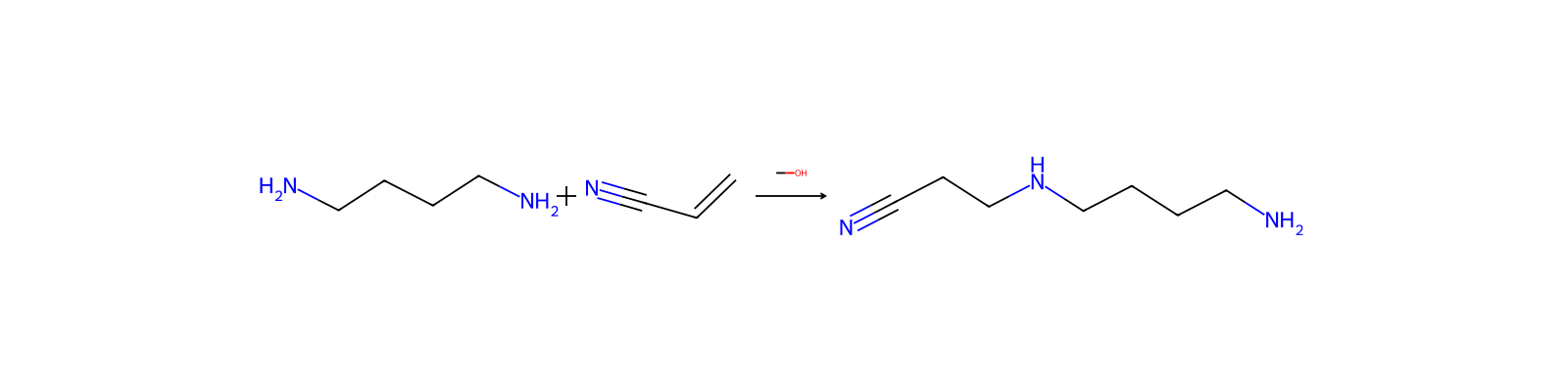
Putrescine is produced on industrial scale by hydrogenation of succinonitrile, which is produced by addition of hydrogen cyanide to acrylonitrile.
General Manufacturing Information
Asphalt Paving, Roofing, and Coating Materials Manufacturing
1,4-Butanediamine: ACTIVE
Biogenic amines are non-volatile amines formed by decarboxylation of amino acids. Although many biogenic amines have been found in fish, only histamine, cadaverine, and putrescine have been found to be significant in fish safety and quality determination. Despite a widely reported association between histamine and scombroid food poisoning, histamine alone appears to be insufficient to cause food toxicity. Putrescine and cadaverine have been suggested to potentiate histamine toxicity. With respect to spoilage on the other hand, only cadaverine has been found to be a useful index of the initial stage of fish decomposition ...
Putrescine (sometimes spelled putrescin or putrescene) is an organic chemical compound NH2(CH2)4NH2 (1,4-diaminobutane or butanediamine). It is related to cadaverine; both are produced by the breakdown of amino acids in living and dead organisms. The two compounds are largely responsible for the foul odor of putrefying flesh, but also contribute to the odor of such processes as bad breath and bacterial vaginosis. They are also found in semen and some microalgae, together with related molecules like spermine and spermidine.
Anbieter50 Anbieter
国药集团化学试剂有限公司86-21-63210123 · [email protected]
梯希爱(上海)化成工业发展有限公司021-67121386 · [email protected]
山东旭晨化工科技有限公司0533-15715337262 15715337262 · [email protected]
上海阿拉丁生化科技股份有限公司400-6206333 13167063860 · [email protected]
邹平创新药业有限公司13561560789 · [email protected]
云南西力生物技术股份有限公司0871-65217109 · [email protected]
T&W GROUP021-61551611 13296011611 · [email protected]
Dayang Chem (Hangzhou) Co.,Ltd.+86-0571-88938639 17705817739 · [email protected]
淄博丽硕化工贸易有限公司13853320569
山东喜玛供应链管理有限公司0533-13011607593; 13011607593
上海迈瑞尔生化科技有限公司4006356688 18621169109 · [email protected]
武汉易泰科技有限公司上海分公司18930552037 · [email protected]
阿法埃莎(中国)化学有限公司400-6106006 · [email protected]
上海德默医药科技有限公司400-021-7337 2355568890 · [email protected]
安耐吉化学&3A(安徽泽升科技股份有限公司)400-0056266 · [email protected]
上海瀚鸿科技股份有限公司021-54306202 13764082696 · [email protected]
上海景颜化工科技有限公司13817811078 · [email protected]
南京蓝白化工有限公司025-85499326 15366059326;13813836665 · [email protected]
上海忆嵘生物科技有限公司18049974220 · [email protected]
佛山宝诺生物科技有限公司0757-85921206 18520245316 · [email protected]
Beckmann-Kenko GmbH+49 4241 9308 88 · [email protected]
上海毕楷科技有限公司18516304666
山东西亚化学有限公司13355009207 13355009207 · [email protected]
玛雅试剂+86 (573) 82222445 (0)18006601000 452520369 · [email protected]
四川库利南科技有限公司400-1166-196 18981987031 · [email protected]
天津希恩思生化科技有限公司400 638 7771 · [email protected]
南京维奥化工有限公司Please Send Email 18652950785 · [email protected]
南京化学试剂股份有限公司025-58369808 17895012682 · [email protected]
斯百全化学(上海)有限公司021-021-021-67601398-809-809-809 15221380277 · [email protected]
艾科试剂4008-755-333 18080918076 · [email protected]
武汉欣扬瑞和化学科技有限公司027-83855316 18171155316
上海思域化工科技有限公司86-21-34053660 · [email protected]
赛默飞世尔科技(中国)有限公司800-810-5118 · [email protected]
北京伊诺凯科技有限公司400-810-7969 010-59572699 · [email protected]
江苏艾康生物医药研发有限公司025-66113011 13913916777 · [email protected]
TCI AMERICA800-4238616 · [email protected]
TOKYO CHEMICAL INDUSTRY CO., LTD.03-36680489 · [email protected]
TCI Europe320-37350700 · [email protected]
上海贤鼎生物科技有限公司4009209199 · [email protected]
武汉卡诺斯科技有限公司153-37111468 15337111468 · [email protected]
北京环宇世纪化学科技有限公司hysj_bj.com
安徽科迪达化工有限公司0554-2106669 · [email protected]
上海爱蝶实业有限公司021-58957966 18930537195 · [email protected]
成都零六生物科技有限公司400-1166-196 13458535857 · [email protected]
广拓化学(上海)有限公司021-60899189-8001 18918189673 · [email protected]
雷丁试剂0510-85629785 18013409632 · [email protected]
上海麦克林生化科技股份有限公司15221275939 15221275939 · [email protected]
上海永叶生物科技有限公司86-021-61559134 15921386130 · [email protected]
康迪斯化工(湖北)有限公司13125172151 · [email protected]
陕西缔都医药化工有限公司029-81024372 17792795018 · [email protected]
Zugehörige Reaktionen
150


Verknüpfte Notizen
Wird geladen…