
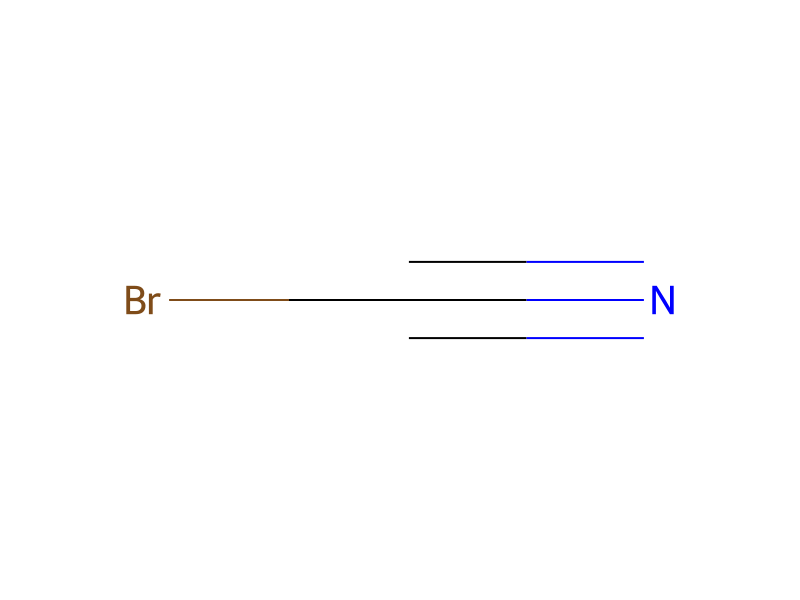
Grundinformationen
- Standard-SMILES
N#CBr- InChIKey
ATDGTVJJHBUTRL-UHFFFAOYSA-N- Summenformel
- CBrN
- Durchschnittliche Molmasse
- 105,92 g/mol
- Monoisotopische Masse
- 104,9214111
Überblick
Cyanogen bromide is a colorless to white crystalline solid with a penetrating odor. It is slightly soluble in water. It is gradually decomposed by water and very rapidly by acids to give off hydrogen bromide, a flammable and poisonous gas. Contamination with many materials can cause rapid decomposition of the material. It is toxic by inhalation of its vapors or by the hydrogen cyanide from decomposition or by ingestion. Toxic oxides of nitrogen are produced in fire involving this material. It is used in gold extraction, to make other chemicals, and as a fumigant.
Namen und Bezeichner
- Bevorzugter Name
- Cyanogen Bromide
- IUPAC
- carbononitridic bromide
- Lokaler Name
- Bromcyan
- Englischer Name
- Cyanogen bromide
- Summenformel
- CBrN
- Molmasse
- 105.92
Namen und Synonyme
CYANOGEN BROMIDE506-68-3Bromine cyanideCyanobromideBromocyanideBromocyanogencarbononitridic bromideBromocyanCampilitCyanogen monobromideBromure de cyanogenBromocyane
Weitere Namen anzeigen
BrCNCyanic bromideCyanogens bromidetl822(CN)Br
Cyanogen bromide (BrCN)Cyanogen bromide ((CN)Br)TL 822Bromine monocyanideDTXSID9021550OS382OHJ8PBromine cyanide (BrCN)NSC-89684
Datenbank-Bezeichner
- CAS
506-68-3- PubChem CID
- 10476
- DTXSID
DTXSID9021550- ChEMBL
CHEMBL3561885- UNII
- OS382OHJ8P
- EC Number
- 208-051-2
- Nikkaji
- J2.608E
Eigenschaften
Berechnete Struktureigenschaften
- XLogP
- 1,1
- Polarare Oberfläche (TPSA)
- 23,8 Ų
- H-Brücken-Donoren
- 0
- H-Brücken-Akzeptoren
- 1
- Frei drehbare Bindungen
- 0
- Schwere Atome
- 3
- Formalladung
- 0
- Komplexität
- 31,3
Experimentelle und physikochemische Eigenschaften
Chemical Classes
Toxic Gases & Vapors -> Cyanides
Reactive agents - 1st degree
SpringerMaterials PropertiesDunham energy parameter
PesticidesPesticide -> EPA IRIS
OdorPenetrating
TasteBitter
Density
2.015 at 68 °F (EPA, 1998) - Denser than water; will sink
2.015 g/cu cm at 20 °C
Percent in saturated air: 12.1% (20 °C); density of saturated air: 1.32 (20 °C)
2.0 g/cm³
Relative density of the vapour/air-mixture at 20 °C (air = 1): 1.53
2.015 @ 20°C
Color/Form
White hygroscopic needles
Crystals
Crystalline solid
Colorless crystals
Solubility
In water, soluble with hydrolysis
Soluble in ethanol, ethyl ether
Soluble in benzene
Aqueous solutions of alkalies decomposes /cyanogen bromide/ to alkali cyanide and alkali bromide
For more Solubility (Complete) data for CYANOGEN BROMIDE (6 total), please visit the HSDB record page.
Solubility in water: slow reaction
CorrosivityCorrodes most metals
Flash PointNot Applicable. Not flammable. (USCG, 1999)
Boiling Point
142 °F at 760 mmHg (EPA, 1998)
61.5 °C
61-62 °C
61.6 °C @760 [mm Hg]
Decomposition
... If involved in a fire decomposes to produce toxic gases.
When heated to decomposition it emits very toxic fumes of SRP: /hydrogen cyanide/ and bromide.
Toxic gases and vapors (such as hydrogen cyanide, and carbon monoxide) may be released when cyanide decomposes. /Cyanide/
Physikochemische Eigenschaften
- Schmelzpunkt
- 50 · 50-53 °C (lit.)
- Siedepunkt
- 61 · 61-62 °C (lit.)
- Dichte
- 1.443 g/mL · 1.443 g/mL at 25 °C
- Dampfdichte
- 3.65 · 3.65 (vs air)
- Dampfdruck
- 100 mm · 100 mm Hg ( 22.6 °C)
- Brechungsindex
- 1.467 · 1.4670 (estimate)
- Flammpunkt
- 61.4 °C · 61.4°C
- storage temp.
- 2 · 2-8°C
- Löslichkeit
- Soluble in chloroform, dichloromethane, ethanol, diethyl ether, benzene and acetonitrile.
- Aggregatzustand
- Solution
- Farbe
- White
- Geruch (Odor)
- Penetrating odor
- Wasserlöslichkeit
- 2 O · decomposed slowly by cold H2O [HAW93]
- Spezifische Wärmekapazität
- 0.44 J/ · Cp(gas): 0.44 J/(g·K), at 25℃
- Merck
- 14 · 14,2693
- BRN
- 1697296 · 1697296
- Stabilität
- Stable. Reacts violently with water and with mineral and organic acids.
- InChI
- 1S/CBrN/c2-1-3
- InChIKey
- ATDGTVJJHBUTRL-UHFFFAOYSA-N
- SMILES
- BrC#N
- CAS Datenbank
- 506 · 506-68-3(CAS DataBase Reference)
- NIST chemische Informationen
- Cyanogen bromide(506-68-3)
- EPA chemische Informationen
- Cyanogen bromide (506-68-3)
Sicherheit und Regulatorisches
GHS-Klassifizierung
GHS Classification
Danger
H300+H310+H330 (60.5%): Fatal if swallowed, in contact with skin or if inhaled [Danger Acute toxicity, oral; acute toxicity, dermal; acute toxicity, inhalation]
P260, P262, P264, P264+P265, P270, P271, P273, P280, P284, P301+P316, P301+P330+P331, P302+P352, P302+P361+P354, P304+P340, P305+P354+P338, P316, P317, P320, P321, P330, P361+P364, P363, P391, P403+P233, P405, and P501 (click each P-code to see the statement)
Aggregated GHS information provided per 177 reports by companies from 10 notifications to the ECHA C&L Inventory. Each notification may be associated with multiple companies.
Gefahrenhinweise
Regulatory Information
Chemical: Cyanogen bromide
Status: Active Update: 06-11-2018 https://echa.europa.eu/registration-dossier/-/registered-dossier/25751
Cyanogen bromide: HSNO Approval: HSR004413 Approved with controls
The New Jersey Worker and Community Right to Know Act requires public and private employers to provide information about hazardous substances at their workplaces. (N.J.S.A. 34:5A-1 et. seq.)
Other Safety InformationIMAP assessments - Cyanogen bromide: Human health tier I assessment
DOT LabelPoison Corrosive
Fire Hazards
Cyanogen bromide is not combustible itself, but impure cyanogen bromide decomposes rapidly and tends to explode. A violent reaction may take place on contact with large quantities of acid. Vapors are highly irritating. When material is heated to decomposition, it emits very toxic fumes of cyanide and bromide. Avoid water, acids. Avoid physical damage, contact with acids or water, and store away from a location where water may be needed for fire control. (EPA, 1998)
· Non-combustible, substance itself does not burn but may decompose upon heating to produce corrosive and/or toxic fumes.
Not combustible but forms flammable gas on contact with water or damp air. Gives off irritating or toxic fumes (or gases) in a fire.
Fire PotentialNoncombustible
Health Hazards
Super toxic; probable oral lethal dose in humans is less than 5 mg/kg or a taste (less than 7 drops) for a 70 kg (150 lb.) person. Vapors are highly irritant and very poisonous. Individuals with chronic diseases of the kidneys, respiratory tract, skin, or thyroid are at greater risk of developing toxic cyanide effects. (EPA, 1998)
· TOXIC and/or CORROSIVE; inhalation, ingestion or contact (skin, eyes) with vapors, dusts or substance may cause severe injury, burns or death.
Hazards Summary
Highly toxic; [Quick CPC] 230 ppm is a lethal concentration for mice and cats; the same animals are paralyzed by a 3 minute exposure to 70 ppm; Can cause cyanide poisoning; Inhalation in range of 10 ppm can cause pulmonary edema; [HSDB] A lachrymator; [CHEMINFO] Slowly reacts with water/moisture producing hydrogen bromide and hydrogen cyanide; A severe skin, eye, and respiratory tract irritant; Inhalation may cause pulmonary edema; Can be absorbed through skin; May have effects on cellular respiration, causing convulsions, unconsciousness, and respiratory failure; [ICSC] Extremely toxic; The probable oral lethal-dose in humans is less than 5 mg/kg (less than 7 drops for a 70 kg person); [CAMEO] Short-term exposure causes second- and third-degree skin burns and severe eye injury; Vapors cause severe eye and throat irritation (and possibly eye and lung injury) and are intolerable even at low concentrations; [CHRIS] TLV Basis is irritation (eye and upper respiratory tract) and pulmonary edema; In humans, 92 ppm is fatal after 10 minutes; 20 ppm is intolerable after 1 minute; 8 ppm is intolerable after 10 minutes; and 1.4 ppm was the lowest irritant concentration for a 10 minute exposure; [ACGIH]
DOT ID and Guide1889 157
Reactive GroupCyanides, Inorganic
UN ClassificationUN Hazard Class: 6.1; UN Subsidiary Risks: 8; UN Pack Group: I
Special Reports
Lunn G, Lawler G; Curr Protoc Protein Sci. Appendix 2: Appendix 2A (2002). This appendix provides protocols for some commonly used disposal and decontamination procedures /for several laboratory reagents including cyanogen bromide. along with analytical techniques that are used to verify that reagents have been decontaminated.
Nat'l Research Council Canada; Effects of Cyanides on Aquatic Organisms with Emphasis Upon Freshwater Fishes (1982) NRCC No. 19246
USEPA; Ambient Water Quality Criteria Doc: Cyanides (1980) EPA 440/5-80-037
NIOSH; Criteria Document: Hydrogen Cyanide and Cyanide Salts (1976) DHEW Pub. NIOSH 77-108
USEPA; Ambient Water Quality Criteria Doc: Cyanide (1984) EPA 440/5-84-028
RCRA Requirements
U246; As stipulated in 40 CFR 261.33, when cyanogen bromide, as a commercial chemical product or manufacturing chemical intermediate or an off-specification commercial chemical product or a manufacturing chemical intermediate, becomes a waste, it must be managed according to Federal and/or State hazardous waste regulations. Also defined as a hazardous waste is any residue, contaminated soil, water, or other debris resulting from the cleanup of a spill, into water or on dry land, of this waste. Generators of small quantities of this waste may qualify for partial exclusion from hazardous waste regulations (40 CFR 261.5).
D003; A solid waste containing cyanogen bromide may become characterized as a hazardous waste when subjected to testing for reactivity as stipulated in 40 CFR 261.23, and if so characterized, must be managed as a hazardous waste.
Sicherheit und Schutzausrüstung
Fire Fighting
Wear full protective clothing. Avoid direct water contact as it will cause cyanogen bromide to decompose, releasing toxic gases. Avoid breathing vapors or dusts; keep upwind; wear self-contained breathing apparatus.
In case of fire in the surroundings, use appropriate extinguishing media.
First Aid Measures
Fresh air, rest. Half-upright position. Artificial respiration may be needed. Refer for medical attention.
Remove contaminated clothes. Rinse skin with plenty of water or shower. Refer for medical attention .
First rinse with plenty of water for several minutes (remove contact lenses if easily possible), then refer for medical attention.
Refer for medical attention . Rinse mouth. Induce vomiting (ONLY IN CONSCIOUS PERSONS!).
Accidental Release Measures
· CALL 911. Then call emergency response telephone number on shipping paper. If shipping paper not available or no answer, refer to appropriate telephone number listed on the inside back cover.
· ELIMINATE all ignition sources (no smoking, flares, sparks or flames) from immediate area.
First Aid
Warning: Cyanogen bromide may be fatal if inhaled, swallowed, or absorbed through skin or mucous membranes. Caution is advised.
General First Aid:
Safe StorageSeparated from food and feedstuffs. See Chemical Dangers. Dry. Well closed.
Exposure Control and Personal Protection
· Wear positive pressure self-contained breathing apparatus (SCBA).
2.0 [mg/m3], as CN, inhalable fraction, as CN[German Research Foundation (DFG)]
Fire Fighting Procedures
If material involved in fire: Extinguish fire using agent suitable for type of surrounding fire. (Material itself does not burn or burns with difficulty.) Use foam, dry chemical, or carbon dioxide. Cool all affected containers with flooding quantities of water. Do not use water on material itself. If large quantities of combustibles are involved, use water in flooding quantities of spray and fog.
Extinguish fire using agent suitable for surrounding fire. Use water spray to keep fire-exposed containers cool.
Storage Conditions
Cyanogen bromide can polymerize violently on prolonged storage at ambient temperature. ... /In the laboratory/ Containers of cyanogen bromide should be kept tightly sealed and stored under nitrogen in a secondary container in a refrigerator.
Impure BrCN can polymerize during storage; the danger of explosion exists with closed BrCN bottles.
Store in a cool, dry, well-ventilated location. Separate from acids.
Pure cyanogen bromide is dangerous in storage because of its volatility, but an approx 50% wt/vol soln with chloroform remains colorless and at constant strength during storage at ambient temp for greater than or equal to 1 yr.
For more Storage Conditions (Complete) data for CYANOGEN BROMIDE (6 total), please visit the HSDB record page.
Cleanup Methods
In the event of a spill, sweep up cyanogen bromide, place in an appropriate container, and dispose of properly. Respiratory and appropriate impermeable protective gloves and clothing should be worn while conducting cleanup of this highly toxic substance.
Cyanogen bromide in water and sodium cyanide in water may safely and efficently (greater than 99.7%) be destroyed using sodium hydroxide (1 M) solution and commercially available sodium or calcium hypochlorite. Details are given of an analytical procedure which can be used to check the final reaction mixture for the presence of residual cyanogen bromide or cyanide.
Wear nitrile rubber gloves, eye protection, laboratory coat and self-contained breathing apparatus if necessary. Cover spill with a 1:1:1 mixture by weight of sodium carbonate or calcium carbonate, clay cat litter (bentonite) and sand. Scoop into a container and transport to the fume hood. Add to a pail of cold water, then, while stirring add an alkaline solution of calcium hypochlorite or household bleach. After 24 hours, decant the solution into the drain with 50 times its volume of water. The solid residue can be treated as normal refuse.
Releases may require isolation or evacuation. Place contaminated materials into appropriate containers for disposal.
Nonfire Spill ResponseExcerpt from ERG Guide 157 [Substances - Toxic and/or Corrosive (Non-Combustible / Water-Sensitive)]:
Disposal Methods
SRP: Wastewater from contaminant suppression, cleaning of protective clothing/equipment, or contaminated sites should be contained and evaluated for subject chemical or decomposition product concentrations. Concentrations shall be lower than applicable environmental discharge or disposal criteria. Alternatively, pretreatment and/or discharge to a permitted wastewater treatment facility is acceptable only after review by the governing authority and assurance that "pass through" violations will not occur. Due consideration shall be given to remediation worker exposure (inhalation, dermal and ingestion) as well as fate during treatment, transfer and disposal. If it is not practicable to manage the chemical in this fashion, it must be evaluated in accordance with EPA 40 CFR Part 261, specifically Subpart B, in order to determine the appropriate local, state and federal requirements for disposal.
Generators of waste (equal to or greater than 100 kg/mo) containing this contaminant, EPA hazardous waste number U246 and D003, must conform with USEPA regulations in storage, transportation, treatment and disposal of waste.
A potential candidate for rotary kiln incineration at a temperature range of 820 to 1,600 °C and residence times of seconds for liquids and gases, and hours for solids.
A potential candidate for fluidized bed incineration at a temperature range of 450 to 980 °C and residence times of seconds for liquids and gases, and longer for solids.
Wear nitrile rubber gloves, laboratory coat and eye protection. In the fume hood and behind a shield, cautiously, with stirring, add to a large volume of an alkaline solution of calcium hypochlorite or household bleach. After 24 hours, wash into the drain with 50 times its volume of water.
Spillage Disposal
Evacuate danger area! Consult an expert! Personal protection: complete protective clothing including self-contained breathing apparatus. Ventilation. Do NOT let this chemical enter the environment. Sweep spilled substance into covered sealable containers. Carefully collect remainder. Then store and dispose of according to local regulations.
Toxikologische Informationen
Treatment
EYES: irrigate opened eyes for several minutes under running water. INGESTION: do not induce vomiting. Rinse mouth with water (never give anything by mouth to an unconscious person). Seek immediate medical advice. SKIN: should be treated immediately by rinsing the affected parts in cold running water for at least 15 minutes, followed by thorough washing with soap and water. If necessary, the person should shower and change contaminated clothing and shoes, and then must seek medical attention. INHALATION: supply fresh air. If required provide artificial respiration.
Interactions
An approach to antidote therapy for cyanide poisoning by using Stroma-Free Methemoglobin Solution was investigated. Rats injected with an LD100 intravenous dose of cyanide were treated with Stroma-Free Methemoglobin Solution equal to 1.5% of their total body hemoglobin. There was a highly significant increase in the survival rate of the treated group compared to saline controls. The potential advantages of Stroma-Free Methemoglobin Solution over current antidotes include an immediate onset of action, rapid elimination of cyanide from the body and a mode of action that doesn't compromise any of the patients' oxygen carrying capacity. Stroma-Free Methemoglobin Solution shows promise as a significant adjunct in the treatment of cyanide poisoning. /Stroma-free methemoglobin solution is prepared from outdated red blood cells by the removal of all cellular membranes (stroma) and induction of methemoglobinemia equivalent to 90% of the total hemoglobin with potassium ferricyanide. Any excess potassium ferricyanide is then removed by dialysis against saline. The resultant preparation does not contain the antigenic components that have been previously reported to cause renal failure and coagulopathies./
Target OrgansEndocrine
Health Effects
Exposure to high levels of cyanide for a short time harms the brain and heart and can even cause coma, seizures, apnea, cardiac arrest and death. Chronic inhalation of cyanide causes breathing difficulties, chest pain, vomiting, blood changes, headaches, and enlargement of the thyroid gland. Skin contact with cyanide salts can irritate and produce sores. Bromine vapour causes irritation and direct damage to the mucous membranes. Elemental bromine also burns the skin. The bromide ion is a central nervous system depressant and chronic exposure produces neuronal effects. This is called bromism and can result in central reactions reaching from somnolence to coma, cachexia, exicosis, loss of reflexes or pathologic reflexes, clonic seizures, tremor, ataxia, loss of neural sensitivity, paresis, papillar edema of the eyes, abnormal speech, cerebral edema, delirium, aggressiveness, and psychoses. (L625, L626, L627, L96, L97)
Ecotoxicity Values
LC50; Species: Lepomis macrochirus (Bluegill) length 33-75 mm; Conditions: freshwater, static, 23 °C, pH 7.6-7.9, hardness 55 mg/L CaCO3; Concentration: 240 ug/L for 96 hr /formulated product/
LC50; Species: Menidia beryllina (Inland silverside) length 40-100 mm; Conditions: saltwater, static, 20 °C, pH 7.6-7.9, hardness 55 mg/L CaCO3; Concentration: 470 ug/L for 96 hr /formulated product/
Adverse EffectsOther Poison - Chemical Asphyxiant
Exposure Routes
The substance can be absorbed into the body by inhalation of its vapour, through the skin and by ingestion.
Inhalation (L96) ; oral (L96) ; dermal (L96)
Toxicity Summary
Organic nitriles decompose into cyanide ions both in vivo and in vitro. Consequently the primary mechanism of toxicity for organic nitriles is their production of toxic cyanide ions or hydrogen cyanide. Cyanide is an inhibitor of cytochrome c oxidase in the fourth complex of the electron transport chain (found in the membrane of the mitochondria of eukaryotic cells). It complexes with the ferric iron atom in this enzyme. The binding of cyanide to this cytochrome prevents transport of electrons from cytochrome c oxidase to oxygen. As a result, the electron transport chain is disrupted and the cell can no longer aerobically produce ATP for energy. Tissues that mainly depend on aerobic respiration, such as the central nervous system and the heart, are particularly affected. Cyanide is also known produce some of its toxic effects by binding to catalase, glutathione peroxidase, methemoglobin, hydroxocobalamin, phosphatase, tyrosinase, ascorbic acid oxidase, xanthine oxidase, succinic dehydrogenase, and Cu/Zn superoxide dismutase. Cyanide binds to the ferric ion of methemoglobin to form inactive cyanmethemoglobin. Bromine is a powerful oxidizing agent and is able to release oxygen free radicals from the water in mucous membranes. These free radicals are also potent oxidizers and produce tissue damage. In additon, the formation of hydrobromic and bromic acids will result in secondary irritation. The bromide ion is also known to affect the central nervous system, causing bromism. This is believed to be a result of bromide ions substituting for chloride ions in the in actions of neurotransmitters and transport systems, thus affecting numerous synaptic processes. (L626, L627, A543, L97)
Signs and Symptoms
Sore throat. Cough. Burning sensation. Convulsions. Dizziness. Headache. Shortness of breath. Laboured breathing. Nausea. Unconsciousness. Vomiting.
MAY BE ABSORBED! Redness. Pain. Blisters. Further see Inhalation.
Redness. Pain.
Abdominal pain. Further see Inhalation.
Cyanide poisoning is identified by rapid, deep breathing and shortness of breath, general weakness, giddiness, headaches, vertigo, confusion, convulsions/seizures and eventually loss of consciousness. Bromine vapour causes irritation and direct damage to the mucous membranes. Symptoms include lacrimation, rhinorrhoea, eye irritation with mucous secretions from the oropharyngeal and upper airways, coughing, dyspnoea, choking, wheezing, epistaxis, and headache. The bromide ion is a central nervous system depressant producing ataxia, slurred speech, tremor, nausea, vomiting, lethargy, dizziness, visual disturbances, unsteadiness, headaches, impaired memory and concentration, disorientation and hallucinations. This is called bromism. (L626, L627, L96, L97)
ICSC Environmental DataEnvironmental effects from the substance have not been investigated adequately. It is strongly advised not to let the chemical enter into the environment.
EPA IRIS Information
Cyanogen bromide
Endocrine
9 x 10 ^-2 mg/kg-day
Medical Surveillance
Initial medical examination /should include/: a complete history and physical examination ... to detect existing conditions that might place the exposed employee at incr risk & to establish a baseline for future health monitoring. ... Examination of cardiovascular, nervous, & upper resp systems, & thyroid should be stressed. The skin should be examined for evidence of chronic disorders. ... The aforementioned medical exam should be repeated on an annual basis. ... /Cyanides/
Thyroid gland examination
Regulatorische Informationen
RCRA Requirements
U246; As stipulated in 40 CFR 261.33, when cyanogen bromide, as a commercial chemical product or manufacturing chemical intermediate or an off-specification commercial chemical product or a manufacturing chemical intermediate, becomes a waste, it must be managed according to Federal and/or State hazardous waste regulations. Also defined as a hazardous waste is any residue, contaminated soil, water, or other debris resulting from the cleanup of a spill, into water or on dry land, of this waste. Generators of small quantities of this waste may qualify for partial exclusion from hazardous waste regulations (40 CFR 261.5).
D003; A solid waste containing cyanogen bromide may become characterized as a hazardous waste when subjected to testing for reactivity as stipulated in 40 CFR 261.23, and if so characterized, must be managed as a hazardous waste.
CERCLA Reportable Quantities
Persons in charge of vessels or facilities are required to notify the National Response Center (NRC) immediately, when there is a release of this designated hazardous substance, in an amount equal to or greater than its reportable quantity of 1000 lb or 454 kg. The toll free number of the NRC is (800) 424-8802. The rule for determining when notification is required is stated in 40 CFR 302.4 (section IV. D.3.b).
Releases of CERCLA hazardous substances are subject to the release reporting requirement of CERCLA section 103, codified at 40 CFR part 302, in addition to the requirements of 40 CFR part 355. Cyanogen bromide is an extremely hazardous substance (EHS) subject to reporting requirements when stored in amounts in excess of its threshold planning quantity (TPQ) of 500 or 10,000 lbs. Extremely hazardous substances that are solids are subject to either of two threshold planning quantities ... The lower quantity applies only if the solid exists in powdered form and has a particle size less than 100 microns; or is handled in solution or in molten form; or meets the criteria for a National Fire Protection Association (NFPA) rating of 2, 3 or 4 for reactivity. If the solid does not meet any of these criteria, it is subject to the upper ... threshold planning quantity ... .
Clean Water Act Requirements
Toxic pollutant designated pursuant to section 307(a)(1) of the Federal Water Pollution Control Act and is subject to effluent limitations. /Cyanides/
The procedures described in the "Guidelines for Deriving Numerical National Water Quality Criteria for the Protection of Aquatic Organisms and Their Uses" indicate that, except possibly where a locally important species is very sensitive, freshwater aquatic organisms and their uses should not be affected unacceptably if the four day average concentration of cyanide does not exceed 5.2 ug/L more than once every three years on the average and if the one hour average concentration does not exceed 22 ug/L more than once every three years on the average. /Cyanide/
The procedures described in the "Guidelines for Deriving Numerical National Water Quality Criteria for the Protection of Aquatic Organisms and Their Uses" indicate that, except posssibly where a locally important species is very sensitive, saltwater aquatic organisms and their uses should not be affected unacceptably if the one hour average concentration of cyanide does not exceed 1.0 ug/L more than once every three years on the average. /Cyanide/
Sicherheitsdaten
- F
- 8-17-19-21
- wgk
- 3
- tsca
- TSCA listed
- ridadr
- UN 1889
- hs_code
- 28530090
- RTECS-Nr.
- GT2100000
- risk_code
- 26/27/28-34-50/53-40-11-36/37-32-51/53
- Toxizität
- LCLO inhal (human) 92 ppm (398 mg/m3; 10 min)LCLO inhal (mouse) 115 ppm (500 mg/m3; 10 min)
- hazard_code
- T+,N,F,C
- safety_code
- 53-28-36/37/39-45-60-61-26-16-7/9-29-7
- hazard_class
- 6.1
- packing_group
- I
- Speicherklasse
- 6.1B - Non-combustible, acute toxic Cat. 1 and 2very toxic hazardous materials
- Giftige Stoffe Daten
- 506-68-3(Hazardous Substances Data)
- Hazard Classifications
- Acute Tox. 2 DermalAcute Tox. 2 InhalationAcute Tox. 2 OralAquatic Acute 1Eye Dam. 1Skin Corr. 1B
Chemie und Industrie
Pharmakologische Informationen
Bionecessity
The spatial organization of biofilms is strongly regulated by chemical cues released by settling organisms. However, the exact nature of these interactions and the repertoire of chemical cues and signals that micro-organisms produce and exude in response to the presence of competitors remain largely unexplored. Biofilms dominated by microalgae often show remarkable, yet unexplained fine-scale patchy variation in species composition. Because this occurs even in absence of abiotic heterogeneity, antagonistic interactions might play a key role. Here /the authors/ show that a marine benthic diatom produces chemical cues that cause chloroplast bleaching, a reduced photosynthetic efficiency, growth inhibition and massive cell death in naturally co-occurring competing microalgae. Using headspace solid phase microextraction (HS-SPME)-GC-MS, we demonstrate that this diatom exudes a diverse mixture of volatile iodinated and brominated metabolites including the natural product cyanogen bromide (BrCN), which exhibits pronounced allelopathic activity. Toxin production is light-dependent with a short BrCN burst after sunrise. BrCN acts as a short-term signal, leading to daily "cleaning" events around the algae. /Investigators/ show that allelopathic effects are H2O2 dependent and link BrCN production to haloperoxidase activity. This strategy is a highly effective means of biofilm control and may provide an explanation for the poorly understood role of volatile halocarbons from marine algae, which contribute significantly to the atmospheric halocarbon budget.
Mechanism of Action
Cyanide has a very high affinity for iron in the ferric state. When absorbed /cyanide/ ... reacts readily with trivalent iron of cytochrome oxidase in mitochondria; cellular respiration is thus inhibited & cytotoxic hypoxia results. Since utilization of oxygen is blocked, venous blood is oxygenated and is almost as bright red as arterial blood. Respiration is stimulated because chemoreceptive cells respond as they do to decreased oxygen. A transient stage of CNS stimulation with hyperpnea and headache is observed; finally there are hypoxic convulsions and death due to respiratory arrest. /Cyanide/
Biological Half-LifeHalf-life for the conversion of cyanide to thiocyanate from a non-lethal dose in man is between 20 min and 1 hr. /Cyanide/
Metabolism/Metabolites
The small quantity of cyanide always present in human tissues is metabolized at the approximate rate of 17 ug/kg x min, primarily by the hepatic enzyme rhodanese, which catalyzes the irreversible reaction of cyanide and a sulfane to produce thiocyanate, a relatively nontoxic compound excreted in the urine. ... The limiting factor under normal conditions is the availability of a sulfane as a substrate for rhodanese, and sulfur is administered therapeutically as sodium thiosulfate to accelerate this reaction. The lethal dose of cyanide is time dependent because of the ability of the body to detoxify small amounts of cyanide via the rhodanese-catalyzed reaction with sulfane. A given amount of cyanide absorbed slowly may cause no biological effects even though the same amount administered over a very short period of time may be lethal. /Hydrogen cyanide and cyanogen chloride/
... Cyanide ion is conjugated with sulfur to form thiocyanate. ... conjugation is catalyzed by the enzyme rhodanese which is widely distributed in most animal tissues except blood, liver being particularly active. ... the rhodanese mechanism is capable of detoxicating only limited amt of cyanide, such as are formed during normal metab. /another sulfur donor is 3-mercaptopyruvate. The enzyme, mercaptosulfur transferase is localized in cytosol./ /Cyanide/
/One of/ the major mechanism/s/ for removing cyanide from the body is its enzymatic conversion, by the mitochondrial enzyme rhodanese (transsulfurase), to thiocyanate, which is relatively ... /less toxic/. /Cyanide/
Organic nitriles are converted into cyanide ions through the action of cytochrome P450 enzymes in the liver. Cyanide is rapidly absorbed and distributed throughout the body. Cyanide is mainly metabolized into thiocyanate by either rhodanese or 3-mercaptopyruvate sulfur transferase. Cyanide metabolites are excreted in the urine. Bromine is mainly absorbed via inhalation, but may also enter the body through dermal contact. Bromine salts can be ingested. Due to its reactivity, bromine quickly forms bromide and may be deposited in the tissues, displacing other halogens. (L626, L96)
Absorption, Distribution and Excretion
Cyanide is distributed to all organs and tissues via the blood, where its concn in red cells is greater than that in plasma by a factor of two or three. Presumably, the accumulation of cyanide in erythrocytes is a reflection of its binding to methemoglobin. /Cyanide/
The cyanide ion is readily absorbed after oral or parenteral admin. Prolonged local contact with cyanide soln ... may result in absorption of toxic amt through skin. Part of absorbed cyanide is excreted unchanged by the lung. Larger portion ... is converted by sulfurtransferase to relatively nontoxic thiocyanate ion. /Cyanide/
Once absorbed into the body, cyanide can form complexes with heavy metal ions. /Cyanide/
Presumably, the accumulation of cyanide in erythrocytes is a reflection of its binding to methemoglobin. /Cyanide/
Verwendung und Herstellung
Uses
Used as a parasiticide, a fumigant, a cyaniding reagent to extract gold, and an intermediate in the synthesis of organic chemicals; also used in cellulose technology and textile treatment; [HSDB]
Textiles (Fiber & Fabric Manufacturing) [Category: Industry]
It is used in organic synthesis as a fumigant and pesticide and in gold-extraction processes. It has also been used in connection with cellulose technology.
In bioseparation procedures ... widely used to activate agarose and dextran gels
Organic synthesis, parasiticide, fumigating compositions, rat exterminants, cyaniding reagent in fold extraction processes
in organic synthesis or as a fumigant; In textile treatment; in gold cyaniding...
U.S. ProductionProduction volumes for non-confidential chemicals reported under the Inventory Update Rule.[Table#2013]
Methods of Manufacturing
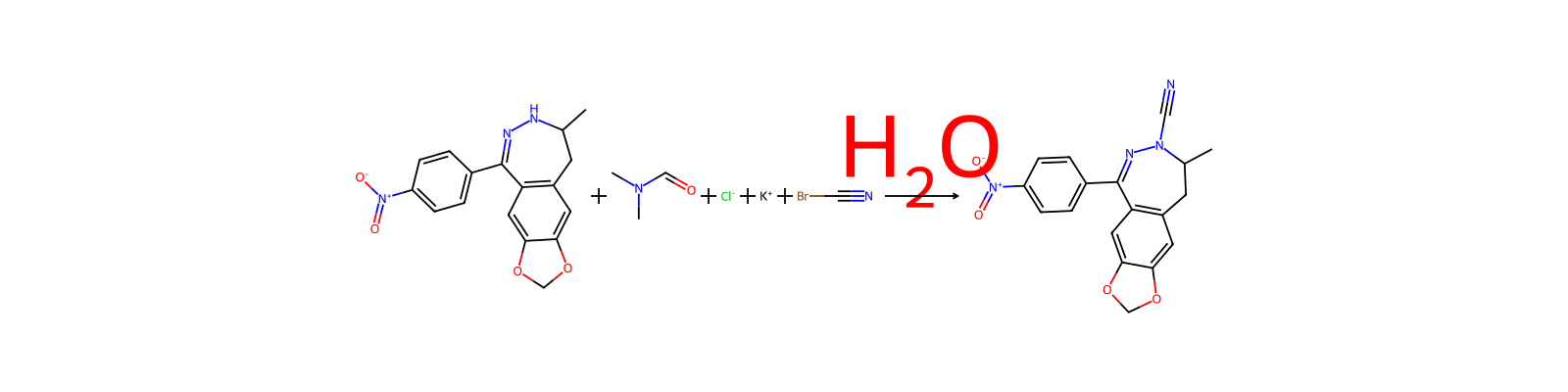
Cyanogen bromide can be prepared from bromine and cyanide salts or hydrogen cyanide.
Prepared from potassium or sodium cyanide and bromine.
Industrial prepn from sodium bromide, sodium chlorate, and sodium cyanide in 30% H2SO4.
Cyanogen bromide may be prepared by either the action of bromine on potassium cyanide or the interaction of sodium bromide, sodium cyanide, sodium chlorate, and sulfuric acid.
Formulations/Preparations
97% Purity product and 5.0 M solution in acetonitrile
... 97% min grade /is available/ ...
A 50 wt% soln of the bromide in chloroform is a stable and convenient form for use.
Commercial products are generally solutions in chloroform.
General Manufacturing Information
Cyanogen bromide ((CN)Br): ACTIVE
Co[-]distillation with chloroform prevents condenser blockage during cyanogen bromide manufacture as well as improving ease of handling.
A recent designer drug "ICE" or "U4EA" was found to be produced from cyanogen bromide and an over the counter decongestant.
Anwendungen
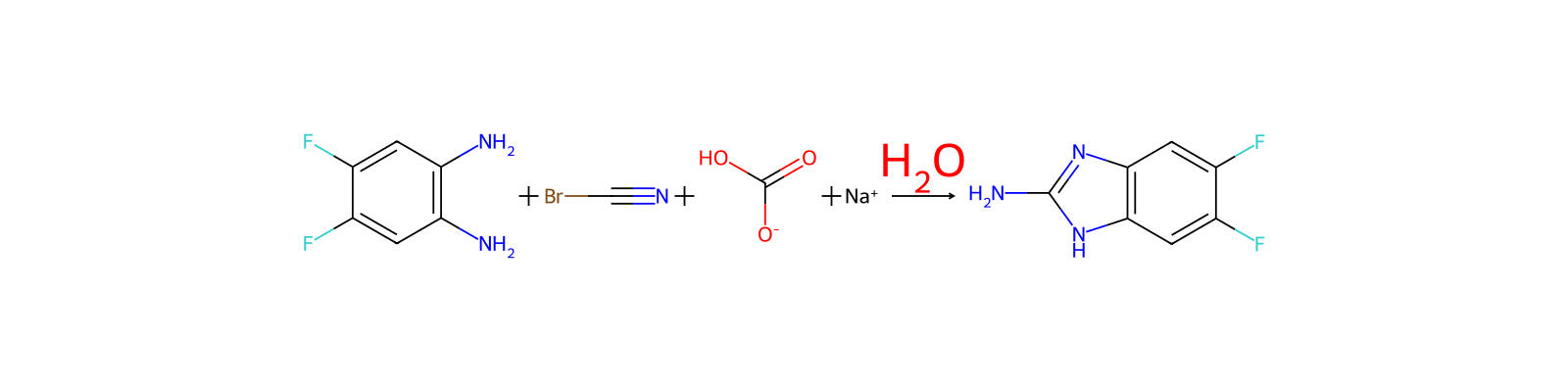
VerwendenCyanogen bromide is used in organic synthesis and as a reagent in bioanalysis.
Vor- und nachgelagerte Produkte
Vorgelagerte Rohstoffe
Nachgelagerte Produkte
Anbieter50 Anbieter
国药集团化学试剂有限公司86-21-63210123 · [email protected]
上海阿拉丁生化科技股份有限公司400-6206333 13167063860 · [email protected]
上海泰矶林实业有限公司02150630626 17717886015 · [email protected]
江苏星科元信息科技有限公司400-605-7200 15335295587
Baoji Guokang Healthchem co.,ltd+8615604608665 15604608665 · [email protected]
科瑞迪化学400-821-5857 021-64326257 · [email protected]
Hangzhou IKSChem Technology Co., Limited13625816949 · [email protected]
上海迈瑞尔生化科技有限公司4006356688 18621169109 · [email protected]
江苏普乐司生物科技有限公司0513-66017706 18551496367 · [email protected]
安耐吉化学&3A(安徽泽升科技有限公司)021-58432009 400-005-6266 · [email protected]
阿法埃莎(中国)化学有限公司400-6106006 · [email protected]
北京大田丰拓化学技术有限公司13651141086 · [email protected]
武汉凯威斯科技有限公司86-027-67849912 · [email protected]
武汉市恒久化工有限公司17317534732 17671758929 · [email protected]
上海景颜化工科技有限公司13817811078 · [email protected]
嘉兴市艾森化工有限公司0573-85285100 18627885956 · [email protected]
山东西亚化学有限公司13355009207 13355009207 · [email protected]
四川库利南科技有限公司400-1166-196 18981987031 · [email protected]
南京一化生物科技有限公司13236563309 · [email protected]
斯百全化学(上海)有限公司021-021-021-67601398-809-809-809 15221380277 · [email protected]
艾科试剂4008-755-333 18080918076 · [email protected]
赛默飞世尔科技(中国)有限公司800-810-5118 · [email protected]
上海倍卓生物科技有限公司021-61119791,13386096464 · [email protected]
上海将来实业股份有限公司021-61552785 · [email protected]
HBCChem, Inc.+1-510-219-6317 · [email protected]
成都零六生物科技有限公司400-1166-196 13458535857 · [email protected]
雷丁试剂0510-85629785 18013409632 · [email protected]
上海嵩爰化工科技有限公司010-1234567 18521000990 · [email protected]
江苏艾康生物医药研发有限公司025-66028182 17714375163 · [email protected]
成都润泽本土化工有限公司13096311329 028-88469284 616445927 · [email protected]
凯试(上海)科技有限公司021-50135380 · [email protected]
池州凯隆进出口贸易有限公司[email protected]
Sigma-Aldrich西格玛奥德里奇(上海)贸易有限公司021-61415566 800-8193336 · [email protected]
上海昕凯医药科技有限公司21-619849051-1 18521059765 · [email protected]
九鼎化学(上海)科技有限公司4009209199 · [email protected]
武汉峰耀同辉化学制品有限公司027-87466205 15377579727 · [email protected]
成都润泽本土化工有限公司028-88469284 18000562381 · [email protected]
南京艾比克斯生化科技有限公司025-87193546 18652950785 · [email protected]
上海西陇生化科技有限公司021-52907766-8042
成都艾娜华化学制剂有限公司028-86612776; 13699069380 · [email protected]
上海源叶生物科技有限公司13636370518 · [email protected]
安泰精细化工技术有限公司18503026267 · [email protected]
成都华纯科技有限公司400-1166-196 15982826727 · [email protected]
广州市金华大化学试剂有限公司020-84383047 · [email protected]
上海贤鼎生物科技有限公司021-021-52271985 17721149837 · [email protected]
陕西缔都医药化工有限公司029-81154043 17391733319 · [email protected]
Shanghai Acmec Biochemical Technology Co., Ltd.+86-18621343501 · [email protected]
盼得(上海)国际贸易有限公司80159919 18662931292 · [email protected]
巴师傅(上海)生物医药科技有限公司60662071 18117346937 · [email protected]
毕升化学(上海)有限公司19852830193 19852830193 · [email protected]
Zugehörige Reaktionen
1.504



Verknüpfte Notizen
Wird geladen…