
HRID 48067als Edukt

25154-54-5O=[N+]([O-])c1ccccc1[N+](=O)[O-]IZUKQUVSCNEFMJ-UHFFFAOYSA-No-Dinitrobenzene can cause male reproductive toxicity according to The Environmental Protection Agency (EPA).
25154-54-5、528-29-0DTXSID4024066CHEMBL168075CHEBI:34053Nitrogen Compounds -> Nitros, Aromatic
Reactive agents - 4th degree
Reactive agents - 4th degree
log Kow = 1.69
1.69
1.46-1.58
1.69
1.31 at 68 °F (USCG, 1999) - Denser than water; will sink
1.3119 g/cu cm
1.6 g/cm³
1.6 g/cm³
Relative density of the vapour/air-mixture at 20 °C (air = 1): 1.01
1.57
COLORLESS OR YELLOW CRYSTALS, NEEDLES OR PLATES
White to yellow monoclinic plates
White crystals
Pale white or yellow, crystalline solid.
0.05 % (NIOSH, 2024)
Sicherheitsangaben dienen nur zur Orientierung und ersetzen weder das Sicherheitsdatenblatt (SDB) des Lieferanten noch geltende Vorschriften oder eine fachliche Bewertung.
Danger
H300: Fatal if swallowed [Danger Acute toxicity, oral]
P260, P262, P264, P270, P271, P273, P280, P284, P301+P316, P302+P352, P304+P340, P316, P319, P320, P321, P330, P361+P364, P391, P403+P233, P405, and P501 (click each P-code to see the statement)
Danger
H300+H310+H330 (70.5%): Fatal if swallowed, in contact with skin or if inhaled [Danger Acute toxicity, oral; acute toxicity, dermal; acute toxicity, inhalation]
P260, P262, P264, P270, P271, P273, P280, P284, P301+P316, P302+P352, P304+P340, P316, P319, P320, P321, P330, P361+P364, P391, P403+P233, P405, and P501 (click each P-code to see the statement)
Chemical: Benzene, 1,2-dinitro-
1,2-Dinitrobenzene: Does not have an individual approval but may be used under an appropriate group standard
The New Jersey Worker and Community Right to Know Act requires public and private employers to provide information about hazardous substances at their workplaces. (N.J.S.A. 34:5A-1 et. seq.)
The New Jersey Worker and Community Right to Know Act requires public and private employers to provide information about hazardous substances at their workplaces. (N.J.S.A. 34:5A-1 et. seq.)
Special Hazards of Combustion Products: Emits highly toxic fumes of oxides of nitrogen. May explode.
Combustible. Gives off irritating or toxic fumes (or gases) in a fire. Finely dispersed particles form explosive mixtures in air.
Combustible. Gives off irritating or toxic fumes (or gases) in a fire. Finely dispersed particles form explosive mixtures in air.
Nitroreductase activity was previously known to occur under nitrogen atmosphere in the cytosolic and microsomal fractions of liver homogenates. This study describes a subcellular nitroreductase activity which occurs in liver mitochondria under aerobic conditions. Mitochondria were isolated from rat liver and assayed for their capacity to reduce certain nitro compounds by measuring spectrophotometrically both the appearance of amino compounds and the consumption of nicotinamide adenine dinucleotide. Intact mitochondria were found to possess a p-dinitrobenzene reductase activity. The activity was destroyed by heat, and was present at only 20% in the microsomal fraction. It was strictly nicotinamide adenine dinucleotide-dependent, while only little or no activity occurred with reduced nicotinamide adenine dinucleotide or other oxidative substrates. Nitro reduction was inhibited by thiol reagents. Rat liver mitochondria showed about 15% activity with o-dinitrobenzene and m-dinitrobenzene, while there was less than 5% activity with a series of p-nitro compounds including chloramphenicol.
The metabolism of radiolabeled dinitrobenzene isomers was compared in hepatocytes and hepatic subcellular fractions isolated from male Fischer-344 rats. Under aerobic conditions, reduction was the major metabolic pathway for m- and p-dinitrobenzene in hepatocytes with m- and p-nitroaniline accounting for 74.0 + or - 1.2 and 81.0 + or - 0.6% (mean + or - SE, n= 4), respectively, of the radioactivity present after a 30 min incubation. The major metabolite of o-dinitrobenzene in similar incubations was S-(2-nitrophenyl)glutathione which represented 48.1 + or - 5.5% of the total radioactivity; o-nitroaniline accounted for 29.5 + or - 2.1% of the radioactivity. Incubation of dinitrobenzene with microsomes produced nitroanilines as well as nitrosonitrobenzenes and nitrophenylhydroxylamines. Reduction of o- and m-dinitrobenzene by microsomes was reduced nicotinamide adenine dinucleotide-dependent. Reduction of p-dinitrobenzene could be supported by nicotinamide adenine dinucleotide as well as reduced nicotinamide adenine dinucleotide, although the rate of reduction was slower with NADH. Conjugation of o- and p-dinitrobenzene, but not m-dinitrobenzene, with glutathione occurred in cytosol incubations although only o-dinitrobenzene formed the glutathione conjugate in intact hepatocytes.


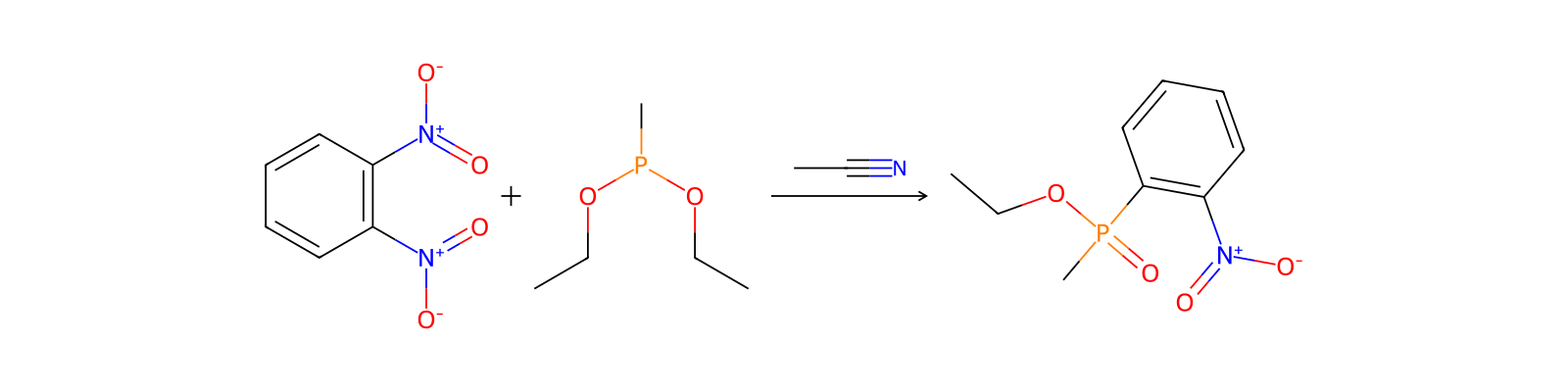


Sol in alc, benzene, chloroform
1 g dissolves in 6600 ml cold water, 2700 ml boiling water
In water, 133 mg/l @ 25 °C
Solubility in water: very poor
Solubility in water: poor
302 °F (USCG, 1999)
302 °F
302 °F (150 °C) (Closed Cup)
150 °C c.c.
150 °C c.c.
302 °F
606 °F at 760 mmHg (USCG, 1999)
319 °C @ 773 mm Hg
319 °C
~300 °C
606 °F
244.4 °F (USCG, 1999)
117 - 118.5 °C
118 °C
244 °F
INHALATION, INGESTION, OR SKIN ABSORPTION: Headache, vertigo and vomiting followed by exhaustion, numbness of the legs, staggering and collapse. Intense methemoglobinenia may lead to asphyxia severe enough to injure the CNS. EYES: Irritation. SKIN: Stains skin yellow. (USCG, 1999)
Potential to cause methemoglobinemia, liver damage, and visual impairment (central scotomas); Listed in table of Industrial Chemicals for Which Methemoglobin Formation is the Principal Cause of Toxicity; [ACGIH] An eye and respiratory tract irritant; Can induce methemoglobinemia and have effects on the liver; [ICSC]
The major hazards encountered in the use and handling of 1,2-dinitrobenzene stem from its toxicologic properties and explosivity. Toxic by all routes (ie, inhalation, ingestion, dermal absorption), exposure to this colorless-to-yellow, crystalline substance may occur from its production or use in the synthesis of dyes and explosives, and as a camphor substitute in cellulose nitrat e production. Effects from exposure may include headache, nausea, vision impairment, contact burns to the skin and eyes, cardiac arrhythmias, methemoglobinemia, cyanosis, and hepatic injury. Effects may be delayed for several hours and may be precipitated by exposure to sunlight or ingestion of alcohol. OSHA has established a time-weighted-average (TWA) exposure limit of 1 mg/cu m, with a skin designation. In activities and situations where over-exposure may occur, wear a positive pressure self-contained breathing apparatus and chemical protective clothing which is specifically recommended by the shipper or manufacturer. No skin should be exposed. If contact should occur, irrigate exposed eyes with copious amounts of tepid water for at least 15 minutes and wash exposed skin thoroughly with soap and water. Contamin ated clothing and shoes should be removed and left at the site for cleaning or disposal. While 1,2-dinitrobenzene does not ignite easily, it may explode by impact, contact with strong oxidizers, or heat under confinement that will permit high pressure build-up. For fires involving this substance, extinguish with dry chemical, CO2, water spray, fog, regular foam (for dinitrobenzen e solution), or alcohol foam (for dinitrobenzene solid). Evacuate area of massive fire, and fight from as far a distance as possible. 1,2-Dinitrobenzene may shipped via air, rail, road, and water, in containers bearing the label, "Poison." This substance should be stored away from heat, sparks, flames, and other sources of ignition, protected from physical damage, and separatedfrom oxidizers, combustibles, metals (eg, tin and zinc), nitric acid, and caustics. For small dry spills of this substance, use a clean shovel to place material into a clean, dry container for later disposal (liquid solutions are taken up with sand or other noncombustible material). Large land spills (liquid solutions) should be diked far ahead of the spill for later disposal. Do not allow the material to enter water sources or sewers. Large dry spills should be covered with a plastic sheet to prevent dissolving in the rain. For spills in water, use sand bag barriers to trap material at the bottom, apply activated carbon, and use mechanical dredges or lifts to remove immobilized masses.
Symbol: T+, N; R: 26/27/28-33-50/53; S: (1/2)-28-36/37-45-60-61; Note: C
Symbol: T+, N; R: 26/27/28-33-50/53; S: (1/2)-28-36/37-45-60-61; Note: C
UN Hazard Class: 6.1; UN Pack Group: II
UN Hazard Class: 6.1; UN Pack Group: II
Dangerous Prop Ind Mater Rep 6 (1): 49-52 (1986). Review dinitrobenzene safety toxicol; Health hazard of dinitrobenzene.
Anonymous; J Appl Toxicol 9 (3): 199-202 (1989). Toxicology update for dinitrobenzene with 42 references on toxicity, metabolism, teratogenicity, mutagenicity, and carcinogenicity.
Section 8(a) of TSCA requires manufacturers of this chemical substance to report preliminary assessment information concerned with production, exposure, and use to EPA as cited in the preamble in 51 FR 41329.
Pursuant to section 8(d) of TSCA, EPA promulgated a model Health and Safety Data Reporting Rule. The section 8(d) model rule requires manufacturers, importers, and processors of listed chemical substances and mixtures to submit to EPA copies and lists of unpublished health and safety studies. o-Dinitrobenzene is included on this list.
Fire Extinguishing Agents: Water, CO2, or dry chemical. (USCG, 1999)
Use water spray, foam, powder, carbon dioxide. In case of fire: keep drums, etc., cool by spraying with water. Combat fire from a sheltered position.
Use water spray, foam, powder, carbon dioxide. In case of fire: keep drums, etc., cool by spraying with water. Combat fire from a sheltered position.
Fresh air, rest. Artificial respiration may be needed. Refer for medical attention.
Remove contaminated clothes. Rinse and then wash skin with water and soap. Refer for medical attention .
First rinse with plenty of water for several minutes (remove contact lenses if easily possible), then refer for medical attention.
Rinse mouth. Give a slurry of activated charcoal in water to drink. Refer for medical attention .
Fresh air, rest. Artificial respiration may be needed. Refer for medical attention.
Remove contaminated clothes. Rinse and then wash skin with water and soap. Refer for medical attention .
Excerpt from NIOSH Pocket Guide for o-Dinitrobenzene:
(General first aid procedures)
Separated from strong oxidants, strong bases and food and feedstuffs. See Chemical Dangers.
Separated from strong oxidants, powdered metals and food and feedstuffs. Well closed.
For rescue purposes wear full protective clothing. fight fire from an explosion-resistant location. In advanced or massive fires, area should be evacuated. If fire occurs in vicinity of this material water should be used to keep containers cool.
Fire Fighting Respirator: Self-contained breathing apparatus with a full facepiece operated in pressure-demand or other positive pressure mode. /Dinitrobenzene, all isomers/
1. Remove all ignition sources. 2. Ventilate area of spill. 3. For small quantities, sweep onto paper or other suitable material and burn in suitable combustion chamber which allows burning in unconfined condition & is equipped with appropriate effluent gas cleaning device. Large quantities may be reclaimed; however, if this is not practical, dissolve in fuel oil and atomize in suitable combustion chamber equipped with an appropriate effluent gas cleaning device.
SRP: At the time of review, criteria for land treatment or burial (sanitary landfill) disposal practices are subject to significant revision. Prior to implementing land disposal of waste residue (including waste sludge), consult with environmental regulatory agencies for guidance on acceptable disposal practices.
1. By making packages of dinitrobenzene in paper or other flammable material and burning in suitable combustion chamber which allows burning in an unconfined condition and is equipped with appropriate effluent gas cleaning device. 2. By dissolving dinitrobenzene in fuel oil and atomizing in suitable combustion chamber equipped with an appropriate effluent gas cleaning device.
Dissolve in combustible solvent such as alcohols, benzene, etc. Spray the solution into the furnace with afterburner and scrubber.
The following wastewater treatment technologies have been investigated for dinitrobenzene: Concentration process: Reverse osmosis. /Dinitrobenzene/
Consult an expert! Personal protection: complete protective clothing including self-contained breathing apparatus. Do NOT let this chemical enter the environment. Sweep spilled substance into covered containers. If appropriate, moisten first to prevent dusting. Carefully collect remainder. Then store and dispose of according to local regulations.
Personal protection: complete protective clothing including self-contained breathing apparatus. Do NOT let this chemical enter the environment. Sweep spilled substance into covered containers. If appropriate, moisten first to prevent dusting. Carefully collect remainder. Then store and dispose of according to local regulations.
Eating and smoking should not be permitted in areas where dinitrobenzene or liquids containing dinitrobenzene are handled, processed, or stored. Employees who handle dinitrobenzene or liquids containing dinitrobenzene should wash their hands thoroughly with soap or mild detergent and water before eating, smoking, or using toilet facilities.
If employees' clothing may have become contaminated with solid dinitrobenzene, employees should change into uncontaminated clothing before leaving the work premises. ... If the clothing is to be laundered or otherwise cleaned to remove the dinitrobenzene, the person performing the operation should be informed of dinitrobenzene's hazardous properties.
Where exposure of an employee's body to liquids containing dinitrobenzene may occur, facilities for quick drenching of the body should be provided within the immediate work area for emergency use.
Non-impervious clothing which becomes contaminated with liquids containing dinitrobenzene should be removed immediately and non-impervious clothing which becomes contaiminated with dinitrobenzene should be removed promptly and such clothing should not be reworn until the dinitrobenzene is removed from the clothing. Clothing contaminated with dinitrobenzene should be placed in closed containers for storage until it can be discarded or until provision is made for the removal of dinitrobenzene from the clothing.
For more Preventive Measures (Complete) data for 1,2-DINITROBENZENE (13 total), please visit the HSDB record page.
TERRESTRIAL FATE: Based on a classification scheme(1), an estimated Koc value of 200(SRC), determined from a measured log Kow of 1.69(2) and a regression-derived equation(3), indicates that 1,2-dinitrobenzene is expected to have moderate mobility in soil(SRC). It has been shown that nitrophenols and nitrobenzenes adsorb strongly to clay surfaces and the mobility of 1,2-dinitrobenzene is expected to be low in soils rich in clay content(4,5). Volatilization of 1,2-dinitrobenzene from moist soil surfaces is not expected to be an important fate process(SRC) given an estimated Henry's Law constant of 5.3X10⁻⁸ atm-cu m/mole(SRC), calculated from a vapor pressure of 4.5X10⁻⁵ mm Hg(6) and water solubility of 133 mg/l(7). 1,2-Dinitrobenzene is not expected to volatilize from dry soil surfaces(SRC) based upon its vapor pressure(6). More than 64 days were required to biodegrade 1,2-dinitrobenzene in silt loam at 25 °C(8), which suggests biodegradation will occur slowly in soil(SRC).
AQUATIC FATE: Based on a classification scheme(1), an estimated Koc value of 200(SRC), determined from a measured log Kow of 1.69(2) and a regression-derived equation(3), indicates that 1,2-dinitrobenzene is not expected to adsorb to suspended solids and sediment(SRC). Volatilization from water surfaces is not expected to be an important fate process(3) based upon an estimated Henry's Law constant of 5.3X10⁻⁸ atm-cu m/mole(SRC), calculated from a vapor pressure of 4.5X10⁻⁵ mm Hg(4) and water solubility of 133 mg/l(5). According to a classification scheme(6), BCF values of 2-38 measured in fish(7,8), suggests bioconcentration in aquatic organisms is low to moderate (SRC). More than 64 days were required to biodegrade 1,2-dinitrobenzene in an aqueous biodegradation screening test using a silt loam inoculum at 25 °C(9), which suggests biodegradation will also occur slowly in water(SRC).
ATMOSPHERIC FATE: According to a model of gas/particle partitioning of semivolatile organic compounds in the atmosphere(1), 1,2-dinitrobenzene, which has a vapor pressure of 4.5X10⁻⁵ mm Hg at 25 °C(2), is expected to exist in both the vapor and particulate phases in the ambient atmosphere. Vapor-phase 1,2-dinitrobenzene is degraded in the atmosphere by reaction with photochemically-produced hydroxyl radicals(SRC); the half-life for this reaction in air is estimated to be 753 days(SRC), calculated from its rate constant of 2.1X10⁻¹⁴ cu cm/molecule-sec at 25 °C(SRC) determined using a structure estimation method(3). 1,2-Dinitrobenzene absorbs light greater than 290 nm and may be susceptible to direct photolysis(4), but the kinetics of this reaction are unknown(SRC). Particulate-phase 1,2-dinitrobenzene may be removed from the air by wet and dry deposition(SRC).
The substance can be absorbed into the body by inhalation, through the skin and by ingestion.
The substance can be absorbed into the body by inhalation, through the skin and by ingestion.
inhalation, skin absorption, ingestion, skin and/or eye contact
Burning sensation. Weakness. Blue lips, fingernails and skin. Headache. Dizziness. Nausea. Laboured breathing.
MAY BE ABSORBED! See Inhalation.
Redness. Pain.
See Inhalation.
Burning sensation. Headache. Blue lips, fingernails and skin. Weakness. Dizziness. Laboured breathing. Nausea. Drowsiness.
MAY BE ABSORBED! Further see Inhalation.
The substance is toxic to aquatic organisms.
The substance is toxic to aquatic organisms.
A complete history and physical examination /should be performed/ to detect existing conditions that might place the exposed employee at increased risk, and to establish a baseline for future health monitoring. Examination of the blood, liver, cardiovascular system, and eyes should be stressed.
A complete blood count: Dinitrobenzene has been shown to cause methemoglobinemia. ... A complete blood count should be performed, including a red cell count, a white cell count, a differential count of a stained smear, as well as hemoglobin and hematocrit. Observe for Heinz bodies. ... Liver function tests: Since liver damage has been observed in humans exposed to dinitrobenzene, a profile of liver function should be performed by using a medically acceptable array of biochemical tests. /Dinitrobenzene, all isomers/
The Koc of 1,2-dinitrobenzene is estimated as 200(SRC), using a measured log Kow of 1.69(1) and a regression-derived equation(2). According to a classification scheme(3), this estimated Koc value suggests that 1,2-dinitrobenzene is expected to have moderate mobility in soil. It has been shown that nitrophenols and nitrobenzenes adsorb strongly to clay through an interaction between the nitro group and the water molecules or metallic cations in the clay(4). However, it has also been shown that ortho substituents on the benzene ring, as in the case of 1,2-dinitrobenzene, diminish this adsorption due to steric effects(5). The adsorption of 1,4-dinitrobenzene and 1,2-dinitrobenzene was studied in monmorillonite, kaolinite and illite clays(5). Adsorption coefficients (Kd) of 188, 1,460 and 3,100 L/kg were measured in kaolinite, illite and monmorillonite, respectively for 1,4-dinitrobenzene, while the adsorption coefficients were only 0.4, 2.5 and 4.2 L/kg for 1,2-dinitrobenzene(5).
IN CASES OF CHRONIC POISONING, IMPAIRMENT OF VISION APPEARS TO HAVE BEEN COMMON. ... VISUAL FIELDS ... SLIGHTLY CONTRACTED, & VISUAL ACUITY ... REDUCED, WITH CENTRAL SCOTOMAS, PARTICULARLY FOR RED & GREEN. USUALLY THERE HAS BEEN NO ABNORMALITY IN APPEARANCE OF THE OPTIC NERVEHEAD OTHER THAN SLIGHT PALLOR ... PARTIAL OPTIC ATROPHY ... VISION HAS GRADUALLY RECOVERED. /DINITROBENZENE/
SURFACE CONTACT MAY CAUSE YELLOWING OF SKIN, & PURPORTEDLY OF CONJUNCTIVA & CORNEA ... SKIN, CONJUNCTIVA, & OCULAR FUNDUS MAY SHOW BLUISH DISCOLORATION. /DINITROBENZENE/
CHRONIC POISONING ... FOLLOWING EXPOSURE FOR 9 TO 18 MO TO DUST & VAPOR IN MUNITIONS PLANTS. SYMPTOMS ... START WITH HEADACHE, & BURNING PAIN & PARESTHESIA IN FEET, ANKLES, HANDS, & FOREARMS. ... APATHY & TIREDNESS, SHORTNESS OF BREATH & PALPITATION OF HEART. PERIPHERAL NERVE DISTURBANCES HAVE ALL BEEN SENSORY ... VISION HAS BEEN AFFECTED ... . /DINITROBENZENE/
NITRO CMPD OF DINITROBENZENE ... TYPE HAVE HISTORY OF PROMINENT HEPATOTOXIC EFFECTS ... HEPATIC INJURY IS MANIFESTED BY JAUNDICE ... DEMONSTRABLE IN CONJUNCTIVAE ... POTENT METHEMOGLOBIN PRODUCER ... CYANOSIS PROVIDES WARNING OF EXPOSURE ... . /DINITROBENZENE/
For more Human Toxicity Excerpts (Complete) data for 1,2-DINITROBENZENE (9 total), please visit the HSDB record page.
1,2-Dinitrobenzene's production and use in the manufacture of dyes and explosives, as an organic synthesis reagent and as a camphor substitute in cellulose nitrate(1) may result in its release to the environment(SRC). 1,2-Dinitrobenzene is also an impurity produced during the production of 2,4,6-trinitrotoluene (TNT)(2).
Section 8(a) of TSCA requires manufacturers of this chemical substance to report preliminary assessment information concerned with production, exposure, and use to EPA as cited in the preamble in 51 FR 41329.
Pursuant to section 8(d) of TSCA, EPA promulgated a model Health and Safety Data Reporting Rule. The section 8(d) model rule requires manufacturers, importers, and processors of listed chemical substances and mixtures to submit to EPA copies and lists of unpublished health and safety studies. o-Dinitrobenzene is included on this list.
Persons in charge of vessels or facilities are required to notify the National Response Center (NRC) immediately, when there is a release of this designated hazardous substance, in an amount equal to or greater than its reportable quantity of 100 lb or 45.4 kg. The toll free number of the NRC is (800) 424-8802; In the Washington D.C. metropolitan area (202) 426-2675. The rule for determining when notification is required is stated in 40 CFR 302.4 (section IV. D.3.b).
o-Dinitrobenzene is designated as a hazardous substance under section 311(b)(2)(A) of the Federal Water Pollution Control Act and further regulated by the Clean Water Act Amendments of 1977 and 1978. These regulations apply to discharges of this substance. This designation includes any isomers and hydrates, as well as any solutions and mixtures containing this substance.
Used in the manufacture of dyes, explosives, and celluloids; [ACGIH]
USED FOR THE SYNTHESIS OF DYESTUFFS, DYESTUFF INTERMEDIATES, EXPLOSIVES, AND CELLULOID PRODUCTION.
1,2-Dinitrobenzene is used in organic synthesis & as a camphor substitute in cellulose nitrate. /Dinitrobenzene/