

Grundinformationen
- Standard-SMILES
Oc1ccc(I)cc1- InChIKey
VSMDINRNYYEDRN-UHFFFAOYSA-N- Summenformel
- C6H5IO
- Durchschnittliche Molmasse
- 220,01 g/mol
- Monoisotopische Masse
- 219,93851278
Überblick
4-iodophenol is an iodophenol.
Namen und Bezeichner
- Bevorzugter Name
- 4-Iodophenol
- IUPAC
- 4-iodophenol
- Lokaler Name
- 4-Iodphenol
- Englischer Name
- 4-Iodophenol
- Summenformel
- C6H5IO
- Molmasse
- 220.01
Namen und Synonyme
4-IODOPHENOL540-38-5p-Iodophenol4-Hydroxyphenyl iodidep-Hydroxyiodobenzenepara-iodophenolDTXSID4052186BH194BAK0BNSC-91464DTXCID4030756CHEBI:43521RefChem:99468
Weitere Namen anzeigen
4-lodophenoIp-iodo-pheno4-iodo-pheno4-Iodophenol99%I**4-Iodophenol
208-745-5Phenol, 4-iodo-Phenol, p-iodo-MFCD000023274-iodo-phenol4-Hydroxyiodobenzenep-JodphenolIOL
Datenbank-Bezeichner
- CAS
540-38-5- PubChem CID
- 10894
- DTXSID
DTXSID4052186- ChEMBL
CHEMBL56475- ChEBI
CHEBI:43521- UNII
- BH194BAK0B
- EC Number
- 208-745-5
- Nikkaji
- J53.759D
Eigenschaften
Berechnete Struktureigenschaften
- XLogP
- 2,9
- Polarare Oberfläche (TPSA)
- 20,2 Ų
- H-Brücken-Donoren
- 1
- H-Brücken-Akzeptoren
- 1
- Frei drehbare Bindungen
- 0
- Schwere Atome
- 8
- Formalladung
- 0
- Komplexität
- 66,9
Experimentelle und physikochemische Eigenschaften
Chemical ClassesOther Classes -> Phenols
DrugsPharmaceuticals -> Listed in ZINC15
SpringerMaterials Properties13C nuclear magnetic resonance spectrum
Vapor Pressure0.00616 [mmHg]
Physical DescriptionWhite or reddish solid; [Merck Index] Light beige crystalline solid; [Alfa Aesar MSDS]
Collision Cross Section124.5 Ų [M-H]- [CCS Type: DT; Buffer gas: N2; Ionization: ESI-; Dataset: TOXCAST; Source Identifier: DTXSID4052186]
Physikochemische Eigenschaften
- Schmelzpunkt
- 92 · 92-94 °C(lit.)
- Siedepunkt
- 138 °C5 · 138 °C5 mm Hg(lit.)
- Dichte
- 1.8573 · 1.8573
- Flammpunkt
- 138 °C/5mm · 138°C/5mm
- storage temp.
- Refrigerator
- Löslichkeit
- Chloroform (Slightly), Methanol (Slightly)
- Aggregatzustand
- Crystals or Crystalline Powder
- pka
- 9.33 · 9.33(at 25℃)
- Farbe
- Pink or beige to brown
- Wasserlöslichkeit
- slightly soluble
- Merck
- 14 · 14,5036
- BRN
- 1904544 · 1904544
- Henry's Law Constant
- 4.6 · 4.6×101 mol/(m3Pa) at 25℃, Hilal et al. (2008)
- Stabilität
- Stable. Incompatible with strong oxidizing agents.
- InChI
- 1S/C6H5IO/c7-5-1-3-6(8)4-2-5/h1-4,8H
- InChIKey
- VSMDINRNYYEDRN-UHFFFAOYSA-N
- SMILES
- Oc1ccc(I)cc1
- CAS Datenbank
- 540 · 540-38-5(CAS DataBase Reference)
- NIST chemische Informationen
- 4 · Phenol, 4-iodo-(540-38-5)
- EPA chemische Informationen
- p-Iodophenol (540-38-5)
Sicherheit und Regulatorisches
GHS-Klassifizierung
GHS Classification
Danger
H302 (87.5%): Harmful if swallowed [Warning Acute toxicity, oral]
P260, P264, P264+P265, P270, P280, P301+P317, P301+P330+P331, P302+P352, P302+P361+P354, P304+P340, P305+P351+P338, P305+P354+P338, P316, P317, P321, P330, P332+P317, P337+P317, P362+P364, P363, P405, and P501 (click each P-code to see the statement)
Aggregated GHS information provided per 48 reports by companies from 7 notifications to the ECHA C&L Inventory. Each notification may be associated with multiple companies.
Gefahrenhinweise
Hazards SummaryA skin and strong eye irritant; [Alfa Aesar MSDS] See Phenol. See 4-Fluorophenol.
Hazard Classes and CategoriesAcute Tox. 4 (87.5%)
Sicherheitsdaten
- wgk
- 3
- tsca
- TSCA listed
- ridadr
- UN 3261 8/PG 3
- hs_code
- 29081900
- RTECS-Nr.
- SL5600000
- risk_code
- 21/22-34-36/37/38-20/21/22
- hazard_code
- C,Xi,Xn
- hazard_note
- Irritant
- safety_code
- 26-36/37/39-45-22
- hazard_class
- IRRITANT, LACHRYMATOR
- Speicherklasse
- 8A - Combustible corrosive hazardous materials
- Hazard Classifications
- Acute Tox. 4 OralSkin Corr. 1B
Chemie und Industrie
Pharmakologische Informationen
Metabolism/Metabolites4-Iodophenol has known human metabolites that include (2S,3S,4S,5R)-3,4,5-trihydroxy-6-(4-iodophenoxy)oxane-2-carboxylic acid.
Verwendung und Herstellung
General Manufacturing InformationPhenol, 4-iodo-: ACTIVE
Anwendungen
Verwenden4-Iodophenol is used in chemiluminescence imaging assays and experiments, as diagnostic agents in order to detect cancer cells in patients. It is also utilized in synthesizing agonists for the estrogen β receptor. Additionally, The compound finds extensive applications in various medical industries as well as in human and animal nutrition products such as pharmaceutical intermediates, and polarizing films for Liquid Crystal Display (LCD) chemicals.
Darstellung
synthetischeIt is obtained from 4-Aminophenol by diazotisation and substitution.
Vor- und nachgelagerte Produkte
Vorgelagerte Rohstoffe
Nachgelagerte Produkte
Anbieter50 Anbieter
国药集团化学试剂有限公司86-21-63210123 · [email protected]
北京华美互利生物化工010-56205725 · [email protected]
梯希爱(上海)化成工业发展有限公司021-67121386 · [email protected]
INTATRADE GmbH+49 3493/605464 · [email protected]
北京安司莫森技术有限公司010-82954736 13391601435 · [email protected]
科瑞迪化学400-821-5857 021-64326257 · [email protected]
Syntechem Co.,Ltd[email protected]
上海迈瑞尔生化科技有限公司4006356688 18621169109 · [email protected]
上海波以尔化工有限公司[email protected]
北京东华力拓科技发展有限公司010-88425576 · [email protected]
阿法埃莎(中国)化学有限公司400-6106006 · [email protected]
太原市瑞和丰科贸有限公司+86 351 7031519 · [email protected]
上海德默医药科技有限公司400-021-7337 2355568890 · [email protected]
安耐吉化学&3A(安徽泽升科技股份有限公司)400-0056266 · [email protected]
石家庄斯迪亚诺精细化工有限公司0311-89250318 13582355795 · [email protected]
上海瀚鸿科技股份有限公司021-54306202 13764082696 · [email protected]
上海景颜化工科技有限公司13817811078 · [email protected]
嘉兴市艾森化工有限公司0573-85285100 18627885956 · [email protected]
Pure Chemistry Scientific Inc.001-857-928-2050 or 1-888-588-9418 · [email protected]
苏州施亚生物科技有限公司86(512)5235 8471 17715136450 · [email protected]
唐山默内德贸易有限公司0315-8309571 15633399667 · [email protected]
玛雅试剂+86 (573) 82222445 (0)18006601000 452520369 · [email protected]
瀚商化工科技有限公司021-50521775 15800962688
四川库利南科技有限公司400-1166-196 18981987031 · [email protected]
天津希恩思生化科技有限公司400 638 7771 · [email protected]
南京维奥化工有限公司Please Send Email 18652950785 · [email protected]
百盛HK进出口有限公司+86-18068513926
斯百全化学(上海)有限公司021-021-021-67601398-809-809-809 15221380277 · [email protected]
艾科试剂4008-755-333 18080918076 · [email protected]
上海思域化工科技有限公司86-21-34053660 · [email protected]
赛默飞世尔科技(中国)有限公司800-810-5118 · [email protected]
北京伊诺凯科技有限公司400-810-7969 010-59572699 · [email protected]
南京诺利斯医药科技有限公司13901585132 · [email protected]
TCI AMERICA800-4238616 · [email protected]
TOKYO CHEMICAL INDUSTRY CO., LTD.03-36680489 · [email protected]
TCI Europe320-37350700 · [email protected]
上海贤鼎生物科技有限公司4009209199 · [email protected]
深圳康特腾科技有限公司86-0755-86635001 · [email protected]
越林试剂021-62960152 · [email protected]
Clearsynth Labs Limited+91-22-26355700 · [email protected]
北京环宇世纪化学科技有限公司hysj_bj.com
上海湄水化工科技有限公司021-60549325 18616193163
安徽科迪达化工有限公司0554-2106669 · [email protected]
HBCChem, Inc.+1-510-219-6317 · [email protected]
日照力德士化工有限公司010-51268198 · [email protected]
郑州阿尔法化工有限公司0371-53732842 15981811963 · [email protected]
美岚实业(上海)有限公司021-58958189 · [email protected]
上海爱蝶实业有限公司021-58957966 18930537195 · [email protected]
成都零六生物科技有限公司400-1166-196 13458535857 · [email protected]
广拓化学(上海)有限公司021-60899189-8001 18918189673 · [email protected]
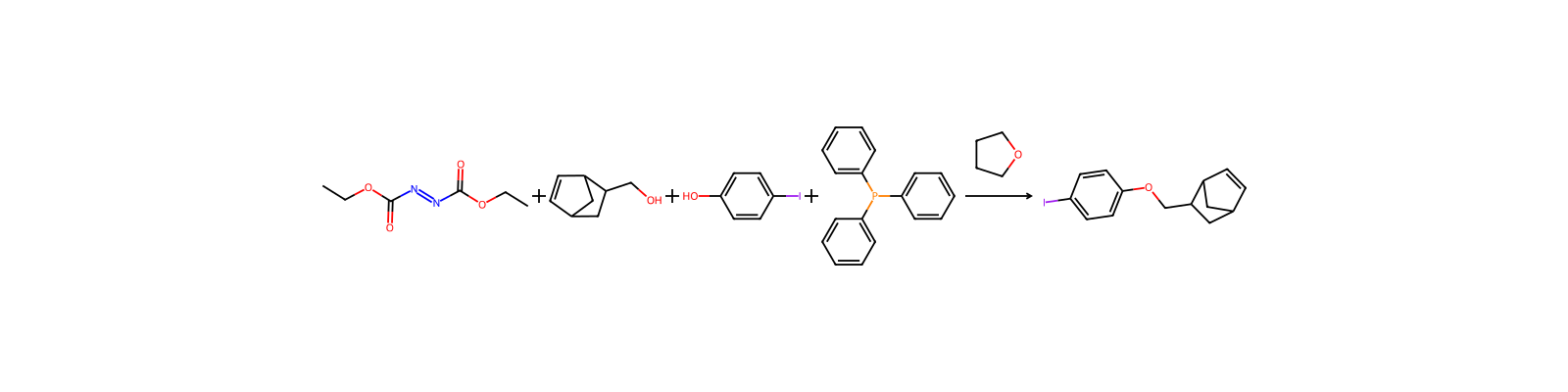
Zugehörige Reaktionen
390



Verknüpfte Notizen
Wird geladen…