
(R)-(+)-3-Chlorostyrene oxide

Grundinformationen
- CAS
62600-71-9- Standard-SMILES
Clc1cccc([C@@H]2CO2)c1- InChIKey
YVMKRPGFBQGEBF-QMMMGPOBSA-N- Summenformel
- C8H7ClO
- Durchschnittliche Molmasse
- 154,59 g/mol
- Monoisotopische Masse
- 154,0185425
Namen und Bezeichner
- Bevorzugter Name
- (R)-(+)-3-Chlorostyrene oxide
- IUPAC
- (2R)-2-(3-chlorophenyl)oxirane
- Englischer Name
- (R)-3-Chlorostyrene oxide
- Summenformel
- C8H7ClO
- Molmasse
- 154.59
Namen und Synonyme
62600-71-9(R)-(+)-3-Chlorostyrene oxideDTXSID301335382RefChem:406982DTXCID501765137613-060-3(R)-2-(3-Chlorophenyl)oxirane(2R)-2-(3-chlorophenyl)oxirane(R)-3-Chlorostyrene oxide(R)-(+)-(3-Chlorophenyl)oxiraneMFCD00673317Oxirane, (3-chlorophenyl)-, (2R)-
Weitere Namen anzeigen
TB-1922CgHzCIO?-(3-Chlorophenyl)oxide(R)-(3-CHLOROPHENYL)OXIDE(R)-M-CHLOROSTYRENE OXIDE(R)-(3-CHLOROPHENYL)OXIRANER(+)-(3-CHLOROPHENYL)OXIRANE
(R)-3-chlorophenyl oxirane(R)-m-chloro-styrene oxideSCHEMBL1947272(R)-(-)-3-chlorostyrene oxideYVMKRPGFBQGEBF-QMMMGPOBSA-N(R)-2-(3-chlorophenyl)-oxirane(2R)-2-(3-chlorophenyl)-oxiraneSBB064283
Datenbank-Bezeichner
- CAS
62600-71-9- PubChem CID
- 10898919
- DTXSID
DTXSID301335382- EC Number
- 613-060-3
- Nikkaji
- J918.458I
Eigenschaften
Berechnete Struktureigenschaften
- XLogP
- 2
- Polarare Oberfläche (TPSA)
- 12,5 Ų
- H-Brücken-Donoren
- 0
- H-Brücken-Akzeptoren
- 1
- Frei drehbare Bindungen
- 1
- Schwere Atome
- 10
- Formalladung
- 0
- Komplexität
- 126
Physikochemische Eigenschaften
- Schmelzpunkt
- 54 · 54-56 °C
- Siedepunkt
- 67 · 67-68 °C1 mm Hg(lit.)
- Dichte
- 1.217 g/mL · 1.217 g/mL at 20 °C(lit.)
- Brechungsindex
- 20 · n20/D 1.551
- Flammpunkt
- 207 °F · 207 °F
- storage temp.
- Store under Nitrogen
- Aggregatzustand
- liquid
- BRN
- 3588590 · 3588590
- InChI
- 1S/C8H7ClO/c9-7-3-1-2-6(4-7)8-5-10-8/h1-4,8H,5H2/t8-/m0/s1
- InChIKey
- YVMKRPGFBQGEBF-QMMMGPOBSA-N
- SMILES
- Clc1cccc(c1)[C@@H]2CO2
- CAS Datenbank
- 62600 · 62600-71-9(CAS DataBase Reference)
Sicherheit und Regulatorisches
GHS-Klassifizierung
GHS Classification
Danger
H301 (72.7%): Toxic if swallowed [Danger Acute toxicity, oral];H314 (72.7%): Causes severe skin burns and eye damage [Danger Skin corrosion/irritation];H315 (27.3%): Causes skin irritation [Warning Skin corrosion/irritation];H317 (27.3%): May cause an allergic skin reaction [Warning Sensitization, Skin];H318 (72.7%): Causes serious eye damage [Danger Serious eye damage/eye irritation];H319 (27.3%): Causes serious eye irritation [Warning Serious eye damage/eye irritation];H335 (27.3%): May cause respiratory irritation [Warning Specific target organ toxicity, single exposure; Respiratory tract irritation];H341 (72.7%): Suspected of causing genetic defects [Warning Germ cell mutagenicity];H411 (72.7%): Toxic to aquatic life with long lasting effects [Hazardous to the aquatic environment, long-term hazard]
P203, P260, P261, P264, P264+P265, P270, P271, P272, P273, P280, P301+P316, P301+P330+P331, P302+P352, P302+P361+P354, P304+P340, P305+P351+P338, P305+P354+P338, P316, P317, P318, P319, P321, P330, P332+P317, P333+P317, P337+P317, P362+P364, P363, P391, P403+P233, P405, and P501 (click each P-code to see the statement)
Aggregated GHS information provided per 143 reports by companies from 3 notifications to the ECHA C&L Inventory. Each notification may be associated with multiple companies.;Information may vary between notifications depending on impurities, additives, and other factors. The percentage value in parenthesis indicates the notified classification ratio from companies that provide hazard codes. Only hazard codes with percentage values above 10% are shown. For more detailed information, please visit ECHA C&L website.
Gefahrenhinweise
Hazard Classes and CategoriesAcute Tox. 3 (72.7%);Skin Corr. 1A (72.7%);Skin Irrit. 2 (27.3%);Skin Sens. 1 (27.3%);Eye Dam. 1 (72.7%);Eye Irrit. 2 (27.3%);STOT SE 3 (27.3%);Muta. 2 (72.7%);Aquatic Chronic 2 (72.7%)
Sicherheitsdaten
- F
- 10-21
- wgk
- 3
- hs_code
- 2932990090
- risk_code
- 36/37/38-43
- hazard_code
- Xi
- safety_code
- 26-36/37
- Speicherklasse
- 10 - Combustible liquids
- Hazard Classifications
- Eye Irrit. 2Skin Irrit. 2Skin Sens. 1STOT SE 3
Chemie und Industrie
Anwendungen
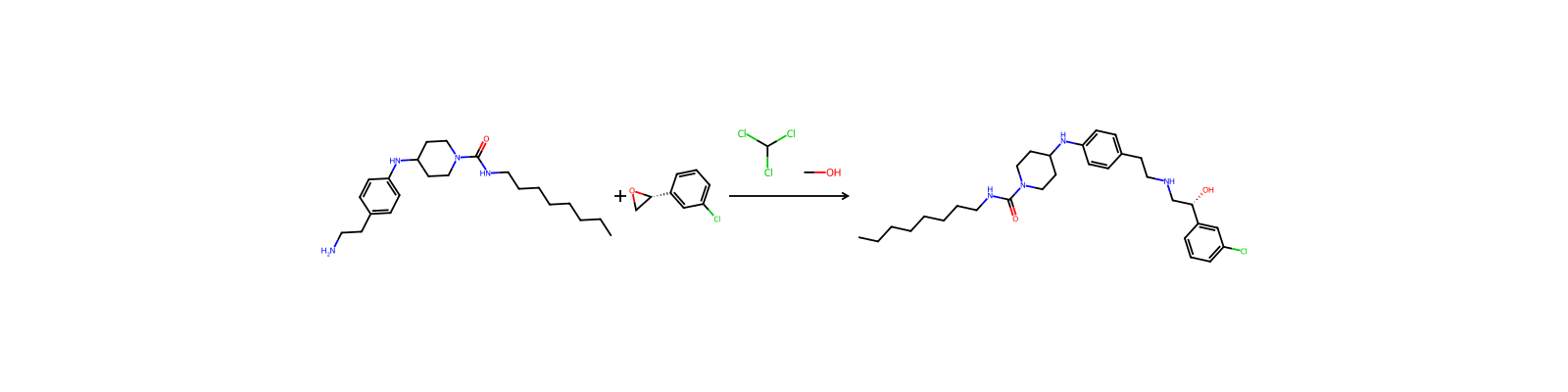
Verwenden(R)-(+)-3-Chlorostyrene oxide may be used as an intermediate for the synthesis of 4-aminopiperidine based human β3-adrenergic receptor (AR) agonists.
Anbieter53 Anbieter
郑州阿尔法化工有限公司+86-18530059196 · [email protected]
湖北永阔科技有限公司027-59223108 15972152991 · [email protected]
陕西缔都新材料有限公司81124267 17392282731 · [email protected]
T&W GROUP021-61551611 13296011611 · [email protected]
江苏艾康生物医药研发有限公司025-025-66113011 15955137747 · [email protected]
Dayang Chem (Hangzhou) Co.,Ltd.+86-0571-88938639 17705817739 · [email protected]
Syntechem Co.,Ltd[email protected]
安耐吉化学&3A(安徽泽升科技股份有限公司)400-0056266 · [email protected]
深圳市思美泉生物科技有限公司17683743113;18038040196 · [email protected]
海门慧聚药业有限公司0086-15189180296 · [email protected]
常州市华阳科技有限公司+8615250961469 · [email protected]
湖北广奥生物科技有限公司027-02702759223056 18162699093 · [email protected]
广东元丰化学试剂有限公司0751-2829979 13376591640 · [email protected]
上海遐瑞医药科技有限公司+86 21 61551611
台州南峰药物研究所[email protected] 18616377689 · [email protected]
石家庄手性化学有限公司031185291771 13832391721 · [email protected]
杭州迈世腾药物科技有限公司0571-82896630 18969958410 · [email protected]
南通敏言生物医药科技有限公司0513-85921823 18662920231 · [email protected]
Sigma-Aldrich西格玛奥德里奇(上海)贸易有限公司021-61415566 800-8193336 · [email protected]
南兴化工(江苏)有限公司0512-66387035 18662433356 · [email protected]
郑州九亿时光新材料有限公司+86-15225627621 +86-13213167925 · [email protected]
HANGZHOU LEAP CHEM CO., LTD.+86-571-87711850 +86-15355479329 · [email protected]
广东翁江化学试剂有限公司0751-2886766 13927870850 · [email protected]
北京华威锐科化工科技有限公司89508211 18501085097 · [email protected]
湖北齐飞医药化工有限公司027-59322506 18071128681 · [email protected]
上海班科生物技术有限公司2221346380 17701603001 · [email protected]
成都诺维尔生物医药有限公司028-85255396 18302801538 · [email protected]
北京珐默兹医药科技有限公司15811073878 · [email protected]
Shaanxi Dideu New Materials Co. Ltd18192503167 · [email protected]
杭州洁汉化工有限公司+86-571-86217390; +8618058761490 · [email protected]
嘉兴市德亿化工有限公司86-0573-85866609 18367600069 · [email protected]
Capot Chemical Co.,Ltd.+86-(0)57185586718 +86-13336195806 · [email protected]
厦门盈融达化工有限公司+86-0592-6210733 · [email protected]
上海腾渤医药科技有限公司021-54338626 18017892860 · [email protected]
career henan chemical co+86-0371-86658258 · [email protected]
爆牛贸易重庆有限公司+86-023-6139-8061 +86-86-13650506873 · [email protected]
XIAMEN AMITY INDUSTRY AND TRADE CO., LTD.+8618950047208 · [email protected]
河南奥创化工有限公司+86-0371-63689365 +8618638391208 · [email protected]
上海亿万化工有限公司00-18662433356 18662433356 · [email protected]
SUZHOU SENFEIDA CHEMICAL CO.,LTD+86-0512-83500002 +86-15195660023 · [email protected]
武汉卡米克科技有限公司18162538168 · [email protected]
南京世洲生物科技有限公司13675144456 · [email protected]
Capot Chemical Co., Ltd+86 (0) 571 85 58 67 18
重庆卡兰医药有限公司[email protected]
烟台盛凯伦化学科技有限公司开发区第一分公司13356901049 · [email protected]
南通普悦生物医药有限公司0513-0513-0513-89158300 18014392889 · [email protected]
Hebei Chuanghai Biotechnology Co., Ltd+86-15350571055 · [email protected]
上海锐谱医药科技有限公司15895968936 · [email protected]
Hefei TNJ Chemical Industry Co.,Ltd.+86-0551-65418671 +86-189 4982 3763 · [email protected]
CD Chemical Group Limited+86-13651442114 · [email protected]
Zugehörige Reaktionen
38




Notizen zur Verbindung
Wird geladen…