Grundinformationen
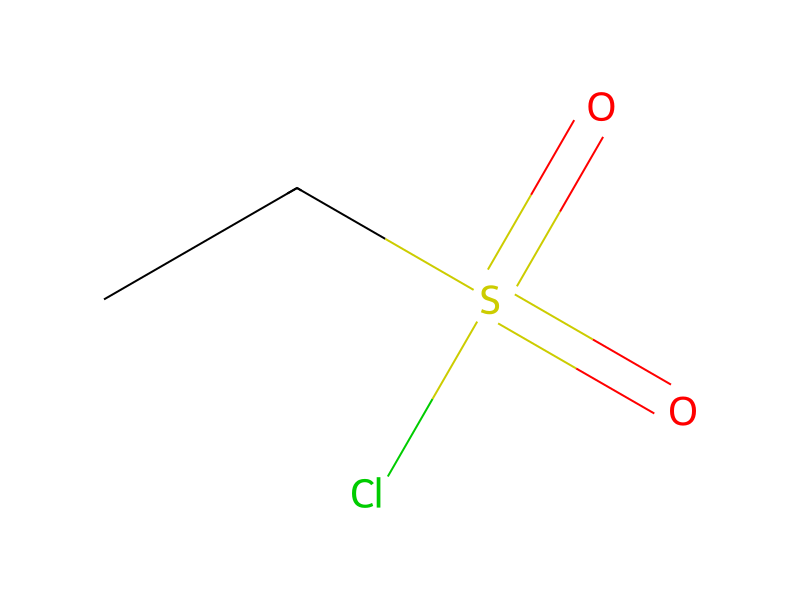
- Standard-SMILES
CCS(=O)(=O)Cl- InChIKey
FRYHCSODNHYDPU-UHFFFAOYSA-N- Summenformel
- C2H5ClO2S
- Durchschnittliche Molmasse
- 128,58 g/mol
- Monoisotopische Masse
- 127,96987808
Namen und Bezeichner
- Bevorzugter Name
- Ethanesulfonyl chloride
- IUPAC
- ethanesulfonyl chloride
- Lokaler Name
- Ethansulfonylchlorid
- Englischer Name
- Ethanesulfonyl chloride
- Summenformel
- C2H5ClO2S
- Molmasse
- 128.58
Namen und Synonyme
ETHANESULFONYL CHLORIDEEthylsulfonyl chlorideEthylsulfochloride1-Ethanesulfonyl chlorideEthanesulphonyl chlorideTL 77ethylsulfuryl chlorideEINECS 209-842-5NSC 8649UNII-B56ZOC898AEthane sulfochlorideBRN 0773865
Weitere Namen anzeigen
ethanesulflonyl chloridetl771,2-Ethane-disulfonicethylsulfurylchlorideTirofiban Impurity 72Ethyl sulfone chloride
B56ZOC898AHSDB 7487NSC-8649DTXSID0060486EC 209-842-54-04-00-00034 (Beilstein Handbook Reference)ETHANESULPHONYL CHLORIDE [HSDB]1-Ethanesulfonyl chloride(ChemID)
Datenbank-Bezeichner
- CAS
594-44-5- PubChem CID
- 11667
- DTXSID
DTXSID0060486- UNII
- B56ZOC898A
- EC Number
- 209-842-5
- Nikkaji
- J53.955D
Eigenschaften
Berechnete Struktureigenschaften
- XLogP
- 0,8
- Polarare Oberfläche (TPSA)
- 42,5 Ų
- H-Brücken-Donoren
- 0
- H-Brücken-Akzeptoren
- 2
- Frei drehbare Bindungen
- 1
- Schwere Atome
- 6
- Formalladung
- 0
- Komplexität
- 108
Experimentelle und physikochemische Eigenschaften
Chemical ClassesToxic Gases & Vapors -> Acid Halides
SpringerMaterials PropertiesBoiling point
Color/Form
Oil
Pale yellow
Solubility
Soluble in carbon disulfide
Slightly soluble (decomposes) in water and alcohol; very soluble in ether and dichloromethane.
Boiling Point177.5 °C
DecompositionWhen heated to decomposition it emits very toxic fumes of /hydrogen chloride and sulfur oxide/.
Vapor Pressure1.29 [mmHg]
Refractive IndexIndex of refraction: 1.4531 at 20 °C
Physical DescriptionPale yellow liquid; [HSDB] Colorless or yellow liquid; [MSDSonline]
Physikochemische Eigenschaften
- Schmelzpunkt
- -70 °C · -70°C
- Siedepunkt
- 177 °C · 177 °C (lit.)
- Dichte
- 1.357 g/mL · 1.357 g/mL at 25 °C (lit.)
- Brechungsindex
- 20 · n20/D 1.452(lit.)
- Flammpunkt
- 182 °F · 182 °F
- storage temp.
- 2 · Inert atmosphere,2-8°C
- Löslichkeit
- soluble in dichloromethane,Ether
- Aggregatzustand
- Liquid
- Farbe
- Clear colorless to light yellow or light brownish to pinkish-purple
- Wasserlöslichkeit
- DECOMPOSES
- BRN
- 773865 · 773865
- InChI
- 1S/C2H5ClO2S/c1-2-6(3,4)5/h2H2,1H3
- InChIKey
- FRYHCSODNHYDPU-UHFFFAOYSA-N
- SMILES
- CCS(Cl)(=O)=O
- CAS Datenbank
- 594 · 594-44-5(CAS DataBase Reference)
- NIST chemische Informationen
- Ethanesulfonyl chloride(594-44-5)
- EPA chemische Informationen
- Ethanesulfonyl chloride (594-44-5)
Sicherheit und Regulatorisches
GHS-Klassifizierung
GHS Classification
Danger
H302 (96.6%): Harmful if swallowed [Warning Acute toxicity, oral]
P260, P261, P262, P264, P270, P271, P280, P284, P301+P317, P301+P330+P331, P302+P352, P302+P361+P354, P304+P340, P305+P354+P338, P316, P317, P319, P320, P321, P330, P361+P364, P362+P364, P363, P403+P233, P405, and P501 (click each P-code to see the statement)
Aggregated GHS information provided per 58 reports by companies from 11 notifications to the ECHA C&L Inventory. Each notification may be associated with multiple companies.
Gefahrenhinweise
Regulatory Information
Status: Active Update: 06-01-2022 https://echa.europa.eu/registration-dossier/-/registered-dossier/11864
Ethanesulphonyl chloride: Does not have an individual approval but may be used under an appropriate group standard
Hazards Summary
A lachrymator; All rats exposed to 1273 ppm died within 30 to 130 minutes; 4-hr LC50 (rat) = approximately 86 ppm; Rats exposed to lethal concentrations have lacrimation, salivation, gasping, and pulmonary hemorrhage; [HSDB] Reacts violently with water; A corrosive substance that can cause injury to the skin, eyes, and respiratory tract; Inhalation may cause chemical pneumonitis; Effects in high-dose animal studies include acute pulmonary edema; [MSDSonline]
Hazard Classes and CategoriesAcute Tox. 4 (96.6%)
Skin, Eye, and Respiratory Irritations/Ethanesulfonyl chloride is a/ lachrymator ...
Sicherheit und Schutzausrüstung
Disposal Methods
SRP: The most favorable course of action is to use an alternative chemical product with less inherent propensity for occupational exposure or environmental contamination. Recycle any unused portion of the material for its approved use or return it to the manufacturer or supplier. Ultimate disposal of the chemical must consider: the material's impact on air quality; potential migration in soil or water; effects on animal, aquatic, and plant life; and conformance with environmental and public health regulations.
Preventive Measures
SRP: Contaminated protective clothing should be segregated in such a manner so that there is no direct personal contact by personnel who handle, dispose, or clean the clothing. Quality assurance to ascertain the completeness of the cleaning procedures should be implemented before the decontaminated protective clothing is returned for reuse by the workers. Contaminated clothing should not be taken home at end of shift, but should remain at employee's place of work for cleaning.
Toxikologische Informationen
Adverse EffectsDermatotoxin - Skin burns.
Human Toxicity Excerpts/SIGNS AND SYMPTOMS/ /Ethanesulfonyl chloride is a/ lachrymator ...
Non-Human Toxicity Excerpts
/LABORATORY ANIMALS: Acute Exposure/ A single dermal application of 2000 mg/kg to rabbits killed two of three animals. No deaths occurred following a dermal application of 200 mg/kg to rabbits.
/LABORATORY ANIMALS: Acute Exposure/ Acute (4-hr) inhalation studies indicated an LC50 of approximately 86 ppm in the rat. Clinical signs included eye irritation, lacrimation, salivation, and gasping. Decedents exhibited pulmonary hemorrhage. All rats died within 30 to 130 min during an exposure to 1273 ppm.
/LABORATORY ANIMALS: Acute Exposure/ Ethanesulfonyl chloride is corrosive to rabbit skin and eyes, and the vapor caused irritation of the eyes and respiratory tract. In rabbits, irritation of the eye 20 to 30 sec after instillation did not reduce the conjunctival necrosis, corneal opacity, or iridial changes. Corneal opacity persisted through 7 days.
Toxicity DataLCLo (rat) = 410 mg/m3/4h
Non-Human Toxicity Values
LD50 rat oral 360 mg/kg
LC50 rat inhalation 86 ppm/4 hr
Sicherheitsdaten
- F
- 19-21
- wgk
- 3
- tsca
- TSCA listed
- ridadr
- UN 2927 6.1/PG 2
- hs_code
- 29049090
- RTECS-Nr.
- KI8050000
- risk_code
- 21/22-23-34-22
- hazard_code
- T
- safety_code
- 26-36/37/39-45
- hazard_class
- 6.1
- packing_group
- II
- Speicherklasse
- 6.1A - Combustible acute toxic Cat. 1 and 2very toxic hazardous materials
- Giftige Stoffe Daten
- 594-44-5(Hazardous Substances Data)
- Hazard Classifications
- Acute Tox. 2 InhalationAcute Tox. 4 DermalAcute Tox. 4 OralEye Dam. 1Skin Corr. 1BSTOT SE 3
Chemie und Industrie
Verwendung und Herstellung
Uses
Used to make sulfonyl-substituted imides, methide lithium salts, and pentafluoroethanesulfonyl fluoride, a fluorinated surfactant; [HSDB]
Intermediate in the syntheses of new, low-cost, non-fluorinated, sulfonyl-substituted imide and methide lithium salts.
Intermediate in the preparation of the fluorinated surfactant pentafluoroethanesulfonyl fluoride.
U.S. ProductionProduction volumes for non-confidential chemicals reported under the Inventory Update Rule. [Table#7143]
Methods of Manufacturing
Alkanesulfonyl chlorides are manufactured from mercaptans or disulfides and chlorine using a loop reactor having an ejector, wherein mercaptan or disulfide is dispersed or dissolved into circulating aqueous solvent before the ejector and alowed to react with chlorine supplied through the aspirator of the ejector.
Mercaptans or disulfide in aqueous solvents are reacted with chlorine gas in dark to produce alkanesulfonyl chloride without chloro chain byproducts. Thus, ... ethyl mercaptan was reacted with ... chlorine gas over 4 hours in /the/ dark in ... pure water keeping the reaction temperature under 20 °C to give ethanesulfonyl chloride.
General Manufacturing InformationEthanesulfonyl chloride: ACTIVE
Vor- und nachgelagerte Produkte
Vorgelagerte Rohstoffe
Nachgelagerte Produkte
Anbieter50 Anbieter
国药集团化学试剂有限公司86-21-63210123 · [email protected]
梯希爱(上海)化成工业发展有限公司021-67121386 · [email protected]
上海阿拉丁生化科技股份有限公司400-6206333 13167063860 · [email protected]
邹平创新药业有限公司13561560789 · [email protected]
河北创海生物科技有限公司+86-86-13131129325 · [email protected]
T&W GROUP021-61551611 13296011611 · [email protected]
爱斯特(成都)生物制药股份有限公司+86-28-85122536 85324413 · [email protected]
Dayang Chem (Hangzhou) Co.,Ltd.+86-0571-88938639 17705817739 · [email protected]
韶远科技(上海)有限公司021-50795510 4000665055 · [email protected]
科瑞迪化学400-821-5857 021-64326257 · [email protected]
Syntechem Co.,Ltd[email protected]
上海迈瑞尔生化科技有限公司4006356688 18621169109 · [email protected]
武汉易泰科技有限公司上海分公司18930552037 · [email protected]
阿法埃莎(中国)化学有限公司400-6106006 · [email protected]
安耐吉化学&3A(安徽泽升科技股份有限公司)400-0056266 · [email protected]
上海瀚鸿科技股份有限公司021-54306202 13764082696 · [email protected]
上海景颜化工科技有限公司13817811078 · [email protected]
嘉兴市艾森化工有限公司0573-85285100 18627885956 · [email protected]
合肥天健化工有限公司551-65418679 15856988503;15837135945 · [email protected]
武汉丰泰威远科技有限公司027-87465837 19945049750 · [email protected]
山东曜明化工有限公司15550028560 · [email protected]
江西国化医药科技有限公司0794-7183888 13155888520
玛雅试剂+86 (573) 82222445 (0)18006601000 452520369 · [email protected]
四川库利南科技有限公司400-1166-196 18981987031 · [email protected]
天津希恩思生化科技有限公司400 638 7771 · [email protected]
南京维奥化工有限公司Please Send Email 18652950785 · [email protected]
Connect Chemicals GmbH+49 2102 2077 19 · [email protected]
上海思域化工科技有限公司86-21-34053660 · [email protected]
赛默飞世尔科技(中国)有限公司800-810-5118 · [email protected]
北京伊诺凯科技有限公司400-810-7969 010-59572699 · [email protected]
江苏艾康生物医药研发有限公司025-66113011 13913916777 · [email protected]
TCI AMERICA800-4238616 · [email protected]
TOKYO CHEMICAL INDUSTRY CO., LTD.03-36680489 · [email protected]
TCI Europe320-37350700 · [email protected]
上海贤鼎生物科技有限公司4009209199 · [email protected]
深圳振强药物研发有限公司0755-66853366 13670046396 · [email protected]
越林试剂021-62960152 · [email protected]
山东艾特化工有限公司18615658326 18615658326 · [email protected]
上海湄水化工科技有限公司021-60549325 18616193163
安徽科迪达化工有限公司0554-2106669 · [email protected]
HBCChem, Inc.+1-510-219-6317 · [email protected]
日照力德士化工有限公司010-51268198 · [email protected]
美岚实业(上海)有限公司021-58958189 · [email protected]
上海爱蝶实业有限公司021-58957966 18930537195 · [email protected]
成都零六生物科技有限公司400-1166-196 13458535857 · [email protected]
雷丁试剂0510-85629785 18013409632 · [email protected]
上海麦克林生化科技股份有限公司15221275939 15221275939 · [email protected]
杭州杰恒化工有限公司0571-87396432 · [email protected]
上海嵩爰化工科技有限公司010-1234567 18521000990 · [email protected]
上海有朋化工有限公司021-69005955 13701776567 · [email protected]
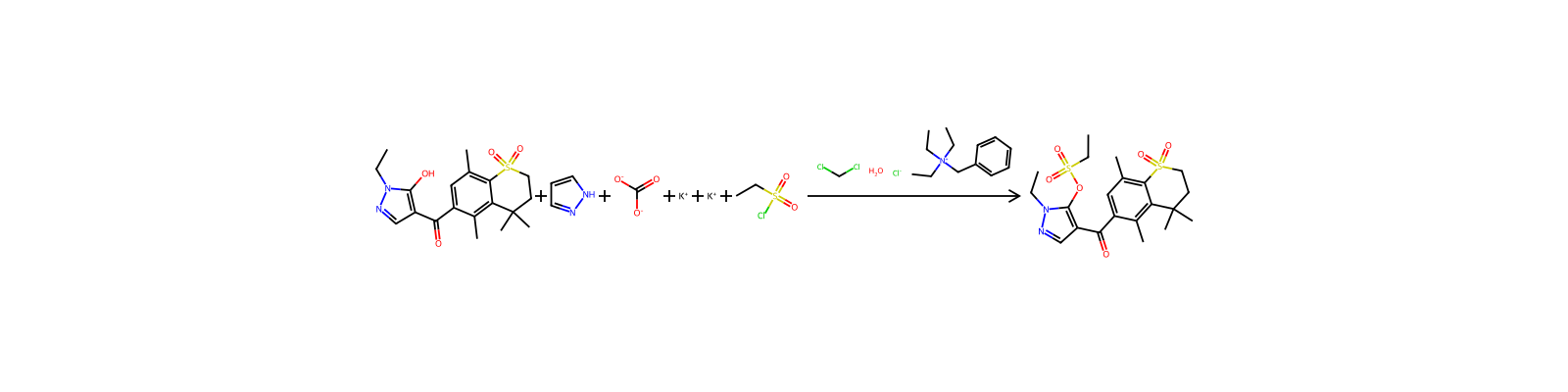
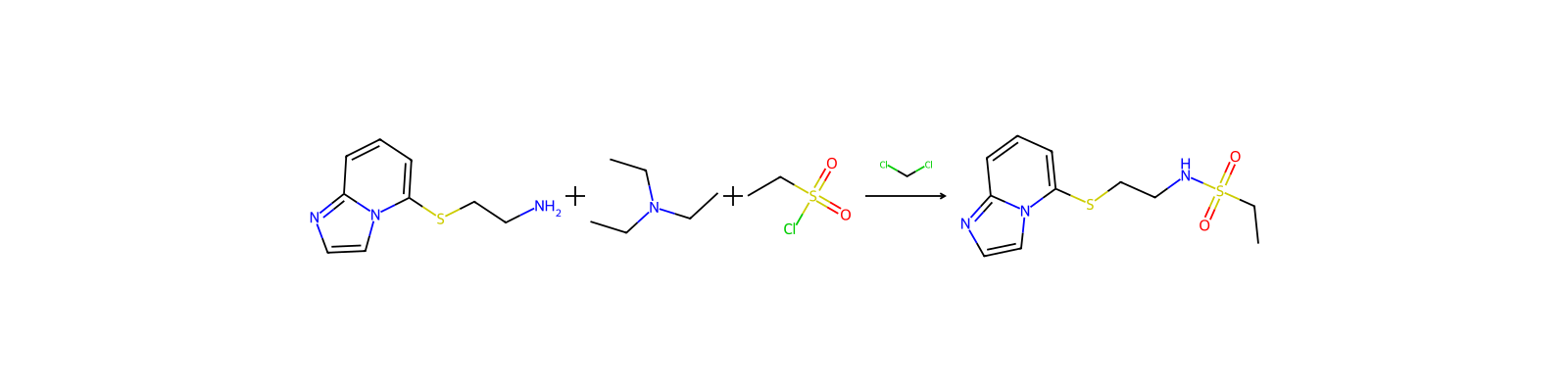
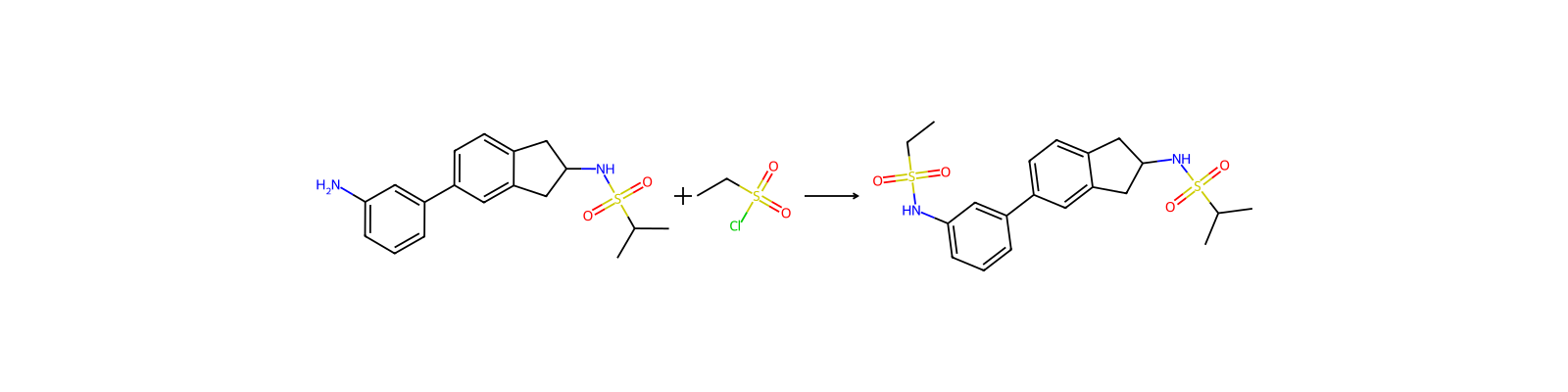
Zugehörige Reaktionen
704



Verknüpfte Notizen
Wird geladen…