StartseiteMCPWorkbenchSkills
StartseiteWorkbenchBenachrichtigungenMein Bereich
llms.txt · MCP-AnleitungDatenschutz · Nutzungsbedingungen · Supportv1.8.0
  1. Startseite
  2. /Verbindung

Triphenylamin

Triphenylamine

HCID 11775
Neue NotizNeue ReaktionAnfrage stellen
Druckvorschau
GrundinformationenÜberblickNamen und BezeichnerEigenschaftenSicherheit und RegulatorischesChemie und IndustrieZugehörige ReaktionenNotizen zur Verbindung
TeilstruktursucheÄhnliche Strukturen suchen

Grundinformationen

CAS
603-34-9
Standard-SMILES
c1ccc(N(c2ccccc2)c2ccccc2)cc1
InChIKey
ODHXBMXNKOYIBV-UHFFFAOYSA-N
Summenformel
C18H15N
Durchschnittliche Molmasse
245,3 g/mol
Monoisotopische Masse
245,12044948

Überblick

Crystals or off-white lumpy solid. (NTP, 1992)

Namen und Bezeichner

Bevorzugter Name
Triphenylamine
IUPAC
N,N-diphenylaniline
Lokaler Name
Triphenylamin
Englischer Name
Triphenylamine
Summenformel
C18H15N
Molmasse
245.32

Namen und Synonyme

TRIPHENYLAMINEN,N-DiphenylanilineBenzenamine, N,N-diphenyl-Triphenyl amineN,N-DiphenylbenzenamineAmine, triphenylCCRIS 4887UNII-NJS65M2DS2HSDB 2098AI3-17278EINECS 210-035-5NJS65M2DS2
Weitere Namen anzeigen
TriphenylaminTriphenylamine (TPA)Three anilineamine,triphenylTrisphenylamineTriphenylamine99+%Triphenylamine,98%Triphenylamine >
NSC 66458N,N-DIPHENYLANILINE [HSDB]NSC-66458DTXSID4022076N,NDiphenylanilineN,NDiphenylbenzenamineRefChem:191895Triphenyl amine (ACGIH)

Datenbank-Bezeichner

CAS
603-34-9
PubChem CID
11775
DTXSID
DTXSID4022076
ChEMBL
CHEMBL3819197
UNII
NJS65M2DS2
EC Number
210-035-5
Nikkaji
J54.231H

Eigenschaften

Berechnete Struktureigenschaften

XLogP
5,7
Polarare Oberfläche (TPSA)
3,2 Ų
H-Brücken-Donoren
0
H-Brücken-Akzeptoren
1
Frei drehbare Bindungen
3
Schwere Atome
19
Formalladung
0
Komplexität
202

Experimentelle und physikochemische Eigenschaften

PolymersNitrogen Compounds -> Amines, Polyaromatic
SpringerMaterials PropertiesAngular frequency
LogP · 3 Einträge

log Kow= 5.74

5.74

5.22

Density · 4 Einträge

0.774 at 32 °F (NTP, 1992) - Less dense than water; will float

0.774 @ 0 °C/0 °C

0.77 g/cm³

0.77

Color/Form · 3 Einträge

MONOCLINIC CRYSTALS FROM METHANOL, ETHYL ACETATE, BENZENE

Exist as colorless monoclinic prisms

Colorless solid

Solubility · 4 Einträge

less than 1 mg/mL at 68 °F (NTP, 1992)

Insoluble in water, slightly soluble in ethanol, and soluble in ethyl ether and benzene

Solubility in water: very poor

Insoluble

Flash Point · 2 Einträge

180 °C

180 °C o.c.

Boiling Point · 4 Einträge

Sicherheit und Regulatorisches

Sicherheitsangaben dienen nur zur Orientierung und ersetzen weder das Sicherheitsdatenblatt (SDB) des Lieferanten noch geltende Vorschriften oder eine fachliche Bewertung.

GHS-Klassifizierung

GHS Classification · 6 Einträge

Warning

H315 (100%): Causes skin irritation [Warning Skin corrosion/irritation]

P261, P264, P264+P265, P271, P280, P302+P352, P304+P340, P305+P351+P338, P319, P321, P332+P317, P337+P317, P362+P364, P403+P233, P405, and P501 (click each P-code to see the statement)

Aggregated GHS information provided per 49 reports by companies from 4 notifications to the ECHA C&L Inventory. Each notification may be associated with multiple companies.

Not Classified

Warning

Gefahrenhinweise

Regulatory Information · 2 Einträge

Chemical: Benzenamine, N,N-diphenyl-

Triphenyl amine: Does not have an individual approval but may be used under an appropriate group standard

Fire Hazards · 2 Einträge

The flash point of this chemical has not been determined, but it is probably combustible. (NTP, 1992)

Combustible. Gives off irritating or toxic fumes (or gases) in a fire. Finely dispersed particles form explosive mixtures in air.

Health HazardsExcerpt from NIOSH Pocket Guide for Triphenylamine:
Hazards SummaryEastman Kodak reported no adverse health effects after extensive use of this chemical. [HSDB] A mild skin and eye irritant; [ICSC]
Reactive GroupAmines, Phosphines, and Pyridines
Special ReportsACGIH. Documentation of the threshold limit values and biological exposure indices; 6th Ed: 1658-1659 (1991). TLV-TWA, 5 mg/cu m.
Reactivity Profile

Chemie und Industrie

Verwendung und Herstellung

Uses · 2 Einträge

Produced by Eastman Kodak to coat film bases; [HSDB]

Coated on film bases as primary photoconductor

General Manufacturing Information · 2 Einträge

Benzenamine, N,N-diphenyl-: ACTIVE

Industrial experience with triphenylamine at the Eastman Kodak Company demonstrated that no injuries occurred as a result of handling of the compound and that no special precautions were necessary for triphenylamine other than those used for the routine control of organic compounds.

Anwendungen · 1 Eintrag

VerwendenOrganic light-emitting diode (OLED) devices have received much attention, because they are expected to be a next generation display and light source, thanks to lightweight and flexible organic materials. Triphenylamine is a propeller-like structural chromophore with a nitrogen atom center. The compound has a large steric hindrance and hyper conjugation electronic effect, which can enhance the stability of the nitrogen atomic radical. Triphenylamine materials also have a high hole mobility due to their unique free radicals nature. Many hole transport materials based on triphenylamine derivatives (TPD) are widely usable,because they are heat-resistant and amorphous.In addition to the TPDs, oxadiazole derivatives (PBD) having an electron transport property, Alq3 as a host material,and blue emissive distylyl derivatives are fundamental materials for amorphous OLED devices. It is used in the manufacture of photographic film. Triphenylamines (TPAs) are highly fluorescent compounds that are efficient to induce cell death upon visible light excitation. Triphenylamine is used in organic light-emitting diode as hole-transporters and as a pharmaceutical intermediate. It is coated on film bases as primary photoconductor.

Darstellung

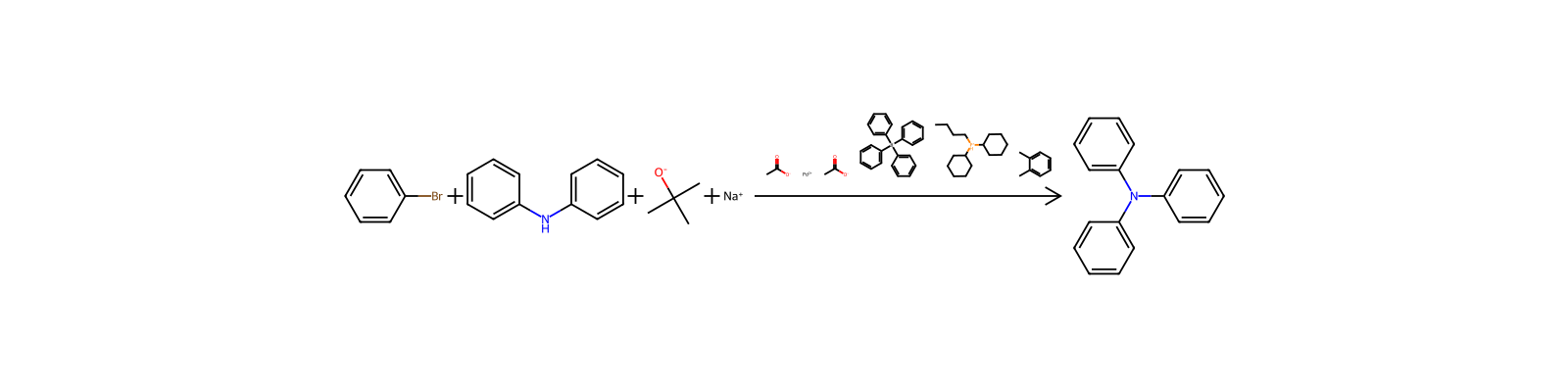
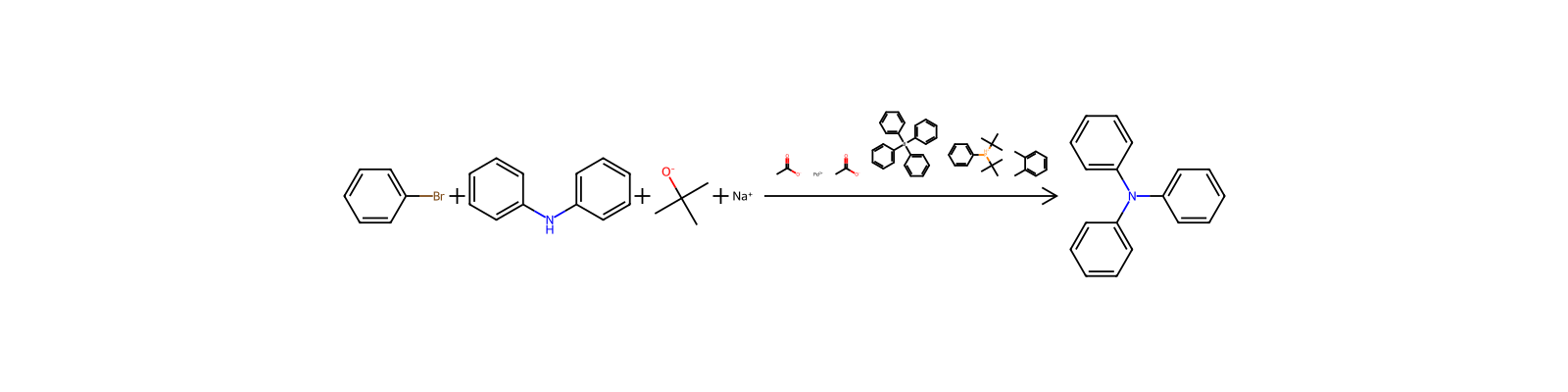
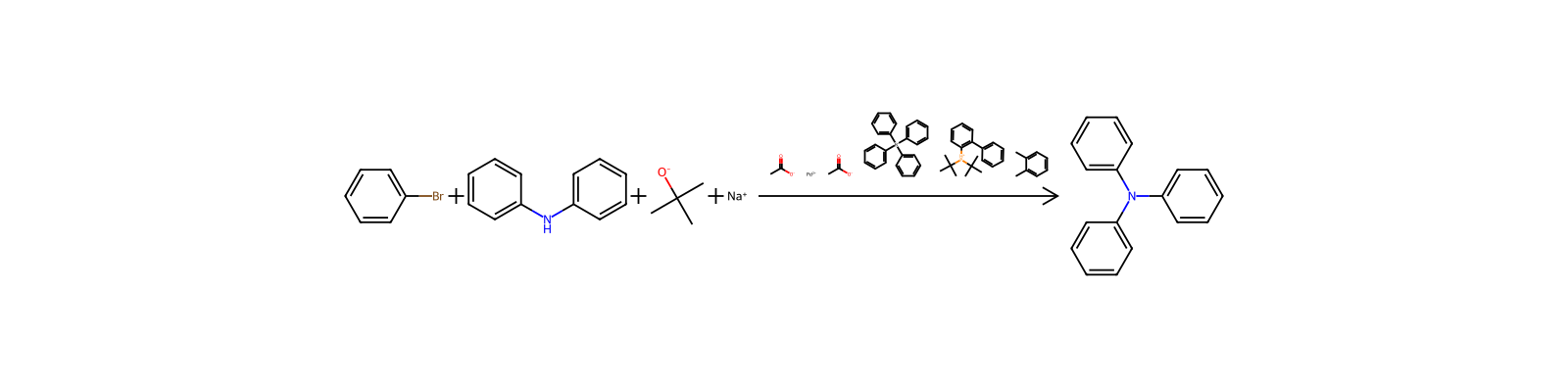
synthetischeTriphenylamine can be prepared by the arylation reaction of diphenylamine.

Vor- und nachgelagerte Produkte

Zugehörige Reaktionen

83
Reaktionsaufzeichnung erstellen
Reaktionsgleichung von HRID 13886
HRID 13886als Produktuspto-grants-2010_06
Reaktionsgleichung von HRID 13905
HRID 13905als Produktuspto-grants-2010_06
Reaktionsgleichung von HRID 13907
HRID 13907als Produktuspto-grants-2010_06
Reaktionsgleichung von HRID 13908
HRID 13908als Produktuspto-grants-2010_06
Reaktionsgleichung von HRID 13909
HRID 13909als Produktuspto-grants-2010_06
Reaktionsgleichung von HRID 13910
HRID 13910als Produktuspto-grants-2010_06
Reaktionsgleichung von HRID 35013
HRID 35013als Produktuspto-grants-1988_08
Reaktionsgleichung von HRID 53409
HRID 53409als Eduktuspto-grants-1997_04
Seite 1 von 11

Notizen zur Verbindung

Wird geladen…

Auf dieser SeiteGrundinformationenÜberblickNamen und BezeichnerEigenschaftenSicherheit und RegulatorischesChemie und IndustrieZugehörige ReaktionenNotizen zur Verbindung
Weitere Aktionen
Neue NotizNeue ReaktionAnfrage stellen

657 to 658 °F at 760 mmHg ; 383-401 °F at 10-22 mmHg (NTP, 1992)

365 °C

365 °C

689 °F

DecompositionWhen heated to decomposition it emits toxic fumes of /nitrogen oxides/.
Melting Point · 4 Einträge

261 °F (NTP, 1992)

127 °C

126.5 °C

261 °F

Vapor Pressure · 2 Einträge

0.000392 [mmHg]

3.92X10⁻⁴ mm Hg @ 25 °C

Refractive IndexIndex of refraction= 1.353 @ 16 °C/D

Physikochemische Eigenschaften

Schmelzpunkt
124 · 124-128 °C (lit.)
Siedepunkt
347 · 347-348 °C (lit.)
Dichte
0.774 · 0.7740
Brechungsindex
1.353 · 1.3530 (estimate)
Flammpunkt
365 °C · 365°C
storage temp.
Sealed in dry,Room Temperature
Löslichkeit
Chloroform (Slightly)
pka
-3.04 · -3.04±0.30(Predicted)
Aggregatzustand
Crystalline Powder
Farbe
Off-white to slightly beige
Wasserlöslichkeit
insoluble
BRN
2050487 · 2050487
Stabilität
Stable. Combustible. Incompatible with strong oxidizing agents.
InChI
1S/C18H15N/c1-4-10-16(11-5-1)19(17-12-6-2-7-13-17)18-14-8-3-9-15-18/h1-15H
InChIKey
ODHXBMXNKOYIBV-UHFFFAOYSA-N
SMILES
c1ccc(cc1)N(c2ccccc2)c3ccccc3
CAS Datenbank
603 · 603-34-9(CAS DataBase Reference)
NIST chemische Informationen
Benzenamine, N,N-diphenyl-(603-34-9)
EPA chemische Informationen
Triphenylamine (603-34-9)
· 1 Eintrag

TRIPHENYLAMINE neutralizes acids in exothermic reactions to form salts plus water. May be incompatible with isocyanates, halogenated organics, peroxides, phenols (acidic), epoxides, anhydrides, and acid halides. Flammable gaseous hydrogen may be generated in combination with strong reducing agents, such as hydrides.

Chemical DangersDecomposes on burning. This produces toxic fumes including nitrogen oxides. The solution in water is a weak base. Reacts with acids, strong oxidants and halogens.
Physical DangersDust explosion possible if in powder or granular form, mixed with air.
Air and Water ReactionsInsoluble in water.
NIOSH RecommendationsRecommended Exposure Limit: 10 Hr Time-Weighted Avg: 5 mg/cu m.
Hazard Classes and Categories · 2 Einträge

Skin Irrit. 2 (100%)

Acute toxicity (Oral) - Category 5

Sicherheit und Schutzausrüstung

Fire Fighting · 2 Einträge

Fires involving this material can be controlled with a dry chemical, carbon dioxide, foam or Halon extinguisher. (NTP, 1992)

Use water spray, powder, alcohol-resistant foam, carbon dioxide.

First Aid Measures · 4 Einträge

Fresh air, rest.

Rinse and then wash skin with water and soap.

First rinse with plenty of water for several minutes (remove contact lenses if easily possible), then refer for medical attention.

Rinse mouth.

First Aid · 2 Einträge

EYES: First check the victim for contact lenses and remove if present. Flush victim's eyes with water or normal saline solution for 20 to 30 minutes while simultaneously calling a hospital or poison control center. Do not put any ointments, oils, or medication in the victim's eyes without specific instructions from a physician. IMMEDIATELY transport the victim after flushing eyes to a hospital even if no symptoms (such as redness or irritation) develop.

(General first aid procedures)

Safe StorageSeparated from acids, strong oxidants and halogens.
Nonfire Spill Response · 1 Eintrag

SMALL SPILLS AND LEAKAGE: If a spill of this chemical occurs, FIRST REMOVE ALL SOURCES OF IGNITION, then you should dampen the solid spill material with acetone and transfer the dampened material to a suitable container. Use absorbent paper dampened with acetone to pick up any remaining material. Seal your contaminated clothing and the absorbent paper in a vapor-tight plastic bag for eventual disposal. Solvent wash all contaminated surfaces with acetone followed by washing with a soap and water solution. Do not reenter the contaminated area until the Safety Officer (or other responsible person) has verified that the area has been properly cleaned.

Disposal Methods · 1 Eintrag

SRP: At the time of review, criteria for land treatment or burial (sanitary landfill) disposal practices are subject to significant revision. Prior to implementing land disposal of waste residue (including waste sludge), consult with environmental regulatory agencies for guidance on acceptable disposal practices.

Spillage DisposalPersonal protection: particulate filter respirator adapted to the airborne concentration of the substance. Sweep spilled substance into covered sealable containers. If appropriate, moisten first to prevent dusting.
Preventive Measures · 2 Einträge

The worker should wash daily at the end of each work shift.

Workers whose clothing may have become contaminated should change into uncontaminated clothing before leaving the work premises.

Eye PreventionWear safety goggles.
Fire PreventionNO open flames. Closed system, dust explosion-proof electrical equipment and lighting. Prevent deposition of dust.
Inhalation RiskA harmful concentration of airborne particles can be reached quickly when dispersed, especially if powdered.
Skin PreventionProtective gloves.

Toxikologische Informationen

Target OrgansSkin
Exposure Routes · 2 Einträge

The substance can be absorbed into the body by ingestion.

inhalation, ingestion, skin and/or eye contact

Signs and Symptoms · 3 Einträge

Redness.

Redness.

In Animals: irritation skin

ICSC Environmental DataEnvironmental effects from the substance have not been investigated adequately.
Human Toxicity Excerpts · 1 Eintrag

Industrial experience with triphenyl amine ... demonstrated that no injuries occurred as a result of handling of the compound & that no special precautions were necessary for triphenyl amine other than those used for the routine control of organic compounds.

Non-Human Toxicity Excerpts · 2 Einträge

SCREENING TEST IN RATS INDICATED ORAL LD50...TO BE BETWEEN 3200-6400 MG/KG, WHILE IN MICE LD50 VARIED FROM 1600-3200 MG/KG. INTRAPERITONEALLY IN BOTH SPECIES LD50 WAS GREATER THAN 6400 MG/KG. DEATHS OCCURRED IN...ORAL ADMIN IN RATS UP TO 6 DAYS AFTER ADMIN & UP TO 2 DAYS IN...MICE. IP NO DEATHS OCCURRED @ 6400 MG/KG LEVEL.

A 10% SOLN OF COMPD IN MIXT OF 9:1 ACETONE: CORN OIL APPLIED TO DEPILATED SKIN OF GUINEA PIG UNDER OCCLUSIVE COVERING @ CONCN OF 5-20 ML/KG FOR 24 HR PRODUCED ONLY SLIGHT ERYTHEMA WITHOUT EDEMA. CRYSTALS OF SOLID COMPD PLACED IN CONJUNCTIVAL SAC OF RABBIT'S EYE PRODUCED NO EVIDENCE OF DAMAGE AT ANY TIME DURING 2-WEEK PERIOD. ...WAS FOUND NOT TO BE SKIN SENSITIZER IN GUINEA PIG.

Probable Routes of Human ExposureINFORMATION MADE AVAILABLE BY EASTMAN KODAK COMPANY REVEALS THAT NO INJURIES HAVE OCCURRED AS RESULT OF HANDLING OF TRIPHENYL AMINE & THAT NO SPECIAL PRECAUTIONS ARE NECESSARY OTHER THAN THOSE USED FOR ROUTINE HANDLING OF ORGANIC COMPD.
Antidote and Emergency Treatment · 2 Einträge

Basic treatment: Establish a patent airway. Suction if necessary. Watch for signs of respiratory insufficiency and assist ventilations if necessary. Administer oxygen by nonrebreather mask at 10 to 15 L/min. Monitor for pulmonary edema and treat if necessary ... . Monitor for shock and treat if necessary ... . Anticipate seizures and treat if necessary ... . For eye contamination, flush eyes immediately with water. Irrigate each eye continuously with normal saline during transport ... . Do not use emetics. For ingestion, rinse mouth and administer 5 ml/kg up to 200 ml of water for dilution if the patent can swallow, has a strong gag reflex, and does not drool. Administer activated charcoal ... . Cover skin burns with dry sterile dressings after decontamination ... . /Organic bases/Amines and related compounds/

Advanced treatment: Consider orotracheal or nasotracheal intubation for airway control in the patient who is unconscious or has severe pulmonary edema. Positive-pressure ventilation techniques with a bag-valve-mask device may be beneficial. Monitor cardiac rhythm and treat arrhythmias as necessary ... . Start an IV with D5W /SRP: "To keep open", minimal flow rate/. Use lactated Ringer's if signs of hypovolemia are present. Watch for signs of fluid overload. Administer 1% solution methylene blue if patient is symptomatic with severe hypoxia, cyanosis, and cardiac compromise not responding to oxygen. ... . Consider drug therapy for pulmonary edema ... . For hypotension with signs of hypovolemia, administer fluid cautiously. If patient is unresponsive to these measures, vasopressors may be helpful. Watch for signs of fluid overload ... . Treat seizures with diazepam (Valium) ... . Use proparacaine hydrochloride to assist eye irrigation ... . /Organic bases/Amines and related compounds/

Non-Human Toxicity Values · 5 Einträge

LD50 Mouse Oral 1600-3200 mg/kg Deaths were /SRP: occurred/ up to 2 days after admin.

LD50 Rat Oral 3200-6400 mg/kg Deaths were /SRP: occurred/ up to 11 days after admin.

LD50 Rat & Mouse Intraperitoneal >6400 mg/kg

LD50 Rat oral 3200 mg/kg

LD50 Mouse oral 1600 mg/kg

Sicherheitsdaten

OEB
B
OEL
TWA: 5 mg/m3
wgk
2
tsca
TSCA listed
hs_code
29214980
RTECS-Nr.
YK2680000
risk_code
36/38-36/37/38-38-36
hazard_code
Xi
hazard_note
Irritant
safety_code
26-28-37/39-26,37/39
Speicherklasse
11 - Combustible Solids
Giftige Stoffe Daten
603-34-9(Hazardous Substances Data)

Vorgelagerte Rohstoffe

DiphenylaminAnilinBrombenzolHydrogenchlorid

Nachgelagerte Produkte

4,4'-DiformyltriphenylamineBenzenamine, 4-iodo-N-(4-iodophenyl)-N-phenyl-Tris(4-iodophenyl)amine4-Fluoro-N,N-diphenylbenzenamineN-PhenylcarbazolN-(4-Iodophenyl)-N-phenylbenzenamineN,N-Diphenyl-4-(4,4,5,5-tetramethyl-1,3,2-dioxaborolan-2-yl)anilineN,N-Bis(4-aminophenyl)benzol-1,4-diaminN-(4-BroMophenyl)-N,N-bis(1,1'-biphenyl-4-yl)aMineBenzoic acid, 4,4'-(phenylimino)bis-