Grundinformationen
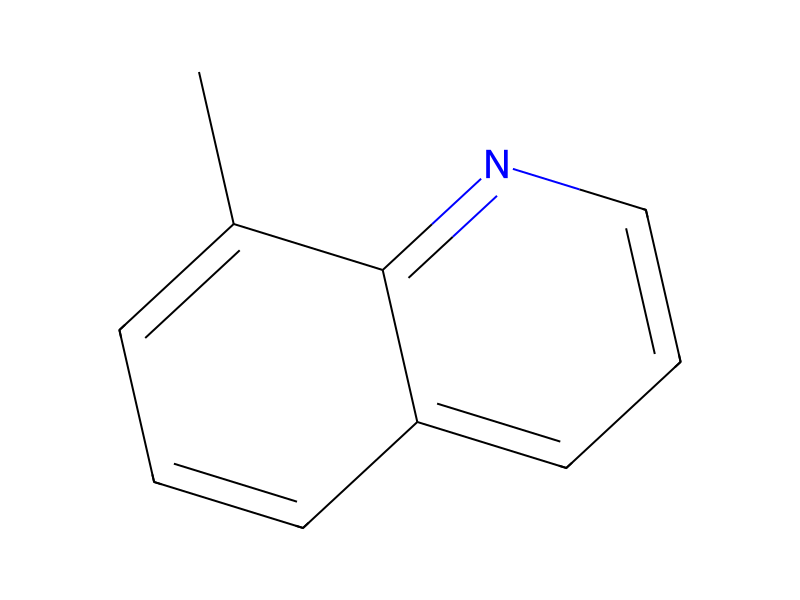
- Standard-SMILES
Cc1cccc2cccnc12- InChIKey
JRLTTZUODKEYDH-UHFFFAOYSA-N- Summenformel
- C10H9N
- Durchschnittliche Molmasse
- 143,18 g/mol
- Monoisotopische Masse
- 143,07349929
Überblick
8-methylquinoline appears as yellow liquid or oil. (NTP, 1992)
Namen und Bezeichner
- Bevorzugter Name
- 8-Methylquinoline
- IUPAC
- 8-methylquinoline
- Lokaler Name
- 8-Methylchinolin
- Englischer Name
- 8-Methylquinoline
- Summenformel
- C10H9N
- Molmasse
- 143.19
Namen und Synonyme
8-METHYLQUINOLINE611-32-5Quinoline, 8-methyl-DTXSID8020888CHEBI:48984NSC-9409K97B12J636DTXCID80888RefChem:107278210-264-0O-Toluquinoline8-methyl-quinoline
Weitere Namen anzeigen
8-methyquinoline8-Methyl0-Toluquinoline8-Methylchinolin8-methyl-quinolin8-Methylquinoline>8-Methylquinoline,98+%
CCRIS 408MFCD000068101199266-77-7NSC 9409CHEMBL1702610Quinoline, 8-methyl-, labeled with deuteriumNSC9409EINECS 210-264-0
Datenbank-Bezeichner
- CAS
611-32-5- PubChem CID
- 11910
- DTXSID
DTXSID8020888- ChEMBL
CHEMBL1702610- ChEBI
CHEBI:48984- UNII
- K97B12J636
- EC Number
- 210-264-0
- Nikkaji
- J841I
Eigenschaften
Berechnete Struktureigenschaften
- XLogP
- 2,6
- Polarare Oberfläche (TPSA)
- 12,9 Ų
- H-Brücken-Donoren
- 0
- H-Brücken-Akzeptoren
- 1
- Frei drehbare Bindungen
- 0
- Schwere Atome
- 11
- Formalladung
- 0
- Komplexität
- 133
Experimentelle und physikochemische Eigenschaften
SpringerMaterials PropertiesBoiling point
LogP2.6
Density1.0719 at 68 °F (NTP, 1992) - Denser than water; will sink
Solubility1 to 5 mg/mL at 63 °F (NTP, 1992)
Flash Point221 °F (NTP, 1992)
Boiling Point478 °F at 751 mmHg (NTP, 1992)
Melting Point-112 °F (NTP, 1992)
Vapor Pressure5.9 mmHg at 75 °F ; 8.0 mmHg at 111 °F; 12.6 mmHg at 149 °F (NTP, 1992)
Physical Description
8-methylquinoline appears as yellow liquid or oil. (NTP, 1992)
Liquid
Physikochemische Eigenschaften
- Schmelzpunkt
- -80 °C · -80 °C
- Siedepunkt
- 245 °C · 245 °C
- Dichte
- 1.052 g/mL · 1.052 g/mL at 25 °C(lit.)
- Brechungsindex
- 20 · n20/D 1.614(lit.)
- Flammpunkt
- 221 °F · 221 °F
- storage temp.
- Room Temperature
- Löslichkeit
- Chloroform, Methanol
- pka
- 5.03 · 5.03±0.17(Predicted)
- Aggregatzustand
- Liquid
- Farbe
- Clear yellow
- Wichte
- 1.052 · 1.052
- Wasserlöslichkeit
- 0.1 · 0.1-0.5 g/100 mL at 17 ºC
- BRN
- 111340 · 111340
- InChI
- 1S/C10H9N/c1-8-4-2-5-9-6-3-7-11-10(8)9/h2-7H,1H3
- InChIKey
- JRLTTZUODKEYDH-UHFFFAOYSA-N
- SMILES
- Cc1cccc2cccnc12
- CAS Datenbank
- 611 · 611-32-5(CAS DataBase Reference)
- NIST chemische Informationen
- 8 · Quinoline, 8-methyl-(611-32-5)
- EPA chemische Informationen
- 8 · 8-Methylquinoline (611-32-5)
Sicherheit und Regulatorisches
GHS-Klassifizierung
GHS Classification
Warning
H315 (100%): Causes skin irritation [Warning Skin corrosion/irritation]
P203, P261, P264, P264+P265, P271, P280, P302+P352, P304+P340, P305+P351+P338, P318, P319, P321, P332+P317, P337+P317, P362+P364, P403+P233, P405, and P501 (click each P-code to see the statement)
Aggregated GHS information provided per 47 reports by companies from 5 notifications to the ECHA C&L Inventory. Each notification may be associated with multiple companies.
Gefahrenhinweise
Regulatory Information
Chemical: Quinoline, 8-methyl-
Quinoline, 8-methyl- is listed on the EPA's Chemical Data Reporting (CDR) system. Manufacturers and importers of Quinoline, 8-methyl- are required to report information about their production and use of this chemical to the EPA under the Toxic Substances Control Act (TSCA). (40 eCFR Part 711)
Fire HazardsThis chemical is combustible. (NTP, 1992)
Health HazardsSYMPTOMS: This compound may be absorbed through the skin and it causes skin irritation. The vapor or mist is irritating to the eyes, mucous membranes and upper respiratory tract.
Reactive GroupAmines, Phosphines, and Pyridines
Reactivity Profile
8-METHYLQUINOLINE may be sensitive to exposure to light. May react vigorously with strong oxidizing agents and strong acids (NTP, 1992). Neutralizes acids in exothermic reactions to form salts plus water. May be incompatible with isocyanates, halogenated organics, peroxides, phenols (acidic), epoxides, anhydrides, and acid halides. Flammable gaseous hydrogen may be generated in combination with strong reducing agents, such as hydrides.
Air and Water ReactionsSlightly soluble in water.
Hazard Classes and CategoriesSkin Irrit. 2 (100%)
Sicherheit und Schutzausrüstung
Fire FightingFires involving this material can be controlled with a dry chemical, carbon dioxide or Halon extinguisher. (NTP, 1992)
First Aid
EYES: First check the victim for contact lenses and remove if present. Flush victim's eyes with water or normal saline solution for 20 to 30 minutes while simultaneously calling a hospital or poison control center. Do not put any ointments, oils, or medication in the victim's eyes without specific instructions from a physician. IMMEDIATELY transport the victim after flushing eyes to a hospital even if no symptoms (such as redness or irritation) develop.
Nonfire Spill Response
SMALL SPILLS AND LEAKAGE: If you spill this chemical, FIRST REMOVE ALL SOURCES OF IGNITION. Then, use absorbent paper to pick up all liquid spill material. Your contaminated clothing and absorbent paper should be sealed in a vapor-tight plastic bag for eventual disposal. Solvent wash all contaminated surfaces with 60-70% ethanol followed by washing with a soap and water solution. Do not reenter the contaminated area until the Safety Officer (or other responsible person) has verified that the area has been properly cleaned.
Personal Protective Equipment (PPE)
RECOMMENDED RESPIRATOR: Where the neat test chemical is weighed and diluted, wear a NIOSH-approved half face respirator equipped with an organic vapor/acid gas cartridge (specific for organic vapors, HCl, acid gas and SO2) with a dust/mist filter. (NTP, 1992)
Sicherheitsdaten
- wgk
- 3
- tsca
- TSCA listed
- hs_code
- 29334900
- RTECS-Nr.
- VC0562000
- risk_code
- 36/37/38-68-22
- hazard_code
- Xi,Xn
- safety_code
- 26-36-45-36/37/39
- hazard_class
- IRRITANT
- Speicherklasse
- 10 - Combustible liquids
- Hazard Classifications
- Eye Irrit. 2Skin Irrit. 2STOT SE 3
Chemie und Industrie
Verwendung und Herstellung
U.S. Production2023: 10,582 lb
Industry UsesCorrosion inhibitor
General Manufacturing Information
All Other Chemical Product and Preparation Manufacturing
Quinoline, 8-methyl-: ACTIVE
Anwendungen
Verwenden8-Methylquinoline has been used in preparation of osmium chloridophosphine complexes, as quinoline carbene tautomers.Tumorigenic potential of 8-methylquinoline has been evaluated in newborn CD-1 mice and Sprague-Dawley rats.
Vor- und nachgelagerte Produkte
Vorgelagerte Rohstoffe
Nachgelagerte Produkte
Anbieter50 Anbieter
国药集团化学试剂有限公司86-21-63210123 · [email protected]
梯希爱(上海)化成工业发展有限公司021-67121386 · [email protected]
上海阿拉丁生化科技股份有限公司400-6206333 13167063860 · [email protected]
上海策嵘生物科技有限公司[email protected]
Changzhou Carman Chemical Co., Ltd.15061933924
合肥翰刚医药科技有限公司+8618062405514 · [email protected]
INTATRADE GmbH+49 3493/605464 · [email protected]
河北创海生物科技有限公司+86-86-13131129325 · [email protected]
北京安司莫森技术有限公司010-82954736 13391601435 · [email protected]
科瑞迪化学400-821-5857 021-64326257 · [email protected]
上海迈瑞尔生化科技有限公司4006356688 18621169109 · [email protected]
武汉易泰科技有限公司上海分公司18930552037 · [email protected]
上海拓克化学科技有限公司+86-021-69895597 13776836200 +86-13776836200 · [email protected]
阿法埃莎(中国)化学有限公司400-6106006 · [email protected]
上海德默医药科技有限公司400-021-7337 2355568890 · [email protected]
安耐吉化学&3A(安徽泽升科技股份有限公司)400-0056266 · [email protected]
武汉凯威斯科技有限公司86-027-67849912 · [email protected]
上海恩诺生物科技有限公司+86 (21) 6435-5022
常州福盟生物科技有限公司0519-89882557 13912311481
上海瀚鸿科技股份有限公司021-54306202 13764082696 · [email protected]
山东洛克化工有限公司17653113209 13065062079 · [email protected]
上海景颜化工科技有限公司13817811078 · [email protected]
嘉兴市艾森化工有限公司0573-85285100 18627885956 · [email protected]
南京哈柏医药科技有限公司13376080562 13376090521 · [email protected]
Zhejiang J&C Biological Technology Co.,Limited+1-2135480471 · [email protected]
杭州东帆化学有限公司86-0571-85151182
北京恒普高药物化学科技有限公司010-81520996 13439320863 · [email protected]
山东西亚化学有限公司13355009207 13355009207 · [email protected]
四川库利南科技有限公司400-1166-196 18981987031 · [email protected]
常州四渡化工有限公司0519-81291281 18015082300
天津希恩思生化科技有限公司400 638 7771 · [email protected]
艾科试剂4008-755-333 18080918076 · [email protected]
上海思域化工科技有限公司86-21-34053660 · [email protected]
赛默飞世尔科技(中国)有限公司800-810-5118 · [email protected]
北京伊诺凯科技有限公司400-810-7969 010-59572699 · [email protected]
TCI AMERICA800-4238616 · [email protected]
TOKYO CHEMICAL INDUSTRY CO., LTD.03-36680489 · [email protected]
TCI Europe320-37350700 · [email protected]
越林试剂021-62960152 · [email protected]
Clearsynth Labs Limited+91-22-26355700 · [email protected]
南京生利德生物科技有限公司025-57798810 18652991625 · [email protected]
北京阳光福润科技有限公司010-57495520 13521095525 · [email protected]
安徽科迪达化工有限公司0554-2106669 · [email protected]
HBCChem, Inc.+1-510-219-6317 · [email protected]
上海御略医药科技有限公司021-60345187 13671753212 · [email protected]
上海麦克林生化科技股份有限公司15221275939 15221275939 · [email protected]
杭州杰恒化工有限公司0571-87396432 · [email protected]
上海嵩爰化工科技有限公司010-1234567 18521000990 · [email protected]
杭州拉凯生物技术有限公司0571-86403260 86403970 · [email protected]
池州凯隆进出口贸易有限公司[email protected]
Ergänzende Hinweise
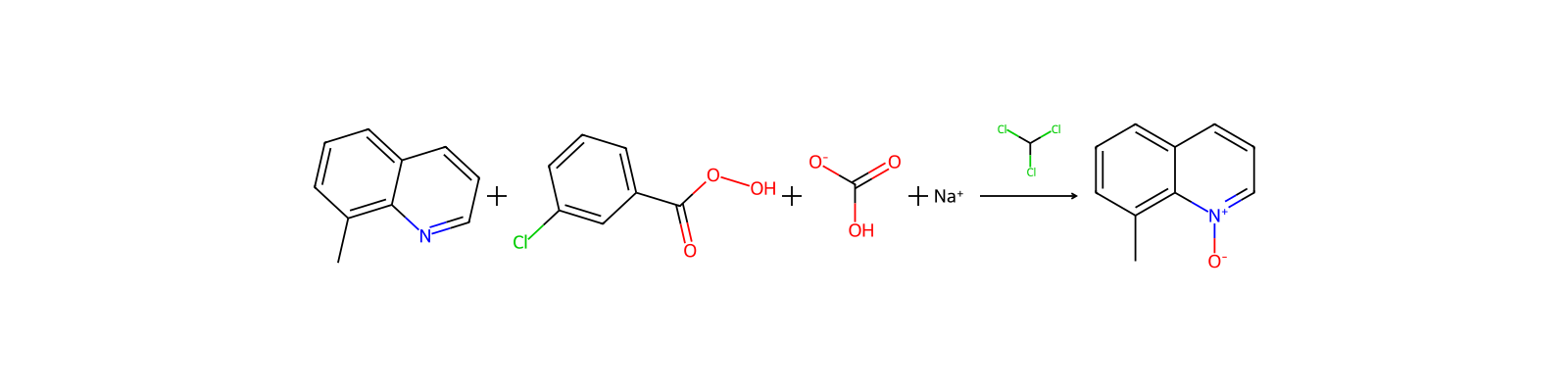
DefinitionChEBI: A methylquinoline carrying a methyl substituent at position 8.
Zugehörige Reaktionen
25


Verknüpfte Notizen
Wird geladen…