Grundinformationen
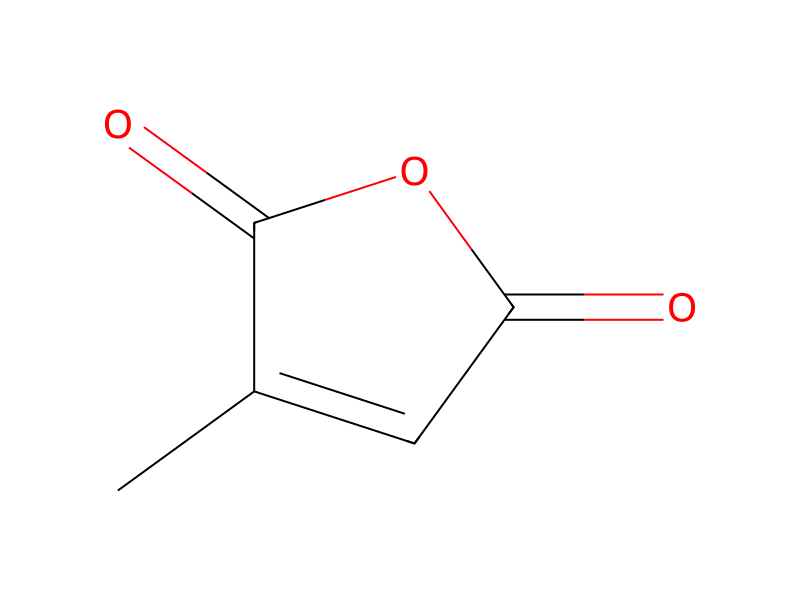
- Standard-SMILES
CC1=CC(=O)OC1=O- InChIKey
AYKYXWQEBUNJCN-UHFFFAOYSA-N- Summenformel
- C5H4O3
- Durchschnittliche Molmasse
- 112,08 g/mol
- Monoisotopische Masse
- 112,01604399
Überblick
Methylmaleic anhydrides.
Namen und Bezeichner
- Bevorzugter Name
- Citraconic Anhydrides
- IUPAC
- 3-methylfuran-2,5-dione
- Lokaler Name
- Citraconsäureanhydrid
- Englischer Name
- Citraconic anhydride
- Summenformel
- C5H4O3
- Molmasse
- 112.08
Namen und Synonyme
Citraconic AnhydridesAnhydride, CitraconicAnhydrides, CitraconicMethylmaleic AnhydridesAnhydrides, Methylmaleic2 Methylmaleic AnhydrideAnhydride, 2-MethylmaleicRefChem:388886Citraconic anhydride616-02-43-methylfuran-2,5-dione2-Methylmaleic anhydride
Weitere Namen anzeigen
CTA3-methyl-furan-2,5-dionealpha-methylmaleicanhydridemethyl-maleicanhydrid3-methyl-5-furandioneIndobufen Impurity 53
2,5-Furandione, 3-methyl-METHYLMALEIC ANHYDRIDE3-Methylmaleic anhydrideCitraconic acid anhydrideMonomethylmaleic anhydrideMaleic anhydride, methyl-3-methyl-2,5-dihydrofuran-2,5-dione3-Methyl-2,5-furandione
Datenbank-Bezeichner
- CAS
616-02-4- PubChem CID
- 12012
- DTXSID
DTXSID8060660- ChEMBL
CHEMBL398893- UNII
- 105NP7PMXX
- EC Number
- 210-459-0
- Nikkaji
- J55.438C、J679.309F
Eigenschaften
Berechnete Struktureigenschaften
- XLogP
- 0,2
- Polarare Oberfläche (TPSA)
- 43,4 Ų
- H-Brücken-Donoren
- 0
- H-Brücken-Akzeptoren
- 3
- Frei drehbare Bindungen
- 0
- Schwere Atome
- 8
- Formalladung
- 0
- Komplexität
- 178
Experimentelle und physikochemische Eigenschaften
PolymersPlastics & Rubber -> Acid Anhydrides, Cyclic
SpringerMaterials PropertiesBoiling point
Density1.2469 @ 16 °C/4 °C
Color/FormCOLORLESS LIQUID
SolubilitySOL IN ALCOHOL, ETHER, ACETONE
Boiling Point213-214 °C @ 760 MM HG
Melting Point7-8 °C
Vapor Pressure1 MM HG @ 47.1 °C
Refractive IndexIndex of refraction: 1.4716 at 21 °C/D
Physical DescriptionColorless liquid; mp = 7-8 deg C; [Hawley] Clear almost colorless liquid; mp = 7 deg C; [MSDSonline]
Other Experimental PropertiesDECOMP IN WATER
Physikochemische Eigenschaften
- Schmelzpunkt
- 6 · 6-10 °C (lit.)
- Siedepunkt
- 213 · 213-214 °C (lit.)
- Dichte
- 1.247 g/mL · 1.247 g/mL at 25 °C (lit.)
- Dampfdichte
- 4 · 4 (vs air)
- Dampfdruck
- 1.3 hPa · 1.3 hPa ( 47 °C)
- Brechungsindex
- 20 · n20/D 1.471(lit.)
- Flammpunkt
- 215 °F · 215 °F
- storage temp.
- 2 · Inert atmosphere,2-8°C
- Löslichkeit
- Chloroform (Slightly), Methanol (Slightly)
- Aggregatzustand
- Liquid
- Farbe
- Clear colorless to very slightly yellow
- Wasserlöslichkeit
- decomposes
- BRN
- 1835 · 1835
- Dielectric constant
- 40.3 · 40.3(20℃)
- InChI
- 1S/C5H4O3/c1-3-2-4(6)8-5(3)7/h2H,1H3
- InChIKey
- AYKYXWQEBUNJCN-UHFFFAOYSA-N
- SMILES
- CC1=CC(=O)OC1=O
- LogP
- -0.232 · -0.232 (est)
- CAS Datenbank
- 616 · 616-02-4(CAS DataBase Reference)
- NIST chemische Informationen
- 2 · 2,5-Furandione, 3-methyl-(616-02-4)
- EPA chemische Informationen
- 2 · 2,5-Furandione, 3-methyl- (616-02-4)
Sicherheit und Regulatorisches
GHS-Klassifizierung
GHS Classification
Danger
H311 (23.9%): Toxic in contact with skin [Danger Acute toxicity, dermal]
P233, P260, P261, P262, P264, P264+P265, P270, P271, P272, P280, P284, P301+P330+P331, P302+P352, P302+P361+P354, P304+P340, P305+P354+P338, P316, P317, P319, P321, P333+P317, P342+P316, P361+P364, P362+P364, P363, P403, P403+P233, P405, and P501 (click each P-code to see the statement)
Aggregated GHS information provided per 222 reports by companies from 12 notifications to the ECHA C&L Inventory. Each notification may be associated with multiple companies.
Gefahrenhinweise
Regulatory InformationStatus: Active Update: 24-02-2017 https://echa.europa.eu/registration-dossier/-/registered-dossier/16743
Hazards SummaryAn irritant; [MSDSonline] See Maleic anhydride. See ACID ANHYDRIDES.
Hazard Classes and CategoriesAcute Tox. 3 (23.9%)
Toxikologische Informationen
Non-Human Toxicity Excerpts
... CITRACONIC ACID ANHYDRIDE TESTED FULL STRENGTH BY DROP APPLICATION TO RABBITS EYES CAUSED SEVERE INJURY LIKE THAT CAUSED BY ACETIC ACID.
VARIOUS CHEMICAL GROUPS WERE EVALUATED FOR THEIR SKIN SENSITIZATION POTENTIAL IN THE GUINEA PIG. CITRACONIC ANHYDRIDE SENSITIZED 3 OF 10 GUINEA PIGS.
Sicherheitsdaten
- F
- 10-21
- wgk
- 3
- tsca
- TSCA listed
- ridadr
- UN 2810 6.1/PG 3
- hs_code
- 29171990
- RTECS-Nr.
- GE6825000
- risk_code
- 23/24/25-36/37/38-42/43-34-24
- hazard_code
- T
- safety_code
- 26-36/37/39-45-28A-23-36/37
- hazard_class
- 6.1
- packing_group
- III
- Speicherklasse
- 8A - Combustible corrosive hazardous materials
- Giftige Stoffe Daten
- 616-02-4(Hazardous Substances Data)
- Hazard Classifications
- Eye Dam. 1Resp. Sens. 1Skin Corr. 1BSkin Sens. 1
Chemie und Industrie
Verwendung und Herstellung
Uses
Used as reagent for alkalies, alcohols, and amines; as monomer for specialty unsaturated polyester resins; [HSDB]
REAGENT FOR ALKALIES, ALCOHOLS, AND AMINES
MONOMER FOR SPECIALTY UNSATURATED POLYESTER RESINS
ANALYTICAL REAGENT FOR ALKALIES, ALCOHOLS & AMINES
U.S. Production(1979) AT LEAST 4.54X10+8 GRAMS
Methods of Manufacturing
PRODUCTION OF CITRACONIC ANHYDRIDE FROM ITACONIC ACID.
VACUUM PYROLYSIS OF CITRIC OR ITACONIC ACID
Formulations/PreparationsGRADES: REAGENT.
General Manufacturing Information2,5-Furandione, 3-methyl-: ACTIVE
Anwendungen
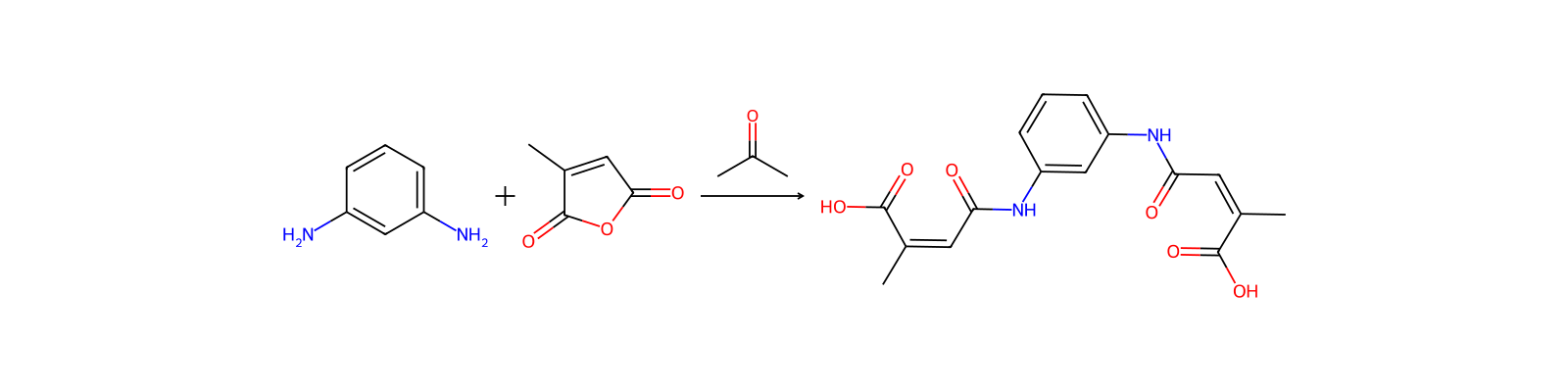
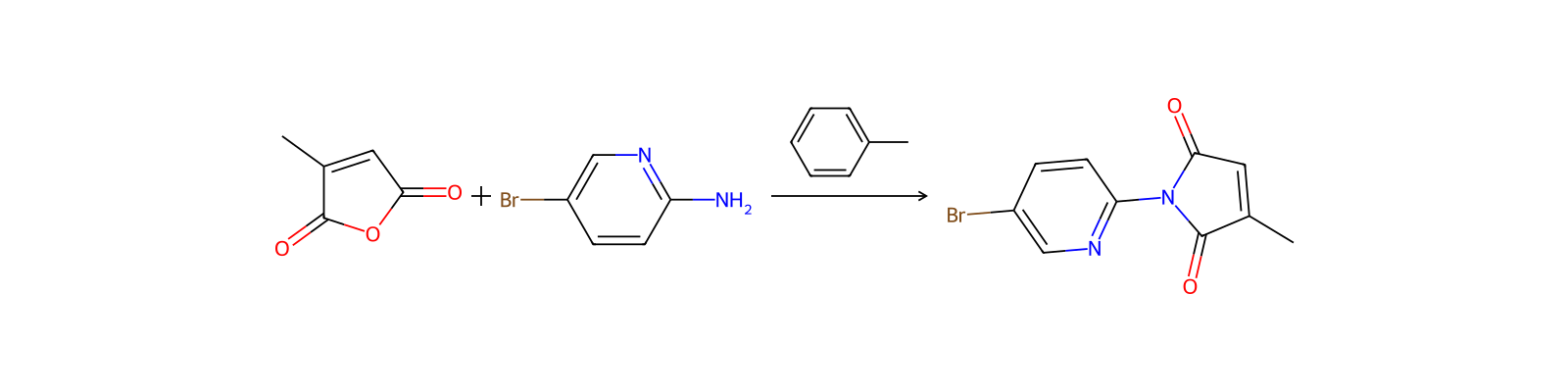
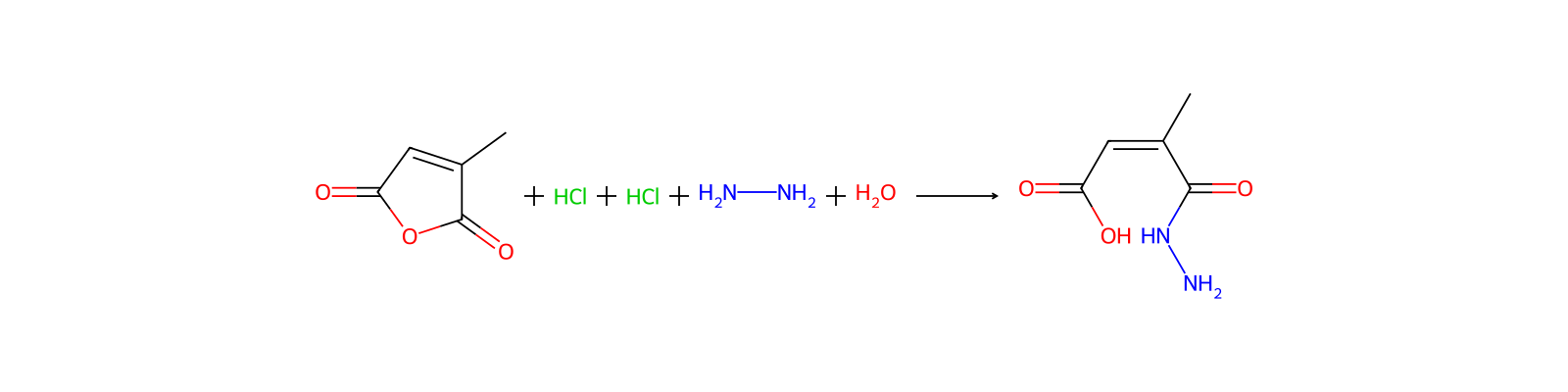
VerwendenCitraconic anhydride is used as a monomer for specialty unsaturated polyester resins. It is used to prepare bicyclic pyrrolidines, maleimides and co- and terpolymers. It is also used for the protection of N-terminal amino acids. Further, it is involved in the preparation of clothing ping acid and its amide. In addition to this, it is selectively used for the isolation of histidyl peptides.
Vor- und nachgelagerte Produkte
Vorgelagerte Rohstoffe
Nachgelagerte Produkte
Anbieter50 Anbieter
梯希爱(上海)化成工业发展有限公司021-67121386 · [email protected]
上海阿拉丁生化科技股份有限公司400-6206333 13167063860 · [email protected]
常州佳德医药科技有限公司18006124028
韶关高科祥高新材料有限公司15089879907
Dayang Chem (Hangzhou) Co.,Ltd.+86-0571-88938639 17705817739 · [email protected]
南京兰亚化工贸易有限公司+86-25-8331-5620 · [email protected]
韶远科技(上海)有限公司021-50795510 4000665055 · [email protected]
科瑞迪化学400-821-5857 021-64326257 · [email protected]
Syntechem Co.,Ltd[email protected]
上海迈瑞尔生化科技有限公司4006356688 18621169109 · [email protected]
阿法埃莎(中国)化学有限公司400-6106006 · [email protected]
安耐吉化学&3A(安徽泽升科技股份有限公司)400-0056266 · [email protected]
石家庄斯迪亚诺精细化工有限公司0311-89250318 13582355795 · [email protected]
上海瀚鸿科技股份有限公司021-54306202 13764082696 · [email protected]
上海柯维化学技术有限公司021-64609169 18901607656 · [email protected]
山东万和化学科技有限公司18854132367
嘉兴市艾森化工有限公司0573-85285100 18627885956 · [email protected]
山东西亚化学有限公司13355009207 13355009207 · [email protected]
玛雅试剂+86 (573) 82222445 (0)18006601000 452520369 · [email protected]
天津希恩思生化科技有限公司400 638 7771 · [email protected]
湖南汇百侍生物科技有限公司0731-85526065 13308475853 · [email protected]
斯百全化学(上海)有限公司021-021-021-67601398-809-809-809 15221380277 · [email protected]
艾科试剂4008-755-333 18080918076 · [email protected]
上海思域化工科技有限公司86-21-34053660 · [email protected]
赛默飞世尔科技(中国)有限公司800-810-5118 · [email protected]
北京伊诺凯科技有限公司400-810-7969 010-59572699 · [email protected]
上海健超生物科技有限公司150-2103-5486 18017383231 · [email protected]
TCI AMERICA800-4238616 · [email protected]
TOKYO CHEMICAL INDUSTRY CO., LTD.03-36680489 · [email protected]
TCI Europe320-37350700 · [email protected]
上海贤鼎生物科技有限公司4009209199 · [email protected]
深圳振强药物研发有限公司0755-66853366 13670046396 · [email protected]
Chempioneer Limited+86-398-3831668 · [email protected]
上海将来实业股份有限公司400-0066400 13621662912 · [email protected]
安徽科迪达化工有限公司0554-2106669 · [email protected]
HBCChem, Inc.+1-510-219-6317 · [email protected]
郑州鸿晟医药科技有限公司0371-0371-13526885213 15637198702 · [email protected]
四川省维克奇生物科技有限公司028-81700200 18116577057 · [email protected]
成都零六生物科技有限公司400-1166-196 13458535857 · [email protected]
上海创赛科技有限公司400-6087598 15021221957 · [email protected]
上海馨远医药科技有限公司021-24206007 13764915196 · [email protected]
上海御略医药科技有限公司021-60345187 13671753212 · [email protected]
上海麦克林生化科技股份有限公司15221275939 15221275939 · [email protected]
杭州杰恒化工有限公司0571-87396432 · [email protected]
上海嵩爰化工科技有限公司010-1234567 18521000990 · [email protected]
江苏艾康生物医药研发有限公司025-66028182 17714375163 · [email protected]
湖北巨胜科技有限公司027-59599241 18871490274 · [email protected]
池州凯隆进出口贸易有限公司[email protected]
Sigma-Aldrich西格玛奥德里奇(上海)贸易有限公司021-61415566 800-8193336 · [email protected]
潍坊市前进精细化工有限公司18753684562 · [email protected]
Zugehörige Reaktionen
57




Verknüpfte Notizen
Wird geladen…