
Metacetamol
3-Hydroxyacetanilide
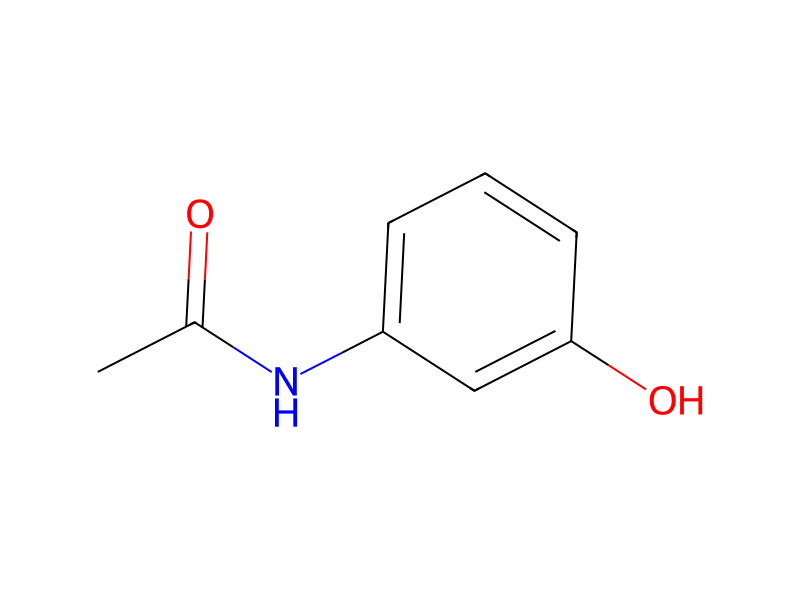
Grundinformationen
- CAS
621-42-1- Standard-SMILES
CC(=O)Nc1cccc(O)c1- InChIKey
QLNWXBAGRTUKKI-UHFFFAOYSA-N- Summenformel
- C8H9NO2
- Durchschnittliche Molmasse
- 151,16 g/mol
- Monoisotopische Masse
- 151,06332853
Überblick
N-acetyl-m-aminophenol is a light gray solid. (NTP, 1992)
Namen und Bezeichner
- Bevorzugter Name
- 3-Hydroxyacetanilide
- IUPAC
- N-(3-hydroxyphenyl)acetamide
- Lokaler Name
- Metacetamol
- Englischer Name
- 3-ACETAMIDOPHENOL
- Summenformel
- C8H9NO2
- Molmasse
- 151.16
Namen und Synonyme
3-Hydroxyacetanilideacetyl-m-aminophenolRefChem:8111923-AcetamidophenolMetacetamolN-(3-Hydroxyphenyl)acetamide621-42-13'-Hydroxyacetanilidem-AcetamidophenolN-Acetyl-m-aminophenolPeditussAcetamide, N-(3-hydroxyphenyl)-
Weitere Namen anzeigen
Nebsbs479BS 479
MetalidPyrapapRystal3-(Acetylamino)phenolM-HYDROXYACETANILIDEm-(Acetylamino)phenolBS 749Metacetamolum
Datenbank-Bezeichner
- CAS
621-42-1- PubChem CID
- 12124
- DTXSID
DTXSID3022089- ChEMBL
CHEMBL9419- ChEBI
CHEBI:76987- UNII
- V942ZCN81H
- EC Number
- 210-687-0
- Nikkaji
- J6.832B
Eigenschaften
Berechnete Struktureigenschaften
- XLogP
- 0,7
- Polarare Oberfläche (TPSA)
- 49,3 Ų
- H-Brücken-Donoren
- 2
- H-Brücken-Akzeptoren
- 2
- Frei drehbare Bindungen
- 1
- Schwere Atome
- 11
- Formalladung
- 0
- Komplexität
- 147
Experimentelle und physikochemische Eigenschaften
DrugsPharmaceutical
LogP0.73
Solubilityless than 1 mg/mL at 72 °F (NTP, 1992)
Melting Point406 °F (NTP, 1992)
Physical DescriptionN-acetyl-m-aminophenol is a light gray solid. (NTP, 1992)
Collision Cross Section
129.8 Ų [M+H]+ [CCS Type: TW; Method: Major Mix IMS/Tof Calibration Kit (Waters)]
137.29 Ų [M+Na]+ [CCS Type: TW; Method: calibrated with polyalanine and drug standards]
130.6 Ų [M+H]+ [CCS Type: TW; Method: calibrated with polyalanine and drug standards]
Physikochemische Eigenschaften
- Schmelzpunkt
- 145 · 145-148 °C(lit.)
- Siedepunkt
- 273.17 °C · 273.17°C (rough estimate)
- Dichte
- 1.249 · 1.249
- Brechungsindex
Sicherheit und Regulatorisches
Sicherheitsangaben dienen nur zur Orientierung und ersetzen weder das Sicherheitsdatenblatt (SDB) des Lieferanten noch geltende Vorschriften oder eine fachliche Bewertung.
GHS-Klassifizierung
GHS Classification
Warning
H315 (100%): Causes skin irritation [Warning Skin corrosion/irritation]
P261, P264, P264+P265, P271, P280, P302+P352, P304+P340, P305+P351+P338, P319, P321, P332+P317, P337+P317, P362+P364, P403+P233, P405, and P501 (click each P-code to see the statement)
Aggregated GHS information provided per 46 reports by companies from 5 notifications to the ECHA C&L Inventory. Each notification may be associated with multiple companies.
Gefahrenhinweise
Regulatory Information
Commission Regulation No 844/2012
3-Acetamidophenol: Does not have an individual approval but may be used under an appropriate group standard
DOT LabelPoison
Fire HazardsFlash point data for this compound are not available. It is probably combustible. (NTP, 1992)
Health HazardsSYMPTOMS: Symptoms of exposure to this compound may include irritation of the skin, eyes and mucous membranes.
Reactive GroupAmides and Imides
Reactivity Profile
Phenols do not behave as organic alcohols, as one might guess from the presence of a hydroxyl (-OH) group in their structure. Instead, they react as weak organic acids. Phenols and cresols are much weaker as acids than common carboxylic acids (phenol has pKa = 9.88). These materials are incompatible with strong reducing substances such as hydrides, nitrides, alkali metals, and sulfides. Flammable gas (H2) is often generated, and the heat of the reaction may ignite the gas. Heat is also generated by the acid-base reaction between phenols and bases. Phenols are sulfonated very readily (for example, by concentrated sulfuric acid at room temperature). The reactions generate heat. Phenols are also nitrated very rapidly, even by dilute nitric acid. Nitrated phenols often explode when heated. Many of them form metal salts that tend toward detonation by rather mild shock. Flammable gases are formed by the reaction of organic amides with strong reducing agents. Amides are very weak bases (weaker than water). Mixing amides with dehydrating agents such as P2O5 or SOCl2 generates the corresponding nitrile. The combustion of these compounds generates mixed oxides of nitrogen (NOx).
Chemie und Industrie
Pharmakologische Informationen
MeSH Pharmacological ClassificationCompounds capable of relieving pain without the loss of CONSCIOUSNESS.
Verwendung und Herstellung
General Manufacturing InformationAcetamide, N-(3-hydroxyphenyl)-: ACTIVE
Vor- und nachgelagerte Produkte
Vorgelagerte Rohstoffe
Nachgelagerte Produkte
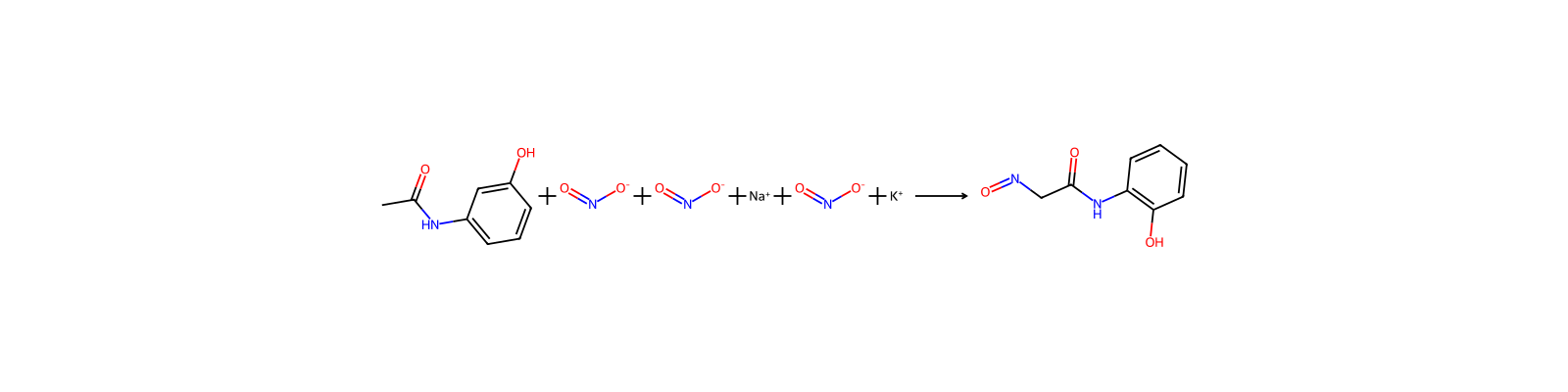
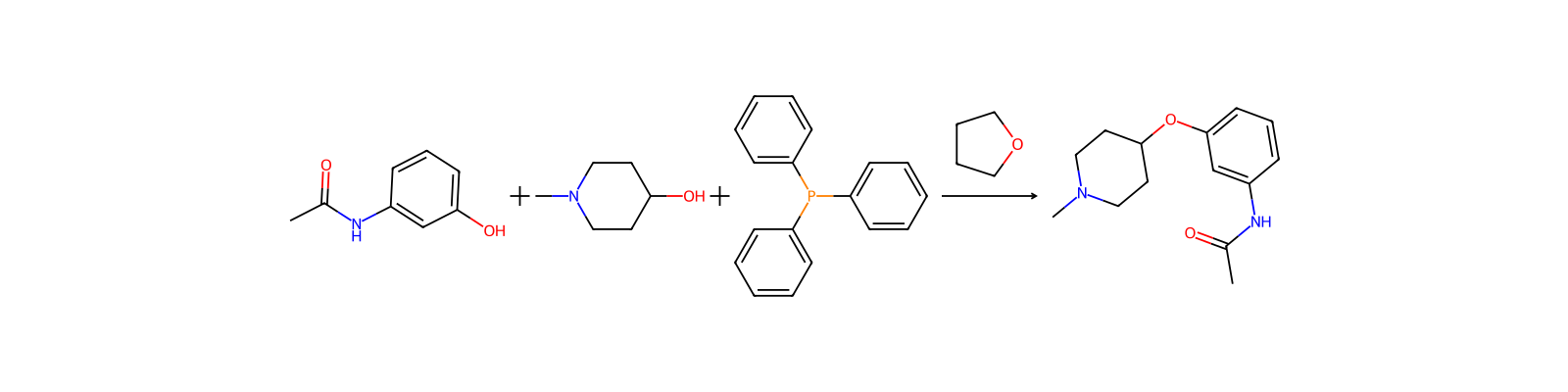
Zugehörige Reaktionen
161




Notizen zur Verbindung
Wird geladen…