

Grundinformationen
- Standard-SMILES
CC(C)(C)C=O- InChIKey
FJJYHTVHBVXEEQ-UHFFFAOYSA-N- Summenformel
- C5H10O
- Durchschnittliche Molmasse
- 86,13 g/mol
- Monoisotopische Masse
- 86,07316494
Überblick
2,2-dimethylpropanal is a member of the class of propanals that is propanal substituted by two methyl groups at position 2. It is a member of propanals and a 2-methyl-branched fatty aldehyde.
Namen und Bezeichner
- Bevorzugter Name
- Pivalaldehyde
- IUPAC
- 2,2-dimethylpropanal
- Lokaler Name
- Pivalaldehyd
- Englischer Name
- Pivaldehyde
- Summenformel
- C5H10O
- Molmasse
- 86.13
Namen und Synonyme
Trimethylacetaldehyde630-19-3PIVALALDEHYDEPivaldehyde2,2-DimethylpropanalNeopentanal2,2-DimethylpropionaldehydePivalic aldehydeNEOPENTALDEHYDESSC20260QWalpha,alpha-DimethylpropionaldehydeNSC-22043
Weitere Namen anzeigen
PALtert-Pentanal2,2-dimethyl-propanapropanal,2,2-dimethyl-LRIT1LRRC21
DTXSID2060888CHEBI:141557RefChem:174620DTXCID3043609211-134-6Propanal, 2,2-dimethyl-MFCD00006962tert-Valeraldehyde
Datenbank-Bezeichner
- CAS
630-19-3- PubChem CID
- 12417
- DTXSID
DTXSID2060888- ChEBI
CHEBI:141557- UNII
- SSC20260QW
- EC Number
- 211-134-6
- Nikkaji
- J102.084F
Eigenschaften
Berechnete Struktureigenschaften
- XLogP
- 1,1
- Polarare Oberfläche (TPSA)
- 17,1 Ų
- H-Brücken-Donoren
- 0
- H-Brücken-Akzeptoren
- 1
- Frei drehbare Bindungen
- 1
- Schwere Atome
- 6
- Formalladung
- 0
- Komplexität
- 49,4
Experimentelle und physikochemische Eigenschaften
Chemical ClassesOther Classes -> Aldehydes
SpringerMaterials PropertiesSchoenflies notation
Vapor Pressure71.2 [mmHg]
Physical DescriptionColorless liquid; [Merck Index] mp = 6 deg C; [Alfa Aesar MSDS]
Physikochemische Eigenschaften
- Schmelzpunkt
- 6 °C · 6 °C(lit.)
- Siedepunkt
- 74 °C730 · 74 °C730 mm Hg(lit.)
- Dichte
- 0.793 g/mL · 0.793 g/mL at 25 °C(lit.)
- Brechungsindex
- 20 · n20/D 1.378(lit.)
- Flammpunkt
- 4 °F · 4 °F
- storage temp.
- 2 · 2-8°C
- Löslichkeit
- Chloroform, Ethyl Acetate (Slightly), Methanol (Slightly)
- Aggregatzustand
- Liquid
- Farbe
- Clear colorless
- Wichte
- 0.793 · 0.793
- Wasserlöslichkeit
- Negligible
- BRN
- 506060 · 506060
- Henry's Law Constant
- 4.1 · 4.1×10-2 mol/(m3Pa) at 25℃, Wang et al. (2017)
- Dielectric constant
- 9.05 · 9.0500000000000007
- Stabilität
- Air Sensitive, Volatile
- InChI
- 1S/C5H10O/c1-5(2,3)4-6/h4H,1-3H3
- InChIKey
- FJJYHTVHBVXEEQ-UHFFFAOYSA-N
- SMILES
- [H]C(=O)C(C)(C)C
- CAS Datenbank
- 630 · 630-19-3(CAS DataBase Reference)
- NIST chemische Informationen
- 2 · Propanal, 2,2-dimethyl-(630-19-3)
- EPA chemische Informationen
- 2 · Propanal, 2,2-dimethyl- (630-19-3)
Sicherheit und Regulatorisches
GHS-Klassifizierung
GHS Classification
Danger
H225 (100%): Highly Flammable liquid and vapor [Danger Flammable liquids]
P210, P233, P240, P241, P242, P243, P261, P264, P271, P280, P302+P352, P303+P361+P353, P304+P340, P319, P321, P332+P317, P362+P364, P370+P378, P403+P233, P403+P235, P405, and P501 (click each P-code to see the statement)
Aggregated GHS information provided per 66 reports by companies from 10 notifications to the ECHA C&L Inventory. Each notification may be associated with multiple companies.
Gefahrenhinweise
Regulatory InformationStatus: Active Update: 25-09-2020 https://echa.europa.eu/registration-dossier/-/registered-dossier/31679
Hazards SummaryAn irritant; [Alfa Aesar MSDS]
Hazard Classes and CategoriesFlam. Liq. 2 (100%)
Sicherheitsdaten
- F
- 8
- wgk
- 3
- tsca
- TSCA listed
- ridadr
- UN 1989 3/PG 2
- hs_code
- 29121900
- risk_code
- 11-37/38-43
- hazard_code
- F,Xi,F+
- safety_code
- 16-23-33-24
- hazard_class
- 3
- packing_group
- III
- Speicherklasse
- 3 - Flammable liquids
- Hazard Classifications
- Eye Irrit. 2Flam. Liq. 2Skin Irrit. 2STOT SE 3
Chemie und Industrie
Verwendung und Herstellung
UsesUsed as a reagent in synthetic organic chemistry; [Merck Index]
General Manufacturing InformationPropanal, 2,2-dimethyl-: ACTIVE
Anwendungen
BeschreibungTrimethylacetaldehyde (also known as Pivaldehyde) is the trimethyl form of acetaldehyde. It is an aldehyde with a sterically bulky R group, the tertiary-butyl group being attached to the carbonyl, >C=O. It is a useful reagent in organic synthesis, pharmaceuticals, agrochemicals and dyestuff. It is useful in streoselective synthesis application as well as in aldol condensation reactions. As a derivative of acetaldehyde, trimethyl acetaldehyde can be used for the production of acetate. It can also be used as the precursor for manufacturing of pyridine derivatives, pentaerythritol, and crotonaldehyde.
VerwendenCommonly used building block in aldol condensation reactions.
Vor- und nachgelagerte Produkte
Vorgelagerte Rohstoffe
Nachgelagerte Produkte
Anbieter50 Anbieter
国药集团化学试剂有限公司86-21-63210123 · [email protected]
梯希爱(上海)化成工业发展有限公司021-67121386 · [email protected]
衢州润东化工有限公司0570-8789886 18892685668 · [email protected]
艾斯提克(山东)生物医药有限公司21-58999881 15623240527 · [email protected]
上海阿拉丁生化科技股份有限公司400-6206333 13167063860 · [email protected]
科瑞迪化学400-821-5857 021-64326257 · [email protected]
Syntechem Co.,Ltd[email protected]
上海迈瑞尔生化科技有限公司4006356688 18621169109 · [email protected]
武汉易泰科技有限公司上海分公司18930552037 · [email protected]
阿法埃莎(中国)化学有限公司400-6106006 · [email protected]
安耐吉化学&3A(安徽泽升科技股份有限公司)400-0056266 · [email protected]
上海瀚鸿科技股份有限公司021-54306202 13764082696 · [email protected]
邯郸市华骏化工有限公司13303008150 · [email protected]
南京欣丰康生物科技有限公司025-84683399 13952017251 · [email protected]
上海相辉医药科技有限公司13761987713 · [email protected]
上海景颜化工科技有限公司13817811078 · [email protected]
绍兴中磊新材料有限公司0575-82040869 13346048991
山东西亚化学有限公司13355009207 13355009207 · [email protected]
玛雅试剂+86 (573) 82222445 (0)18006601000 452520369 · [email protected]
四川库利南科技有限公司400-1166-196 18981987031 · [email protected]
天津希恩思生化科技有限公司400 638 7771 · [email protected]
斯百全化学(上海)有限公司021-021-021-67601398-809-809-809 15221380277 · [email protected]
艾科试剂4008-755-333 18080918076 · [email protected]
上海思域化工科技有限公司86-21-34053660 · [email protected]
赛默飞世尔科技(中国)有限公司800-810-5118 · [email protected]
北京伊诺凯科技有限公司400-810-7969 010-59572699 · [email protected]
上海健超生物科技有限公司150-2103-5486 18017383231 · [email protected]
TCI AMERICA800-4238616 · [email protected]
TOKYO CHEMICAL INDUSTRY CO., LTD.03-36680489 · [email protected]
TCI Europe320-37350700 · [email protected]
上海贤鼎生物科技有限公司4009209199 · [email protected]
上海乐晨国际贸易有限公司021-67256163 · [email protected]
上海将来实业股份有限公司021-61552785 · [email protected]
安徽科迪达化工有限公司0554-2106669 · [email protected]
HBCChem, Inc.+1-510-219-6317 · [email protected]
日照力德士化工有限公司010-51268198 · [email protected]
美岚实业(上海)有限公司021-58958189 · [email protected]
南京顺象医药科技有限公司025-86819868 13951004015
重庆星灿医药科技有限公司13594048950 19923294409 · [email protected]
上海爱蝶实业有限公司021-58957966 18930537195 · [email protected]
广拓化学(上海)有限公司021-60899189-8001 18918189673 · [email protected]
雷丁试剂0510-85629785 18013409632 · [email protected]
上海御略医药科技有限公司021-60345187 13671753212 · [email protected]
上海马氏化学科技有限公司19916721580 · [email protected]
上海闯欣医药科技有限公司13621615409 · [email protected]
上海麦克林生化科技股份有限公司15221275939 15221275939 · [email protected]
上海嵩爰化工科技有限公司010-1234567 18521000990 · [email protected]
北京欣赛维化学科技有限公司010-56218822 13717722232 · [email protected]
上海凯赛化工有限公司021-33516722 13701817765 · [email protected]
上海孚一生物科技有限公司+86 (21) 61124340
Zugehörige Reaktionen
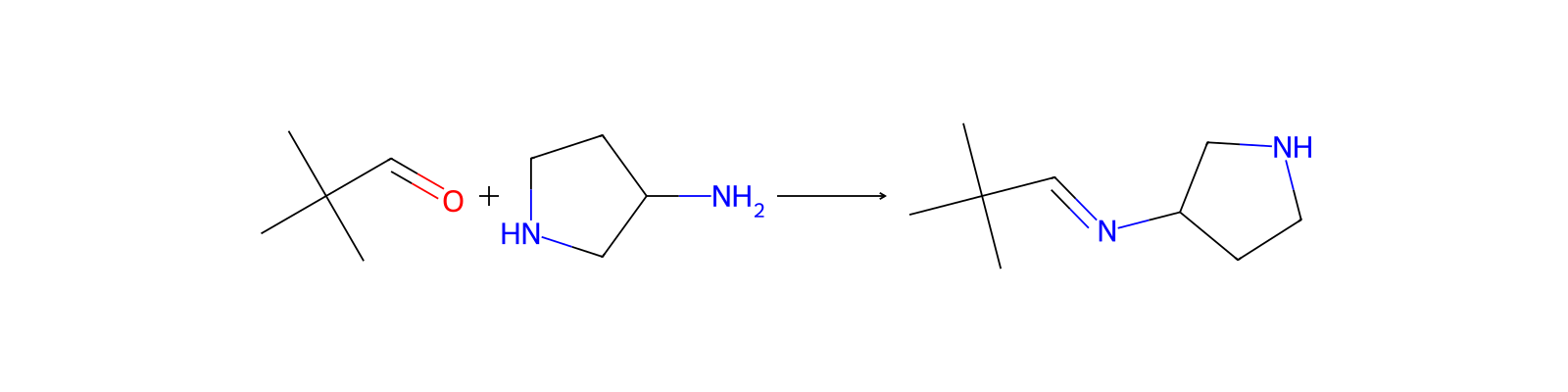
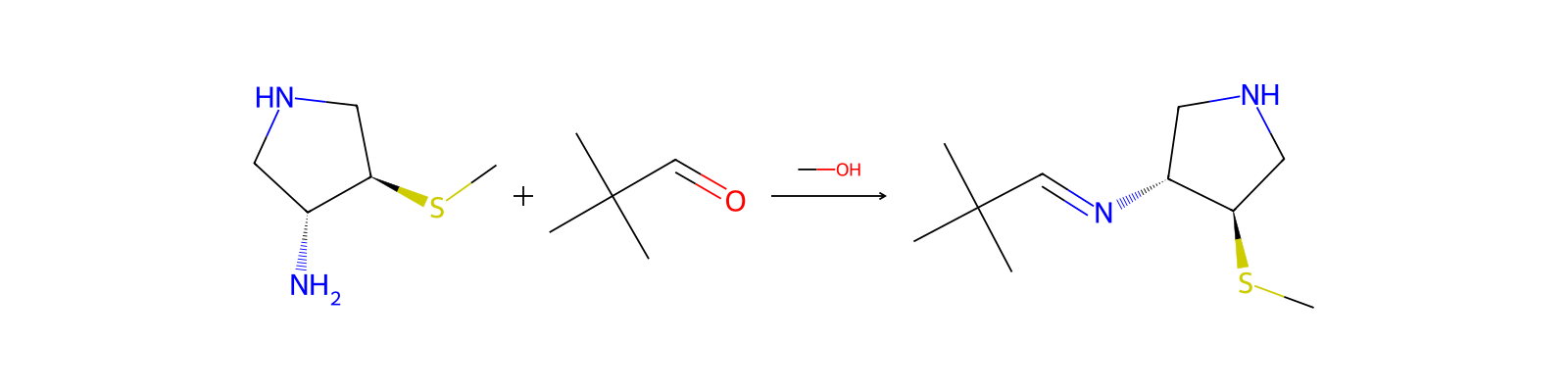
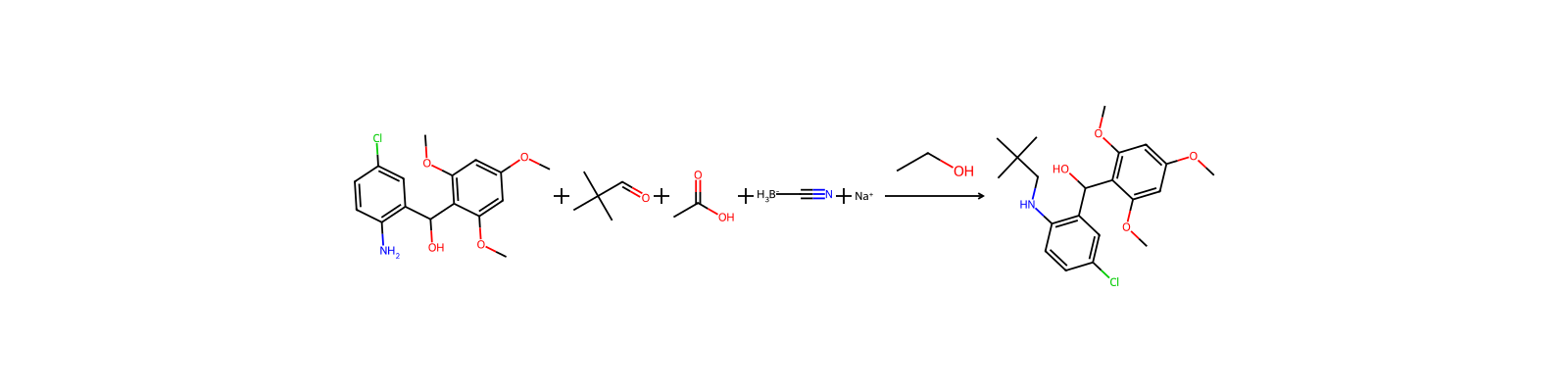
342




Verknüpfte Notizen
Wird geladen…