
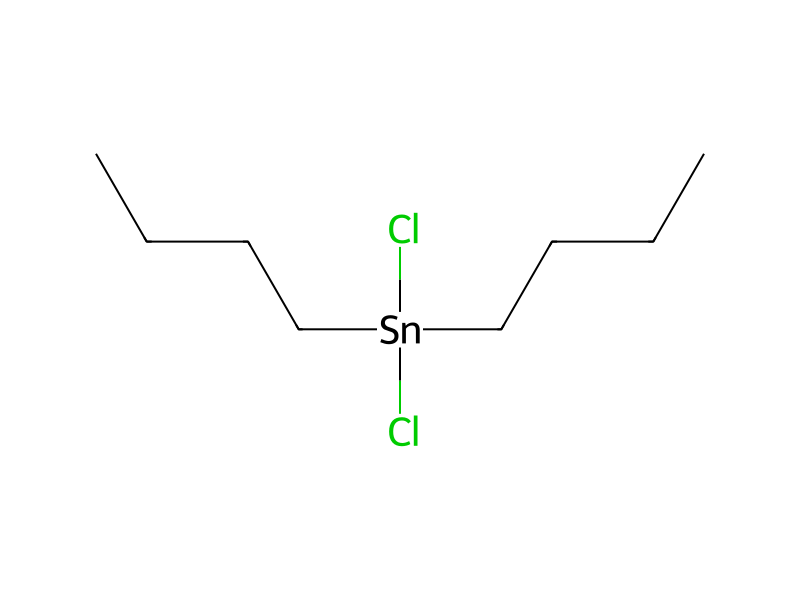
Grundinformationen
- Standard-SMILES
CCC[CH2][Sn]([Cl])([Cl])[CH2]CCC- InChIKey
RJGHQTVXGKYATR-UHFFFAOYSA-L- Summenformel
- C8H18Cl2Sn
- Durchschnittliche Molmasse
- 303,84 g/mol
Überblick
Dibutyltin dichloride is an organotin compound. Tin is a chemical element with the symbol Sn and atomic number 50. It is a natural component of the earth's crust and is obtained chiefly from the mineral cassiterite, where it occurs as tin dioxide. (L307, L309)
Namen und Bezeichner
- Bevorzugter Name
- Dibutyltin dichloride
- IUPAC
- dibutyl(dichloro)stannane
Namen und Synonyme
DIBUTYLTIN DICHLORIDE683-18-1DibutyldichlorostannaneDi-n-butyltin dichlorideDibutyldichlorotinDibutyltin chlorideStannane, dibutyldichloro-DichlorodibutyltinDichlorodibutylstannaneDibutylstannium dichlorideDi-n-butyl-zinn-dichloridChlorid di-n-butylcinicity
Weitere Namen anzeigen
Tin, dibutyl-, dichlorideDTXSID8027292Stannane, dibutyldichloroJ4AQN88R8PNSC-2604DTXCID607292DBTC dichlorideRefChem:132966
Datenbank-Bezeichner
- CAS
683-18-1- PubChem CID
- 12688
- UNII
- J4AQN88R8P
- EC Number
- 211-670-0
Eigenschaften
Berechnete Struktureigenschaften
- Polarare Oberfläche (TPSA)
- 0 Ų
- H-Brücken-Donoren
- 0
- H-Brücken-Akzeptoren
- 0
- Frei drehbare Bindungen
- 6
- Schwere Atome
- 11
- Formalladung
- 0
- Komplexität
- 84,1
Experimentelle und physikochemische Eigenschaften
Chemical ClassesMetals -> Tin Compounds, Organic
LogPlog Kow=0.97
Density1.36 @ 24 °C/D
Color/Form
White crystalline solid
Light tan or colorless solid or semisolid
Solubility
SOL IN ETHER, BENZENE, ALCOHOL
Insoluble in cold water; hydrolyzed in hot water.
Flash Point335 °F (open cup)
Boiling Point135 °C @ 10 mm Hg
Decomposition
DECOMP BY HOT & COLD WATER, DECOMP AT 113.6 °C, 60 MM HG
... Emits highly toxic fumes of hydrochloric acid.
Melting Point43 °C
Vapor Density10.5 (Air = 1)
Vapor Pressure2 mm Hg at 100 °C
Food Contact SubstancesFCS -> FDA Inventory of Food Contact Substances Listed in 21 CFR
Sicherheit und Regulatorisches
GHS-Klassifizierung
GHS Classification
Danger
H301: Toxic if swallowed [Danger Acute toxicity, oral]
P203, P260, P264, P270, P271, P273, P280, P284, P301+P316, P301+P330+P331, P302+P352, P302+P361+P354, P304+P340, P305+P354+P338, P316, P317, P318, P319, P320, P321, P330, P362+P364, P363, P391, P403+P233, P405, and P501 (click each P-code to see the statement)
Danger
H301 (99.2%): Toxic if swallowed [Danger Acute toxicity, oral]
P203, P260, P261, P264, P264+P265, P270, P271, P272, P273, P280, P284, P301+P316, P301+P330+P331, P302+P352, P302+P361+P354, P304+P340, P305+P354+P338, P308+P316, P316, P317, P318, P319, P320, P321, P330, P333+P317, P362+P364, P363, P391, P403+P233, P405, and P501 (click each P-code to see the statement)
Gefahrenhinweise
Regulatory Information
Chemical: Stannane, dibutyldichloro-
Hazard Traits - Reproductive Toxicity
Stannane, dibutyldichloro- is listed on the EPA's Chemical Data Reporting (CDR) system. Manufacturers and importers of Stannane, dibutyldichloro- are required to report information about their production and use of this chemical to the EPA under the Toxic Substances Control Act (TSCA). (40 eCFR Part 711)
Status: Active Update: 13-11-2020 https://echa.europa.eu/registration-dossier/-/registered-dossier/14508
Substance: Dibutyltin dichloride (DBTC)
Dibutyltin dichloride: Does not have an individual approval but may be used under an appropriate group standard
Other Safety InformationIMAP assessments - Dibutlytin chloride and hydrogen borate: Human health tier II assessment
Fire PotentialCombustible when exposed to heat or flame. ... Can react vigorously with oxidizing materials.
Hazards Summary
In lethal dose studies by intravenous route, causes somnolence (general depressed activity), chronic pulmonary edema, and liver injury; Oral LD50 (rat) = 50 mg/kg; Intravenous LDLo (rat) = 10 mg/kg; [ChemIDplus] A strong skin and eye irritant; A potent immunotoxin--causes thymus lymphocyte depletion in animal experiments; [HSDB] A delayed skin, eye, and respiratory tract irritant; [INCHEM] Can cause burns; [eChemPortal: ESIS] May evolve hydrochloric acid on exposure to moisture; A corrosive substance that can cause injury to the skin, eyes, and respiratory tract; Can be absorbed through skin; [MSDSonline] See Tin, organic compounds.
Toxic Combustion ProductsA dangerous material; emits highly toxic fumes of HCl /hydrochloric acid/.
Hazard Classes and Categories
Acute Tox. 3 (99.2%)
Acute toxicity (inhalation) - category 2
Acute toxicity (Oral) - Category 3
Muta. 2
State Drinking Water Guidelines(MN) MINNESOTA 4000 ug/l /Tin/
Shipping Name/ Number DOT/UN/NA/IMO
UN 3146; Organotin cmpd, solid, not otherwise specified
UN 2788; Organotin cmpd, liquid, not otherwise specified
IMO 6.1; Organotin cmpd, liquid or solid, not otherwise specified
Hazardous Reactivities and Incompatibilities... Will react with water or steam to produce heat and toxic fumes; can react vigorously with oxidizing materials.
Sicherheit und Schutzausrüstung
Exposure Control and Personal Protection0.1 [mg/m3], inhalable fraction, as Sn[German Research Foundation (DFG)]
Fire Fighting ProceduresTo fight fire, use water, foam, CO2, dry chemical.
Disposal Methods
SRP: At the time of review, criteria for land treatment or burial (sanitary landfill) disposal practices are subject to significant revision. Prior to implementing land disposal of waste residue (including waste sludge), consult with environmental regulatory agencies for guidance on acceptable disposal practices.
Preventive Measures
If employees' clothing has had any possibility of being contaminated with ... dibutyltin dichloride, employees should change into uncontaminated clothing before leaving the work premises. ... Clothing contaminated with ... dibutyltin dichloride ... should be placed in closed containers for storage until it can be discarded or until provision is made for the removal of contaminant from the clothing. If the clothing is to be laundered or otherwise cleaned to remove the contaminant, the person performing the operation should be informed of contaminant's hazard properties. ... Non-impervious clothing which becomes contaminated with ... dibutyltin dichloride should be removed promptly & not reworn until the contaminant is removed ... .
Where exposure of an employee's body to dibutyltin dichloride or liquids containing dibutyltin dichloride may occur, facilities for quick drenching of the body should be provided within the immediate work area for emergency use. Skin that becomes contaminated with ... dibutyltin dichloride should be immediately flushed with large amounts of water to remove any contaminant. Workers subject to skin contact with solid ... dibutyltin dichloride should wash with soap or mild detergent & water any areas of the body that may have contacted any contaminant at the end of each work day. ... Eating & smoking should not be permitted in areas where ... dibutyltin dichloride ... /is/ handled, processed, or stored. Employees who handle ... dibutyltin dichloride ... should wash their hands thoroughly with soap or mild detergent & water before eating, smoking, or using toilet facilities.
SRP: Contaminated protective clothing should be segregated in such a manner so that there is no direct personal contact by personnel who handle, dispose, or clean the clothing. Quality assurance to ascertain the completeness of the cleaning procedures should be implemented before the decontaminated protective clothing is returned for reuse by the workers. All contaminated clothing should not be taken home at end of shift, but should remain at employee's place of work for cleaning.
Wherever possible, safer substitutes should be used in the place of alkyltin compounds. When it is necessary to make and use them ... /handling should be done in/ enclosed systems ... /equipped with/ exhaust ventilation. Engineering control should ensure that exposure limits are not exceeded. Personal protective equipment should be worn, & in appropriate circumstances respiratory protection should be used. Emergency showers should be installed ... to allow workers to wash immediately after splashes. /Organotin compounds/
For more Preventive Measures (Complete) data for DI-N-BUTYLTIN DICHLORIDE (13 total), please visit the HSDB record page.
Threshold Limit Values (TLV)
0.1 [mg/m3], as Sn
0.2 [mg/m3], as Sn
8 hr Time Weighted Avg (TWA): 0.1 mg/cu m; 15 min Short Term Exposure Limit (STEL): 0.2 mg/cu m, skin. /Tin, organic cmpd, as Sn/
A4; Not classifiable as a human carcinogen. /Tin, organic cmpd, as Sn/
Permissible Exposure Limit (PEL)0.1 [mg/m3], as Sn
Personal Protective Equipment (PPE)
Personnel protection: ... Wear appropriate chemical protective gloves, boots and goggles. ... /Organotin compounds, NOS/
Skin contact should be prevented by protective clothing. /Tin & inorganic tin cmpd/
Recommendations for respirator selection: Max. concn for use: 1 mg/cu m). Any chemical cartridge respirator with organic vapor cartridge(s) in combination with a dust and mist filter. Any supplied-air respirator. /Tin (organic cmpds, as Sn)/
Recommendations for respirator selection: Max. concn for use: 2.5 mg/cu m). Any supplied-air respirator operated in a continuous-flow mode. Any powered, air-purifying respirator with organic vapor cartridge(s) in combination with a dust and mist filter. /Tin (organic cmpds, as Sn)/
For more Personal Protective Equipment (PPE) (Complete) data for DI-N-BUTYLTIN DICHLORIDE (8 total), please visit the HSDB record page.
Immediately Dangerous to Life or Health (IDLH)25.0 [mg/m3], as Sn
Toxikologische Informationen
Interactions
The effects of timing of a single intragastric application of dibutyltin dichloride, at a dosage of 30 mg/kg body wt, on N-nitrosobis(2-oxopropyl) amine induced pancreatic carcinomas have been studied in female Syrian golden hamsters. Dibutyltin dichloride, which has been shown to produce selected bile duct injury, was admin either 1 wk before or 1 wk after a single injection of N-nitrosobis(2-oxopropyl) amine (20 mg/kg body wt). The incidence of ductal adenocarcinomas strikingly decr in hamsters when dibutyltin dichloride was ingested after N-nitrosobis(2-oxopropyl) amine treatment, but remained unaffected when dibutyltin dichloride was given before carcinogen treatment. Two cases of sarcoma were observed in the group treated with dibutyltin dichloride before N-nitrosobis(2-oxopropyl) amine injection. The incidence of insulomas, which were considered as spontaneous tumors, was not influenced by dibutyltin dichloride. These results showed that intragastric application of dibutyltin dichloride after N-nitrosobis(2-oxopropyl) amine treatment significantly reduced the induction of pancreatic cancer.
The interaction of dibutyltin chloride and tributyltin chloride with human erythrocyte membrane proteins was assessed. Erythrocyte membrane was prepared from fresh Rh positive human blood, and known concentrations of membrane protein were incubated with 0 to 500 um dibutyltin or tributyltin at 37 °C for 15 min. The bound and free tin complexes were estimated using the dithiozone method, and the alkyltin complexes were analyzed by sodium dodecyl sulfate polycrylamide gel electrophoresis. Scatchard analysis of the binding data for dibutyltin fitted the results to two binding sites with affinities of 25,300 and 2060 per mole. Scatchard analysis of the binding of tributyltin to erythrocyte membrane indicated a single class of binding sites with an affinity of 6780 per mole. Polyacrylamide gel electrophoresis indicated tributyltin binding to be associated with a single band of proteins in the molecular weight region of 90,000 to 100,000. Dibutyltin binding was associated with this band and with lower molecular weight proteins. /It was/ concluded that the different binding patterns of dibutyltin and tributyltin with erythrocyte membrane protein represent different mechanisms for the biological effects of the tin compounds.
The in vivo effects of di-n-butyltin dichloride on the enzyme activity and lipid constituents of liver plasma membrane were studied in male albino rats. The rats were ip administered with 0.1 ml (10% v/v) ethanol either alone or containing di-n-butyltin dichloride (10 or 30 mg/kg/day) for 7 consecutive days. A significant inhibition of plasma membrane marker enzymes such as 5'-nucleotidase, gamma-glutamyltranspeptidase, alkaline phosphatase, magnesium(+2)-ATPase, sodium(+)/potasium(+)-ATPase and calcium(+2)-ATPase occurred in di-n-dibutyltin dichloride treated rats when compared with respective controls. Other important bioconstituents such as sialic acid and total phospholipid/cholesterol ratio were also significantly decreased in di-n-butyltin dichloride treated rats when compared with corresponding controls. These results suggest that interaction of di-n-dibutyltin dichloride with liver plasma membrane constituents might cause derangement of its structural and functional organization, thus leading to hepatotoxicity.
Health EffectsBreathing or swallowing, or skin contact with organotins, can interfere with the way the brain and nervous system work, causing death in severe cases. Organic tin compounds may also damage the immune and reproductive system. (L307, L308)
Environmental Fate
TERRESTRIAL FATE: Dibutyltin dichloride is expected to dissociate in soil forming the cation, dibutyl tin, which will exist as or will be rapidly converted to dibutyltin oxides, hydroxides, carbonates, or hydrated cations(1). Dibutyltin species are expected to adsorb to organic carbon and clay(SRC). Volatilization from moist soil surfaces is not expected to be an important fate process because the cation is not expected to volatilize(SRC). Dibutyltin dichloride may also biodegrade in soil, since tributyltins are converted to dibutyltin and monobutyltin(2).
AQUATIC FATE: Dibutyltin dichloride is expected to dissociate in water forming the cation, dibutyltin(SRC). Cations generally adsorb to suspended solids and sediment more strongly than their neutral counterparts(SRC). Volatilization from water surfaces is not expected to be an important fate process because the cation is not expected to volatilize(SRC). According to a classification scheme(2), a BCF value of 12 for round crucian carp(3) suggests the potential for bioconcentration in aquatic organisms is low(SRC). Dibutyltin dichloride may also biodegrade in water, since tributyltins are converted to dibutyltin and monobutyltin(1). Tributyltin species in water were sequentially degraded to dibutyltin, monobutyltin, and finally to tin ions in water/sediment mixtures or water alone from Toronto Harbor, Canada(1). Small quantities of dimethyldibutyltin were occasionally detected in these experiments in water/sediment and water alone, but not in the sterile controls, which indicates the possibility of biomethylation of dibutyltin compounds(1).
ATMOSPHERIC FATE: According to a model of gas/particle partitioning of semivolatile organic compounds in the atmosphere(1), dibutyltin dichloride, which has an estimated vapor pressure of 0.079 mm Hg at 25 °C(SRC), determined from a fragment constant method(2), is expected to exist solely as a vapor in the ambient atmosphere. Vapor-phase dibutyltin dichloride is degraded in the atmosphere by reaction with photochemically-produced hydroxyl radicals(SRC); the half-life for this reaction in air is estimated to be 14 hours(SRC), calculated from its rate constant of 28X10-12 cu cm/molecule-sec at 25 °C(SRC) determined using a structure estimation method(3).
Adverse EffectsNeurotoxin - Other CNS neurotoxin
Exposure RoutesOral (L308) ; inhalation (L308) ; dermal (L308)
Toxicity Summary
Organotin compounds produce neurotoxic and immunotoxic effects. Organotins may directly activate glial cells contributing to neuronal cell degeneration by local release of pro-inflammatory cytokines, tumor necrosis factor-_, and/or interleukins. They may also induce apoptosis by direct action on neuronal cells. Organotin compounds stimulate the neuronal release of and/or decrease of neuronal cell uptake of neurotransmitters in brain tissue, including aspartate, GABA, glutamate, norepinephrine, and serotonin. This may be either a contributing factor to or result of the neuronal cell loss. The immunotoxic effects of organotins are characterized by thymic atrophy caused by the suppression of proliferation of immature thymocytes and apoptosis of mature thymocytes. Organotin compounds are believed to exert these effects by suppressing DNA and protein synthesis, inducing the expression of genes involved in apoptosis (such as nur77), and disrupting the regulation of intracellular calcium levels, giving rise to the uncontrolled production of reactive oxygen species, release of cytochrome c to the cytosol, and the proteolytic and nucleolytic cascade of apoptosis. The suppression of proliferation of immature thymocytes further results in the suppression of T-cell-mediated immune responses. Organotins are also endocrine disruptors and are believed to contribute to obesity by inappropriate receptor activation, leading to adipocyte differentiation. Inorganic tin triggers eryptosis, contributing to tin-induced anemia. (L308, A182, A184)
Signs and SymptomsInorganic or organic tin compounds placed on the skin or in the eyes can produce skin and eye irritation. (L308)
Soil Adsorption/Mobility
Dibutyltin dichloride is expected to dissociate in water forming the cation, dibutyltin(SRC). Cations generally adsorb to organic carbon and clay(SRC). The adsorption of dibutyltin dichloride was studied under simulated estuarine conditions which included artificial seawater (salinity(S)), hydrous iron oxide (moderately particulate matter (PM)), and fulvic acid(1). The partition coefficients Kp (ug/kg)/ug/l) ranged from zero (no adsortion at pH 8.2 and with low S and high PM concn or high S and low PM concn) to 110,000 (at pH 6.2 and high S and low PM concn)(1). Based upon these results, dibutyltin dichloride is expected to exist mainly in the solution (aqueous) phase in estuarine waters and seawater(1). In a study of desorption from sediment, approximately 1% of the initial dibutyltin species was observed to desorb from the unshaken Toronto Harbor sediment/water mixtures in 10.6 months(2).
Human Toxicity Excerpts
IN WORKERS HANDLING ... /DIBUTYLTIN CHLORIDE/, SKIN LESIONS, EVEN BURNS, HAVE BEEN FOUND. THE IRRITANT EFFECT APPEARED BETWEEN 1 & 8 HR AFTER CONTACT. HEALING WAS RAPID AFTER REMOVAL FROM EXPOSURE. THE EYES CAN ALSO BE AFFECTED ... BUT THE DAMAGE WAS NOT CHRONIC.
BLAST TRANSFORMATION OF HUMAN THYMOCYTES WAS INHIBITED AT CONCENTRATIONS AS LOW AS 0.02 UG/ML MEDIUM.
One instance of eye injury is reported in a worker who accidentally splashed the liquid in his face and eyes. Despite immediate washing with water, lacrimation and conjunctival hyperemia appeared within minutes and persisted for four days. At the end of a week the skin was still erythematous, but the eyes appeared normal.
Fish/Seafood Concentrations
The only monitoring data located were for dibutyltin (Bu2Sn++) without regard for the identity of the accompanying anion(s) and concn was reported in Sn equivalents(1). Dibutyltin was detected and quantified in 1 of 14 samples of whole fish collected from Canadian surface waters during 1982 and 1984 at the following concn (specie; location): 0.05 ppm Sn (wet wt), herring (C. harengus pallasi; Vancouver Harbor); dibutyltin also was detected, not quantified in another 4 of the samples (concn <0.01 ppm Sn (wet wt) (limit of quantitation))(1).
Artificial Pollution SourcesDibutyltin dichloride's production and use as an intermediate in the synthesis of other dibutyltin compounds(1) may result in its release to the environment through various waste streams(SRC).
Environmental Biodegradation
Tributyltin species, obtained by dissolution of tributyltin oxide in water, are sequentially degraded by microorganisms to dibutyltin, monobutyltin (similar to the monobutyltin obtained by dissolution of mono-n-butyltin trichloride), and finally to inorganic tin using water/sediment mixtures or water alone from Tornoto Harbor, Canada(1). Butyltin compounds may be susceptible to biomethylation based upon the possible biomethylation of dibutyltin and tributyltin compounds(1).
Regulatorische Informationen
State Drinking Water Guidelines(MN) MINNESOTA 4000 ug/l /Tin/
Chemie und Industrie
Pharmakologische Informationen
Mechanism of Action
DIBUTYLTIN DICHLORIDE INHIBITED ADP STIMULATED RESPIRATION OF MITOCHONDRIA (FROM OX HEART) UTILIZING PYRUVATE PLUS MALATE AS SUBSTRATE; UNLIKE OTHER TRIALKYLTIN CMPD, UNCOUPLER STIMULATED RESPIRATION WAS ALSO INHIBITED. SIMILAR RESULT WAS OBTAINED WITH ALPHA-KETOGLUTARATE, WHEREAS WITH SUCCINATE ONLY THE ADP STIMULATED RESPIRATION WAS INHIBITED, INDICATING THAT DIBUTYLTIN DICHLORIDE HAS MODE OF ACTION SIMILAR TO CLASSICAL INHIBITORS OF OXIDATIVE PHOSPHORYLATION. ATP SYNTH IN SUBMITOCHONDRIAL PARTICLES USING NADH, SUCCINATE, & ASCORBATE PLUS TETRAMETHYL-P-PHENYLENEDIAMINE WAS INHIBITED ALSO. APPARENTLY DIBUTYLTIN DICHLORIDE HAS DIRECT ACTION ON ATP SYNTHASE COMPLEX.
Di-n-butyltin dichloride or tri-n-butyltin chloride given in the diets of rats have previously been shown to cause atrophy of the thymus and subsequently suppression of the T-cell-dependent immune responses. To study the mechanism of the immunotoxic effects, the dose-effect relationships and the kinetics of the thymus atrophy caused by di-n-butyltin dichloride and tri-n-butyltin chloride were investigated in detail. A single oral dose of di-n-butyltin dichloride or tri-n-butyltin chloride to rats induced a dose-related reduction of relative thymus weight, which was maximal 4 days after intubation. The log dose-effect relationships for both compounds were linear and ran parallel over a dose range of 5-60 mg/kg. Dose levels calculated to cause 50% reduction of relative thymus weight were 18 mg di-n-butyltin dichloride and 29 mg tri-n-butyltin chloride per kg body wt. A single oral dose of mono-n-butyltin trichloride, however, did not cause thymus atrophy at dose levels up to 180 mg/kg. The kinetics of the dibutyltin- and tributyltin-induced thymus atrophy in rats were investigated by measuring thymus weight, total thymic cell count, number of small, intermediate and large cells and the incorporation of DNA, RNA and protein precursors into isolated thymocytes during a period of 9 days after a single oral dose. Di-n-butyltin dichloride and tri-n-butyltin chloride caused atrophy of the thymus due to a selective reduction in the number of rapidly proliferating lymphoblasts in the first 2 days after dosing. As a consequence the large pool of small lymphocytes declined in the following 2 days. On the forth day, when atrophy was most pronounced, the frequency of the lymphoblasts increased above the controls.
Analysis of the binding of tributyltin chloride to human erythrocyte membrane indicated a single class of binding site with an affinity of approximately 6.78 X 10(3) M-1, whereas dibutyltin dichloride showed the presence of more than one class of binding sites with a high affinity value of 2.53 X 10(4) M-1 and a low affinity value of 2.06 X 10(3) M-1. Membrane protein binding studies revealed that both di- and tributyltin compounds bind significantly with band 3 protein of the erythrocyte membrane. These results indicate the significant interactions of erythrocyte membrane components with alkyltin compounds.
After iv or ip administration of a single dose of dibutyltin dichloride the following changes were observed in pancreas and bile ducts of male rats: acute interstitial pancreatitis, enlargement of diameter and destruction of epithelial cells of the bile ducts, increase of serum alkaline phosphatase activity. The effects were dependent on the dose of dibutyltin dichloride (1, 4 or 6 mg/kg body weight), the route of administration and the time after treatment. The pancreatitis induced by dibutyltin dichloride is under further investigation as a model of experimental pancreatitis.
For more Mechanism of Action (Complete) data for DI-N-BUTYLTIN DICHLORIDE (11 total), please visit the HSDB record page.
Metabolism/Metabolites
Though tin metal is very poorly absorbed, tin compounds may be absorbed via oral, inhalation, or dermal routes, with organotin compounds being much more readily absorbed than inorganic tin compounds. Tin may enter the bloodstream and bind to hemoglobin, where it is distributed and accumulates mainly in the kidney, liver, lung, and bone. Organotin compounds may undergo dealkylation, hydroxylation, dearylation, and oxidation catalyzed by cytochrome P-450 enzymes in the liver. The alkyl products of dealkylation are conjugated with glutathione and further metabolized to mercapturic acid derivatives. Tin and its metabolites are excreted mainly in the urine and feces. (L308)
MeSH Pharmacological Classification
Agents that suppress immune function by one of several mechanisms of action. Classical cytotoxic immunosuppressants act by inhibiting DNA synthesis. Others may act through activation of T-CELLS or by inhibiting the activation of HELPER CELLS. While immunosuppression has been brought about in the past primarily to prevent rejection of transplanted organs, new applications involving mediation of the effects of INTERLEUKINS and other CYTOKINES are emerging.
An agent that causes the production of physical defects in the developing embryo.
Absorption, Distribution and Excretion
WITHIN 1 HR AFTER IV INJECTION OF 20 UMOL DIBUTYLTIN DICHLORIDE, RATS EXCRETED IN THE BILE 2X10⁻⁵ MOL ORGANOTIN/L. THE BILE/PLASMA QUOTIENT WAS 151:1 WHICH INDICATES AN ACTIVE TRANSPORT OF DIBUTYLTIN CHLORIDE FROM LIVER TO THE BILE. BIOTRANSFORMATION WAS NOT INVOLVED IN THE EXCRETION.
AFTER INJECTION OF DIBUTYL- & DIETHYLTIN COMPOUNDS, HIGHEST CONCENTRATIONS WERE FOUND IN LIVER & KIDNEY OF MICE & RATS. /DIBUTYL- AND DIETHYLTIN COMPOUNDS/
Verwendung und Herstellung
Uses
Used as organotin intermediate, a general-purpose stabilizers for polyvinyl chloride, an esterification catalyst, and a veterinary vermicide and tapeworm remedy; [HSDB]
For Di-n-butyltin dichloride (USEPA/OPP Pesticide Code: 083123) there are 0 labels match. /SRP: Not registered for current use in the U.S., but approved pesticide uses may change periodically and so federal, state and local authorities must be consulted for currently approved uses./
Organotin intermediate
Dialkyltin compounds are the best general-purpose stabilizers for polyvinyl chloride, esp if colorlessness and transparency are required. /Dialkyltin compounds/
Dibutyltin as well as monobutyltins are used increasingly as esterification catalysts for the mfr of organic esters used in plasticizers, lubricants, & heat-transfer fluids. /Dibutyltin and monobutyltins/
MEDICATION (VET)
Impurities... IT IS EXTREMELY DIFFICULT TO PREPARE DIALKYLTIN COMPOUNDS AS PURE COMPOUNDS, THERE GENERALLY BEING PRESENT TRACES OF THE CORRESPONDING TRIALKYL DERIVATIVES. /DIALKYLTIN COMPOUNDS/
U.S. Production
2023: 7,000,000 - <8,500,000 lb
(1979) PROBABLY GREATER THAN 4.54X10+6 GRAMS
(1981) PROBABLY GREATER THAN 4.54X10+6 GRAMS
Consumer UsesNot Known or Reasonably Ascertainable
Industry UsesIntermediate
Methods of Manufacturing
... Prepared by any of 3 different reactions, /Grignard, Wurtz-Fittig, or aluminum exchange/ all of which employ tin tetrachloride as a reactant in a two-step synthesis that first produces tetrabutyltin as an intermediate.
Dibutyltin dichloride is mfr by Kocheshkov redistribution from crude tetrabutyltin and stannic chloride and usually is catalyzed with ... aluminum trichloride.
Reaction of butylmagnesium chloride with tin tetrachloride
General Manufacturing Information
All Other Chemical Product and Preparation Manufacturing
Stannane, dibutyldichloro-: ACTIVE
With regard to heat stabilizing efficacy, it is generally accepted that the dialkyltin compounds containing 2 anionic substituents are better than either the monoalkyl- or trialkyltin derivatives. /Dialkyltin compounds/
Zugehörige Reaktionen
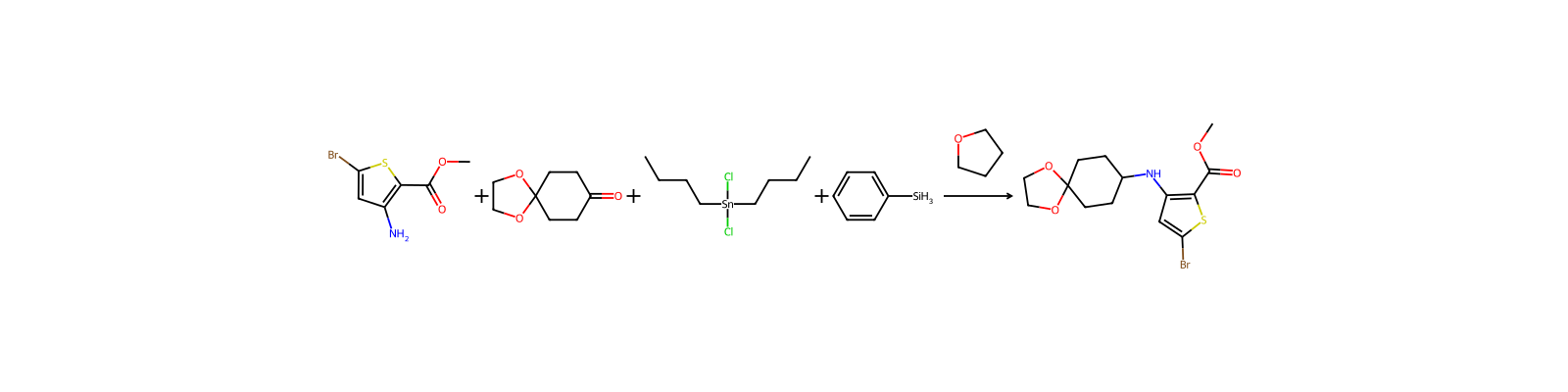
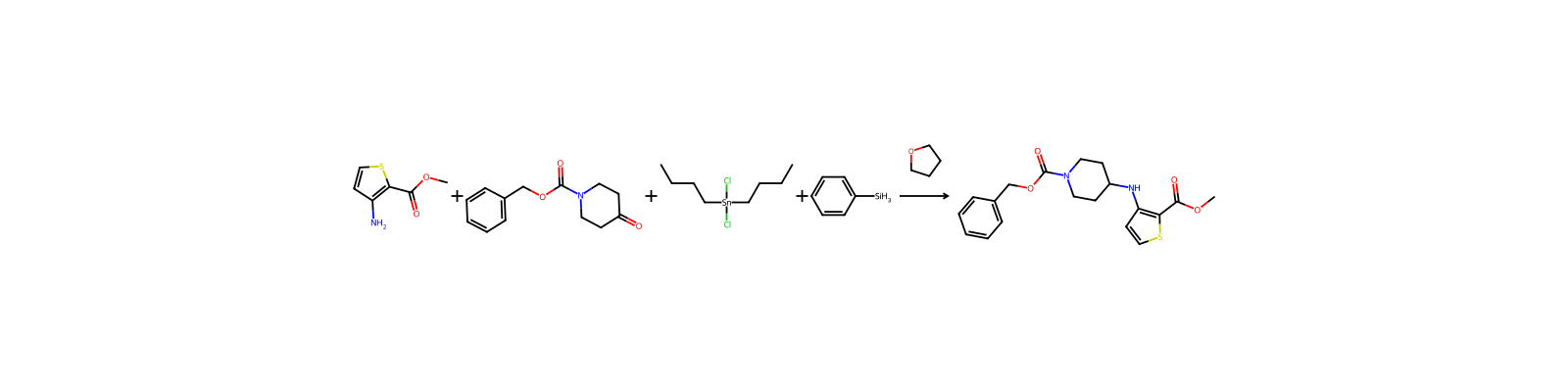
174





Verknüpfte Notizen
Wird geladen…