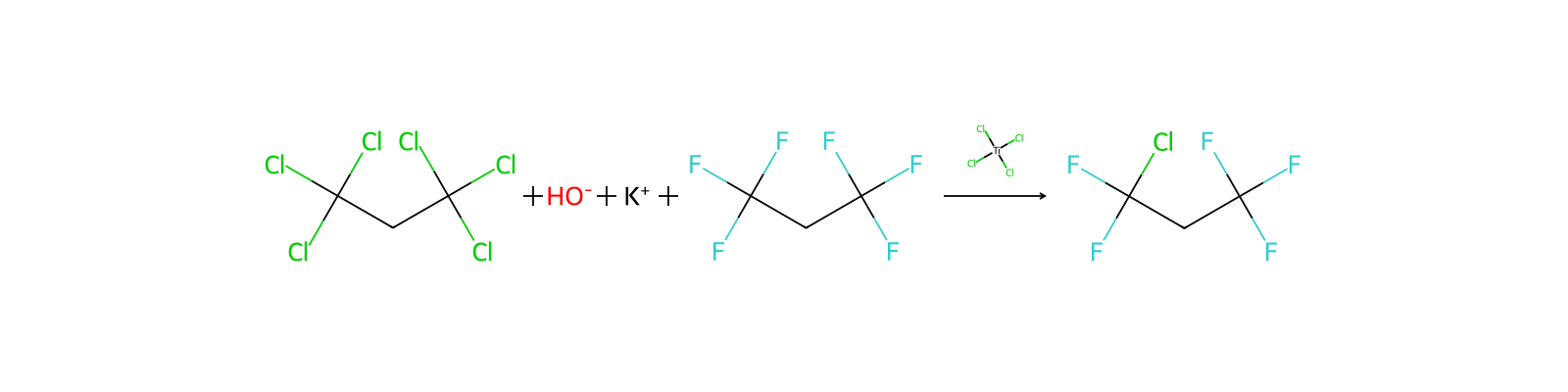

Grundinformationen
- Standard-SMILES
FC(F)(F)CC(F)(F)F- InChIKey
NSGXIBWMJZWTPY-UHFFFAOYSA-N- Summenformel
- C3H2F6
- Durchschnittliche Molmasse
- 152,04 g/mol
- Monoisotopische Masse
- 152,00606938
Namen und Bezeichner
- Bevorzugter Name
- 1,1,1,3,3,3-Hexafluoropropane
- IUPAC
- 1,1,1,3,3,3-hexafluoropropane
- Englischer Name
- 1,1,2,2,3,3-HEXAFLUOROPROPANE
- Summenformel
- C3H2F6
- Molmasse
- 152.04
Namen und Synonyme
1,1,1,3,3,3-Hexafluoropropane690-39-1HFC-236faBistrifluoromethylmethane2,2-DihydroperfluoropropaneR 236faHFC 236faPROPANE, 1,1,1,3,3,3-HEXAFLUORO-7075BUD0LMDTXSID8052435RefChem:409391DTXCID0031007
Weitere Namen anzeigen
1H,3H-Hexafluoropropane1,1,2,2,3,3-HEXAFLUOROPROPANE1,1,2,2,3,3-Hexafluoropropane, HFC-236ca1,1,2,2,3,3-HEXAFLUOROPROPANE ISO 9001:2015 REACH
1,1,1,3,3,3-HFP425-320-1614-909-0Propane, hexafluoro-MFCD000691161,1,1,3,3,3-Hexafluoropropane (FC-236fa)CCRIS 8586FE-36
Datenbank-Bezeichner
- CAS
27070-61-7、690-39-1- PubChem CID
- 12722
- DTXSID
DTXSID8052435- UNII
- 7075BUD0LM
- EC Number
- 425-320-1、614-909-0
- Nikkaji
- J50.919A
Eigenschaften
Berechnete Struktureigenschaften
- XLogP
- 2,8
- Polarare Oberfläche (TPSA)
- 0 Ų
- H-Brücken-Donoren
- 0
- H-Brücken-Akzeptoren
- 6
- Frei drehbare Bindungen
- 0
- Schwere Atome
- 9
- Formalladung
- 0
- Komplexität
- 73,5
Experimentelle und physikochemische Eigenschaften
PFAS
PFAS -> PFAS with analytical method available
PFAS -> PFAS identified in REACH Regulation EC No. 1272/2008
SolventsSolvents -> Chlorofluorocarbons
SpringerMaterials PropertiesSchoenflies notation
OdorOdorless
Density1.4343 g/cu cm at 0 °C
Color/FormColorless gas
Boiling Point
-1.1 °C
BP: -1.4 °C
DecompositionWhen heated to decomposition, it emits toxic vapors of /fluoride/.
Melting Point
-94.2 °C
MP: -93.6 °C
Physical Description
Liquid
Liquefied gas; [MSDSonline]
Other Experimental Properties
Global Warming Potential (GWP): Chemical: HFC-236fa; GWP: 9,810 (100-Year Time Horizon)
Critical volume: 262 cu cm/mole
Hydroxyl radical reaction rate constant = 3.30X10⁻¹⁶ cu cm/molec-sec at 25 °C
Physikochemische Eigenschaften
- Siedepunkt
- 5 °C · 5°C
- EPA chemische Informationen
- Propane, hexafluoro- (27070-61-7)
Sicherheit und Regulatorisches
GHS-Klassifizierung
GHS Classification
This chemical does not meet GHS hazard criteria for 16.7% (1 of 6) of reports.
Warning
H280 (83.3%): Contains gas under pressure; may explode if heated [Warning Gases under pressure]
P261, P271, P304+P340, P319, P403+P233, P405, P410+P403, and P501 (click each P-code to see the statement)
Aggregated GHS information provided per 6 reports by companies from 3 notifications to the ECHA C&L Inventory. Each notification may be associated with multiple companies.
Warning
Gefahrenhinweise
Regulatory Information
Chemical: Propane, 1,1,1,3,3,3-hexafluoro-
Propane, 1,1,1,3,3,3-hexafluoro- is listed on the EPA's Chemical Data Reporting (CDR) system. Manufacturers and importers of Propane, 1,1,1,3,3,3-hexafluoro- are required to report information about their production and use of this chemical to the EPA under the Toxic Substances Control Act (TSCA). (40 eCFR Part 711)
PMN - indicates a commenced PMN (Pre-Manufacture Notices) substance.
S - indicates a substance that is identified in a final Significant New Use Rule.
Status: Active Update: 13-09-2018 https://echa.europa.eu/registration-dossier/-/registered-dossier/18979
1,1,1,3,3,3-hexafluoropropane: Does not have an individual approval but may be used under an appropriate group standard
Hazards SummaryMay cause frostbite; Inhalation of high concentrations may cause cardiac sensitization and unconsciousness; [MSDSonline]
Special ReportsDanish EPA; Survey of selected fluorinated green-house gases (2015)[Available from, as of March 3, 2016: http://eng.mst.dk/]
Hazard Classes and Categories
Press. Gas (Liq.) (100%)
Press. Gas (Liq.) (83.3%)
Critical Temperature and PressureCritical temperature: 398.07 K; critical pressure: 3.18 MPa
Sicherheit und Schutzausrüstung
Disposal Methods
SRP: Recycle any unused portion of the material for its approved use or return it to the manufacturer or supplier. Ultimate disposal of the chemical must consider: the material's impact on air quality; potential migration in air, soil or water; effects on animal, aquatic and plant life; and conformance with environmental and public health regulations. If it is possible or reasonable use an alternative chemical product with less inherent propensity for occupational harm/injury/toxicity or environmental contamination.
Other Standards Regulations and Guidelines
Global Warming Potential (GWP): Chemical: HFC-236fa; GWP: 9,810 (100-Year Time Horizon)
Workplace Environmental Exposure Level (WEEL): 8-hr Time-weighted Average (TWA) 1000 ppm. Last Revised: 1998.
Toxikologische Informationen
Interactions
A 9:1 mixture of 1,1,1,3,3,3-hexafluoropropane (HFC-236fa) and I-bromopropane (BP) was identified as a possible replacement candidate for ozone-depleting fire extinguishants. An acute inhalation toxicity assessment utilizing male and female Fischer 344 rats was performed on this mixture. No deaths occurred in any of the rats exposed to 5.09 mg/L of the 9:1 HFC-236fa and BP mixture. Body weights ofmale rats during the subsequent 14-day observation period appeared unaffected by treatment. Female rat mean body weights averaged <3 g from their initial body weights at the end of the postexposure period, but no signs of toxic stress were observed in any animals. The 9:1 mixture of HFC- 236fa and BP did not produce acute toxicity via the inhalation route.
Environmental Fate
TERRESTRIAL FATE: Based on a classification scheme(1), an estimated Koc value of 340(SRC), determined from a structure estimation method(2), indicates that 1,1,1,3,3,3-hexafluoropropane is expected to have moderate mobility in soil(SRC). Volatilization of 1,1,1,3,3,3-hexafluoropropane from moist soil surfaces is expected to be an important fate process(SRC) given an estimated Henry's Law constant of 3.5 atm-cu m/mole(SRC), using a fragment constant estimation method(2). 1,1,1,3,3,3-Hexafluoropropane is expected to volatilize from dry soil surfaces(SRC) based upon an estimated vapor pressure of 1850 mm Hg at 25 °C(SRC), determined from a fragment constant method(2). Biodegradation data in soil were not available(SRC, 2016).
AQUATIC FATE: Based on a classification scheme(1), an estimated Koc value of 340(SRC), determined from a structure estimation method(2), indicates that 1,1,1,3,3,3-hexafluoropropane is expected to adsorb to suspended solids and sediment(SRC). Volatilization from water surfaces is expected(3) based upon an estimated Henry's Law constant of 3.5 atm-cu m/mole(SRC), developed using a fragment constant estimation method(2). Using this Henry's Law constant and an estimation method(3), volatilization half-lives for a model river and model lake are 3.6 hours and 5 days, respectively(SRC). 1,1,1,3,3,3-Hexafluoropropane is not expected to undergo hydrolysis in the environment due to the lack of functional groups that hydrolyze under environmental conditions(3). According to a classification scheme(4), an estimated BCF of 26(SRC), from an estimated log Kow of 2.65(2) and a regression-derived equation(2), suggests the potential for bioconcentration in aquatic organisms is low(SRC). Biodegradation data in water were not available(SRC, 2016).
ATMOSPHERIC FATE: According to a model of gas/particle partitioning of semivolatile organic compounds in the atmosphere(1), 1,1,1,3,3,3-hexafluoropropane, which has an estimated vapor pressure of 1850 mm Hg at 25 °C(SRC), determined from a fragment constant method(2), is expected to exist solely as a gas in the ambient atmosphere. Gas-phase 1,1,1,3,3,3-hexafluoropropane is degraded in the atmosphere by reaction with photochemically-produced hydroxyl radicals(SRC); the half-life for this reaction in air is estimated to be 110-260 years(SRC), calculated from rate constants of 1.7X10⁻¹⁶ to 4.08X10⁻¹⁶ cu cm/molecule-sec(3-6). Atmospheric life-times for 1,1,1,3,3,3-hexafluoropropane have been reported as 222-226 years(7). 1,1,1,3,3,3-Hexafluoropropane has estimated 20-, 100- and 500-year Global Warming Potentials of 6125, 6300-9400 and 5930, respectively(7-8). 1,1,1,3,3,3-Hexafluoropropane does not contain chromophores that absorb at wavelengths >290 nm(9) and, therefore, is not expected to be susceptible to direct photolysis by sunlight(SRC).
Adverse EffectsNeurotoxin - Acute solvent syndrome
Toxicity Summary
IDENTIFICATION AND USE: For 1,1,1,3,3,3-Hexafluoropropane (HFC-236fa) is a colorless, odorless gas. Its uses are as a fire extinguishant and explosion suppression agent. It also can be used as a pure refrigerant for low-pressure chillers. HUMAN EXPOSURE AND TOXICITY: No evidence of mutagenic/genotoxic activity was found in vitro in human lymphocyte assays. ANIMAL STUDIES: The 4-hr acute lethal concentration of HFC-236fa in rats exceeds 195,000 ppm; narcosis was the predominant clinical sign observed during exposure. Cardiac sensitization in beagle dogs was noted at greater than or equal to 150,000 ppm with a NOEL of 100,000 ppm. Rats exposed to 20,000 or 50,000 ppm had a transiently diminished acoustic startle response only during exposure; rats exposed to 5000 ppm were unaffected. Some adaptation to narcosis was noted as the study progressed. In a rat developmental toxicity study, maternal toxicity (diminished startle response and weight gain) was evident at 20,000 ppm or greater while fetal toxicity was found in any group. The overall no-observed-effect level for HFC-236fa was 5000 ppm, based on narcosis noted at concentrations of 20,000 ppm or greater. No evidence of mutagenic/genotoxic activity was found in vitro in Ames assay or in vivo in the mouse micronucleus assay.
Effluent Concentrations1,1,1,3,3,3-Hexafluoropropane was not detected in emissions from industries that use fluorocarbons in The Netherlands in 1990(1).
Soil Adsorption/Mobility
Using a structure estimation method based on molecular connectivity indices(1), the Koc of 1,1,1,3,3,3-hexafluoropropane can be estimated to be 340(SRC). According to a classification scheme(2), this estimated Koc value suggests that 1,1,1,3,3,3-hexafluoropropane is expected to have moderate mobility in soil.
Human Toxicity Excerpts/GENOTOXICITY/ No evidence of mutagenic/genotoxic activity was found in vitro in human lymphocyte assays...
Artificial Pollution Sources1,1,1,3,3,3-Hexafluoropropane's production and use as a refrigerant and fire-extinguishing agent(1) may result in its release to the environment through various waste streams(SRC).
Environmental Bioconcentration
An estimated BCF of 26 was calculated in fish for 1,1,1,3,3,3-hexafluoropropane(SRC), using an estimated log Kow of 2.65(1) and a regression-derived equation(1). According to a classification scheme(2), this BCF suggests the potential for bioconcentration in aquatic organisms is low(SRC).
Volatilization from Water/Soil
The Henry's Law constant for 1,1,1,3,3,3-hexafluoropropane is estimated as 3.5 atm-cu m/mole(SRC) using a fragment constant estimation method(1). This Henry's Law constant indicates that 1,1,1,3,3,3-hexafluoropropane is expected to volatilize rapidly from water surfaces(2). Based on this Henry's Law constant, the volatilization half-life from a model river (1 m deep, flowing 1 m/sec, wind velocity of 3 m/sec)(2) is estimated as 3.6 hours(SRC). The volatilization half-life from a model lake (1 m deep, flowing 0.05 m/sec, wind velocity of 0.5 m/sec)(2) is estimated as 5 days(SRC). 1,1,1,3,3,3-Hexafluoropropane's Henry's Law constant indicates that volatilization from moist soil surfaces may occur(SRC). 1,1,1,3,3,3-Hexafluoropropane is expected to volatilize from dry soil surfaces(SRC) based upon an estimated vapor pressure of 1850 mm Hg(SRC), determined from a fragment constant method(1).
Non-Human Toxicity Excerpts
/LABORATORY ANIMALS: Acute Exposure/ Toxicological evaluations were performed to assess the acute, subchronic, developmental and genetic toxicity, and cardiac sensitization of HFC-236fa, a saturated alternative fluorocarbon refrigerant. The 4-hr acute lethal concentration of HFC-236fa in rats exceeds 195,000 ppm; /CNS depression/ was the predominant clinical sign observed during exposure.
/LABORATORY ANIMALS: Acute Exposure/ Cardiac sensitization in beagle dogs was noted at greater than or equal to 150,000 ppm with a NOEL of 100,000 ppm.
/LABORATORY ANIMALS: Subchronic or Prechronic Exposure/ In 2-week and 13-week inhalation studies with rats at 5000, 20,000 and 50,000 ppm (6 hr/d, 5 d/wk), no evidence of body or organ weight effects, clinical pathology, organ pathology, or induction of hepatic peroxisomes were found. Rats exposed to 20,000 or 50,000 ppm had a transiently diminished acoustic startle response only during exposure; rats exposed to 5000 ppm were unaffected. Some adaptation to /CNS depression/ was noted as the study progressed.
/GENOTOXICITY/ No evidence of mutagenic/genotoxic activity was found in vitro in Ames /test/... or in vivo in the mouse micronucleus assay.
Environmental Abiotic Degradation
The rate constant for the vapor-phase reaction of 1,1,1,3,3,3-hexafluoropropane with photochemically-produced hydroxyl radicals has been reported as 1.7X10⁻¹⁶ to 4.08X10⁻¹⁶ cu cm/molecule-sec(1-4). This corresponds to an atmospheric half-life of about 110-260 years at an atmospheric concentration of 5X10+5 hydroxyl radicals per cu cm(5). The atmospheric life-time for 1,1,1,3,3,3-hexafluoropropane has been reported as 222-226 years(6). 1,1,1,3,3,3-Hexafluoropropane 20-, 100- and 500-year Global Warming Potentials have been calculated and reported as 6125, 6300-9400 and 5930, respectively(6,7). 1,1,1,3,3,3-Hexafluoropropane does not contain chromophores that absorb at wavelengths >290 nm(8) and, therefore, is not expected to be susceptible to direct photolysis by sunlight(SRC). 1,1,1,3,3,3-Hexafluoropropane is not expected to undergo hydrolysis in the environment due to the lack of functional groups that hydrolyze under environmental conditions(8).
Sicherheitsdaten
- tsca
- TSCA listed
- ridadr
- 3163
- hs_code
- 2903491000
- hazard_code
- Xi
- hazard_note
- Irritant
- safety_code
- 23
- hazard_class
- GAS
Chemie und Industrie
Pharmakologische Informationen
Biological Half-Life
...newborn piglets ...were ventilated with air containing 0.8% HFP (v/v) for 30 min. This was done to assess accumulation of HFP during measurement of functional residual lung capacity by wash-in and wash-out techniques. A saturation concentration in blood between 2.0 and 2.5 mg/L was attained after 3 min ventilation and decreased with a half-life below 1 min after termination of the HFP supply.
Verwendung und Herstellung
Uses
Developed as a replacement for chlorofluorocarbons to be used as a refrigerant and fire extinguishing agent; [AIHA]
Uses are as a fire extinguishant and explosion suppression agent. It also can be used as a pure refrigerant for low-pressure chillers.
Refrigerant and fire-extinguishing agent
U.S. Production
2023: 50,000 - <250,000 lb
Non-confidential 2012 Chemical Data Reporting (CDR) information on the production and use of chemicals manufactured or imported into the United States. Chemical: Propane, 1,1,1,3,3,3-hexafluoro-. National Production Volume: Withheld.
Consumer UsesFlame retardant
Industry UsesRefrigerants
General Manufacturing Information
All Other Chemical Product and Preparation Manufacturing
Propane, 1,1,1,3,3,3-hexafluoro-: ACTIVE
Propane, hexafluoro-: INACTIVE
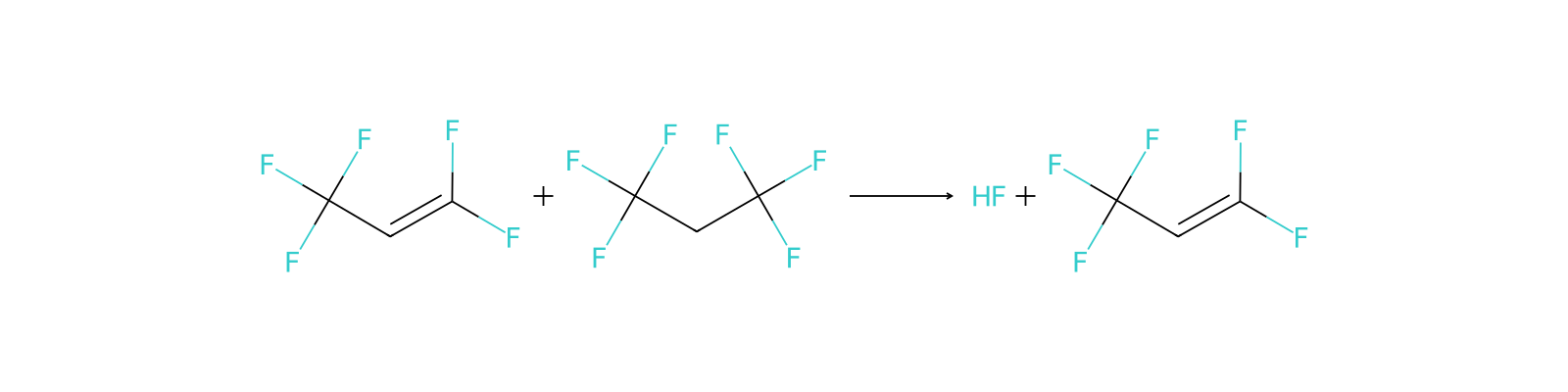
Zugehörige Reaktionen
10


Verknüpfte Notizen
Wird geladen…