StartseiteMCPWorkbenchSkills
StartseiteWorkbenchBenachrichtigungenMein Bereich
llms.txt · MCP-AnleitungDatenschutz · Nutzungsbedingungen · Supportv1.8.2
  1. Startseite
  2. /Verbindung

1-Brombutanon

1-Bromo-2-butanone

HCID 13156
Neue Reaktion
Drucken
GrundinformationenÜberblickNamen und BezeichnerEigenschaftenSicherheit und RegulatorischesChemie und IndustrieZugehörige ReaktionenNotizen zur Verbindung
TeilstruktursucheÄhnliche Strukturen suchen

Grundinformationen

CAS
816-40-0
Standard-SMILES
CCC(=O)CBr
InChIKey
CCXQVBSQUQCEEO-UHFFFAOYSA-N
Summenformel
C4H7BrO
Durchschnittliche Molmasse
151 g/mol
Monoisotopische Masse
149,96803

Überblick

1-bromo-2-butanone appears as a colorless to straw-colored liquid. Toxic by inhalation, skin contact or ingestion.

Namen und Bezeichner

Bevorzugter Name
1-Bromo-2-butanone
IUPAC
1-bromobutan-2-one
Lokaler Name
1-Brombutanon
Englischer Name
1-Bromo-2-butanone
Summenformel
C4H7BrO
Molmasse
151

Namen und Synonyme

1-BROMO-2-BUTANONE816-40-01-bromobutan-2-one2-Butanone, 1-bromo-Bromomethyl ethyl ketoneEINECS 212-431-3BRN 07418944-01-00-03258 (Beilstein Handbook Reference)DTXSID00231216RefChem:75057DTXCID00153707CCXQVBSQUQCEEO-UHFFFAOYSA-N
Weitere Namen anzeigen
1-Brombutanon-(2)tl8191-bromo-2-butanonBrommethylethylketon
1-BromobutanoneTL 819bromobutanone1-bromo-butan-2-onebromobutan-2-one2-Oxobutyl bromideMFCD000002074UPM4J7CVA

Datenbank-Bezeichner

CAS
816-40-0
PubChem CID
13156
DTXSID
DTXSID00231216
UNII
4UPM4J7CVA
EC Number
212-431-3
Nikkaji
J42.075A

Eigenschaften

Berechnete Struktureigenschaften

XLogP
1,2
Polarare Oberfläche (TPSA)
17,1 Ų
H-Brücken-Donoren
0
H-Brücken-Akzeptoren
1
Frei drehbare Bindungen
2
Schwere Atome
6
Formalladung
0
Komplexität
51,5

Experimentelle und physikochemische Eigenschaften

SpringerMaterials PropertiesBoiling point
Physical Description1-bromo-2-butanone appears as a colorless to straw-colored liquid. Toxic by inhalation, skin contact or ingestion.

Physikochemische Eigenschaften

Siedepunkt
105 °C150 · 105 °C150 mm Hg(lit.)
Dichte
1.479 g/mL · 1.479 g/mL at 25 °C(lit.)
Brechungsindex
20 · n20/D 1.465(lit.)
Flammpunkt
155 °F · 155 °F
storage temp.
Keep Cold
Aggregatzustand
Liquid
Wichte
1.479 · 1.479
Farbe
Colorless to light yellow
BRN
741894 · 741894
InChI
InChI=1S/C4H7BrO/c1-2-4(6)3-5/h2-3H2,1H3
InChIKey

Sicherheit und Regulatorisches

Sicherheitsangaben dienen nur zur Orientierung und ersetzen weder das Sicherheitsdatenblatt (SDB) des Lieferanten noch geltende Vorschriften oder eine fachliche Bewertung.

GHS-Klassifizierung

GHS Classification · 4 Einträge

Warning

H302 (91.3%): Harmful if swallowed [Warning Acute toxicity, oral]

P261, P264, P264+P265, P270, P271, P280, P301+P317, P302+P352, P304+P340, P305+P351+P338, P317, P319, P321, P330, P332+P317, P337+P317, P362+P364, P403+P233, P405, and P501 (click each P-code to see the statement)

Aggregated GHS information provided per 46 reports by companies from 6 notifications to the ECHA C&L Inventory. Each notification may be associated with multiple companies.

Gefahrenhinweise

DOT LabelPoison
Fire HazardsExcerpt from ERG Guide 159 [Substances (Irritating)]:
Health HazardsExcerpt from ERG Guide 159 [Substances (Irritating)]:
Reactive GroupHalogenated Organic Compounds
Reactivity ProfileSome of these materials may burn, but none ignite readily. Containers may explode when heated.
Air and Water ReactionsWater soluble.
Hazard Classes and CategoriesAcute Tox. 4 (91.3%)

Sicherheit und Schutzausrüstung

Fire FightingExcerpt from ERG Guide 159 [Substances (Irritating)]:

Chemie und Industrie

Anwendungen · 1 Eintrag

Verwenden1-Bromo-2-butanone (bromomethyl ethyl ketone) was used as a potential regulatory site-directed reagent for the residue C221 on pyruvate decarboxylase. It was also used as a reagent for aromatic bromination with sodium hydride in DMSO and in a microwave-assisted preparation of fused heterocycles.

Vor- und nachgelagerte Produkte

Nachgelagerte Produkte

methyl 8-amino-2,3-dimethylimidazo[1,2-a]pyridine-6-carboxylate3,6,10-Trimethylundeca-3,5,9-trien-2-on8-chloro-2-ethylimidazo[1,2-a]pyrazineEthyl 4,5-dimethyl-1,3-thiazole-2-carboxylate

Zugehörige Reaktionen

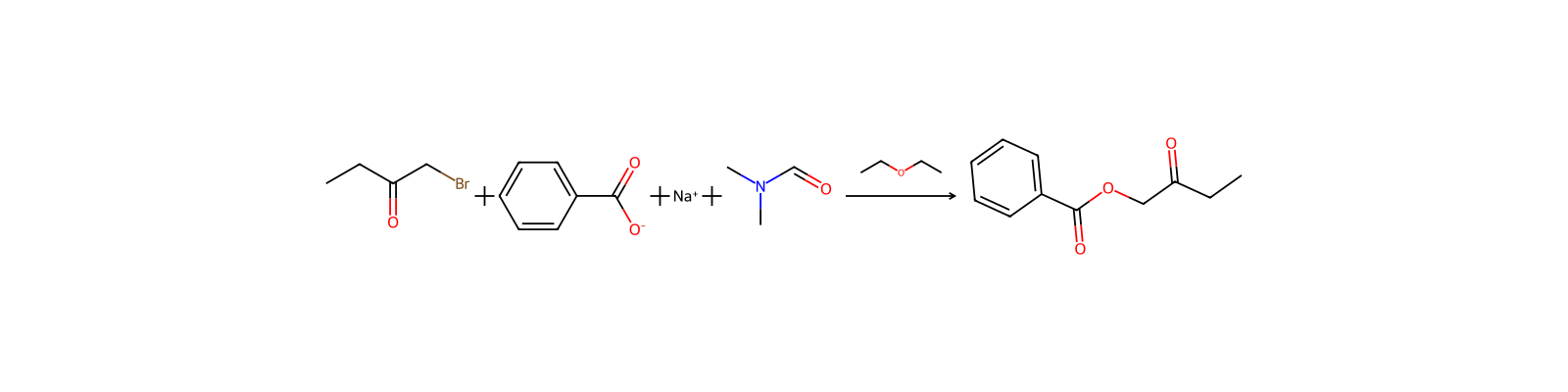
190
Reaktionsaufzeichnung erstellen
Reaktionsgleichung von HRID 6852
HRID 6852als Edukt
Reaktionsgleichung von HRID 7278
HRID 7278als Edukt
Reaktionsgleichung von HRID 23369
HRID 23369als Edukt
Reaktionsgleichung von HRID 30636
HRID 30636als Edukt
Reaktionsgleichung von HRID 30653
HRID 30653als Edukt
Reaktionsgleichung von HRID 30659
HRID 30659als Edukt
Reaktionsgleichung von HRID 31656
HRID 31656als Edukt
Reaktionsgleichung von HRID 31659
HRID 31659als Edukt
ZurückSeite 1 von 24

Notizen zur Verbindung

Auf dieser SeiteGrundinformationenÜberblickNamen und BezeichnerEigenschaftenSicherheit und RegulatorischesChemie und IndustrieZugehörige ReaktionenNotizen zur Verbindung
CCXQVBSQUQCEEO-UHFFFAOYSA-N
SMILES
C(Br)C(=O)CC
CAS Datenbank
816 · 816-40-0(CAS DataBase Reference)
First AidExcerpt from ERG Guide 159 [Substances (Irritating)]:
Nonfire Spill ResponseExcerpt from ERG Guide 159 [Substances (Irritating)]:
Isolation and EvacuationExcerpt from ERG Guide 159 [Substances (Irritating)]:
Personal Protective Equipment (PPE)Excerpt from ERG Guide 159 [Substances (Irritating)]:

Toxikologische Informationen

Carcinogen ClassificationNo indication of carcinogenicity to humans (not listed by IARC).

Sicherheitsdaten

wgk
3
ridadr
1693
hs_code
2914790090
RTECS-Nr.
EL7000000
risk_code
20/21/22-36/37/38
hazard_code
Xn,Xi,F
hazard_note
Harmful/Irritant/Lachrymatory
safety_code
26-27-36/37/39
hazard_class
6.1
packing_group
III
Speicherklasse
10 - Combustible liquids
Hazard Classifications
Acute Tox. 4 DermalAcute Tox. 4 InhalationAcute Tox. 4 OralEye Irrit. 2Skin Irrit. 2STOT SE 3