StartseiteMCPWorkbenchSkills
StartseiteWorkbenchBenachrichtigungenMein Bereich
llms.txt · MCP-AnleitungDatenschutz · Nutzungsbedingungen · Supportv1.8.0
  1. Startseite
  2. /Verbindung

2-Hydroxyethylmethacrylat

2-Hydroxyethyl Methacrylate

HCID 13360
Neue NotizNeue ReaktionAnfrage stellen
Druckvorschau
GrundinformationenÜberblickNamen und BezeichnerEigenschaftenSicherheit und RegulatorischesChemie und IndustrieZugehörige ReaktionenNotizen zur Verbindung
TeilstruktursucheÄhnliche Strukturen suchen

Grundinformationen

CAS
12676-48-1
Standard-SMILES
C=C(C)C(=O)OCCO
InChIKey
WOBHKFSMXKNTIM-UHFFFAOYSA-N
Summenformel
C6H10O3
Durchschnittliche Molmasse
130,14 g/mol
Monoisotopische Masse
130,06299418

Überblick

2-hydroxyethyl methacrylate is an enoate ester that is the monomethacryloyl derivative of ethylene glycol. It has a role as an allergen and a polymerisation monomer. It is functionally related to a methacrylic acid and an ethylene glycol.

Namen und Bezeichner

Bevorzugter Name
2-Hydroxyethyl Methacrylate
IUPAC
2-hydroxyethyl 2-methylprop-2-enoate
Lokaler Name
2-Hydroxyethylmethacrylat
Englischer Name
2-Hydroxyethyl methacrylate
Summenformel
C6H10O3
Molmasse
130.14

Namen und Synonyme

2-HYDROXYETHYL METHACRYLATE868-77-9Glycol methacrylateHydroxyethyl methacrylateGlycol monomethacrylateEthylene glycol methacrylate2-(Methacryloyloxy)ethanolMhoromer2-HydroxyethylmethacrylateMonomer MG-1Ethylene glycol monomethacrylate2-Propenoic acid, 2-methyl-, 2-hydroxyethyl ester
Weitere Namen anzeigen
HEMAN5-Methyl-L-glutamine1,2-ETHANEDIOL MONO(2-METHYLPROPENOATE)2-methyl-2BisoMer HEMAHydroxyethyl Methacrylat
beta-Hydroxyethyl methacrylateDTXSID7022128Ethylene glycol, monomethacrylateMonomethacrylic ether of ethylene glycol6E1I4IV47VCHEBI:34288NSC-24180DTXCID202128

Datenbank-Bezeichner

CAS
12676-48-1、868-77-9

Eigenschaften

Berechnete Struktureigenschaften

XLogP
0,5
Polarare Oberfläche (TPSA)
46,5 Ų
H-Brücken-Donoren
1
H-Brücken-Akzeptoren
3
Frei drehbare Bindungen
4
Schwere Atome
9
Formalladung
0
Komplexität
117

Experimentelle und physikochemische Eigenschaften

PolymersPlastics & Rubber -> (Meth)acrylates
CosmeticsCosmetic ingredients (HEMA) -> CIR (Cosmetic Ingredient Review)
LogP · 3 Einträge

log Kow= 0.47

0.42

0.47

Density · 3 Einträge

1.034 @ 25 °C/4 °C

1.07 g/cm³

1.034 @25 °C

Viscosity8.4 mm²/s at 20 °C
Color/FormClear mobile liquid
Solubility · 2 Einträge

Miscible with water and soluble in common org solvents

Solubility in water: miscible

Flash Point · 2 Einträge

97 °C (closed cup)

97 °C c.c.

Boiling Point · 3 Einträge

67 °C @ 3.5 mm Hg

250 °C (calculated)

67 °C @760 [mm Hg]

Sicherheit und Regulatorisches

Sicherheitsangaben dienen nur zur Orientierung und ersetzen weder das Sicherheitsdatenblatt (SDB) des Lieferanten noch geltende Vorschriften oder eine fachliche Bewertung.

GHS-Klassifizierung

GHS Classification · 6 Einträge

Warning

H315: Causes skin irritation [Warning Skin corrosion/irritation]

P261, P264, P264+P265, P272, P280, P302+P352, P305+P351+P338, P321, P332+P317, P333+P317, P337+P317, P362+P364, and P501 (click each P-code to see the statement)

This chemical does not meet GHS hazard criteria for 0.2% (3 of 1898) of reports.

Warning

H315 (94.3%): Causes skin irritation [Warning Skin corrosion/irritation]

Gefahrenhinweise

Regulatory Information · 4 Einträge

Chemical: 2-Propenoic acid, 2-methyl-, 2-hydroxyethyl ester

2-Propenoic acid, 2-methyl-, 2-hydroxyethyl ester is listed on the EPA's Chemical Data Reporting (CDR) system. Manufacturers and importers of 2-Propenoic acid, 2-methyl-, 2-hydroxyethyl ester are required to report information about their production and use of this chemical to the EPA under the Toxic Substances Control Act (TSCA). (40 eCFR Part 711)

REACH registered substance: 2-hydroxyethyl methacrylate (EC: 212-782-2)

2-Hydroxyethyl methacrylate: Does not have an individual approval but may be used under an appropriate group standard

Other Safety InformationIMAP assessments - 2-Propenoic acid, 2-methyl-, 2-hydroxyethyl ester: Human health tier II assessment
Fire HazardsCombustible. Above 97 °C explosive vapour/air mixtures may be formed.
Fire Potential30% GRADE (WITH XYLENE) IS FLAMMABLE; MODERATE FIRE RISK.
Hazards Summary · 1 Eintrag

Allergic contact dermatitis reported in a laboratory technician and in the printing industry; A skin and eye irritant; [HSDB] Hydrolyzed forming methacrylic acid and ethylene glycol; A mild skin and moderate eye irritant; Possesses skin sensitizing properties with equivocal results in human patch testing; [Reference #2] A skin and severe eye irritant; May cause skin sensitization; [Alfa Aesar MSDS]

Chemie und Industrie

Pharmakologische Informationen

Metabolism/MetabolitesSMALL QUANTITIES OF METHACRYLATES MAY READILY BE METABOLIZED BY SAPONIFICATION INTO THE ALCOHOL AND METHACRYLIC ACID. THE LATTER MAY FORM AN ACETYL-COENZYME DERIVATIVE, WHICH THEN ENTERS THE NORMAL LIPID METABOLISM. /METHACRYLATES/

Verwendung und Herstellung

Uses · 6 Einträge

CIR ingredient: HEMA

Frequently used in UV-curable inks and coatings; also used in adhesives, artificial nails, dental materials, and lacquers; [HSDB] Used in dentistry as one of the main volatile acrylates along with methyl methacrylate; [Reference #1] Used as a monomer in the synthesis of polymers (used in paints, adhesives, coatings, dental adhesive systems, etc.) for dental prosthetics, and for geotechnical grouting in construction work; [Reference #2]

Painting (Pigments, Binders, and Biocides) [Category: Paint]

Acrylic resins; binder for nonwoven fabrics; enamels.

IN OPTOMETRY UTILIZED AS BASIC MATERIAL FOR CONTACT LENSES; AS DENTAL FILLER; IN PHARMACEUTICAL AREAS AS A DRUG RELEASE CONTROL MEDIUM; IN MEDICINE AS A SYNTHETIC WOUND DRESSING COMPONENT; AS A HYDROGEL FOR ORGAN GRAFTING; FOR SURFACE TENSION CONTROL IN BIOENGINEERING.

CROSSLINKING MONOMER FOR THERMOSET & UV CURABLE ACRYLICS.

U.S. Imports(1983) 1.36X10+9 g /Acrylates & Acrylic Acid/
U.S. Production2023: 10,000,000 - <25,000,000 lb
Consumer UsesIntermediate
Industry UsesMonomers
Methods of Manufacturing · 3 Einträge

The methacrylates can be synthesized by catalytic oxidation of isobutylene and subsequent esterification with the appropriate alcohol, or by reacting acetone with hydrocyanic acid and subsequent esterification in sulfuric acid with the appropriate alcohol. /Methacrylic esters/

Zugehörige Reaktionen

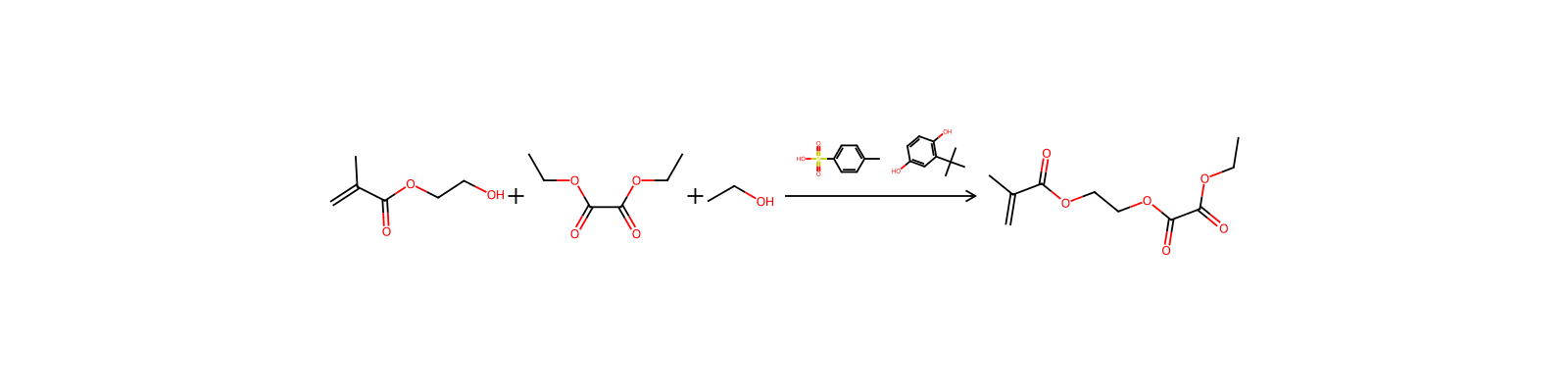
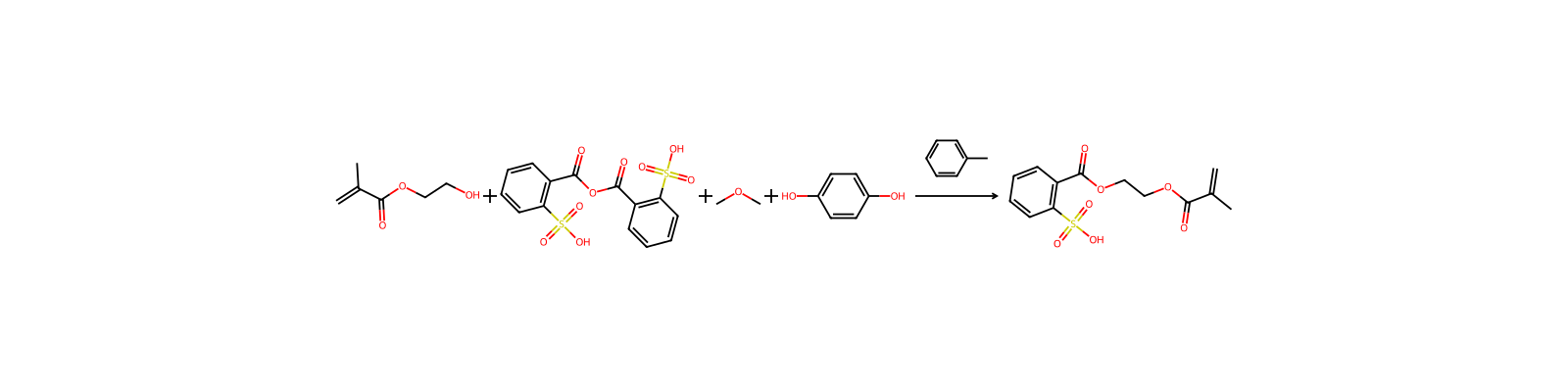
234
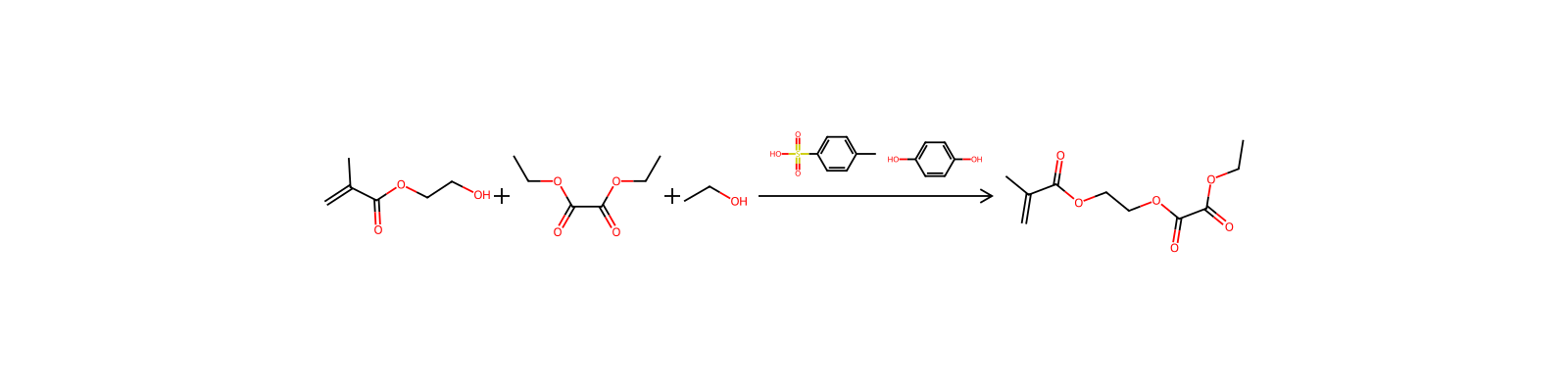
Reaktionsaufzeichnung erstellen
Reaktionsgleichung von HRID 5285
HRID 5285als Produktuspto-grants-1993_09
Reaktionsgleichung von HRID 6403
HRID 6403als Eduktuspto-grants-1993_09
Reaktionsgleichung von HRID 6404
HRID 6404als Eduktuspto-grants-1993_09
Reaktionsgleichung von HRID 6405
HRID 6405als Eduktuspto-grants-1993_09
Reaktionsgleichung von HRID 6406
HRID 6406als Eduktuspto-grants-1993_09
Reaktionsgleichung von HRID 26354
HRID 26354als Eduktuspto-grants-1979_04
Reaktionsgleichung von HRID 66427
HRID 66427als Eduktuspto-grants-1978_12
Reaktionsgleichung von HRID 66435
HRID 66435als Eduktuspto-grants-1978_12
Seite 1 von 30

Notizen zur Verbindung

Wird geladen…

Auf dieser SeiteGrundinformationenÜberblickNamen und BezeichnerEigenschaftenSicherheit und RegulatorischesChemie und IndustrieZugehörige ReaktionenNotizen zur Verbindung
Weitere Aktionen
Neue NotizNeue ReaktionAnfrage stellen
PubChem CID
13360
DTXSID
DTXSID7022128
ChEMBL
CHEMBL1730239
ChEBI
CHEBI:34288
UNII
6E1I4IV47V
EC Number
212-782-2、927-388-2
Nikkaji
J53.687C
Decomposition
When heated to decomp it emits acrid smoke and irritating fumes.
Melting PointFP: -12 °C
Vapor DensityRelative vapor density (air = 1): 4.5

Physikochemische Eigenschaften

Schmelzpunkt
-12 °C · -12 °C
Siedepunkt
67 °C3.5 · 67 °C3.5 mm Hg(lit.)
Dichte
1.073 g/mL · 1.073 g/mL at 25 °C(lit.)
Dampfdichte
5 · 5 (vs air)
Dampfdruck
0.01 mm · 0.01 mm Hg ( 25 °C)
Brechungsindex
20 · n20/D 1.453(lit.)
Flammpunkt
207 °F · 207 °F
storage temp.
2 · 2-8°C
Löslichkeit
Chloroform, Methanol (Slightly)
Aggregatzustand
Liquid
pka
13.83 · 13.83±0.10(Predicted)
Farbe
Clear
Geruch (Odor)
Ester like
Wasserlöslichkeit
soluble
BRN
1071583 · 1071583
Henry's Law Constant
4.6 · 4.6×101 mol/(m3Pa) at 25℃, Duchowicz et al. (2020)
Stabilität
Unstable - may polymerize in the absence of stabilizer. May be stabilized with, or contain small amounts of, diethylene glycol monomethacrylate, di(ethylene glycol)dimethacrylate, methacrylic acid. Incompatible with strong oxidizing agents, free radical initiators, peroxides, steel. Closed containers may explode if heated due to runaway polymer
Kosmetik-Inhaltsstoffe Funktionen
NAIL SCULPTING
InChI
1S/C6H10O3/c1-5(2)6(8)9-4-3-7/h7H,1,3-4H2,2H3
InChIKey
WOBHKFSMXKNTIM-UHFFFAOYSA-N
SMILES
CC(=C)C(=O)OCCO
LogP
0.42 at · 0.42 at 25℃
CAS Datenbank
868 · 868-77-9(CAS DataBase Reference)
NIST chemische Informationen
2 · 2-Hydroxyethyl methacrylate(868-77-9)
EPA chemische Informationen
2 · 2-Hydroxyethyl methacrylate (868-77-9)
FDA RequirementsHomopolymers and copolymers of 2-Hydroxyethyl methacrylate is an indirect food additive for use only as a component of adhesives.
EC ClassificationSymbol: Xi; R: 36/38-43; S: (2)-26-28; Note: D
Chemical Dangers · 1 Eintrag

The substance will polymerize due to heating, on contact with peroxides, and under the influence of light. Heating may cause violent combustion or explosion. This produces acrid smoke. The substance may spontaneously polymerize if it is not stabilized.

Hazard Classes and Categories · 6 Einträge

Skin Irrit. 2 (94.3%)

Eye irritation - category 2A

Serious eye damage/eye irritation - Category 2A

Serious eye damage/eye irritation - Category 2

Skin corrosion/irritation - Category 2

Skin Irrit. 2

Skin, Eye, and Respiratory IrritationsIrritating to eyes and skin.

Sicherheit und Schutzausrüstung

Fire FightingUse water spray, dry powder, alcohol-resistant foam. In case of fire: keep drums, etc., cool by spraying with water.
First Aid Measures · 4 Einträge

Fresh air, rest. Refer for medical attention.

First rinse with plenty of water for at least 15 minutes, then remove contaminated clothes and rinse again. Refer for medical attention .

First rinse with plenty of water for several minutes (remove contact lenses if easily possible), then refer for medical attention.

Rinse mouth. Do NOT induce vomiting. Give one or two glasses of water to drink. Refer immediately for medical attention.

Safe StorageStore only if stabilized. Keep in the dark. Cool. Ventilation along the floor.
Storage Conditions · 1 Eintrag

Temp during storage must be kept low to minimize formation of peroxides and other oxidation products. ... Storage temp below 30 °C are recommended for the polyfunctional methacrylates. ... The methacrylate monomers should not be stored for longer than one year. Shorter storage times are recommended for the aminomethacrylates, ie, three months, and the polyfunctional methacrylates, ie, six months. Many of these cmpd are sensitive to UV light and should, therefore, be stored in the dark. The methacrylic esters may be stored in mild steel, stainless steel, or aluminum. /Methacrylic acid & derivatives/

Disposal Methods · 1 Eintrag

SRP: At the time of review, criteria for land treatment or burial (sanitary landfill) disposal practices are subject to significant revision. Prior to implementing land disposal of waste residue (including waste sludge), consult with environmental regulatory agencies for guidance on acceptable disposal practices.

Spillage Disposal · 1 Eintrag

Personal protection: chemical protection suit and filter respirator for organic gases and vapours adapted to the airborne concentration of the substance. Collect leaking liquid in covered containers. Absorb remaining liquid in sand or inert absorbent. Then store and dispose of according to local regulations.

Preventive Measures · 3 Einträge

... Hazard is the generation of considerable exothermic heat in some of the reactions, so that high pressures & temp may develop. This danger ... should be borne in mind when designing plant. Awareness of the dangers and of good engineering design are essential to safety. Employees should be instructed about the necessity of cleansing the skin if it is contaminated by materials which are irritants or skin-absorbed. With careful design, however, and complete enclosure of those processes where toxic chemicals or intermediates occur, dangerous exposures can be avoided. /Acrylic acid & derivatives/

SRP: Contaminated protective clothing should be segregated in such a manner so that there is no direct personal contact by personnel who handle, dispose, or clean the clothing. Quality assurance to ascertain the completeness of the cleaning procedures should be implemented before the decontaminated protective clothing is returned for reuse by the workers. Contaminated clothing should not be taken home at end of shift, but should remain at employee's place of work for cleaning.

SRP: The scientific literature for the use of contact lenses in industry is conflicting. The benefit or detrimental effects of wearing contact lenses depend not only upon the substance, but also on factors including the form of the substance, characteristics and duration of the exposure, the uses of other eye protection equipment, and the hygiene of the lenses. However, there may be individual substances whose irritating or corrosive properties are such that the wearing of contact lenses would be harmful to the eye. In those specific cases, contact lenses should not be worn. In any event, the usual eye protection equipment should be worn even when contact lenses are in place.

Eye PreventionWear safety spectacles or eye protection in combination with breathing protection.
Fire PreventionNO open flames. Above 97 °C use a closed system and ventilation.
Inhalation RiskNo indication can be given about the rate at which a harmful concentration of this substance in the air is reached.
Skin PreventionProtective gloves. Protective clothing.
Exposure PreventionPREVENT GENERATION OF MISTS!

Toxikologische Informationen

Ecotoxicity Values · 1 Eintrag

LC50 Pimephales promelas (fathead minnows) 0.99 g/l/96 hr (95% confidence limit 0.90-1.1 g/l); age 30 days old, water hardness 45.6 mg/l calcium carbonate, temp 24.9 °C, pH 7.66, dissolved oxygen 7.1 mg/l, alkalinity 44.4 mg/l (CaCO3), Tank vol: 2.0 l, additions: 18 vol/day (flow-through bioassay)

Environmental Fate · 3 Einträge

TERRESTRIAL FATE: Based on a classification scheme(1), an estimated Koc value of 43(SRC), determined from a log Kow of 0.47(2) and a regression-derived equation(3), indicates that 2-hydroxyethyl methacrylate is expected to have very high mobility in soil(SRC). Volatilization of 2-hydroxyethyl methacrylate from moist soil surfaces is not expected to be an important fate process(SRC) given an estimated Henry's Law constant of 4.6X10⁻⁹ atm-cu m/mole(SRC), using a fragment constant estimation method(4). 2-Hydroxyethyl methacrylate is not expected to volatilize from dry soil surfaces(SRC) based upon a vapor pressure of 0.126 mm Hg(5). Screening tests indicate that 2-hydroxyethyl methacrylate is readily biodegradable; it reached 92-100% of its theoretical BOD in 2 weeks using an activated sludge inoculum(6).

AQUATIC FATE: Based on a classification scheme(1), an estimated Koc value of 43(SRC), determined from a log Kow of 0.47(2) and a regression-derived equation(3), indicates that 2-hydroxyethyl methacrylate is not expected to adsorb to suspended solids and sediment in water(SRC). Volatilization from water surfaces is not expected(3) based upon an estimated Henry's Law constant of 4.6X10⁻⁹ atm-cu m/mole(SRC), developed using a fragment constant estimation method(4). According to a classification scheme(5), an estimated BCF of 1.3(SRC), from the log Kow(2), suggests the potential for bioconcentration in aquatic organisms is low. Hydrolysis of 2-hydroxyethyl methacrylate may be a significant process under basic conditions based upon a hydrolytic half-life of 4 hours at pH 11 for the structurally similar butyl acrylate(6); half-lives for butyl acrylate at pH 7, 8, and 9 were 4 years, 150 days, and 15 days(SRC), respectively, based upon a hydrolytic rate constant of 0.053 L/mole-sec(8). Screening tests indicate that 2-hydroxyethyl methacrylate is readily biodegradable; it reached 92-100% of its theoretical BOD in 2 weeks using an activated sludge inoculum(7).

ATMOSPHERIC FATE: According to a model of gas/particle partitioning of semivolatile organic compounds in the atmosphere(1), 2-hydroxyethyl methacrylate, which has a vapor pressure of 0.126 mm Hg at 25 °C(2), is expected to exist solely as a vapor in the ambient atmosphere. Vapor-phase 2-hydroxyethyl methacrylate is degraded in the atmosphere by reaction with photochemically-produced hydroxyl radicals(SRC); the half-life for this reaction in air is estimated to be 16 hours(SRC) from its estimated rate constant of 2.4X10⁻¹¹ cu cm/molecule-sec at 25 °C(3). Because the structurally similar ethyl methacrylate does not absorb light in the environmental spectrum above 290 nm(4), direct photolysis of 2-hydroxyethyl methacrylate is not expected to occur(SRC).

Adverse EffectsSkin Sensitizer - An agent that can induce an allergic reaction in the skin.
Toxicity Summary · 2 Einträge

Based on available data, the CIR Expert Panel concluded that...HEMA is safe as used in nail enhancement products when skin contact is avoided. Products containing these ingredients should be accompanied with directions to avoid skin contact, because of the sensitizing potential of Methacrylates.

Safe for use in cosmetics, with qualifications

Signs and Symptoms · 4 Einträge

Cough. Sore throat.

Redness.

Redness.

Sore throat. Aspiration hazard!

Soil Adsorption/Mobility · 1 Eintrag

The Koc of 2-hydroxyethyl methacrylate is estimated as approximately 43(SRC), using a log Kow of 0.47(1) and a regression-derived equation(2). According to a classification scheme(3), this estimated Koc value suggests that 2-hydroxyethyl methacrylate is expected to have very high mobility in soil.

Human Toxicity Excerpts · 2 Einträge

LAB TECHNICIAN DEVELOPED ALLERGIC CONTACT DERMATITIS ASSOC WITH NAUSEA, DIARRHEA, & PERSISTENT PARESTHESIA OF FINGERTIPS. HYDROXYETHYLMETHACRYLATE WAS DEMONSTRATED TO PASS THROUGH VINYL GLOVES.

2-Hydroxy-ethyl methacrylate and di- and tetra-ethylene glycol dimethacrylates have produced contact sensitization in workers in the printing industry.

Artificial Pollution Sources2-Hydroxyethyl methacrylate's production and use in acrylic resins, enamels, and as a binder for non-woven fabrics(1) may result in its release to the environment through various waste streams(SRC).
Environmental Biodegradation2-Hydroxyethyl methacrylate, present at 100 mg/l, reached 92-100% of its theoretical BOD in 2 weeks using an activated sludge inoculum and the Japanese MITI test(1).
Environmental BioconcentrationAn estimated BCF of 1.3 was calculated for 2-hydroxyethyl methacrylate(SRC), using a log Kow of 0.47(1). According to a classification scheme(2), this BCF suggests the potential for bioconcentration in aquatic organisms is low.
Volatilization from Water/Soil · 1 Eintrag

The Henry's Law constant for 2-hydroxyethyl methacrylate is estimated as 4.6X10⁻⁹ atm-cu m/mole(SRC) using a fragment constant estimation method(1). This Henry's Law constant indicates that 2-hydroxyethyl methacrylate is expected to be essentially nonvolatile from water surfaces(2) and from moist soil surfaces(SRC). 2-Hydroxyethyl methacrylate is not expected to volatilize from dry soil surfaces(SRC) based upon a vapor pressure of 0.126 mm Hg(3).

Non-Human Toxicity Excerpts · 5 Einträge

TOXICOLOGICALLY, HYDROXYETHYL METHACRYLATE APPEARS ALMOST THREE TIMES AS TOXIC AS THE METHACRYLIC ETHYL ESTER.

INTRACORNEAL IMPLANTS OF PLASTIC FOILS MADE WITH HYDROXYETHYLMETHACRYLATE OR HYDROXYETHYLACRYLATE PLUS ETHYLENEGLYCOL DIMETHACRYLATE IN RABBITS PRODUCED EDEMA, VASCULARIZATION, NECROSIS, & ULCERATION & EVEN CHANGES IN THE PLASTICS THEMSELVES. CAUSATIVE AGENT NOT IDENTIFIED.

THE TOXICITY OF 6 ACRYLATES AND 6 METHACRYLATES, INCLUDING 2-HYDROXYETHYL METHACRYLATE, WAS DETERMINED IN RATS AND FISH. ALL THE ESTERS WERE LESS TOXIC THAN ACRYLAMIDE AND ACRYLONITRILE. METHACRYLATES WERE APPROXIMATELY 5-FOLD LESS TOXIC THAN ACRYLATES. FOR A GIVEN SERIES, TOXICITY DECREASED WITH INCREASING LENGTH OF THE CARBON CHAIN.

METHACRYLIC ACID ADMIN IV INCR RESPIRATORY RATE, DECR HEART RATE, & PRODUCED ELECTROCARDIOGRAM CHANGES IN ANESTHETIZED DOGS. METHACRYLIC ACID, METHYL, N-PROPYL, N-BUTYL, ISOBUTYL, AND HYDROXYETHYL METHACRYLATES PRODUCED A BIPHASIC RESPONSE, AN ABRUPT FALL IN BLOOD PRESSURE FOLLOWED BY A SECONDARY RISE. 2-ETHYLHEXYL, ISODECYL, LAURYL, AND TERT-BUTYLAMINOETHYL METHACRYLATES PRODUCED ONLY A HYPOTENSIVE EFFECT. DIMETHYLAMINOETHYLMETHACRYLATE PRODUCED ONLY A HYPERTENSIVE EFFECT.

TWENTY-ONE DIFFERENT ACRYLATE & METHACRYLATE COMPOUNDS, INCLUDING 2-HYDROXYETHYL METHACRYLATE, WERE SCANNED FOR THEIR ABILITY TO INDUCE CONTACT SENSITIVITY, USING 5 DIFFERENT SENSITIZATION PROTOCOLS. CONTACT REACTIONS OF VARYING INTENSITIES WERE PRODUCED TO ALL THE MONO-, DI-, AND TRIACRYLATES TESTED. METHACRYLATES DID NOT SENSITIZE GUINEA PIGS.

Regulatorische Informationen

FDA RequirementsHomopolymers and copolymers of 2-Hydroxyethyl methacrylate is an indirect food additive for use only as a component of adhesives.

Sicherheitsdaten

wgk
1
tsca
TSCA listed
hs_code
29161490
RTECS-Nr.
OZ4725000
risk_code
36/38-43-36/37/38
Toxizität
LD50 orally in Rabbit: 5050 mg/kg LD50 dermal Rabbit > 3000 mg/kg
hazard_code
Xi
safety_code
26-36/37-28A-28
Speicherklasse
10 - Combustible liquids
Giftige Stoffe Daten
868-77-9(Hazardous Substances Data)
Hazard Classifications
Eye Irrit. 2Skin Irrit. 2Skin Sens. 1

REACTION OF METHACRYLIC ACID WITH ETHYLENE OXIDE; TRANSESTERIFICATION OR ESTERIFICATION OF ETHYLENE GLYCOL WITH EITHER METHYL METHACRYLATE OR METHACRYLIC ACID.

Hydroxyalkyl methacrylates are prepared by the addition of methacrylic acid to the epoxide ring of alkylene oxides to form hydroxyalkyl methacrylates, ie, beta-hydroxyethyl and hydroxypropyl methacrylate. Oxides other than ethylene oxide give isomeric products; commercial hydroxypropyl methacrylate has about a 2-to-1 ratio of 2-hydroxypropyl methacrylate to 1-methyl-2-hydroxyethyl methacrylate. Effective catalysts include tertiary amines, anion-exchange resins, ferric chloride, and lithium methacrylate.

Formulations/Preparations · 3 Einträge

The 30% solution is made with xylene. Grades: 30%; 96%.

An inhibitor is usually added to solutions to prolong shelf life.

Commercial products contain hydroquinone methyl ether or similar polymerization inhibitors.

Household ProductsInformation on 4 consumer products that contain 2-Hydroxyethyl methacrylate in the following categories is provided:
General Manufacturing Information · 4 Einträge

Adhesive Manufacturing

2-Propenoic acid, 2-methyl-, 2-hydroxyethyl ester: ACTIVE

METHYL METHACRYLATE, AND IN GENERAL THE METHACRYLIC ESTERS, POLYMERIZE MUCH LESS READILY THAN THE CORRESPONDING ORDINARY ACRYLATES. NONE THE LESS, THEY ARE STABILIZED BY ADDING HYDROQUINONE OR PYROGALLOL, PARTICULARLY IN THE PRESENCE OF METALLIC COPPER. /METHACRYLATES/

In hydrogel contact lenses

Anwendungen · 2 Einträge

Beschreibung2-Hydroxyethyl methacrylate (HEMA) is a widely used monomer compound employed in the preparation of poly(2-hydroxyethyl methacrylate) (PHEMA) and its derivatives. PHEMA is a favourable biomaterial primarily utilised in the production of hydrogel medical materials. HEMA is a raw material for contact lenses, paints, adhesives, resin modifiers, photosensitive resins, paper processing agents, and similar products.

Verwenden2-Hydroxyethyl methacrylate is used for preparation of hydrophilic polymers for biomedical devices.

Vor- und nachgelagerte Produkte

Vorgelagerte Rohstoffe

EthylenoxidPolymerization inhibitor2-Chlorethanol1,4-DihydroxybenzolTetramethylammoniumchloridMethacrylsureBenzophenon-3,3':4,4'-tetracarbonsaeuredianhydridEthylendimethacrylat2-[(2-Methyl-1-oxoallyl)oxy]ethylacetoacetatDiethylene glycol mono-methacrylateMethyl-2-hydroxy-2-methylpropionatPhenothiazin

Nachgelagerte Produkte

2,2-Dimethyl-1,3-dioxolan2-Methacryloxyethyl D-glucopyranoside2-AcetoxyethylmethacrylatMethacrylic acid, 2-hydroxyethyl ester diphenyl phosphateCaprolactone 2-(methacryloyloxy)ethyl ester

Ergänzende Hinweise

Definition2-Hydroxyethyl methacrylate is an enoate ester that is the monomethacryloyl derivative of ethylene glycol.