
Grundinformationen
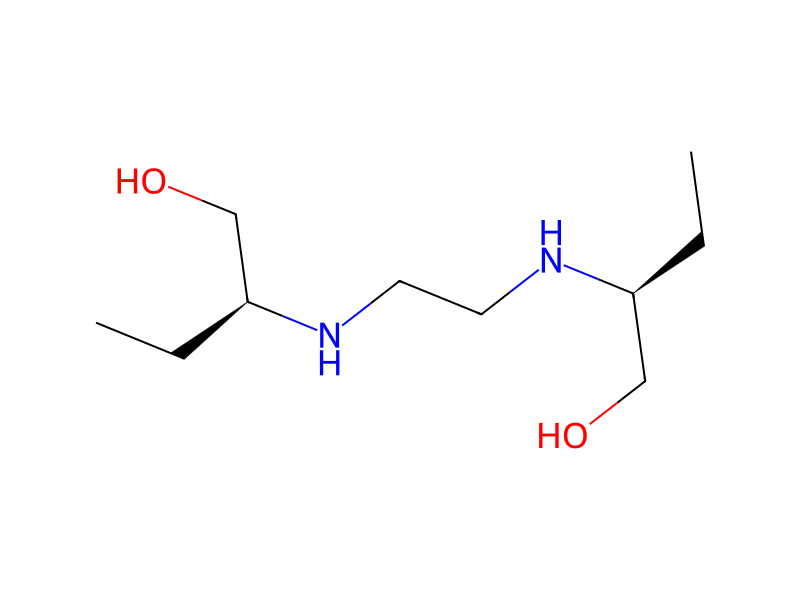
- Standard-SMILES
CC[C@@H](CO)NCCN[C@@H](CC)CO- InChIKey
AEUTYOVWOVBAKS-UWVGGRQHSA-N- Summenformel
- C10H24N2O2
- Durchschnittliche Molmasse
- 204,31 g/mol
Überblick
Ethambutol is an ethylenediamine derivative that is ethane-1,2-diamine in which one hydrogen attached to each of the nitrogens is sutstituted by a 1-hydroxybutan-2-yl group (S,S-configuration). It is a bacteriostatic antimycobacterial drug, effective against Mycobacterium tuberculosis and some other mycobacteria. It is used (as the dihydrochloride salt) in combination with other antituberculous drugs in the treatment of pulmonary and extrapulmonary tuberculosis; resistant strains of M. tuberculosis are readily produced if ethambutol is used alone. It has a role as an antitubercular agent, a xenobiotic and an environmental contaminant. It is a member of ethanolamines and an ethylenediamine derivative.
Namen und Bezeichner
- Bevorzugter Name
- Ethambutol
- IUPAC
- (2S)-2-[2-[[(2S)-1-hydroxybutan-2-yl]amino]ethylamino]butan-1-ol
- Englischer Name
- (+-)-N,N'-Bis[1-(hydroxymethyl)propyl]ethylenediamine
- Summenformel
- C10H24N2O2
- Molmasse
- 204.31
Namen und Synonyme
ethambutol74-55-5Ethambutolum(+)-ethambutolAethambutolumDiambutolD-Ethambutol(+)-S,S-EthambutolEtambutol(S,S)-ethambutolEtambutoloS,S-Ethambutol
Weitere Namen anzeigen
1-Butanol, 2,2'-(ethylenediimino)di-, DL- (8CI)1-Butanol, 2,2'-(1,2-ethanediyldiimino)bis-, (R*,R*)-1-Butanol, 2,2'-(1,2-ethanediyldiimino)bis-, (R*,R*)-(+-)-(2R)-2-[2-[[(2R)-1-hydroxybutan-2-yl]amino]ethylamino]butan-1-ol
(+)-2,2'-(Ethylenediimino)di-1-butanolCHEBI:4877(+)-N,N'-Bis(1-(hydroxymethyl)propyl)ethylenediamine(2S)-2-[2-[[(2S)-1-hydroxybutan-2-yl]amino]ethylamino]butan-1-ol8G167061QZD-2,2'-(Ethylenediimino)di-1-butanolD-2,2'-(Ethylenediimino)bis(1-butanol)DTXSID8023006
Datenbank-Bezeichner
- CAS
36697-71-9、74-55-5- PubChem CID
- 14052
- DTXSID
DTXSID8023006- ChEMBL
CHEMBL44884- ChEBI
CHEBI:4877- UNII
- 8G167061QZ
- EC Number
- 200-810-6
- Nikkaji
- J5.261B
Eigenschaften
Berechnete Struktureigenschaften
- XLogP
- -0,1
- Polarare Oberfläche (TPSA)
- 64,5 Ų
- H-Brücken-Donoren
- 4
- H-Brücken-Akzeptoren
- 4
- Frei drehbare Bindungen
- 9
- Schwere Atome
- 14
- Formalladung
- 0
- Komplexität
- 109
Experimentelle und physikochemische Eigenschaften
Drugs
Pharmaceuticals -> Listed in ZINC15
Pharmaceuticals -> Antibiotics
LogP
-0.3
-0.4
OdorESSENTIALLY ODORLESS
TasteHAS BITTER TASTE
Color/Form
Crystals
WHITE, CRYSTALLINE POWDER
Solubility
Soluble in chloroform, methylene chloride; less soluble in benzene; sparingly soluble in water
7.58e+00 g/L
Human Drugs
Breast Feeding; Lactation; Milk, Human; Anti-infective Agents; Antitubercular Agents
Antituberculosis medicines
Endocrine DisruptorsPotential endocrine disrupting compound
Melting Point
171.5-174.5
87.5-88.8 °C
88 °C
Optical Rotation
White powder, crystalizes as needles, mp 121-122 °C (dec). Soluble in water, methanol, N,N-dimethylformamide. Insoluble in ethanol, ethyl ether, chlorofor,. UV max: 265 nm. Specific optical rotation: +3 deg at 20 °C/D ( c = 5% in water). /Mixture with isoniazid methane sulfonate/
Specific optical rotation: +13.7 deg at 25 °C/D ( c = 2 in water)
Physical DescriptionSolid
Stability/Shelf LifeSTABLE IN LIGHT & HEAT BUT IS HYGROSCOPIC WHEN EXPOSED TO HIGH RELATIVE HUMIDITIES
Physikochemische Eigenschaften
- Siedepunkt
- 345.342 · 345.342±22.00 °C(Press: 760.00 Torr)(predicted)
- Dichte
- 0.987 · 0.987±0.06 g/cm3(Temp: 25 °C; Press: 760 Torr)(predicted)
- pka
- 14.426 · 14.426±0.10(predicted)
Sicherheit und Regulatorisches
GHS-Klassifizierung
GHS Classification
Warning
H302 (100%): Harmful if swallowed [Warning Acute toxicity, oral]
P260, P264, P270, P301+P317, P319, P330, and P501 (click each P-code to see the statement)
The GHS information provided by 1 company from 1 notification to the ECHA C&L Inventory.
Gefahrenhinweise
Other Safety InformationIMAP assessments - 1-Butanol, 2,2'-(1,2-ethanediyldiimino)bis-, [S-(R*,R*)]-: Environment tier I assessment
FDA Requirements
The Approved Drug Products with Therapeutic Equivalence Evaluations List identifies currently marketed prescription drug products, incl ethambutol hydrochloride approved on the basis of safety and effectiveness by FDA under sections 505 of the Federal Food, Drug, and Cosmetic Act. /Ethambutol hydrochloride/
Hazard Classes and CategoriesAcute Tox. 4 (100%)
Sicherheit und Schutzausrüstung
Storage Conditions
Ethambutol hydrochloride tablets should be protected from light, moisture, and excessive heat and should be stored in well-closed containers at 15-30 °C.
Store below 40 °C (104 °F), preferably between 15 and 30 °C (50 and 86 °F), unless otherwise specified by manufacturer. Store in a well-closed container.
Disposal Methods
SRP: At the time of review, criteria for land treatment or burial (sanitary landfill) disposal practices are subject to significant revision. Prior to implementing land disposal of waste residue (including waste sludge), consult with environmental regulatory agencies for guidance on acceptable disposal practices.
Toxikologische Informationen
Interactions
Patient administered digitoxin (0.1 mg/day orally) while taking ethambutol (20-25 mg/kg/day) had markedly decreased serum levels of digitoxin compared to controls (16.6 versus 35 ng/mL). Binding of digitoxin by blood proteins was same in both groups. Its metabolism was probably increased.
Concurrent administration of ethambutol with other neurotoxic medications may increase the potential for neurotoxicity, such as optic and peripheral neuritis.
Aluminum salts may delay and reduce the absorption of ethambutol.
The effect of repeated administration of rifabutin on the pharmacokinetics and metabolism of ethambutol was evaluated in ten healthy volunteers. The subjects received a single oral administration of 1200 mg ethambutol on days 1 and 10 and a single daily oral dose of 300 mg rifabutin from days 3 to 9. No statistically significant difference was found in plasma pharmacokinetics (C(max), t(max), AUC, half-life and MRT) and in the renal clearance, whereas a significant decrease in the amount of unchanged ethambutol excreted in urine was observed. The decrease observed in ethambutol urinary excretion may be accounted for by taking into consideration the variability of the urinary excretion of ethambutol reported in the literature. However, a slight, likely not clinically relevant, induction or activation of kidney alcohol and/or aldehyde dehydrogenase isoenzymes by rifabutin cannot be ruled out at present. Evidence exists in the present study for autoinduction of rifabutin metabolism; this is shown by the lower plasma concentrations obtained 24 hr after the seventh dose as compared to the theoretical concentrations.
Hepatotoxicity
Because ethambutol is almost always used in combination with isoniazid, rifampin or other antituberculosis agents, the frequency of serum aminotransferase elevations attributable to ethambutol alone cannot be estimated with any confidence. The addition of ethambutol to isoniazid, rifampin or pyrazinamide does not appear to increase the rate of transient ALT elevations during therapy. In addition, ethambutol is a rare cause of acute, symptomatic liver injury. Despite 50 years of use, ethambutol has been linked to clinically apparent liver injury in only a few case reports. In the best described instance (Case 1), the onset of symptoms was 2 months after starting combination antituberculosis therapy and, in contrast to liver injury due to isoniazid or pyrazinamide, the pattern of serum enzymes was distinctly cholestatic. The recurrence of liver injury upon rechallenge with ethambutol but not isoniazid made the attribution convincing. Other case reports have described liver injury occurring in the context of DRESS syndrome, arising within 2 to 6 weeks of starting antituberculosis therapy with fever, rash, eosinophilia and other organ involvement such as liver, kidney and lung. Several published instances have described recurrence of injury after rechallenge with ethambutol.
Adverse EffectsLoss of Visual Acuity
Milk ConcentrationsEthambutol is distributed into milk in concentrations approximately equal to plasma concentrations of the drug.
Toxicity Summary
IDENTIFICATION: Ethambutol is used to treat tuberculosis. Ethambutol is an odorless crystalline hygroscopic powder. It is soluble in water, alcohol, chloroform, methyl alcohol, and very slightly soluble in ether. HUMAN EXPOSURE: Summary: Main risks and target organs: During chronic treatment ethambutol may produce visual and neurological disturbances, allergic reactions, gastrointestinal symptoms, psychiatric symptoms and transient impairment of liver function. This last event has a very low incidence. Increased serum uric acid levels and acute gouty arthritis have been reported. Summary of clinical effects: Acute overdosage may cause gastrointestinal symptoms, hallucinations and optic neuritis. Acute overdosage symptoms include nausea, abdominal pain, fever, mental confusion, visual hallucinations, and optic neuropathy (retrobulbar neuritis) with doses over 10 g. The effects of overdosage are not well established. During chronic treatment the following have been reported: Visual disturbances: Ethambutol may produce a reduction of visual acuity which appear to be due to optic neuritis. Central scotoma and green-red colour blindness may also occur. Allergic reactions: Rash, anaphylactoid reactions, dermatitis and pruritus. Gastrointestinal symptoms: Abdominal pain, anorexia, nausea, vomiting. Neurological disturbances and psychiatric symptoms: Headache, peripheral neuritis, dizziness, mental confusion, disorientation and hallucinations. Other side effects: Jaundice, transient impairment of liver function, fever, increase of serum uric acid levels, joint pain, acute gouty arthritis, malaise. Ethambutol may diffuse into milk. Ethambutol is a synthetic oral antibiotic derivative of ethylenediamine. Contraindications: Ethambutol hydrochloride is contraindicated in patients who are known to be hypersensitive to this drug. Renal impairment, old age and optic neuritis are relative contraindications. Routes of entry: Oral: Ethambutol is only available for oral use. Absorption by route of exposure: About 80% of an oral dose of ethambutol is absorbed from the gastro-intestinal tract, and the remainder appears in the feces unchanged. Absorption is not significantly impaired by food. Distribution by route of exposure: Ethambutol diffuses readily into red blood cells and into the cerebrospinal fluid when the meninges are inflamed. The concentration in erythrocytes at steady state is approximately twice the plasma concentration. It has been reported to cross the placenta and is excreted in breast milk. Biological half-life by route of exposure: The serum half-life in therapeutic doses is 3 hours, increasing in renal failure, as 80% is excreted renally. Metabolism: The main path of metabolism appears to be an initial oxidation of the alcohol to an aldehydic intermediate, followed by conversion to a dicarboxylic acid. Elimination by route of exposure: During the 24 hour period following oral administration of ethambutol, approximately 50% of the initial dose is excreted unchanged in the urine, while an additional 8% to 15% appears in the form of metabolites. From 20 to 22% of the initial dose is excreted in the feces as unchanged drug. Mode of action: Toxicodynamics: The underlying cause of visual alterations appears to be a disturbance of metabolism due to depletion of copper and zinc which serve as prosthetic groups for many enzymes. The eye normally contains a considerable store of zinc. Much of the zinc is in the pigmented cells of the outer zone of the retina, where it serves as a metal prosthetic group for retinol (alcohol) dehydrogenase. Pharmacodynamics: Ethambutol is an oral chemotherapeutic agent which is specifically effective against actively growing microorganisms of the genus Mycobacterium, including M. tuberculosis. Ethambutol is bacteriostatic and appears to inhibit the synthesis of one or more metabolites, thus causing impairment of cell metabolism, arrest of multiplication, and cell death. No cross resistance with other available antimycobacterial agents has been demonstrated. Ethambutol has been shown to be effective against strains of mycobacterium tuberculosis but does not seem to be active against fungi, viruses, or other bacteria. Ethambutol is also active against some atypical mycobacteria including M. kansasii. Primary resistance to ethambutol is uncommon in developed countries but resistant strains of M. tuberculosis are readily produced if the drug is used alone. Human data: Adults: Subclinical impairment of colour discrimination was reported to be relatively common in patients receiving ethambutol daily as part of antituberculous chemotherapy when compared with 50 patients receiving other antituberculous agents. Peripheral neuropathy has been reported in tubercular patients who had received ethambutol among other drugs. Interactions: Results of a crossover study involving 13 tuberculous patients suggest that concomitant administration of aluminium hydroxide may delay and reduce absorption of ethambutol in some patients. Untoward effects may be enhanced when ethambutol is combined with isoniazid or rifampicin. Main adverse effects: Ethambutol may produce decreased visual acuity which appear to be due to optic neuritis and to be related to dose and duration of treatment. The effects are generally reversible when administration of the drug is discontinued promptly. Ethambutol may produce constriction of visual field, central and peripheral scotoma, and green-red color blindness which may be associated with retrobulbar neuritis. Renal clearance of urate may be reduced in about 50% of patients receiving ethambutol and acute gout has been precipitated in patients with gout or impaired renal function. Cholestatic jaundice has been reported. ANIMAL/PLANT STUDIES: Relevant animal data: Toxicological studies in dogs on high prolonged doses, produced evidence of myocardial damage and failure, and depigmentation of the tapetum lucidum of the eyes, the significance of which is not known. Degenerative changes in the central nervous system, apparently not dose-related, have also been noted in dogs receiving ethambutol hydrochloride over a prolonged period. In the rhesus monkey, neurological signs appeared after treatment with high doses given daily over a period of several months. These correlated with specific serum levels of ethambutol hydrochloride and with definite neuro-anatomical changes in the central nervous system. Focal interstitial carditis was also noted in monkeys which received ethambutol hydrochloride in high doses for a prolonged period.
Signs and Symptoms of Toxicity
Human Toxicity Excerpts
/HUMAN EXPOSURE STUDIES/ The aim of the present study was to describe the side effects related to combined Pyrazinamide (PZA) and ethambutol (EMB) treatment given for LTBI, in contacts previously exposed to MDR-TB. In total, 12 consecutive contacts, all of African origin and aged 38+/-5 yrs, were treated with daily PZA (23+/-4 mg.kg(-1)) and EMB (17+/-4 mg.kg(-1)) at Geneva University Hospital outpatient clinic (Switzerland), as a result of contact-tracing procedures for two patients with contagious MDR-TB. Clinical status and liver function tests (aspartate aminotransferase (ALAT) and alanine aminotransferase (ASAT)) were monitored monthly. In seven cases (58%) treatment was discontinued after a median of 119 days, due to hepatic toxicity in six cases (ALAT or ASAT elevation more than four times the upper normal limit), and gastrointestinal symptoms in one case.
/HUMAN EXPOSURE STUDIES/ Seventy patients with pulmonary tuberculosis and 12 healthy controls were included in a study to observe the effect of ethambutol on serum uric acid level. In ethambutol-treated cases a statistically significant increase in mean serum uric acid levels was observed in the second, third and fourth week of treatment. This increase was independent of dosage of ethambutol. However, 22 of the 52 (42%) ethambutol-treated cases showed no increase. ... Hyperuricemia due to ethambutol was reversed with probenecid but not by salicylates. No patient developed acute gouty arthritis although two developed arthralgia.
/EPIDEMIOLOGY STUDIES/ A retrospective observational case series from a single neuro-ophthalmology practice. 8 patients with a history of ethambutol-induced optic neuropathy were examined within 3 months after stopping ethambutol treatment. All patients underwent a neuro-ophthalmologic examination, including visual acuity, color vision, visual fields and funduscopy. Optical coherence tomography (OCT) was performed on both eyes of each patient using the retinal nerve fibre layer analysis protocol. The interval between cessation of ethambutol treatment and the initial visit ranged from 1 week to 3 months. All patients had visual deficits characteristic of ethambutol-induced optic neuropathy at their initial visit, and the follow-up examination was performed within 12 months. Compared with the initial retinal nerve fibre layer thickness (RNFLT), there was a statistically significant decrease in the mean RNFLT of the temporal, superior and nasal quadrants (p = 0.009, 0.019 and 0.025, respectively), with the greatest decrease in the temporal quadrant (mean decrease 26.5 mum). A decrease in RNFLT is observed in all quadrants in patients with ethambutol-induced optic neuropathy who have recently discontinued the medication. This decrease is most pronounced in the temporal quadrant of the optic disc.
/HUMAN EXPOSURE STUDIES/ From January 1984-December 1987, 1783 patients received combination therapy of isoniazid, rifampin, and ethambutol for the control of tuberculosis. Forty-two developed symptomatic hepatitis during the period of treatment. Fifteen were hepatitis B virus carriers, and the remaining 27 were noncarriers. The peak serum transaminase and bilirubin levels were higher in carriers. Seven carriers died of fulminant or subacute hepatic failure, and only 1 noncarrier died. Eleven carriers had detectable serum hepatitis B virus deoxyribonucleic acid during the acute stage of hepatitis.
For more Human Toxicity Excerpts (Complete) data for ETHAMBUTOL (12 total), please visit the HSDB record page.
Drug Induced Liver Injury
Benchmark Dataset for the Liver Toxicity Knowledge Base (LTKB)
ethambutol
Myambutol
Antimycobacterials
8
most-DILI-concern
Non-Human Toxicity Excerpts
/LABORATORY ANIMALS: Developmental or Reproductive Toxicity/ Intramuscular administration of 25 & 250 mg ethambutol-2HCl/kg to rats & cocks produced alterations of seminiferous epithelium with consequent blocking of spermatogenesis in both animals at 250 mg.
/LABORATORY ANIMALS: Developmental or Reproductive Toxicity/ Studies in mice given high doses have shown that ethambutol causes a low incidence of cleft palate, exencephaly, and vertebral column abnormalities. In addition, studies in rats given high doses have shown that ethambutol causes minor abnormalities of the cervical vertebrae. Studies in rabbits given high doses have shown that ethambutol may cause monophthalmia, limb reduction defects, hare lip, and cleft palate.
Environmental Water Concentrations
While data specific to ethambutol were not located(SRC, 2007), the literature suggests that some pharmaceutically active compounds originating from human and veterinary therapy are not eliminated completely in municipal sewage treatment plants and are therefore discharged into receiving waters(1). Wastewater treatment processes often were not designed to remove them from the effluent(2). Selected organic waste compounds may be degrading to new and more persistent compounds that may be released instead of or in addition to the parent compound(2). Studies have indicated that several polar pharmaceutically active compounds can leach through soil(1).
Antidote and Emergency Treatment
Decontamination: Administer activated charcoal orally if conditions are appropriate. Gastric lavage is not necessary after small to moderate ingestions if activated charcoal can be given promptly. /Antibacterial agents/
Emergency and supportive measures: Maintain an open airway and assist ventilation if necessary. Treat coma, seizures, hypotension, anaphylaxis, and hemolysis if they occur. Replace fluid losses resulting from gastroenteritis with intravenous crystalloids. ... /Antibacterial agents/
Enhanced elimination: Most antibiotics are excreted unchanged in the urine, so maintenance of adequate urine flow is important. The role of forced diuresis in unclear. Hemodialysis is not usually indicated, except perhaps in patients with renal dysfunction and a high level of a toxic agent. /Antibacterial agents/
Effects During Pregnancy and Lactation◉ Summary of Use during Lactation
Non-Human Toxicity Values
LD50 Mouse oral 2800 mg/kg /Mixture with isoniazid methane sulfonate/
LD50 Mouse ip 2210 mg/kg /Mixture with isoniazid methane sulfonate/
Regulatorische Informationen
FDA Requirements
The Approved Drug Products with Therapeutic Equivalence Evaluations List identifies currently marketed prescription drug products, incl ethambutol hydrochloride approved on the basis of safety and effectiveness by FDA under sections 505 of the Federal Food, Drug, and Cosmetic Act. /Ethambutol hydrochloride/
Chemie und Industrie
Pharmakologische Informationen
ATC Code
J04AK02
J - Antiinfectives for systemic use
QJ - Antiinfectives for systemic use
J04AK02
Protein BindingEthambutol is 20-30% bound to protein in plasma. Data regarding which proteins ethambutol binds to are not readily available.
Pharmacodynamics
Ethambutol is indicated in combination with other anti-tuberculosis drugs in the treatment of pulmonary tuberculosis. It has a long duration of action as it is administered daily, and a moderate therapeutic window. Patients should be counselled regarding the risk of optic neuritis and hepatic toxicity.
Mechanism of Action
Ethambutol diffuses into _Mycobacterium_ cells. Once inside the cell, ethambutol inhibits the arabinosyltransferases (embA, embB, and embC), preventing formation of the cell wall components arabinogalactan and lipoarabinomannan, and preventing cell division. Decreased concentrations of arabinogalactan in the cell wall reduces the number of binding sites for mycolic acid, leading to the accumulation of mycolic acid, trehalose monomycolate, and trehalose dimycolate. Lipoarabinomannan is a component of a cell surface molecule involved in the interaction with host cells. Reduced levels of lipoarabinomannan may interfere with mycobacterial interaction with host cells.
Ethambutol is bacteriostatic in action. Although the exact mechanism of action has not been fully elucidated, the drug appears to inhibit the synthesis of one or more metabolites in susceptible bacteria resulting in impairment of cellular metabolism, arrest of multiplication, and cell death. Ethambutol is active against susceptible bacteria only when they are undergoing cell division.
Biological Half-Life
Ethambutol has a half life of 3.3 hours in patients with normal renal function. In patients with renal failure, the half life could be 7 hours or longer.
The plasma half-life of ethambutol is approximately 3.3 hours in patients with normal renal function. The half-life is prolonged in patients with impaired renal or hepatic function. In patients with renal failure, the half-life may be 7 hours or longer.
Six normal adult volunteers were administered 15 mg/kg of ethambutol (EMB) by a constant-rate 1-hr infusion. Plasma and urine samples were collected up to 24 and 72 hr, respectively. ... Subsequent postinfusion EMB levels exhibited multiphasic decay. In the 12-hr period following infusion, EMB levels showed biexponential decay. However, 24-hr plasma levels in all subjects were observed to be higher than those predicted using a two-compartment body model. The alpha phase in these subjects had a mean half-life of 8.6 min while the half-life of the beta phase ranged from 2.5 to 3.6 hr (mean 3.1). The half-life of the gamma phase estimated from plasma data points between 12 and 24 hr averaged 1.2 +/- 3.6 hr. A terminal gamma t1/2 of 15.4 +/- 1.7 hr was calculated from 12-72 hr urine data. ... Plasma EMB clearance ranged from 7.47 to 8.87 mL/min/kg (mean 8.57). ...
Metabolism/Metabolites
Ethambutol is mainly oxidized by an aldehyde dehydrogenase to an aldehyde metabolite, followed by conversion to the dicarboxylic acid 2,2'-(ethylinediimino)di-butyric acid.
... Up to 15% is excreted in the form of two metabolites, an aldehyde and a dicarboxylic acid derivative.
Ethambutol is partially inactivated in the liver by oxidation to an aldehyde intermediate, 2,2?-(ethylenediimino)-di-butyraldehyde, which is converted to the decarboxylic acid derivative, 2,2?-(ethylenediimino)-di-butyric acid.
FDA Pharmacological Classification
8G167061QZ
ETHAMBUTOL
Established Pharmacologic Class [EPC] - Antimycobacterial
Ethambutol is an Antimycobacterial.
MeSH Pharmacological Classification
Drugs used in the treatment of tuberculosis. They are divided into two main classes: first-line agents, those with the greatest efficacy and acceptable degrees of toxicity used successfully in the great majority of cases; and second-line drugs used in drug-resistant cases or those in which some other patient-related condition has compromised the effectiveness of primary therapy.
Absorption, Distribution and Excretion
Oral ethambutol is approximately 75-80% orally bioavailable. A 25 mg/kg oral dose of ethambutol reaches a Cmax of 2-5 µg/mL, with a Tmax of 2-4 hours. In a separate study, the AUC0-8 varied from 6.3 ± 5.5 h\*mg/L to 10.8 ± 7.6 h\*mg/L depending on CYP1A2 genetic polymorphisms.
Ethambutol is 50% eliminated in the urine as the unmetabolized parent compound and 8-15% as inactive metabolites. 20-22% of a dose is eliminated unchanged in the feces.
Patients coinfected with tuberculosis and HIV have an estimated ethambutol volume of distribution of 76.2 L.
Patients coinfected with tuberculosis and HIV have an estimated ethambutol oral clearance of 77.4 L/h.
Approximately 75-80% of an oral dose of ethambutol hydrochloride is rapidly absorbed from the GI tract. Absorption is not substantially affected when the drug is administered with food. Following a single oral ethambutol hydrochloride dose of 25 mg/kg, peak serum ethambutol concentrations of 2-5 mcg/mL are attained within 2-4 hours; serum concentrations of the drug are undetectable 24 hours after the dose.
There is no evidence that accumulation of the drug occurs when ethambutol doses of 25 mg/kg are given once daily in patients with normal renal function. Serum concentrations of the drug are higher and accumulation may occur when ethambutol is used in patients with impaired renal function.
Cellular LocationsExtracellular
Verwendung und Herstellung
Uses
Used to treat atypical mycobacteria, M. kansasii ... M. avium-intracellularis ... a tuberculostatic agent active against most human strains of tubercle bacilli /Hydrochloride/
THERAP CAT: Antibacterial (tuberculostatic)
MEDICATION
Use (kg; approx.) in Germany (2009): >750
Methods of Manufacturing
(+-)-2-AMINOBUTANOL IS RESOLVED VIA ITS TARTRATE AND (+)-ENANTIOMORPH IS CONDENSED WITH 1,2-DICHLOROETHANE IN AN APPROPRIATE DEHYDROCHLORINATING ENVIRONMENT. ETHAMBUTOL THUS FORMED IS DISSOLVED IN SUITABLE SOLVENT & REACTED WITH HCL. /ETHAMBUTOL HYDROCHLORIDE/
PREPD BY HEATING ETHYLENE DICHLORIDE WITH (+)-2-AMINOBUTANOL OR, ALTERNATIVELY, BY ALKYLATING 2-AMINOBUTANOL WITH GLYOXAL USING NABH4 AS REDUCING AGENT.
2-Aminobutanol + glyoxal (racemate separation/reductive amination)
Formulations/Preparations
Oral Tablets, film-coated 100 mg ethambutol Tablets, VersaPharm; Myambutol, X-Gen. Oral Tablets, film-coated 400 mg ethambutol Tablets, Barr; VersaPharm; West-Ward; Myambutol (scored), X-Gen.
Available commercially as the free base or hydrochloride.
Dexambutol; Ebutol; Etibi; Etapiam; Myambutol; Mycobutol; Sural; Tibutol /Ethambutol dihydrochloride/
General Manufacturing Information...IN-VITRO & IN-VIVO STUDIES REVEALED THAT D FORM OF THIS SUBSTANCE (ETHAMBUTOL) EXHIBITED 200 TIMES MORE ACTIVITY THAN DID L ISOMER.
Anbieter50 Anbieter
武汉英诺医药科技有限公司+86-027-59232304 15387063101 · [email protected]
盐城通铭生物科技有限公司15195160625 · [email protected]
HubeiwidelychemicaltechnologyCo.,Ltd18627774460 · [email protected]
上海毕得医药科技股份有限公司400-1647117 13681763483 · [email protected]
河北展药生物科技有限公司15369953316 +8615369953316 · [email protected]
浙江珲达生物科技有限公司0571-89903022 18679456698 · [email protected]
LGM Pharma1-(800)-881-8210 · [email protected]
Syntechem Co.,Ltd[email protected]
安耐吉化学&3A(安徽泽升科技有限公司)021-58432009 400-005-6266 · [email protected]
欧利希(湖北)医药科技有限公司17316404525 17316404525 · [email protected]
United Life Science020-82099279 18988941402 · [email protected]
河北缤享新材料科技有限公司+8618633865755 · [email protected]
MedBio脉铂医药021-69568360 18916172912 · [email protected]
銳迪國際科技有限公司18024082417 · [email protected]
Shaanxi TNJONE Pharmaceutical Co., Ltd[email protected]
上海瀚香生物科技有限公司177-54423994 17754423994 · [email protected]
佛山宝诺生物科技有限公司0757-85921206 18520245316 · [email protected]
Xiamen AmoyChem Co., Ltd+86-86-5926051114 · [email protected]
上海华思格医药科技有限公司13611612777 · [email protected]
斯百全化学(上海)有限公司021-021-021-67601398-809-809-809 15221380277 · [email protected]
南京生利德生物科技有限公司025-57798810 18652991625 · [email protected]
上海麦克林生化科技股份有限公司15221275939 15221275939 · [email protected]
湖北巨胜科技有限公司027-59599241 18871490274 · [email protected]
池州凯隆进出口贸易有限公司[email protected]
BOC Sciences16314854226; +8616314854226 · [email protected]
HANGZHOU LEAP CHEM CO., LTD.+86-571-87711850 +86-15355479329 · [email protected]
昆山中莱特贸易有限公司0512-55170668 13913095008;13770601296 · [email protected]
Alfa Chemistry+1-5166625404 · [email protected]
上海阿拉丁生化科技股份有限公司6206333 13167063860 · [email protected]
陕西缔都医药化工有限公司029-029-81120477 17792793610 · [email protected]
曼哈格(上海)生物科技有限公司400-818 0104 18918165978 · [email protected]
风咏生物(AbMole)021-10000000 13000000000 · [email protected]
上海源叶生物科技有限公司13636370518 · [email protected]
上海陶术生物科技股份有限公司13564774135 · [email protected]
成都标样生物科技有限公司028-81700200 13308200041 · [email protected]
安徽酷尔生物工程有限公司0551-65171243 13856024262 · [email protected]
BOC Sciences[email protected]
Shanghai Acmec Biochemical Technology Co., Ltd.+86-18621343501 · [email protected]
杭州洁汉化工有限公司+86-571-86217390; +8618058761490 · [email protected]
Musechem+1-800-259-7612 · [email protected]
江苏艾康生物医药研发有限公司025-58851090 13913916777 · [email protected]
上海易恩化学技术有限公司400-400-1332688 18019345275 · [email protected]
华世药业(南京)有限公司025-57672321 13739186949 · [email protected]
career henan chemical co+86-0371-86658258 · [email protected]
广州牌牌生物科技有限公司+86-13602409664 +86-17788709170 · [email protected]
成都圣美凯生物科技有限公司028-85157043 15882256948 · [email protected]
北京沃凯生物科技有限公司010-62971590 18548936886 · [email protected]
河南威梯希化工科技有限公司0371-63284658 18135795563 · [email protected]
上海杰瑞兴生物医药科技有限公司17521512546 17721492509 · [email protected]
Aladdin Scientific[email protected]
Zugehörige Reaktionen
2

Verknüpfte Notizen
Wird geladen…