StartseiteMCPWorkbenchSkills
StartseiteWorkbenchBenachrichtigungenMein Bereich
llms.txt · MCP-AnleitungDatenschutz · Nutzungsbedingungen · Supportv1.8.0
  1. Startseite
  2. /Verbindung

Dinatriumperoxid

Sodium peroxide
HCID 14803
Neue NotizNeue ReaktionAnfrage stellen
Druckvorschau
GrundinformationenÜberblickNamen und BezeichnerEigenschaftenSicherheit und RegulatorischesChemie und IndustrieZugehörige ReaktionenNotizen zur Verbindung
TeilstruktursucheÄhnliche Strukturen suchen

Grundinformationen

CAS
1313-60-6
Standard-SMILES
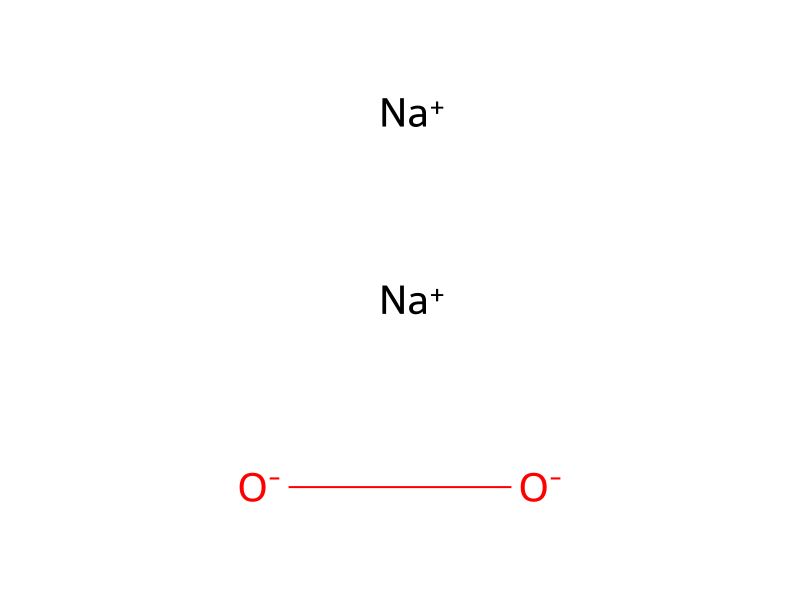
[Na+].[Na+].[O-][O-]
InChIKey
PFUVRDFDKPNGAV-UHFFFAOYSA-N
Summenformel
Na2O2
Durchschnittliche Molmasse
77,978 g/mol
Monoisotopische Masse
77,9693678

Überblick

Sodium peroxide appears as a yellow-white to yellow granular solid. Mixtures with combustible material are readily ignited by friction, heat, or contact with moisture. May vigorously decompose under prolonged exposure to heat, causing the rupture of the containers.

Namen und Bezeichner

Bevorzugter Name
Sodium peroxide
IUPAC
disodium;peroxide
Lokaler Name
Dinatriumperoxid
Englischer Name
Sodium peroxide
Summenformel
Na2O2
Molmasse
77.98

Namen und Synonyme

SODIUM PEROXIDE1313-60-6Disodium peroxideSolozoneNatriumsuperoxidSodium dioxideDisodium dioxideNatrium peroxydatumSodium oxide, per-Flocool 180Sodium oxide (Na2O2)Sodium peroxide (Na2(O2))
Weitere Namen anzeigen
OxolinGYHNflocoolNa2-(O2)solozone[qr]Oxygen powderPeroxydisodium
3GSN3JCJ5KDTXSID0061660RefChem:6245DTXCID3034038215-209-4disodium;peroxideMFCD00003497UNII-3GSN3JCJ5K

Datenbank-Bezeichner

CAS
1313-60-6
PubChem CID
14803
DTXSID
DTXSID0061660
EC Number
215-209-4
Nikkaji
J209.344H

Eigenschaften

Berechnete Struktureigenschaften

Polarare Oberfläche (TPSA)
46,1 Ų
H-Brücken-Donoren
0
H-Brücken-Akzeptoren
2
Frei drehbare Bindungen
0
Schwere Atome
4
Formalladung
0
Komplexität
4

Experimentelle und physikochemische Eigenschaften

Chemical Classes · 2 Einträge

Metals -> Peroxides, Metal

Reactive agents - 1st degree

Density · 3 Einträge

2.805 @ 20 °C

2.8 g/cm³

2.805 @25 °C

Color/Form · 4 Einträge

Yellowish-white, granular powder

WHITE POWDER TURNING YELLOW ON EXPOSURE TO ATMOSPHERE

Yellowish-white powder turns yellow when heated

Pale yellow solid

Solubility · 3 Einträge

SOLUBLE IN ACID; INSOLUBLE IN ALKALI

Freely sol in water, forming sodium hydroxide and hydrogen peroxide, the latter quickly decomp into oxygen and water

Solubility in water: reaction

Boiling Point657 °C, decomp
Decomposition460 °C
Melting Point · 2 Einträge

460 °C, decomp

675 °C

Physical Description · 3 Einträge

Sodium peroxide appears as a yellow-white to yellow granular solid. Mixtures with combustible material are readily ignited by friction, heat, or contact with moisture. May vigorously decompose under prolonged exposure to heat, causing the rupture of the containers.

Sicherheit und Regulatorisches

Sicherheitsangaben dienen nur zur Orientierung und ersetzen weder das Sicherheitsdatenblatt (SDB) des Lieferanten noch geltende Vorschriften oder eine fachliche Bewertung.

GHS-Klassifizierung

GHS Classification · 6 Einträge

Danger

H271: May cause fire or explosion; strong Oxidizer [Danger Oxidizing liquids; Oxidizing solids]

P210, P220, P260, P264, P280, P283, P301+P330+P331, P302+P361+P354, P304+P340, P305+P354+P338, P306+P360, P316, P321, P363, P370+P378, P371+P380+P375, P405, P420, and P501 (click each P-code to see the statement)

Danger

H271 (100%): May cause fire or explosion; strong Oxidizer [Danger Oxidizing liquids; Oxidizing solids]

P210, P220, P260, P264, P264+P265, P280, P283, P301+P330+P331, P302+P361+P354, P304+P340, P305+P354+P338, P306+P360, P316, P317, P321, P363, P370+P378, P371+P380+P375, P405, P420, and P501 (click each P-code to see the statement)

Gefahrenhinweise

Regulatory Information · 4 Einträge

Chemical: Sodium peroxide (Na2(O2))

Status: Active Update: 30-03-2018 https://echa.europa.eu/registration-dossier/-/registered-dossier/23936

Sodium peroxide: HSNO Approval: HSR001355 Approved with controls

The New Jersey Worker and Community Right to Know Act requires public and private employers to provide information about hazardous substances at their workplaces. (N.J.S.A. 34:5A-1 et. seq.)

Other Safety InformationIMAP assessments - Sodium peroxide (Na2(O2)): Environment tier I assessment
DOT LabelOxidizer
Fire Hazards · 3 Einträge

Excerpt from ERG Guide 144 [Oxidizers (Water-Reactive)]:

· May ignite combustibles (wood, paper, oil, clothing, etc.).

Not combustible but enhances combustion of other substances. Risk of fire and explosion on contact with combustible substances.

Fire Potential · 6 Einträge

Chemie und Industrie

Verwendung und Herstellung

Uses · 6 Einträge

Used as a chemical intermediate, catalyst, oxidizing agent, antiseptic, and bleaching agent for textiles, paper, and other products; Also used in oxygen-supply systems, water purification, ore processing, and chemical analysis; [HSDB]

Pulp and Paper Processing [Category: Industry]

For Sodium Peroxide (USEPA/OPP PC Code: 063606) there are 0 labels match. /SRP: Not registered for current use in the U.S./

Bleaching animal and vegetable fibers, feathers, bones, ivory, wood, wax, sponges, coral; rendering air charged with carbon dioxide respirable as in torpedo boats, submarines, diving bells, etc; purifying air in sick rooms; dyeing and printing textiles; chemical analysis; general oxidizing agent.

CATALYST IN POLYMERIZATION OF STYRENE TO POLYSTYRENE

CHEM INT FOR OTHER INORG PEROXY CMPD & IN ORGANIC SYNTHESIS; OXIDIZING AGENT IN CHEMICAL ANALYSIS; BLEACHING AGENT FOR TEXTILES & PAPER; COMPONENT OF OXYGEN-SUPPLY SYSTEMS; AGENT FOR REMOVING PARAFFINS BLOCKING OIL WELLS

U.S. Exports · 2 Einträge

(1972) 5.99X10+7 GRAMS

(1975) 7.48X10+7 GRAMS

Methods of Manufacturing · 2 Einträge

Reaction of sodium metal with oxygen (free of carbon dioxide and water vapor)

Prepared by heating sodium metal to 300 °C in aluminum vessels with a current of air from which carbon dioxide has been removed. Prepn of the octahydrate: Penneman, Inorg Syn 3, 1 (1950).

Formulations/PreparationsThe product of commerce contains 90-95% sodium peroxide.
General Manufacturing Information · 2 Einträge

Sodium peroxide (Na2(O2)): ACTIVE

Discussion on the use of hydrogen peroxide and sodium peroxide in the bleaching of tripe.

Anwendungen · 2 Einträge

BeschreibungSodium peroxide has a molecular formula of Na2O2 and is an inorganic peroxide salt. It is a yellowish-white powder that turns yellow when heated. Sodium peroxide absorbs water and carbon dioxide from the air and is soluble in cold water. It is a strong oxidizing agent, is corrosive and can cause burns to the eyes and skin, and is also toxic by ingestion and inhalation. Sodium peroxide is water reactive and a dangerous fire and explosion risk in contact with water, alcohol, or acids. Sodium peroxide forms self-igniting mixtures with powdered metals and organic materials. It is incompatible with ethyl or methyl alcohol, glacial acetic acid, carbon disulfide, glycerin, ethylene glycol, and ethyl acetate. The four-digit UN identification number is 1504. The NFPA 704 designation is health 3, flammability 0, and reactivity 1. The 704 diamond has the prefix “oxy” in the white space at the bottom. It is used as bleach and as an oxygen-generating material for diving bells and submarines.

Zugehörige Reaktionen

19
Reaktionsaufzeichnung erstellen
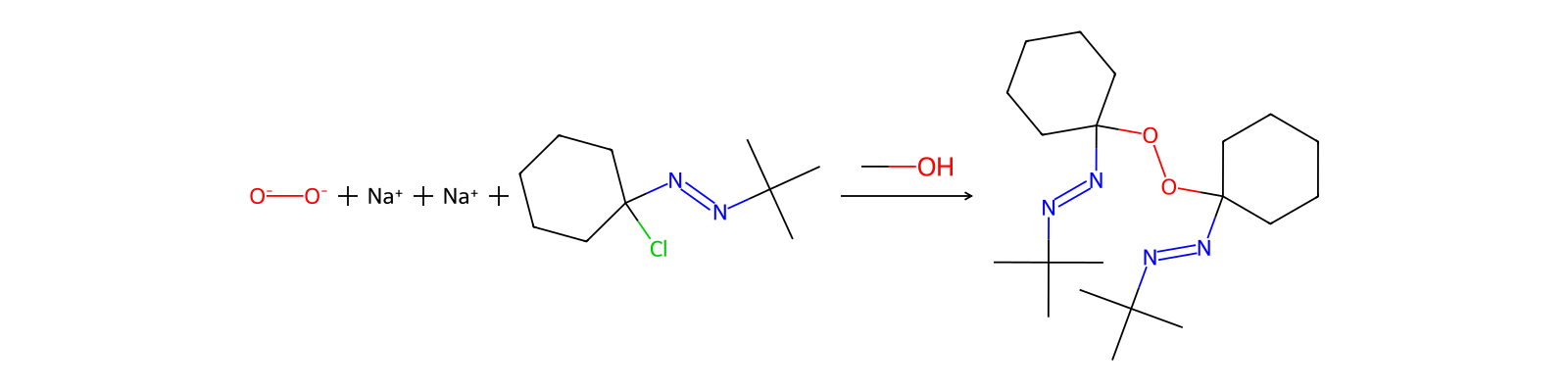
Reaktionsgleichung von HRID 26630
HRID 26630als Eduktuspto-grants-1979_04
Reaktionsgleichung von HRID 263302
HRID 263302als Eduktuspto-grants-1979_05
Reaktionsgleichung von HRID 596140
HRID 596140als Eduktuspto-grants-1977_03
Reaktionsgleichung von HRID 616580
HRID 616580als Eduktuspto-grants-1978_02
Reaktionsgleichung von HRID 865517
HRID 865517als Eduktuspto-grants-1996_10
Reaktionsgleichung von HRID 964457
HRID 964457als Eduktuspto-grants-1998_06
Reaktionsgleichung von HRID 980571
HRID 980571als Eduktuspto-grants-1987_01
Reaktionsgleichung von HRID 1022873
HRID 1022873als Eduktuspto-grants-2014_05
Seite 1 von 3

Notizen zur Verbindung

Wird geladen…

Auf dieser SeiteGrundinformationenÜberblickNamen und BezeichnerEigenschaftenSicherheit und RegulatorischesChemie und IndustrieZugehörige ReaktionenNotizen zur Verbindung
Weitere Aktionen
Neue NotizNeue ReaktionAnfrage stellen

White to pale-yellow granules; [CHEMINFO MSDS]

YELLOW-TO-WHITE POWDER.

Stability/Shelf LifeABSORBS WATER & CARBON DIOXIDE FROM AIR.
Other Experimental Properties · 5 Einträge

Reacts with water

Active oxygen content approx 20% by weight; evolves heat when dissolved in cold water

Strong oxidizing agent

With dilute acids hydrogen peroxide is formed which remains stable

For more Other Experimental Properties (Complete) data for SODIUM PEROXIDE (7 total), please visit the HSDB record page.

Physikochemische Eigenschaften

Schmelzpunkt
460 °C · 460 °C (dec.)(lit.)
Siedepunkt
657 °C · 657°C
Dichte
2.8 · 2.8
Dampfdruck
0.001 Pa · 0.001Pa at 20℃
Flammpunkt
657 °C · 657°C
storage temp.
15 °C · Store at +15°C to +25°C.
Löslichkeit
Soluble in acid. Insoluble in alkali.
Aggregatzustand
beads (small)
Farbe
Yellow
Wichte
2.805 · 2.805
Geruch (Odor)
Odorless
PH
12.8 · 12.8 (100g/l, H2O, 20℃)
Wasserlöslichkeit
2 · Soluble in water, forming NaOH and H{2}O{2}. Soluble in acid. Insoluble in alkali.
Spezifische Wärmekapazität
1.14 J/ · Cp(crystal): 1.14 J/(g·K), at 25℃
Merck
14 · 14,8655
Dielectric constant
2.7 · 2.7(Ambient)
Stabilität
Reacts violently with water. Contact with combustible materials may cause fire or explosion. Incompatible with strong oxidizing agents, alcohols, organic materials, acids, powdered metals. Absorbs carbon dioxide from the air.
InChI
1S/2Na.O2/c;;1-2/q2*+1;-2
InChIKey
PFUVRDFDKPNGAV-UHFFFAOYSA-N
SMILES
[Na+].[Na+].[O-][O-]
CAS Datenbank
1313 · 1313-60-6(CAS DataBase Reference)
EPA chemische Informationen
Sodium peroxide (1313-60-6)

MIXTURES OF SODIUM PEROXIDE & COMBUSTIBLE, ORGANIC OR READILY OXIDIZABLE SUBSTANCES...IGNITE EASILY BY FRICTION OR ON CONTACT WITH A SMALL AMT OF WATER.

A mixture of sodium peroxide and aluminum powder reacts with incandescence. ... When the mixture is exposed to moist air, spontaneous ignition occurs.

When the mixture /of sodium peroxide and magnesium powder/ is exposed to moist air, spontaneous combustion occurs.

Sodium peroxide oxidizes antimony, arsenic, copper, potassium, tin, and zinc to incandescence.

Sodium peroxide...is spontaneously flammable with aniline, benzene, organic matter such as paper and wood, and diethyl ether. Mixtures with charcoal, glycerine, certain oils, and phosphorus burn... When a mixture of sodium peroxide and calcium carbide (powdered) is exposed to damp air, spontaneous combustion occurs. ... Sodium peroxide will ignite...organic cmpd, eg, hexamethylenetetramine when the mixture is moistened.

A mixture of sodium peroxide, silver chloride, and charcoal ignites spontaneously.

Health Hazards · 2 Einträge

Excerpt from ERG Guide 144 [Oxidizers (Water-Reactive)]:

· TOXIC; inhalation or contact with vapor, substance, or decomposition products may cause severe injury or death.

Hazards Summary · 1 Eintrag

Hazardous decomposition products include oxygen (increased fire hazard) and toxic oxides of sodium; Corrosive to skin, eyes, and upper respiratory tract; [CHEMINFO MSDS] Corrosive; Inhalation of high concentration can cause chemical pneumonitis; [MSDSonline]

DOT ID and Guide1504 144
Reactive GroupBases, Strong
EC ClassificationSymbol: O, C; R: 8-35; S: (1/2)-8-27-39-45
UN ClassificationUN Hazard Class: 5.1; UN Pack Group: I
Reactivity AlertsExplosive

Sicherheit und Schutzausrüstung

Fire Fighting · 2 Einträge

Excerpt from ERG Guide 144 [Oxidizers (Water-Reactive)]:

NO water. Use dry powder. In case of fire: keep drums, etc., cool by spraying with water. NO direct contact with water.

First Aid Measures · 4 Einträge

Fresh air, rest. Half-upright position. Artificial respiration may be needed. Refer for medical attention.

First rinse with plenty of water for at least 15 minutes, then remove contaminated clothes and rinse again. Refer for medical attention .

First rinse with plenty of water for several minutes (remove contact lenses if easily possible), then refer for medical attention.

Rinse mouth. Do NOT induce vomiting. Refer for medical attention .

Accidental Release Measures · 2 Einträge

· CALL 911. Then call emergency response telephone number on shipping paper. If shipping paper not available or no answer, refer to appropriate telephone number listed on the inside back cover.

· ELIMINATE all ignition sources (no smoking, flares, sparks or flames) from immediate area.

First Aid · 2 Einträge

Excerpt from ERG Guide 144 [Oxidizers (Water-Reactive)]:

General First Aid:

Safe StorageStore in an area without drain or sewer access. Separated from combustible substances, reducing agents, acids and powdered metals. Dry.
Exposure Control and Personal Protection· Wear positive pressure self-contained breathing apparatus (SCBA).
Fire Fighting Procedures · 3 Einträge

If material on fire or involved in fire: use dry chemical, graphite, or dry earth. Use water only if flooding quantities are available. Apply water from as far a distance as possible.

Evacuation: If fire becomes uncontrollable - consider evacuation of one-half (1/2) mile radius.

In case of fire, water should be applied by the sprinkler system or by hose from a safe distance, preferably with a fog nozzle. Foam may be necessary instead if the peroxide is diluted in a low density flammable solvent. Portable extinguishers should not be used except for very small fires. Peroxides threatened by fire should be wetted from a safe distance for cooling. /Peroxides, Organic and Inorganic/

Storage Conditions · 3 Einträge

KEEP TIGHTLY CLOSED & PROTECTED FROM CONTACT WITH ORGANIC OR OXIDIZABLE SUBSTANCES.

...SHOULD...BE STORED IN FIRE-RESISTING BUILDINGS, & SEPARATED FROM FLAMMABLE MATERIALS.

PROTECT AGAINST PHYSICAL DAMAGE & MOISTURE. SEPARATE FROM COMBUSTIBLE, ORGANIC OR OTHER READILY OXIDIZABLE MATERIALS. DO NOT STORE IN AREAS SUBJECT TO MOISTURE. IMMEDIATELY REMOVE & DISPOSE OF ANY SPILLED PEROXIDE.

Cleanup MethodsDilute and drain into the sewer with abundant water. /Hydrogen peroxide/
Nonfire Spill ResponseExcerpt from ERG Guide 144 [Oxidizers (Water-Reactive)]:
Disposal Methods · 1 Eintrag

SRP: At the time of review, criteria for land treatment or burial (sanitary landfill) disposal practices are subject to significant revision. Prior to implementing land disposal of waste residue (including waste sludge), consult with environmental regulatory agencies for guidance on acceptable disposal practices.

Spillage Disposal · 1 Eintrag

Personal protection: complete protective clothing including self-contained breathing apparatus. Do NOT absorb in saw-dust or other combustible absorbents. Do NOT let this chemical enter the environment. Sweep spilled substance into covered containers. Then store and dispose of according to local regulations.

Toxikologische Informationen

Adverse EffectsDermatotoxin - Skin burns.
Exposure RoutesThe substance can be absorbed into the body by inhalation and by ingestion.
Signs and Symptoms · 4 Einträge

Burning sensation. Cough. Laboured breathing. Shortness of breath. Sore throat.

Redness. Serious skin burns. Pain.

Redness. Pain. Blurred vision. Severe deep burns.

Sore throat. Abdominal pain. Nausea. Shock or collapse. Burning sensation.

ICSC Environmental DataThe substance is harmful to aquatic organisms.
Human Toxicity Excerpts · 5 Einträge

...MAY CAUSE CHEMICAL BURNS OF SKIN & MUCOUS MEMBRANES, ALTHOUGH BURNS CAUSED BY HYDROGEN PEROXIDE ARE LESS SERIOUS THAN THOSE CAUSED BY SODIUM PEROXIDE.

NO PRIMARY SYSTEMIC EFFECTS WHEN INGESTED BECAUSE IT IS DECOMPOSED IN /SRP: GI TRACT/ BEFORE ABSORPTION. DECOMPOSITION MAY RELEASE LARGE VOL OF OXYGEN... LARGE DOSES PRESUMABLY PRODUCE GASTRITIS & ESOPHAGITIS.

IRRITANT AND CORROSIVE

Acute exposures to sodium peroxide via inhalation may cause respiratory irritation and difficulty in breathing.

For more Human Toxicity Excerpts (Complete) data for SODIUM PEROXIDE (6 total), please visit the HSDB record page.

Non-Human Toxicity Excerpts · 2 Einträge

/AN AEROSOL/...OF NA2O2 WITH SOME NAO.../WAS USED/ TO REPRESENT PRODUCT OF AN ACCIDENTAL SODIUM METAL FIRE IN A NUCLEAR REACTOR. JUVENILE & ADULT RATS EXPOSED...2 HR TO VARIOUS DILUTIONS OF AEROSOL.../SHOWED NECROSIS OF LARYNX SURFACE/. FINAL PARTICLE SIZE...2.5 UM OR LESS...PREDOMINATELY SODIUM CARBONATE WITH SOME NAOH.

DUE TO INDUSTRIAL DEVELOPMENT OF SODIUM COOLED BREEDER REACTORS, THE CONSEQUENCES OF SODIUM PEROXIDE AEROSOLS ON LETTUCE & TOMATOES WERE STUDIED. NECROSIS WAS REPORTED WHEN DEPOSITS IN SODIUM EQUIV WERE APPROX 300 MG/CU M. LEAVES WERE DESTROYED IF NECROSIS WAS EXTENSIVE.

Populations at Special RiskIndividuals with eye, skin, and chronic respiratory diseases /may be/ at an increased risk. /Hydrogen peroxide/
Probable Routes of Human ExposureIT MAY...BE ENCOUNTERED IN THE AEROSOL FROM SODIUM FIRES.
Antidote and Emergency Treatment · 3 Einträge

Basic treatment: Establish a patent airway. Suction if necessary. Watch for signs of respiratory insufficiency and assist ventilations if necessary. Administer oxygen by nonrebreather mask at 10 to 15 L/min. Monitor for pulmonary edema and treat if necessary ... . Monitor for shock and treat if necessary ... . For eye contamination, flush eyes immediately with water. Irrigate each eye continuously with normal saline during transport ... . Do not use emetics. For ingestion, rinse mouth and administer 5 ml/kg up to 200 ml of water for dilution if the patient can swallow, has a strong gag reflex, and does not drool ... . Do not attempt to neutralize because of exothermic reaction. Cover skin burns with dry, sterile dressings after decontamination ... . /Oxidizers/

Advanced treatment: Consider orotracheal or nasotracheal intubation for airway control in the patient who is unconscious, has severe pulmonary edema, or is in, respiratory arrest. Early intubation, at the first sign of upper airway obstruction, may be necessary. Positive pressure ventilation techniques with a bag valve mask device may be beneficial. Monitor cardiac rhythm and treat arrhythmias as necessary ... . Start an IV with D5W /SRP: "To keep open", minimal flow rate/. Use lactated Ringer's if signs of hypovolemia are present. Watch for signs of fluid overload. Consider drug therapy for pulmonary edema ... . For hypotension with signs of hypovolemia, administer fluid cautiously. Watch for signs of fluid overload ... . Use proparacaine hydrochloride to assist eye irrigation ... . /Oxidizers/

Peroxides should be washed promptly from the skin to prevent irritation. In the case of eye contact, the eyes should be flushed immediately with large amounts of water, and medical attention should be obtained. ... Medical attention should also be obtained in case of accidental ingestion. ... /Peroxides, Organic and Inorganic/

Sicherheitsdaten

F
3-9-23
wgk
1
tsca
TSCA listed
ridadr
UN 1504
hs_code
2815 30 00
RTECS-Nr.
WD3450000
risk_code
8-35
hazard_code
O,C
safety_code
8-27-39-45
hazard_class
5.1
packing_group
I
Speicherklasse
5.1A - Strongly oxidizing hazardous materials
Giftige Stoffe Daten
1313-60-6(Hazardous Substances Data)
Hazard Classifications
Ox. Sol. 1Skin Corr. 1A

VerwendenSodium peroxide historically was used to bleach wood pulp for the production of paper and textiles. It is mainly used for specialized laboratory operations, for example, the extraction of minerals from various ores. Sodium peroxide is used as an oxidizing agent and is used as an oxygen source by reacting with carbon dioxide to produce oxygen and sodium carbonate; it is thus particularly useful in scuba gear, submarines, and so on.

Vor- und nachgelagerte Produkte

Vorgelagerte Rohstoffe

CalciumoxidNatriumSauerstoffRaw powder

Ergänzende Hinweise

DefinitionExists as impurity (about 10%) in sodium peroxide, obtained by heat- ing sodium peroxide in oxygen, reacts with water to yield hydrogen peroxide, oxygen, and sodium hydroxide.