

Grundinformationen
- Standard-SMILES
Nc1n[nH]c(N)n1- InChIKey
PKWIYNIDEDLDCJ-UHFFFAOYSA-N- Summenformel
- C2H5N5
- Durchschnittliche Molmasse
- 99,1 g/mol
- Monoisotopische Masse
- 99,05449516
Überblick
Guanazole appears as colorless crystals. (NTP, 1992)
Namen und Bezeichner
- Bevorzugter Name
- 3,5-Diamino-1,2,4-triazole
- IUPAC
- 1H-1,2,4-triazole-3,5-diamine
- Lokaler Name
- 1-H-1,2,4-triazol-3,5-diamin
- Englischer Name
- 1H-1,2,4-Triazole-3,5-diamine
- Summenformel
- C2H5N5
- Molmasse
- 99.09
Namen und Synonyme
Guanazole1H-1,2,4-Triazole-3,5-diamine1455-77-23,5-DIAMINO-1,2,4-TRIAZOLE3,5-Diamino-s-triazole3,5-Diamino-1H-1,2,4-triazoles-Triazole, 3,5-diamino-NCI-C04819NSC 1895MC 51762NSC-1895DTXSID0025367
Weitere Namen anzeigen
4H-1,2,4-TRIAZOLE-3,5-DIAMINETIMTEC-BB SBB004371Guanazole (VAN) (8CI)3,5-diamino-s-triazol
NSC1895DTXCID705367I01TWM5267CHEBI:75425NSC-166592NSC-167391NSC-167392NSC166592
Datenbank-Bezeichner
- CAS
1455-77-2- PubChem CID
- 15078
- DTXSID
DTXSID0025367- ChEMBL
CHEMBL56973- ChEBI
CHEBI:75425- UNII
- I01TWM5267
- EC Number
- 215-937-2
- Nikkaji
- J13.125C
Eigenschaften
Berechnete Struktureigenschaften
- XLogP
- -0,7
- Polarare Oberfläche (TPSA)
- 93,6 Ų
- H-Brücken-Donoren
- 3
- H-Brücken-Akzeptoren
- 4
- Frei drehbare Bindungen
- 0
- Schwere Atome
- 7
- Formalladung
- 0
- Komplexität
- 63,1
Experimentelle und physikochemische Eigenschaften
SolubilitySoluble (NTP, 1992)
Melting Point399 to 403 °F (Decomposes) (NTP, 1992)
Physical DescriptionGuanazole appears as colorless crystals. (NTP, 1992)
Physikochemische Eigenschaften
- Schmelzpunkt
- 202 · 202-205 °C (lit.)
- Siedepunkt
- 473.7 · 473.7±28.0 °C(Predicted)
- Dichte
- 1.686 · 1.686±0.06 g/cm3(Predicted)
- Brechungsindex
- 1.733 · 1.7330 (estimate)
- storage temp.
- 2 · Keep in dark place,Inert atmosphere,2-8°C
- Löslichkeit
- 2 O: · H2O: clear to hazy
- Aggregatzustand
- powder
- pka
- 12.1 · 12.10±0.40(Predicted)
- Farbe
- white
- Wasserlöslichkeit
- Soluble in water.
- BRN
- 112467 · 112467
- Stabilität
- Stability Air sensitive. Reacts with acids and oxidizing agents.
- InChI
- 1S/C2H5N5/c3-1-5-2(4)7-6-1/h(H5,3,4,5,6,7)
- InChIKey
- PKWIYNIDEDLDCJ-UHFFFAOYSA-N
- SMILES
- Nc1n[nH]c(N)n1
- CAS Datenbank
- 1455 · 1455-77-2(CAS DataBase Reference)
- NIST chemische Informationen
- 3 · 3,5-Diamino-1,2,4-triazole(1455-77-2)
- EPA chemische Informationen
- Guanazole (1455-77-2)
Sicherheit und Regulatorisches
GHS-Klassifizierung
GHS Classification
This chemical does not meet GHS hazard criteria for 31% (53 of 171) of reports.
Warning
H302+H312+H332 (16.4%): Harmful if swallowed, in contact with skin or if inhaled [Warning Acute toxicity, oral; acute toxicity, dermal; acute toxicity, inhalation]
P261, P264, P264+P265, P270, P271, P280, P301+P317, P302+P352, P304+P340, P305+P351+P338, P317, P321, P330, P332+P317, P337+P317, P362+P364, and P501 (click each P-code to see the statement)
Aggregated GHS information provided per 171 reports by companies from 7 notifications to the ECHA C&L Inventory. Each notification may be associated with multiple companies.
Gefahrenhinweise
Regulatory Information
Status: Active Update: 12-12-2020 https://echa.europa.eu/registration-dossier/-/registered-dossier/24231
1H-1,2,4-Triazole-3,5-diamine: Does not have an individual approval but may be used as a component in a product covered by a group standard. It is not approved for use as a chemical in its own right.
Fire HazardsFlash point data for this chemical are not available. It is probably combustible. (NTP, 1992)
Health HazardsSYMPTOMS: This chemical is stable under normal laboratory conditions. (NTP, 1992)
Reactive GroupAmines, Phosphines, and Pyridines
Reactivity AlertsExplosive
Reactivity Profile
The triazoles, of which GUANAZOLE is a member, are a group of highly explosive materials that are sensitive to heat, friction, and impact. Sensitivity varies with the type of substitution to the triazole ring. The amine substituted derivatives, guanazole, tend not to be explosion sensitive. Metal chelated and halogen substitution of the triazol ring make for a particularly heat sensitive material. Azido and nitro derivatives have been employed as high explosives. No matter the derivative these materials should be treated as explosives. GUANAZOLE forms salts readily with acids. (NTP, 1992)
Air and Water ReactionsThis compound is sensitive to air. Dust can be explosive when suspended in air at specific concentrations. Water soluble.
Hazard Classes and CategoriesAcute Tox. 4 (67.8%)
Sicherheit und Schutzausrüstung
Fire FightingFires involving this material should be controlled using a dry chemical, carbon dioxide or Halon extinguisher. (NTP, 1992)
First Aid
EYES: First check the victim for contact lenses and remove if present. Flush victim's eyes with water or normal saline solution for 20 to 30 minutes while simultaneously calling a hospital or poison control center. Do not put any ointments, oils, or medication in the victim's eyes without specific instructions from a physician. IMMEDIATELY transport the victim after flushing eyes to a hospital even if no symptoms (such as redness or irritation) develop.
Nonfire Spill Response
SMALL SPILLS AND LEAKAGE: If you spill this chemical, you should dampen the solid spill material with water, then transfer the dampened material to a suitable container. Use absorbent paper dampened with water to pick up any remaining material. Seal your contaminated clothing and the absorbent paper in a vapor-tight plastic bag for eventual disposal. Wash all contaminated surfaces with a soap and water solution. Do not reenter the contaminated area until the Safety Officer (or other responsible person) has verified that the area has been properly cleaned.
Personal Protective Equipment (PPE)
RECOMMENDED RESPIRATOR: Where the neat test chemical is weighed and diluted, wear a NIOSH-approved half face respirator equipped with an organic vapor/acid gas cartridge (specific for organic vapors, HCl, acid gas and SO2) with a dust/mist filter. (NTP, 1992)
Sicherheitsdaten
- wgk
- 3
- tsca
- TSCA listed
- hs_code
- 29339990
- RTECS-Nr.
- XZ4535000
- risk_code
- 22-34
- hazard_code
- Xn,Xi,C
- safety_code
- 36/37-45-36/37/39-27-26
- Speicherklasse
- 11 - Combustible Solids
- Hazard Classifications
- Aquatic Chronic 2Repr. 2STOT RE 2
Chemie und Industrie
Pharmakologische Informationen
MeSH Pharmacological ClassificationSubstances that inhibit or prevent the proliferation of NEOPLASMS.
Verwendung und Herstellung
General Manufacturing Information1H-1,2,4-Triazole-3,5-diamine: ACTIVE
Vor- und nachgelagerte Produkte
Vorgelagerte Rohstoffe
Nachgelagerte Produkte
Anbieter50 Anbieter
国药集团化学试剂有限公司86-21-63210123 · [email protected]
梯希爱(上海)化成工业发展有限公司021-67121386 · [email protected]
上海阿拉丁生化科技股份有限公司400-6206333 13167063860 · [email protected]
INTATRADE GmbH+49 3493/605464 · [email protected]
河北创海生物科技有限公司+86-86-13131129325 · [email protected]
Dayang Chem (Hangzhou) Co.,Ltd.+86-0571-88938639 17705817739 · [email protected]
Hebei Yanxi Chemical Co., Ltd.+86-17531190177 · [email protected]
韶远科技(上海)有限公司021-50795510 4000665055 · [email protected]
科瑞迪化学400-821-5857 021-64326257 · [email protected]
Ark Pharm, Inc.847-367-3680 · [email protected]
上海迈瑞尔生化科技有限公司4006356688 18621169109 · [email protected]
北京华威锐科化工有限公司0757-86329057 18934348241 · [email protected]
Wuhan EnTai Technology Development Co,.Ltd86-27-82330560 · [email protected]
阿法埃莎(中国)化学有限公司400-6106006 · [email protected]
安耐吉化学&3A(安徽泽升科技股份有限公司)400-0056266 · [email protected]
上海瀚鸿科技股份有限公司021-54306202 13764082696 · [email protected]
Pure Chemistry Scientific Inc.001-857-928-2050 or 1-888-588-9418 · [email protected]
武汉丰泰威远科技有限公司+86-27-8746-5837 +86-18627785180 · [email protected]
武汉丰泰威远科技有限公司027-87465837 19945049750 · [email protected]
石家庄建鑫生物科技有限公司0311-1906231-3169 19062313169 · [email protected]
孝感深远化工有限公司15527621225; 15527621225 · [email protected]
山东西亚化学有限公司13355009207 13355009207 · [email protected]
四川库利南科技有限公司400-1166-196 18981987031 · [email protected]
上海耐士化工科技有限公司400-188-0725 +86 21 34310725 13611771617
上海源叶生物科技有限公司13636370518 · [email protected]
艾科试剂4008-755-333 18080918076 · [email protected]
赛默飞世尔科技(中国)有限公司800-810-5118 · [email protected]
北京伊诺凯科技有限公司400-810-7969 010-59572699 · [email protected]
江苏艾康生物医药研发有限公司025-66113011 13913916777 · [email protected]
上海健超生物科技有限公司150-2103-5486 18017383231 · [email protected]
TCI AMERICA800-4238616 · [email protected]
TOKYO CHEMICAL INDUSTRY CO., LTD.03-36680489 · [email protected]
TCI Europe320-37350700 · [email protected]
上海贤鼎生物科技有限公司4009209199 · [email protected]
河南赢创生物科技有限公司15672878902 · [email protected]
上海将来实业股份有限公司400-0066400 13621662912 · [email protected]
成都零六生物科技有限公司400-1166-196 13458535857 · [email protected]
上海麦克林生化科技股份有限公司15221275939 15221275939 · [email protected]
上海嵩爰化工科技有限公司010-1234567 18521000990 · [email protected]
上海有朋化工有限公司021-69005955 13701776567 · [email protected]
北京海力扬化学科技有限公司13718199399 · [email protected]
四川海诺威科技有限公司13708085536 13708085536 · [email protected]
上海凯赛化工有限公司021-33516722 13701817765 · [email protected]
上海彤源化工有限公司021-021-69182866 13701855675 · [email protected]
武汉弘德悦欣医药科技有限公司027-83855396 15271852016
上海蓝润化学有限公司021-69515658 ; 69515628 13701998368 · [email protected]
上海容立化学科技有限公司021-69992220 13701886816 · [email protected]
上海康拓化工有限公司021-69185552 13701777608 · [email protected]
Sigma-Aldrich西格玛奥德里奇(上海)贸易有限公司021-61415566 800-8193336 · [email protected]
潍坊市前进精细化工有限公司18753684562 · [email protected]
Ergänzende Hinweise
DefinitionChEBI: An aromatic amine that is 1,2,4-triazole substituted at positions 3 and 5 by amino groups.
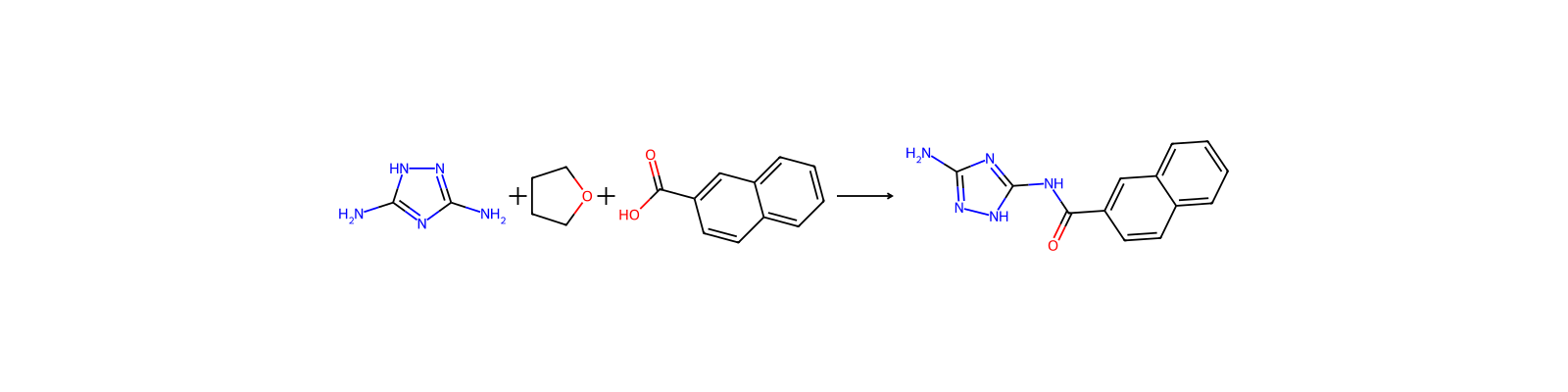
Zugehörige Reaktionen
23


Verknüpfte Notizen
Wird geladen…