StartseiteMCPWorkbenchSkills
StartseiteWorkbenchBenachrichtigungenMein Bereich
llms.txt · MCP-AnleitungDatenschutz · Nutzungsbedingungen · Supportv1.8.0
  1. Startseite
  2. /Verbindung

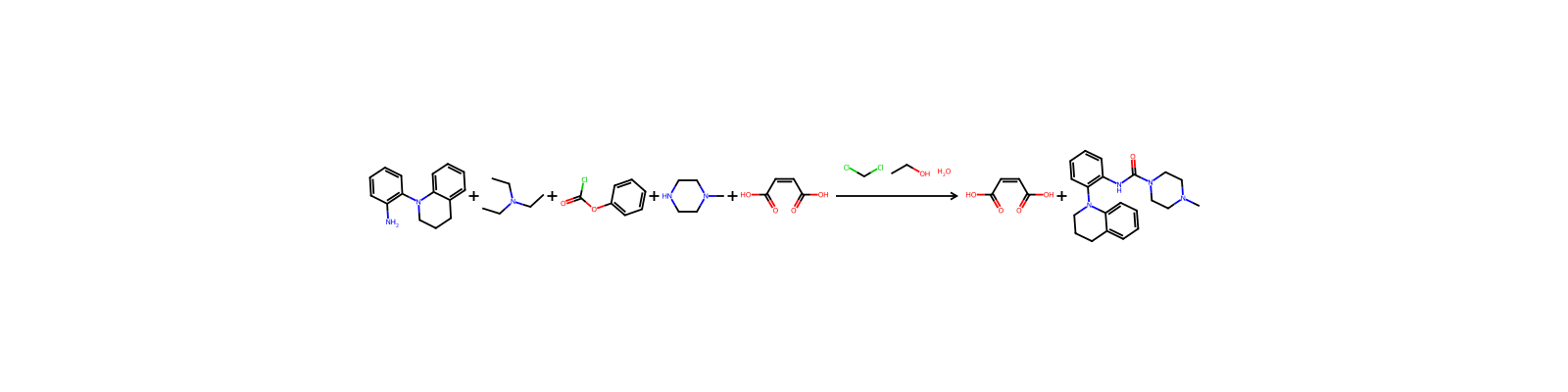
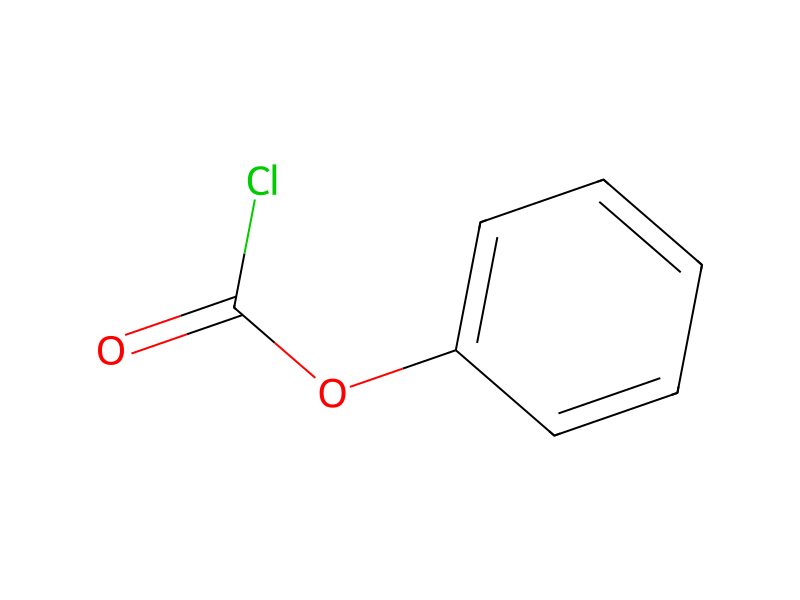
Phenylchlorformiat

Phenyl chloroformate

HCID 15891
Neue NotizNeue ReaktionAnfrage stellen
Druckvorschau

Daten werden ergänzt – lade die Seite später neu, um den aktuellen Stand zu sehen
GrundinformationenÜberblickNamen und BezeichnerEigenschaftenSicherheit und RegulatorischesChemie und IndustrieZugehörige ReaktionenNotizen zur Verbindung
TeilstruktursucheÄhnliche Strukturen suchen

Grundinformationen

CAS
1885-14-9
Standard-SMILES
O=C(Cl)Oc1ccccc1
InChIKey
AHWALFGBDFAJAI-UHFFFAOYSA-N
Summenformel
C7H5ClO2
Durchschnittliche Molmasse
156,56 g/mol
Monoisotopische Masse
155,9978071

Überblick

Phenyl chloroformate appears as a colorless liquid with a strong odor. Toxic by ingestion, inhalation and skin absorption. Very irritating to skin and eyes. Used to make other chemicals.

Namen und Bezeichner

Bevorzugter Name
Phenyl chloroformate
IUPAC
phenyl carbonochloridate
Lokaler Name
Phenylchlorformiat
Englischer Name
Phenyl chloroformate
Summenformel
C7H5ClO2
Molmasse
156.57

Namen und Synonyme

PHENYL CHLOROFORMATE1885-14-9phenyl carbonochloridatePhenyl chlorocarbonateChloroformic acid phenyl esterCarbonochloridic acid, phenyl esterPhenoxycarbonyl chlorideFormic acid, chloro-, phenyl esterPHENYLCHLOROFORMATEFenylester kyseliny chlormravenciTL 398DTXSID9044403
Weitere Namen anzeigen
CARBONOCHLORIDIC ACIDchlorocarbonic acidPHENYL CHLOROFORMATPhenyl choroformatePHENYL CHLOROFORMATE / CHLOROFORMIC ACID PHENYL ESTERtl398
phenyloxycarbonyl chloride6TND0D6D3YPHENYLCHLOROFORMIC ACIDNSC-210946DTXCID7024403RefChem:172952217-547-8Carbonochloridic acid phenyl ester

Datenbank-Bezeichner

CAS
1885-14-9
PubChem CID
15891
DTXSID
DTXSID9044403

Eigenschaften

Berechnete StruktureigenschaftenWird ergänzt

XLogP
2,6
Polarare Oberfläche (TPSA)
26,3 Ų
H-Brücken-Donoren
0
H-Brücken-Akzeptoren
2
Frei drehbare Bindungen
2
Schwere Atome
10
Formalladung
0
Komplexität
119

Experimentelle und physikochemische Eigenschaften

Chemical Classes · 2 Einträge

Toxic Gases & Vapors -> Acid Halides

Flammable agents - 2nd degree

SpringerMaterials PropertiesNuclear quadrupole resonance spectroscopy
Density · 3 Einträge

Density (at 20 °C): 1.2 g/cm³

Relative density of the vapour/air-mixture at 20 °C (air = 1): 1.00

1.244 @25 °C

SolubilitySolubility in water: reaction
Flash Point69 °C c.c.
Boiling Point188-189 °C
Melting Point-28 °C
Vapor DensityRelative vapor density (air = 1): 5.41
Vapor Pressure · 3 Einträge

0.67 [mmHg]

Vapor pressure, Pa at 20 °C: 90

63.074 [mm Hg] @20 °C

Sicherheit und Regulatorisches

Sicherheitsangaben dienen nur zur Orientierung und ersetzen weder das Sicherheitsdatenblatt (SDB) des Lieferanten noch geltende Vorschriften oder eine fachliche Bewertung.

GHS-Klassifizierung

GHS Classification · 6 Einträge

Danger

H290 (60.1%): May be corrosive to metals [Warning Corrosive to Metals]

P234, P260, P261, P264, P264+P265, P270, P271, P272, P273, P280, P284, P301+P317, P301+P330+P331, P302+P352, P302+P361+P354, P304+P340, P305+P354+P338, P316, P317, P319, P320, P321, P330, P333+P317, P362+P364, P363, P390, P403+P233, P405, P406, and P501 (click each P-code to see the statement)

Aggregated GHS information provided per 188 reports by companies from 18 notifications to the ECHA C&L Inventory. Each notification may be associated with multiple companies.

Danger

H227: Combustible liquid [Warning Flammable liquids]

Gefahrenhinweise

Regulatory Information · 4 Einträge

Chemical: Carbonochloridic acid, phenyl ester

REACH registered substance: Phenyl chloroformate (EC: 217-547-8)

Phenyl chloroformate: Does not have an individual approval but may be used under an appropriate group standard

The New Jersey Worker and Community Right to Know Act requires public and private employers to provide information about hazardous substances at their workplaces. (N.J.S.A. 34:5A-1 et. seq.)

Other Safety InformationEvaluation - Chemicals that are unlikely to require further regulation to manage risks to human health
DOT LabelPoison Corrosive
Fire Hazards · 3 Einträge

Excerpt from ERG Guide 156 [Substances - Toxic and/or Corrosive (Combustible / Water-Sensitive)]:

· Combustible material: may burn but does not ignite readily.

Combustible. Gives off irritating or toxic fumes (or gases) in a fire. Above 69 °C explosive vapour/air mixtures may be formed.

Chemie und Industrie

Verwendung und Herstellung

UsesUsed to make other chemicals; [CAMEO]
General Manufacturing InformationCarbonochloridic acid, phenyl ester: ACTIVE
Anwendungen · 1 Eintrag

VerwendenPhenyl chloroformate is used in the synthesis of poly(2-(phenoxycarbonyloxy)ethyl methacrylate) and phenyl-(4-vinylphenyl) carbonate. It acts as a precursor of phenyl mixed anhydrides which are used in peptide coupling reactions. It serves as a dehydrating reagent for the conversion of primary amides to nitriles and an intermediate in the synthesis of pharmaceuticals and carbamates.

Darstellung · 1 Eintrag

synthetischePhenyl chloroformate is synthesized by the reaction of phenol with phosgene. Phenol was dissolved in chloroform, phosgene was introduced under cooling, and the absorbed phosgene was in an equal molar ratio to phenol, and equimolar N,N-dimethylaniline was added dropwise under stirring at 5-10 °C. Then add cold water to dilute, separate the oil layer, wash with dilute hydrochloric acid and water successively. After drying with anhydrous calcium chloride, chloroform is evaporated, and then distilled under reduced pressure to collect 74-75°C (1.73kPa) fraction, which is phenyl chloroformate. The yield is about 90%.

Vor- und nachgelagerte Produkte

Vorgelagerte Rohstoffe

Bis(trichlormethyl)carbonatCalciumchloridPhenolN,N-Dimethyl-anilinDichlormethan

Zugehörige Reaktionen

2.465
Reaktionsaufzeichnung erstellen
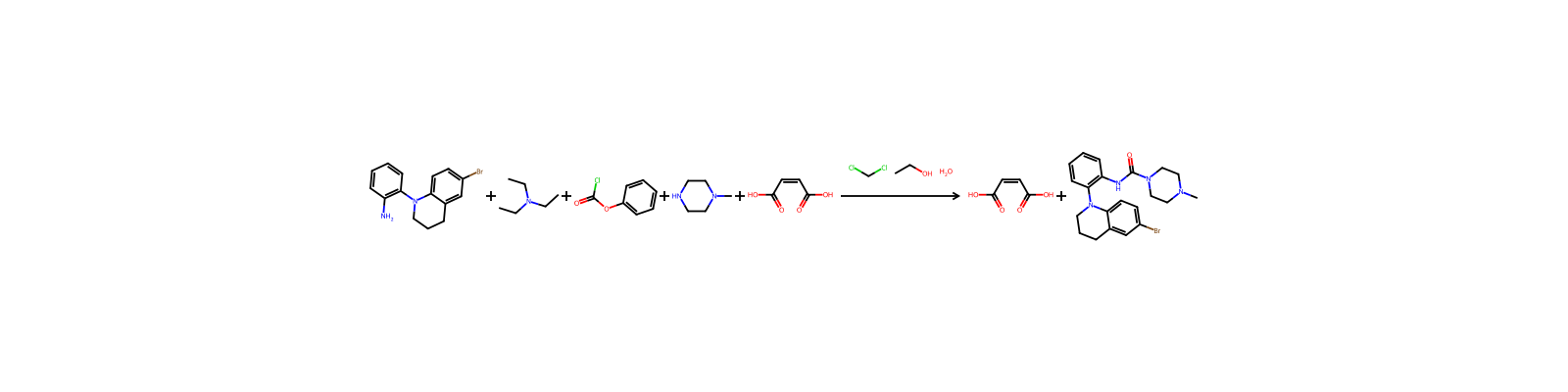
Reaktionsgleichung von HRID 1480
HRID 1480als Eduktuspto-grants-1998_03
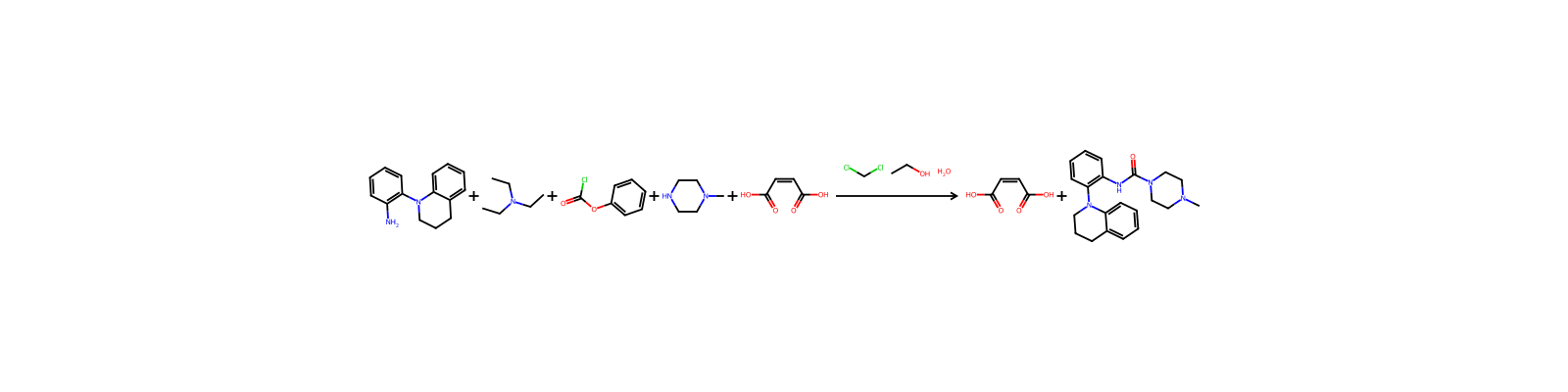
Reaktionsgleichung von HRID 4041
HRID 4041als Eduktuspto-grants-1988_02
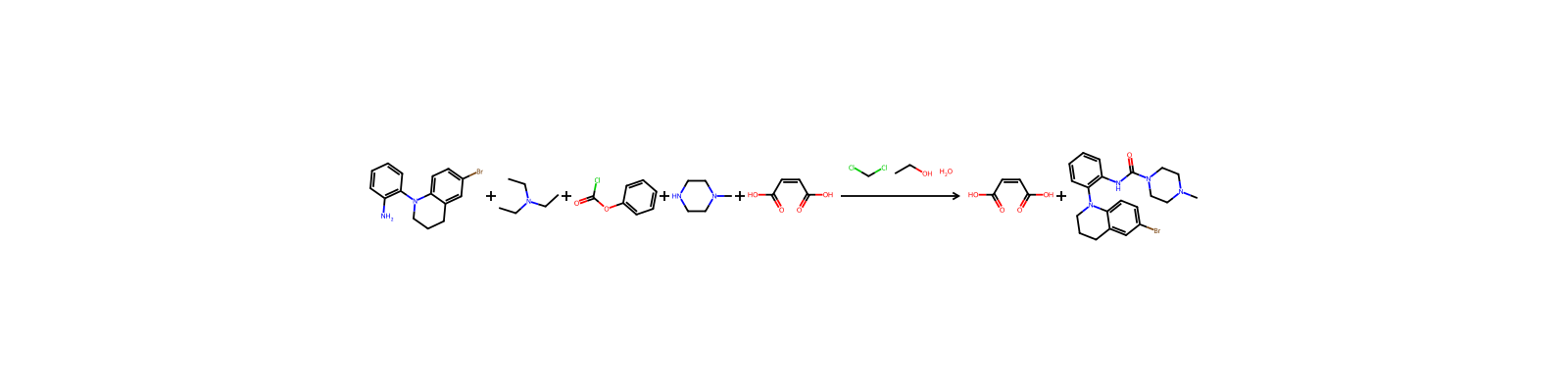
Reaktionsgleichung von HRID 4045
HRID 4045als Eduktuspto-grants-1988_02
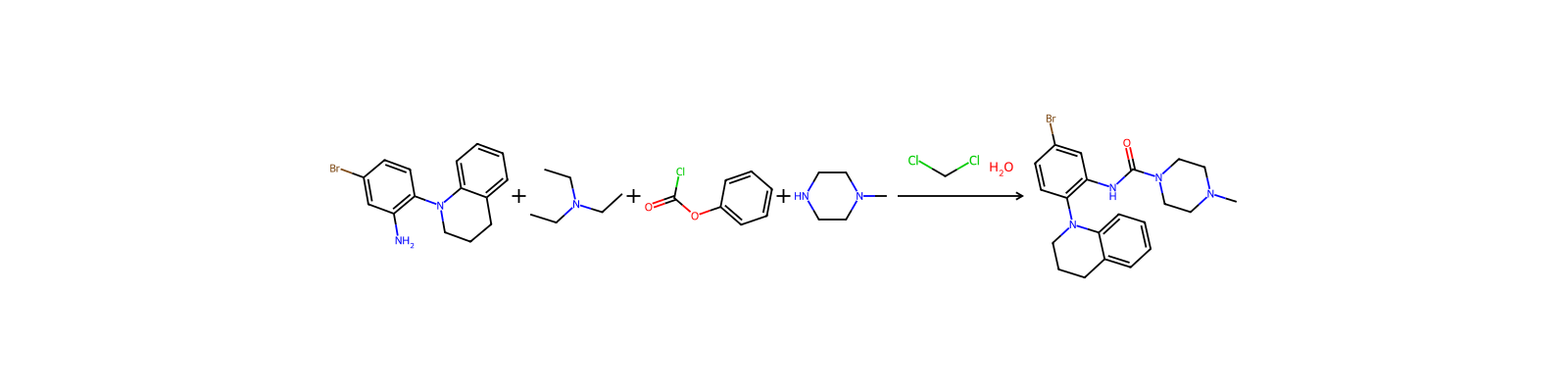
Reaktionsgleichung von HRID 4047
HRID 4047als Eduktuspto-grants-1988_02
Reaktionsgleichung von HRID 4099
HRID 4099als Eduktuspto-grants-1988_02
Reaktionsgleichung von HRID 4103
HRID 4103als Eduktuspto-grants-1988_02
Reaktionsgleichung von HRID 4105
HRID 4105als Eduktuspto-grants-1988_02
Reaktionsgleichung von HRID 4196
HRID 4196als Eduktuspto-grants-1988_02
Seite 1 von 309

Notizen zur Verbindung

Wird geladen…

Auf dieser SeiteGrundinformationenÜberblickNamen und BezeichnerEigenschaftenSicherheit und RegulatorischesChemie und IndustrieZugehörige ReaktionenNotizen zur Verbindung
Weitere Aktionen
Neue NotizNeue ReaktionAnfrage stellen
UNII
6TND0D6D3Y
EC Number
217-547-8
Nikkaji
J33.963F
Physical Description · 3 Einträge

Phenyl chloroformate appears as a colorless liquid with a strong odor. Toxic by ingestion, inhalation and skin absorption. Very irritating to skin and eyes. Used to make other chemicals.

Colorless liquid with a pungent odor; [ICSC]

COLOURLESS-TO-LIGHT-YELLOW LIQUID WITH PUNGENT ODOUR.

Autoignition Temperature540 °C

Physikochemische Eigenschaften

Schmelzpunkt
-28 °C · -28 °C
Siedepunkt
74 · 74-75 °C/13 mmHg (lit.)
Dichte
1.248 g/mL · 1.248 g/mL at 25 °C (lit.)
Dampfdichte
1 · 1 (vs air)
Dampfdruck
1.22 psi · 1.22 psi ( 20 °C)
Brechungsindex
20 · n20/D 1.511(lit.)
Flammpunkt
168 °F · 168 °F
storage temp.
2 · 2-8°C
Löslichkeit
Miscible with N,N-dimethylformamide.
Aggregatzustand
Liquid
Farbe
Clear
Wasserlöslichkeit
hydrolysis
BRN
606778 · 606778
InChI
1S/C7H5ClO2/c8-7(9)10-6-4-2-1-3-5-6/h1-5H
InChIKey
AHWALFGBDFAJAI-UHFFFAOYSA-N
SMILES
ClC(=O)Oc1ccccc1
CAS Datenbank
1885 · 1885-14-9(CAS DataBase Reference)
NIST chemische Informationen
Carbonochloridic acid, phenyl ester(1885-14-9)
EPA chemische Informationen
Carbonochloridic acid, phenyl ester (1885-14-9)
Health Hazards · 2 Einträge

Excerpt from ERG Guide 156 [Substances - Toxic and/or Corrosive (Combustible / Water-Sensitive)]:

· TOXIC and/or CORROSIVE; inhalation, ingestion or contact (skin, eyes) with vapors, dusts or substance may cause severe injury, burns or death.

Hazards Summary · 1 Eintrag

Decomposed by water producing hydrogen chloride and phenol; A corrosive substance that can cause injury to the skin, eyes, and respiratory tract; Inhalation may cause pulmonary edema; [ICSC] Reacts with water evolving hydrogen chloride; Fumes in moist air releasing hydrogen chloride; A strong skin and eye irritant; [CAMEO] A skin irritant; Corrosive to eyes; [eChemPortal: ERMA] Reacts with water; A corrosive substance that can cause injury to the skin, eyes, and respiratory tract; Inhalation may cause chemical pneumonitis; [MSDSonline] See CHLOROFORMATES.

DOT ID and Guide2746 156
Reactive GroupAcyl Halides, Sulfonyl Halides, and Chloroformates
UN ClassificationUN Hazard Class: 6.1; UN Subsidiary Risks: 8; UN Pack Group: II
Reactivity AlertsWater-Reactive
Reactivity Profile · 1 Eintrag

PHENYL CHLOROFORMATE is incompatible with strong oxidizing agents, alcohols, amines, alkali. May react vigorously or explosively if mixed with diisopropyl ether or other ethers in the presence of trace amounts of metal salts [J. Haz. Mat., 1981, 4, 291].

Chemical DangersDecomposes on heating and on contact with water and moisture. This produces toxic and corrosive fumes including hydrogen chloride and phenol. Reacts violently with acids, alcohols, amines, bases, oxidants and metals.

Sicherheit und Schutzausrüstung

Fire Fighting · 2 Einträge

Excerpt from ERG Guide 156 [Substances - Toxic and/or Corrosive (Combustible / Water-Sensitive)]:

NO water. Use dry powder, carbon dioxide, alcohol-resistant foam.

First Aid Measures · 4 Einträge

Fresh air, rest. Half-upright position. Artificial respiration may be needed. Refer immediately for medical attention.

Remove contaminated clothes. Rinse skin with plenty of water or shower. Refer immediately for medical attention.

Rinse with plenty of water for several minutes (remove contact lenses if easily possible). Refer immediately for medical attention.

Rinse mouth. Do NOT induce vomiting. Give one or two glasses of water to drink. Refer immediately for medical attention.

Accidental Release Measures · 2 Einträge

· CALL 911. Then call emergency response telephone number on shipping paper. If shipping paper not available or no answer, refer to appropriate telephone number listed on the inside back cover.

· ELIMINATE all ignition sources (no smoking, flares, sparks or flames) from immediate area.

First Aid · 2 Einträge

Excerpt from ERG Guide 156 [Substances - Toxic and/or Corrosive (Combustible / Water-Sensitive)]:

General First Aid:

Safe StorageDry. Well closed. Ventilation along the floor. Separated from acids, alcohols, amines, bases, oxidants and food and feedstuffs. Store in an area without drain or sewer access.
Exposure Control and Personal Protection· Wear positive pressure self-contained breathing apparatus (SCBA).
Nonfire Spill ResponseExcerpt from ERG Guide 156 [Substances - Toxic and/or Corrosive (Combustible / Water-Sensitive)]:
Spillage Disposal · 1 Eintrag

Personal protection: chemical protection suit including self-contained breathing apparatus. Do NOT let this chemical enter the environment. Collect leaking liquid in sealable plastic containers. Absorb remaining liquid in dry sand or inert absorbent. Then store and dispose of according to local regulations.

Isolation and Evacuation · 2 Einträge

Excerpt from ERG Guide 156 [Substances - Toxic and/or Corrosive (Combustible / Water-Sensitive)]:

Immediate precautionary measure

Eye PreventionWear face shield or eye protection in combination with breathing protection.
Fire PreventionNO open flames. Above 69 °C use a closed system and ventilation.
Inhalation RiskA harmful contamination of the air will be reached quickly on evaporation of this substance at 20 °C.

Toxikologische Informationen

Adverse EffectsDermatotoxin - Skin burns.
Exposure RoutesThe substance can be absorbed into the body by inhalation of its vapour and by ingestion. Serious local effects on contact with eyes and skin.
Signs and Symptoms · 4 Einträge

Sore throat. Burning sensation. Cough. Laboured breathing. Shortness of breath. Symptoms may be delayed.

Redness. Pain. Skin burns.

Redness. Pain. Severe burns.

Burning sensation in the mouth and in the throat and chest. Sore throat. Abdominal pain. Diarrhoea. Shock or collapse.

ICSC Environmental DataThe substance is harmful to aquatic organisms.
Toxicity DataLCLo (rat) = 44 ppm/4h

Sicherheitsdaten

F
10-19-21
wgk
3
tsca
TSCA listed
ridadr
UN 2746
hs_code
29159020
RTECS-Nr.
FG3850000
risk_code
22-26-34-41-38-29-37
Toxizität
LD50 orally in Rabbit: 1730 mg/kg LD50 dermal Rabbit 4880 mg/kg
hazard_code
T+
safety_code
26-28-36/37/39-45-28A
hazard_class
6.1
packing_group
II
Speicherklasse
6.1A - Combustible acute toxic Cat. 1 and 2very toxic hazardous materials
Hazard Classifications
Acute Tox. 1 InhalationAcute Tox. 4 OralMet. Corr. 1Skin Corr. 1BSTOT SE 3
Selbstentzündungstemperatur
540 °C

Nachgelagerte Produkte

Bis[N-[2-[[2-hydroxy-3-(4-hydroxyphenoxy)propyl]amino]ethyl]morpholin-4-carboxamid]fumaratN-(Dicyclopropylmethyl)-4,5-dihydrooxazol-2-aminCamazepam5-BROMO-2(3H)-BENZOXAZOLONEp-Phenylendimethanolethyl phenyl carbonateLeuprorelin2-Piperidin-2-ylethanolBENZYL 3-PYRROLINE-1-CARBOXYLATECbz-D-Phenylalaninol4,6-Dimethoxy-2-(phenoxycarbonyl)aminopyrimidinePhenylcarbamatBENZYL PHENYL CARBONATE 97CarbaMic acid, bis(2-chloroethyl)-, phenyl ester