StartseiteMCPWorkbenchSkills
StartseiteWorkbenchBenachrichtigungenMein Bereich
llms.txt · MCP-AnleitungDatenschutz · Nutzungsbedingungen · Supportv1.8.0
  1. Startseite
  2. /Reaktion

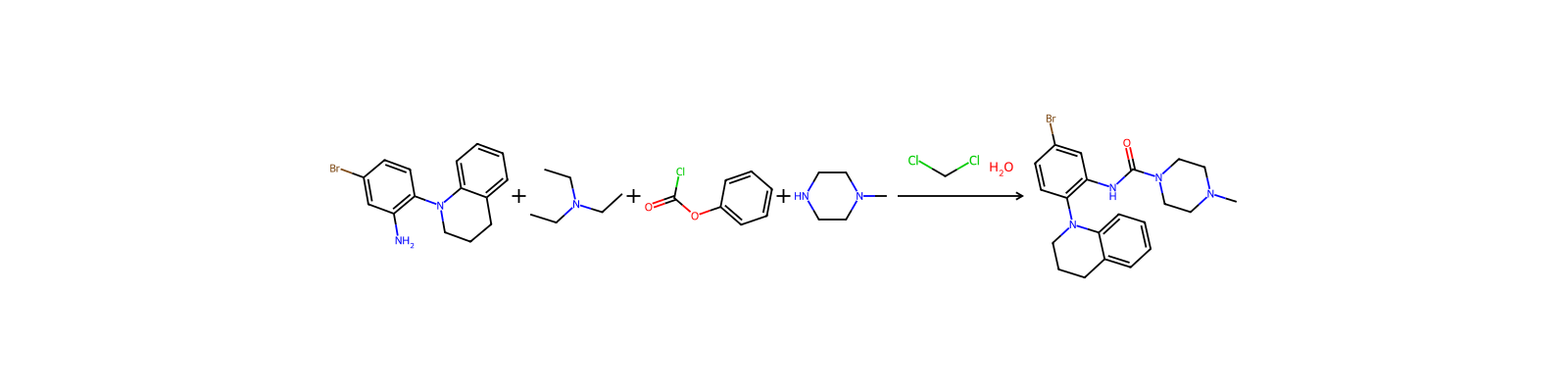
Triethylamine → 4-Methyl-N-[5-bromo-2-(1,2,3,4-tetrahydro-1-quinolinyl)phenyl]piperazinecarboxamide

HRID 4103
Notizen
Druckvorschau

Reaktionsgleichung

Reaktionsgleichung von HRID 4103
[Br:1][C:2]1[CH:7]=[CH:6][C:5]([N:8]2[C:17]3[C:12](=[CH:13][CH:14]=[CH:15][CH:16]=3)[CH2:11][CH2:10][CH2:9]2)=[C:4]([NH2:18])[CH:3]=1.C(N(CC)CC)C.C1(O[C:33](Cl)=[O:34])C=CC=CC=1.[CH3:36][N:37]1[CH2:42][CH2:41][NH:40][CH2:39][CH2:38]1>ClCCl.O>[CH3:36][N:37]1[CH2:42][CH2:41][N:40]([C:33]([NH:18][C:4]2[CH:3]=[C:2]([Br:1])[CH:7]=[CH:6][C:5]=2[N:8]2[C:17]3[C:12](=[CH:13][CH:14]=[CH:15][CH:16]=3)[CH2:11][CH2:10][CH2:9]2)=[O:34])[CH2:39][CH2:38]1
KomponentenVersuchsvorschriftAufarbeitungQuellen und NachweiseNotizen zur Reaktion

Komponenten

7

Edukt 4

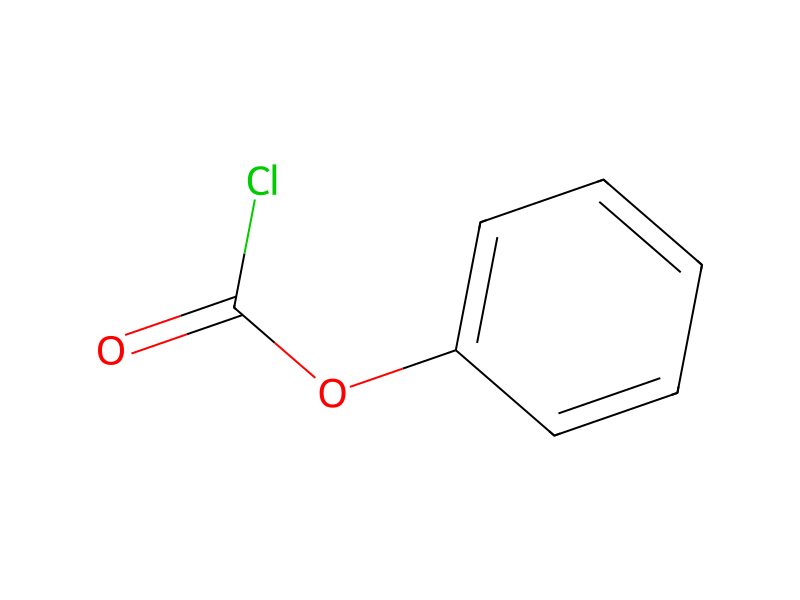
HCID 8471TriethylamineHCID 15891Phenyl chloroformate2×HCID 531671-MethylpiperazineHCID 138129315-Bromo-2-[3,4-dihydro-1(2H)-quinolinyl]aniline

Produkt 1

HCID 138129394-Methyl-N-[5-bromo-2-(1,2,3,4-tetrahydro-1-quinolinyl)phenyl]piperazinecarboxamideAusbeute 61,2 %

Reagenzien, Katalysatoren, Lösungsmittel 2

HCID 962WaterLösungsmittelHCID 6344DichloromethaneLösungsmittel3×

Versuchsvorschrift

1-(4-Bromo-2-aminophenyl)-1,2,3,4-tetrahydroquinoline (10.6 g, 0.035 mole) was dissolved on a steam bath in dichloromethane (150 ml). The solution was cooled to -5° C. in ice/methanol and triethylamine (5.01 g, 0.050 mole) was added in one portion, followed by a solution of phenylchloroformate (7.85 g, 0.050 mole) dissolved in dichloromethane (10 ml), dropwise over 15 minutes. The mixture was stirred 1 hour in the cold, 2 hours at room temperature, and an additional charge of phenylchloroformate (1.57 g, 0.010 mole) was added. After one hour, a solution of N-methylpiperazine (14.1 g, 0.14 mole) dissolved in dichloromethane (15 ml) was added over 0.5 hour. The reaction mixture was stirred under nitrogen at room temperature overnight. Water (100 ml) was added and the mixture was stirred 0.5 hour. The organic phase was separated, washed 4 times with water, dried over anhydrous sodium sulfate, and evaporated in a 100° C. bath in vacuo. The residue was dissolved in toluene (40 ml), adsorbed on a column of silica gel (500 g) packed in toluene and eluted with dichloromethane-methanol (98:2). The appropriate fractions were combined and evaporated to give 9.2 g (61%) of product, as an oil.

Aufarbeitung

  1. additionwas added
  2. waitAfter one hour
  3. additionwas added over 0.5 hour
  4. stirringThe reaction mixture was stirred under nitrogen at room temperature overnight
  5. stirringthe mixture was stirred 0.5 hour
  6. customThe organic phase was separated
  7. washwashed 4 times with water
  8. dry with materialdried over anhydrous sodium sulfate
  9. customevaporated in a 100° C. bath in vacuo
  10. dissolutionThe residue was dissolved in toluene (40 ml)
  11. washeluted with dichloromethane-methanol (98:2)
  12. customevaporated

Quellen und Nachweise

ORD-Eintrag
ord-c5fcc801525f4ce79084810a6244bdb8
Quelldatensatz
uspto-grants-1988_02
DOI
10.6084/m9.figshare.5104873.v1
Patentnummer
US04723003

Notizen zur Reaktion

Wird geladen…

Auf dieser SeiteKomponentenVersuchsvorschriftAufarbeitungQuellen und NachweiseNotizen zur Reaktion