2,2-Dimethyl-1,3-dioxan-4,6-dion
2,2-Dimethyl-1,3-dioxane-4,6-dione
Daten werden ergänzt – lade die Seite später neu, um den aktuellen Stand zu sehen

Grundinformationen
- CAS
2033-24-1- Standard-SMILES
CC1(C)OC(=O)CC(=O)O1- InChIKey
GXHFUVWIGNLZSC-UHFFFAOYSA-N- Summenformel
- C6H8O4
- Durchschnittliche Molmasse
- 144,12 g/mol
- Monoisotopische Masse
- 144,04225874
Überblick
structure given in first source
Namen und Bezeichner
- Bevorzugter Name
- 2,2-Dimethyl-1,3-dioxane-4,6-dione
- IUPAC
- 2,2-dimethyl-1,3-dioxane-4,6-dione
- Lokaler Name
- 2,2-Dimethyl-1,3-dioxan-4,6-dion
- Englischer Name
- 2,2-Dimethyl-1,3-dioxane-4,6-dione
- Summenformel
- C6H8O4
- Molmasse
- 144.13
Namen und Synonyme
2,2-Dimethyl-1,3-dioxane-4,6-dione2033-24-1Meldrum's acid1,3-Dioxane-4,6-dione, 2,2-dimethyl-Isopropylidene malonateCyclic isopropylidene malonateMalonic acid, cyclic isopropylidene ester2,2-Dimethyl-m-dioxane-4,6-dioneDD139RP1SCNSC-71902NSC-688343DTXSID7051846
Weitere Namen anzeigen
Meldrum’s acidIsopropyl MalonateMie acidNSC 71902Meldrumic acid
RefChem:156318DTXCID5030402217-992-82,2-Dimethyl-1,3-dioxan-4,6-dioneMeldrums acidMFCD00006638Malonic acid cyclic isopropylidene estercycl-Isopropylidene malonate
Datenbank-Bezeichner
- CAS
2033-24-1- PubChem CID
- 16249
- DTXSID
DTXSID7051846- UNII
- DD139RP1SC
- EC Number
- 217-992-8
- Nikkaji
- J7.852B
Eigenschaften
Berechnete StruktureigenschaftenWird ergänzt
- XLogP
- 0,6
- Polarare Oberfläche (TPSA)
- 52,6 Ų
- H-Brücken-Donoren
- 0
- H-Brücken-Akzeptoren
- 4
- Frei drehbare Bindungen
- 0
- Schwere Atome
- 10
- Formalladung
- 0
- Komplexität
- 164
Experimentelle und physikochemische Eigenschaften
Chemical ClassesOther Classes -> Other Organic Compounds
SpringerMaterials PropertiesChemical shift
Physical DescriptionSolid; [Merck Index] White powder; [Alfa Aesar MSDS]
Physikochemische Eigenschaften
- Schmelzpunkt
- 92 · 92-96 °C(lit.)
- Siedepunkt
- 182.71 °C · 182.71°C (rough estimate)
- Dichte
- 1.1311 · 1.1311 (rough estimate)
- Dampfdruck
- 0.044 · 0.044-133Pa at 25℃
- Brechungsindex
- 1.4434 · 1.4434 (estimate)
- storage temp.
- 2 · 2-8°C
- Löslichkeit
- 5 %, · dioxane: soluble5%, clear to very slightly hazy, colorless to faintly yellow
- pka
- 5.1 · 5.1(at 25℃)
Sicherheit und Regulatorisches
Sicherheitsangaben dienen nur zur Orientierung und ersetzen weder das Sicherheitsdatenblatt (SDB) des Lieferanten noch geltende Vorschriften oder eine fachliche Bewertung.
GHS-Klassifizierung
GHS Classification
This chemical does not meet GHS hazard criteria for 26.1% (12 of 46) of reports.
Warning
H315 (39.1%): Causes skin irritation [Warning Skin corrosion/irritation]
P261, P264, P264+P265, P271, P273, P280, P302+P352, P304+P340, P305+P351+P338, P319, P321, P332+P317, P337+P317, P362+P364, P391, P403+P233, P405, and P501 (click each P-code to see the statement)
Aggregated GHS information provided per 46 reports by companies from 8 notifications to the ECHA C&L Inventory. Each notification may be associated with multiple companies.
Gefahrenhinweise
Regulatory Information
Chemical: 1,3-Dioxane-4,6-dione, 2,2-dimethyl-
Status: Active Update: 09-08-2019 https://echa.europa.eu/registration-dossier/-/registered-dossier/18635
1,3-Dioxane-4,6-dione, 2,2-dimethyl-: Does not have an individual approval but may be used as a component in a product covered by a group standard. It is not approved for use as a chemical in its own right.
Hazards SummaryA skin and strong eye irritant; [Alfa Aesar MSDS] See 1,3-Dioxane.
Hazard Classes and CategoriesSkin Irrit. 2 (39.1%)
Sicherheitsdaten
- F
- 10-21
- wgk
- 3
- tsca
- TSCA listed
- hs_code
- 29322090
- RTECS-Nr.
- JH0800000
- risk_code
- 36/37/38-45
- hazard_code
- Xi,T
Chemie und Industrie
Verwendung und Herstellung
UsesUsed in organic synthesis; [Merck Index]
General Manufacturing Information1,3-Dioxane-4,6-dione, 2,2-dimethyl-: ACTIVE
Anwendungen
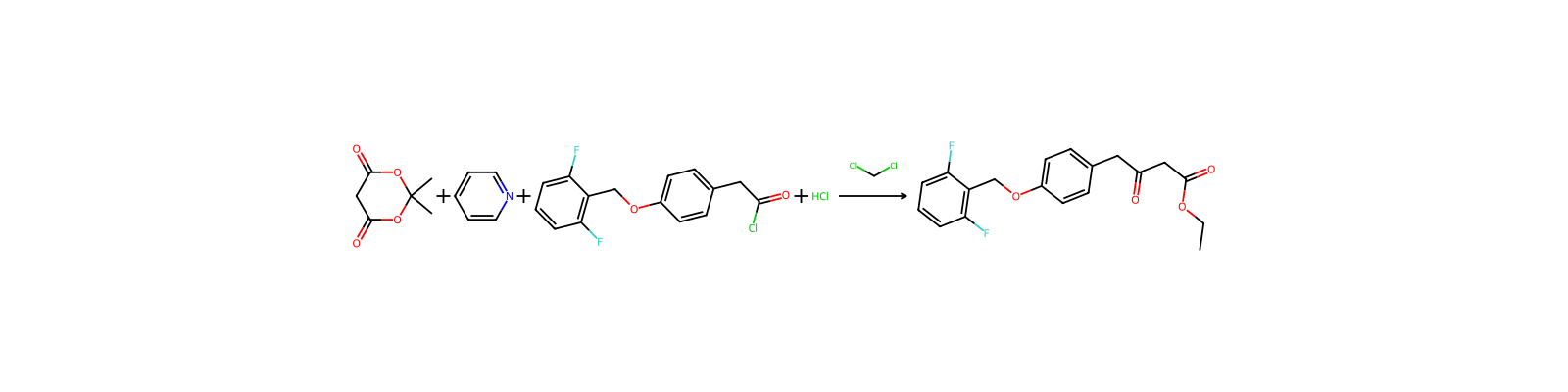
BeschreibungMeldrumsäure bildet weiße Kristalle, die bei 92-96 ℃ unter Zersetzung schmelzen. Mit einem pKs-Wert von 4,97 ist Meldrumsäure eine ungewöhnlich starke Säure (in Anbetracht ihrer Struktur). Meldrumsäure ist ein sehr nützlicher Synthesebaustein: Bei hoher Temperatur zersetzt sich Meldrumsäure unter Bildung von Aceton, Kohlenstoffdioxid und einem hochreaktiven Keten, welches mit einer Vielzahl von Verbindungen Reaktionen eingeht. Da der Kohlenstoff zwischen den beiden Carbonylgruppen C-H acide Wasserstoffatome trägt, kann Meldrumsäure leicht an dieser Position alkyliert oder acyliert werden. Die dabei entstehenden Verbindungen können wiederum, wie oben beschrieben, durch Pyrolyse in hochreaktive Ketene überführt werden. Erhitzt man die acylierte Meldrumsäure mit einem Alkohol, so entstehen in einer Reaktion, die der Malonestersynthese gleicht, β-Ketoester, welche als Edukte in einer Knorrschen Pyrrolsynthese verwndet werden können. Durch Bromierung der Meldrumsäure mit elementarem Brom im basischem Medium erhält man Dibrommeldrumsäure, ein sehr mildes und effektives Bromierungsreagenz.
BeschreibungMeldrum's acid, also known as 2,2-dimethyl-1,3-dioxane-4,6-dione, is an organic compound with the formula C6H8O4. The compound was first made in 1908 by Andrew Norman Meldrum by a condensation reaction of malonic acid with acetone in acetic anhydride and sulfuric acid. Meldrum misidentified the structure as a β-lactone of β-hydroxyisopropylmalonic acid. Yet Meldrum's acid has a high acidity with a pKa of 4.97, because like ascorbic acid, deprotonation at the methylene next to the carbonyls produces a stable enolate. Because of this property Meldrum's acid like malonic acid is a reactant in Knoevenagel condensations.
VerwendenMeldrum's acid serves as an intermediate in a variety of organic synthesis reactions. It is commonly used as an alternative to acyclic malonic esters and generally acts as a C3O2 synthon in organic synthesis.
Zugehörige Reaktionen
709



Notizen zur Verbindung
Wird geladen…