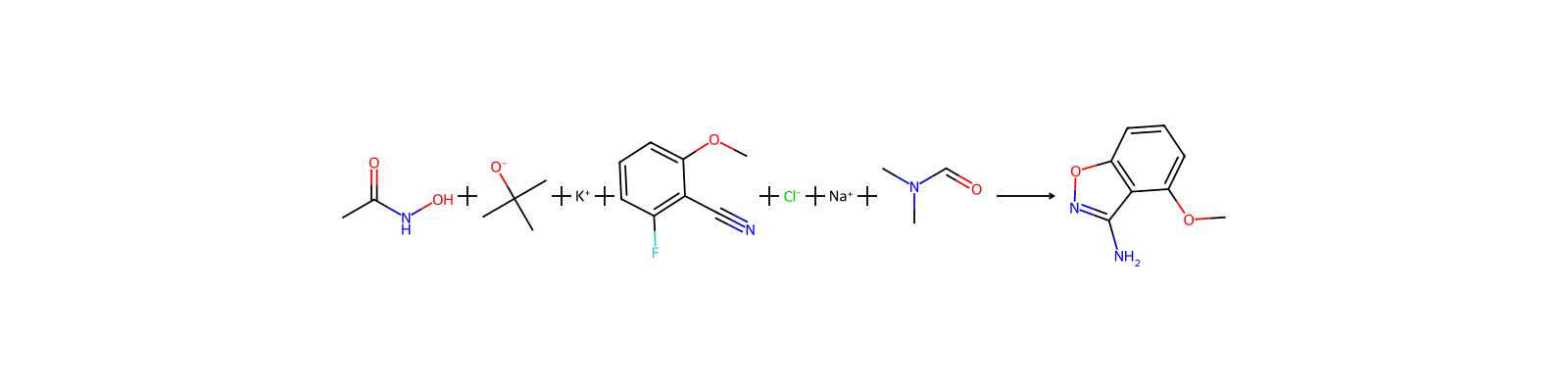
HRID 16396als Edukt
Acetohydroxamic Acid

546-88-3CC(=O)NORRUDCFGSUDOHDG-UHFFFAOYSA-NAcetohydroxamic Acid can cause developmental toxicity according to state or federal government labeling requirements.
546-88-3DTXSID7022546CHEMBL734CHEBI:27777log Kow= -1.59
-0.7
-1.59
5.09e+02 g/L
<0.2 [ug/mL] (The mean of the results at pH 7.4)
FDA approved drugs -> Active ingredient
FDA approved drugs -> Active ingredient
89-92 °C
90.5 °C
Sicherheitsangaben dienen nur zur Orientierung und ersetzen weder das Sicherheitsdatenblatt (SDB) des Lieferanten noch geltende Vorschriften oder eine fachliche Bewertung.
Danger
H360 (96.1%): May damage fertility or the unborn child [Danger Reproductive toxicity]
P203, P280, P318, P405, and P501 (click each P-code to see the statement)
Aggregated GHS information provided per 51 reports by companies from 9 notifications to the ECHA C&L Inventory.
Manufacturers, packers, and distributors of drug and drug products for human use are responsible for complying with the labeling, certification, and usage requirements as prescribed by the Federal Food, Drug, and Cosmetic Act, as amended (secs 201-902, 52 Stat. 1040 et seq., as amended; 21 U.S.C. 321-392).
SRP: At the time of review, criteria for land treatment or burial (sanitary landfill) disposal practices are subject to significant revision. Prior to implementing land disposal of waste residue (including waste sludge), consult with environmental regulatory agencies for guidance on acceptable disposal practices.
G - Genito urinary system and sex hormones
QG - Genito urinary system and sex hormones
Acetohydroxamic Acid, a synthetic drug derived from hydroxylamine and ethyl acetate, is similar in structure to urea. In the urine, it acts as an antagonist of the bacterial enzyme urease. Acetohydroxamic Acid has no direct antimicrobial action and does not acidify urine directly.
Acetohydroxamic Acid reversibly inhibits the bacterial enzyme urease. This inhibits the hydrolysis of urea and production of ammonia in urine infected with urea-splitting organisms, leading to a decrease in pH and ammonia levels. As antimicrobial agents are more effective in such conditions, the effectiveness of these agents is amplified, resulting in a higher cure rate.
Inhibits the hydrolysis of urea and production of ammonia in urine infected with urea-splitting bacteria, by reversible inhibition of the bacterial enzyme urease, and by the chelation of nickel, an essential component of urease enzymes. Such enzyme inhibition results in reduction of both urine alkalinity and ammonia concentration. The effectiveness of antibacterial medication is then enhanced and the formation of urinary calculi reduced.
5-10 hours in patients with normal renal function
...increases with increasing dose and reportedly ranges from about 3.5-10 hours in patients with normal renal function.
35-65% of oral dose excreted unchanged in urine (which provides the drug's therapeutic effect).
...is metabolized to acetamide.
4RZ82L2GY5
ACETOHYDROXAMIC ACID


8.7 (at 25 °C)
pKa= 8.70
Concurrent use of alcoholic beverages with acetohydroxamic acid has resulted in a nonpruritic, reddish, macular skin rash about 30 to 45 minutes after ingestion. The rash may be associated with a general feeling of warmth and tingling, and usually disappears spontaneously in 30 to 60 minutes.
Acetohydroxamic acid chelates iron and possibly other heavy metals with concurrent oral administration; this may result in reduced intestinal absorption of both; if iron therapy is indicated, parenteral administration of iron is recommended.
In vitro studies indicate that acetohydroxamic acid and methenamine have a synergistic effect in inhibiting increases in pH caused by urease-producing Proteus spp. and that acetohydroxamic acid potentiates the antibacterial effect of methenamine against these bacteria...
Acetohydroxamic acid was positive for mutagenicity in the Ames test.
Acetohydroxamic acid overdose has not been reported. However, if it should occur, concomitant reduction in platelets and/or white blood cells should be anticipated; reticulocyte count is likely to be elevated, and severe hemolysis may occur.
Drug Induced Liver Injury Rank (DILIrank 2.0)
Acetohydroxamic acid
Ambiguous-DILI-concern
3
Warnings & precautions
DOI:10.1016/j.drudis.2016.02.015
Acetamide, a metabolite or acetohydroxamic acid, has been shown to cause hepatocellular carcinoma in rats when used in very high doses.
...in long-term studies in rats, large oral dosages (e.g., 4 g/kg daily) of acetamide, a metabolite of acetohydroxamic acid, have been shown to cause hepatocellular carcinoma.
Evidence of toxicity did not occur when the drug was administered subcutaneously in mice at a dosage of 500 mg/kg daily for 60-100 days; however, evidence of cumulative toxicity, with death occurring at a mean of 21 days, occurred when the drug was administered subcutaneously at a dosage of 1 g/kg daily.
Treatment of overdose: Administration should be stopped. There is no known specific antidote for acetohydroxamic acid overdose. Recommended treatment consists of the following: Monitoring - Close monitoring of hematologic status; Specific Treatment - Symptomatic treatment as necessary. Blood transfusions if required. Dialysis (considered possible but not yet proven).
LD50 Mouse ip 2.5 g/kg
LD50 Mouse oral 5 g/kg
LD50 Rat oral 4.8 g/kg
Manufacturers, packers, and distributors of drug and drug products for human use are responsible for complying with the labeling, certification, and usage requirements as prescribed by the Federal Food, Drug, and Cosmetic Act, as amended (secs 201-902, 52 Stat. 1040 et seq., as amended; 21 U.S.C. 321-392).
Established Pharmacologic Class [EPC] - Urease Inhibitor
Mechanisms of Action [MoA] - Urease Inhibitors
Acetohydroxamic acid is an Urease Inhibitor. The mechanism of action of acetohydroxamic acid is as an Urease Inhibitor.
ACETOHYDROXAMIC ACID
Well absorbed from the GI tract following oral administration.
Well absorbed from gastrointestinal tract.
Well distributed throughout body fluids.
Elimination: Renal- Unchanged, 36 to 65%; as acetamide, 9 to 14%. Respiratory - As carbon dioxide, 20 to 40%.
In rodents, about 55% of an intraperitoneal dose is excreted in urine as unchanged drug, 15% as acetamide, and 10% as acetate within 24 hours; approximately 7% of the dose is excreted by the lungs as carbon dioxide and less than 1% is excreted in feces within 24 hours.
In mice, highest concentrations of the drug occur in the liver and kidney, while the lowest concentrations occur in the brain.
BeschreibungAcetohydroxamic acid is a potent, non-competitive and irreversible inhibitor of bacterial urease (Ki≈lO-7M). This enzyme, which is widely distributed in plants and bacteria, but not in mammalian cells, catalyzes the decomposition of urea to ammonia. Elevated urinary ammonia levels can reduce the antibacterial effectiveness of a number of agents. Thus, acetohydroxamic acid is useful as adjunctive therapy to decrease urinary ammonia and alkalinity in patients with chronic urea-splitting urinary infection. Such infections are a leading cause of recurring complications and death in paraplegics.
VerwendenAcetohydroxamic acid is a potent inhibitor of bacterial urease activity and reduces urinary ammonia levels. 2-Acetohydroxamic acid loaded floating microspheres forms an efficient drug delivery system for the treatment of Helicobacter pylori.Acetohydroxamic acid was used:to study the mechanism of complexation of iron (III) with acetohydroxamic acid.to study the inhibitory mechanism of lansoprazole and omeprazole on Helicobacter pyloni.in urease inhibition studies.for in situ generation of nitrosocarbonylmethane as a Diels-Alder dienophile.Used in urease inhibition studies and for in situ generation of nitrosocarbonylmethane as a Diels-Alder dienophile.